Tuna Salad Recipe: 7 Easy Tricks for Better Flavor

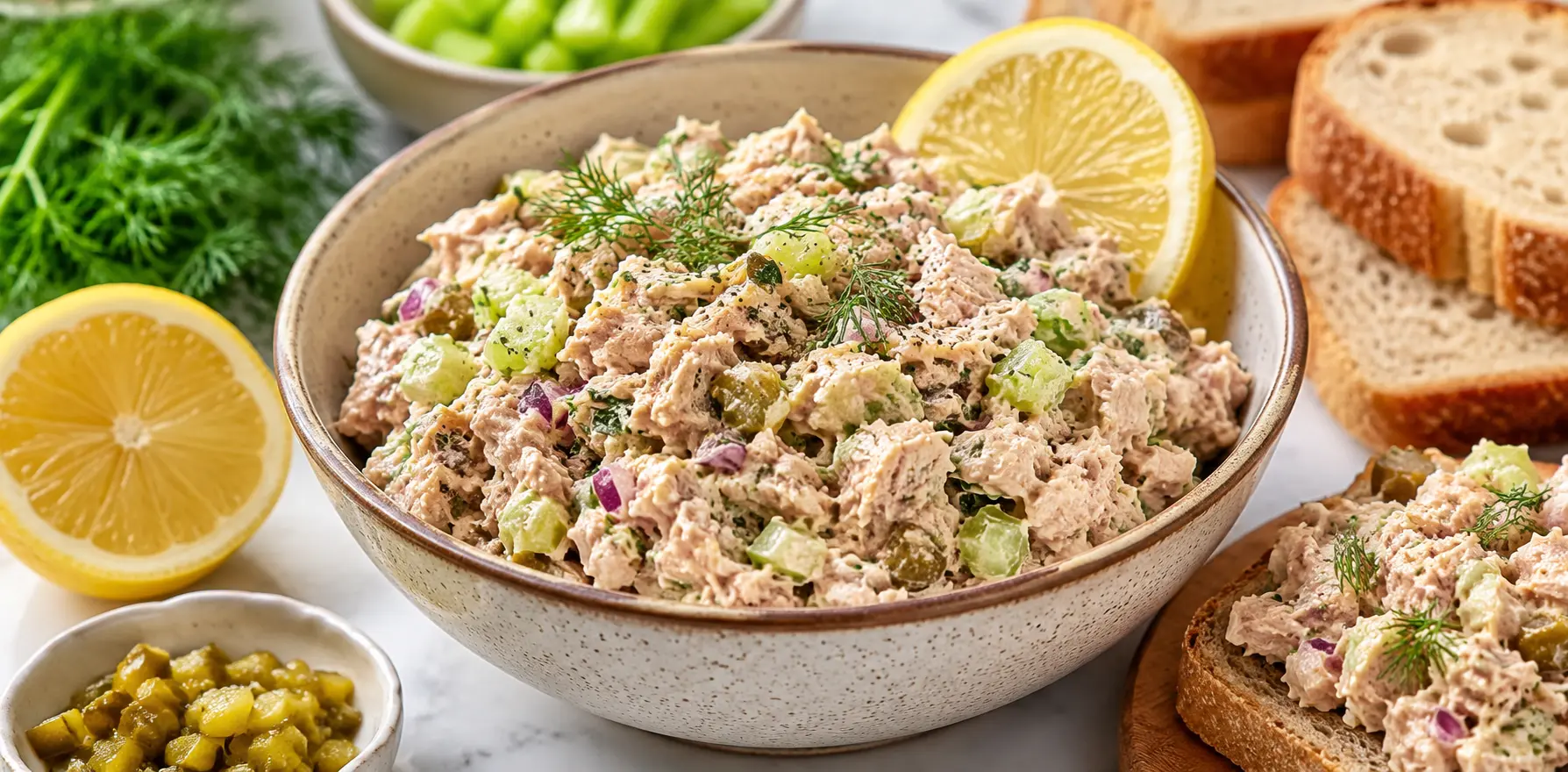
Tuna Salad Recipe That Tastes Better Than Any Deli Version. There’s something comforting about opening the refrigerator and finding a bowl of homemade tuna salad ready for lunch. It’s one of those reliable meals that works on busy weekdays, lazy summer afternoons, and even quick family dinners when nobody feels like cooking. A good tuna salad recipe is creamy, fresh, crunchy, and packed with flavor without feeling heavy. When made properly, every bite has flaky tuna, crisp celery, tangy lemon juice, and just enough mayonnaise to hold everything together.
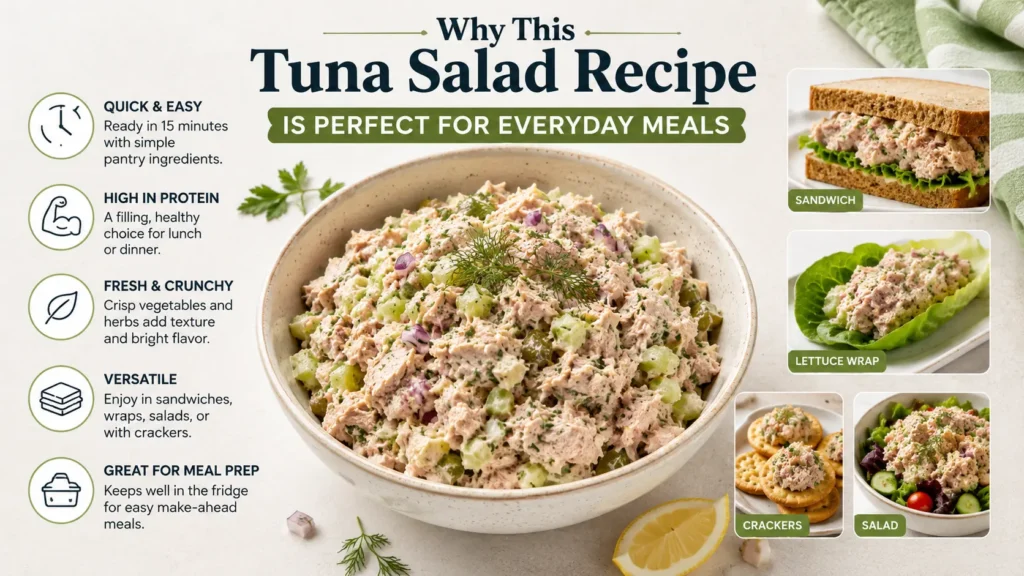
What I love most about this tuna salad recipe is how flexible it is. You can pile it onto grilled bread for a classic tuna melt, spoon it into lettuce wraps for a lighter meal, or eat it straight from the bowl with crackers. The balance of creamy dressing, fresh herbs, crunchy vegetables, and mild seafood flavor makes it one of those recipes people keep coming back to. After testing countless versions at home, I found that a few small details completely change the texture and flavor—and most people overlook them.
What Makes This Tuna Salad Recipe So Popular for Everyday Meals
A tuna salad recipe is a cold seafood salad usually made with canned tuna, mayonnaise, crunchy vegetables, herbs, and seasonings. The tuna is flaked into small pieces, then mixed with ingredients like celery, red onion, lemon juice, dill pickles, and fresh herbs to create a creamy yet refreshing meal.
People often enjoy tuna salad as a tuna sandwich, stuffed inside tomato halves, wrapped in Bibb lettuce leaves, or served over mixed greens. It’s especially popular because it uses pantry ingredients, requires almost no cooking, and can be prepared in under 20 minutes. In many homes, tuna salad is considered a classic lunch entrée because it feels satisfying without being overly rich.
Unlike heavier deli salads, this homemade tuna salad has a bright, fresh flavor with crunchy texture and balanced seasoning. The combination of creamy mayonnaise and lemon juice creates a tangy dressing that enhances the natural flavor of the tuna instead of masking it.
Why This Tuna Salad Recipe Works Better Than Most Versions
Many tuna salad recipes rely too heavily on mayonnaise, which can make the salad dense and soggy after refrigeration. This version focuses on balance. The celery finely chopped into small pieces adds crunch, while fresh dill and lemon juice keep the flavor bright.
The tuna salad texture is also important. Some people prefer chunky texture with large tuna pieces, while others enjoy a creamy deli-style tuna salad. This recipe works beautifully either way because the tuna dressing coats the flakes evenly without turning mushy.
This tuna salad recipe is especially useful for:
- Quick lunch preparation
- Meal prep for busy weekdays
- Light dinner ideas
- Tuna melt sandwiches
- Healthy high-protein meals
- Picnic and summer salads
- Easy throw-together lunch options
Quick Recipe Overview
| Detail | Information |
| Prep Time | 15 minutes |
| Cook Time | 0 minutes |
| Total Time | 15 minutes |
| Servings | 4 |
| Difficulty | Easy |
| Cuisine | American cuisine |
| Calories | About 420 per serving |
Budget vs Gourmet Tuna Salad Cost Breakdown
| Version | Main Tuna Used | Estimated Cost Per Serving |
| Budget Pantry Version | Chunk tuna packed in water | Under $2 |
| Mid-Range Homemade Version | Wild albacore tuna | Around $3.50 |
| Gourmet Deli-Style Version | Oil-packed tuna with fresh herbs | $5+ |
How Choosing the Right Tuna Changes the Entire Flavor
Not all canned tuna tastes the same, and the type you choose has a huge impact on the final tuna salad flavor.
| Tuna Type | Flavor | Texture | Best For |
| Skipjack Tuna | Stronger seafood flavor | Soft flakes | Budget tuna salad |
| Albacore Tuna | Mild flavor | Firm flaky texture | Classic deli-style salad |
| Yellowfin Tuna | Rich seafood taste | Meaty texture | Gourmet tuna salad |
| Water-Packed Tuna | Cleaner natural flavor | Light texture | Fresh tuna salad |
| Oil-Packed Tuna | Rich and silky | Dense texture | Creamy tuna melt |
Water-packed chunk white tuna is usually my favorite for a classic tuna salad recipe because the clean tuna flavor works perfectly with lemon juice and fresh herbs.
Tuna Salad Ingredients and Why Each One Matters
A truly delicious tuna salad starts with simple ingredients that each serve a purpose. The goal is balance: creamy dressing, crunchy vegetables, fresh herbs, and flaky tuna.
- Canned tuna packed in water gives the salad its protein-rich base and mild seafood flavor.
- Mayonnaise creates richness and binds the tuna salad mix together.
- Lemon juice brightens the overall flavor and cuts through the richness.
- Red onion adds sharpness and crunch.
- Celery provides fresh crunchy texture that keeps the salad lively.
- Fresh dill and parsley bring freshness and classic deli-style flavor.
- Dill pickles add tangy flavor and a little acidity.
- Dijon mustard deepens the tuna dressing with subtle sharpness.
- Salt and freshly ground black pepper enhance every ingredient naturally.
- Garlic clove minced finely adds savory depth without overpowering the seafood flavors.
Tuna Salad Ingredients
- 2 cans tuna packed in water drained well
- 1/2 cup mayonnaise
- 1 tablespoon Dijon mustard
- 2 tablespoons fresh lemon juice
- 1/2 cup celery finely chopped
- 1/4 cup finely chopped red onion
- 2 tablespoons chopped dill pickles
- 1 tablespoon fresh dill
- 1 tablespoon parsley
- 1 garlic clove minced
- Salt and pepper to taste
How to Make Tuna Salad Recipe the Right Way
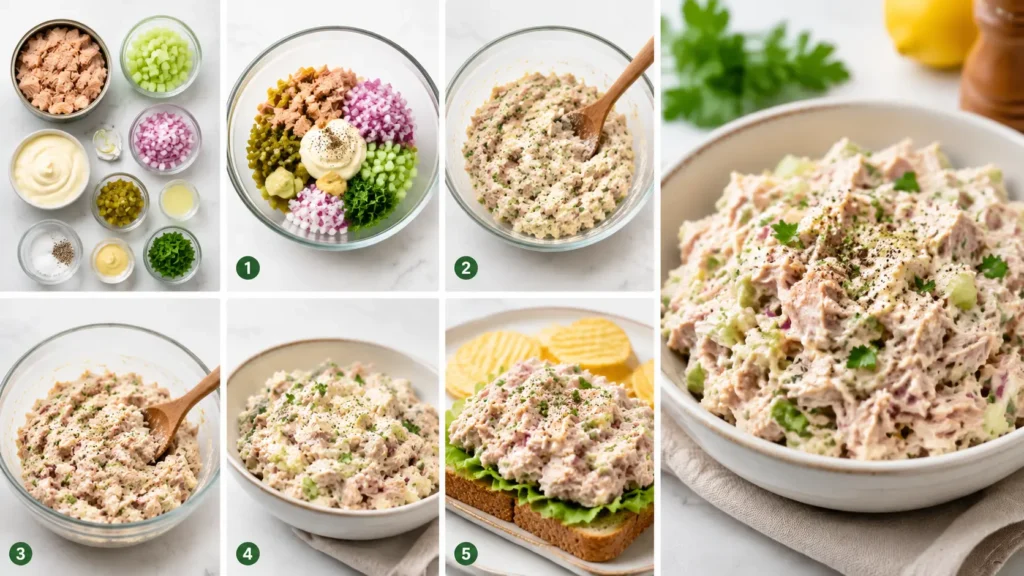
The biggest mistake people make with a tuna salad recipe is rushing the preparation. Proper draining, balanced seasoning, and resting time completely change the final texture.
If you want chunky tuna salad, use a fork gently to separate the tuna flakes. For a smoother deli-style tuna salad, lightly mash the tuna with the back of the fork while mixing. A potato masher creates a more spreadable texture, while a fork keeps the flakes larger and more defined.
Step-by-Step Instructions
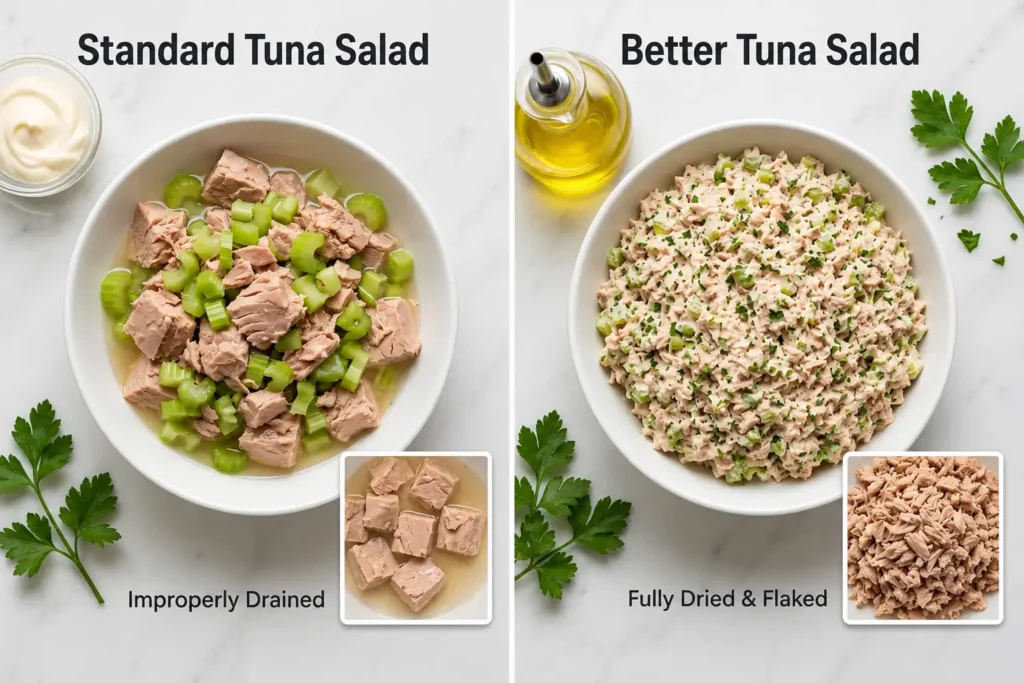
- Drain the tuna thoroughly using the can lid to press out excess liquid. This prevents watery tuna salad later.
- Transfer the drained tuna into a medium-sized mixing bowl and gently flake the tuna apart with a fork.
- In a separate small bowl, whisk mayonnaise, lemon juice, Dijon mustard, garlic, salt, and black pepper until smooth.
- Add celery, red onion, chopped dill pickles, fresh dill, and parsley to the tuna.
- Pour the dressing over the tuna pieces and fold everything together gently until evenly coated.
- Taste the tuna salad seasoning and adjust with additional lemon juice or salt if needed.
- Cover and chill for at least 30 minutes before serving for the best flavor bloom.
Why Tuna Salad Gets Soggy and How to Prevent It
Most people think mayonnaise causes watery tuna salad, but the real problem is moisture from vegetables. Salt naturally pulls water out of celery and onions while the salad sits in the refrigerator.
Pro Tips for Moisture Control
- Drain the tuna until it forms a compacted dry disk before mixing.
- Pat chopped celery dry with paper towels.
- Toss onions and celery with a tiny drizzle of olive oil first to create a moisture barrier.
- Add pickles just before serving if meal prepping for several days.
- Store the dressing separately when possible for maximum crunch factor longevity.
This small trick changes everything for tuna salad meal prep.
Wait Before Serving Because Flavor Bloom Time Matters
Freshly mixed tuna salad tastes good, but after 30 minutes in the refrigerator, it tastes dramatically better. During that resting time, the salt penetrates the protein, the lemon juice softens the sharpness of the onion, and the herbs blend into the creamy dressing.
That short resting period creates a more balanced tuna salad richness and deeper overall flavor.
Pro Tip That Makes Tuna Salad Taste Like a Deli Favorite
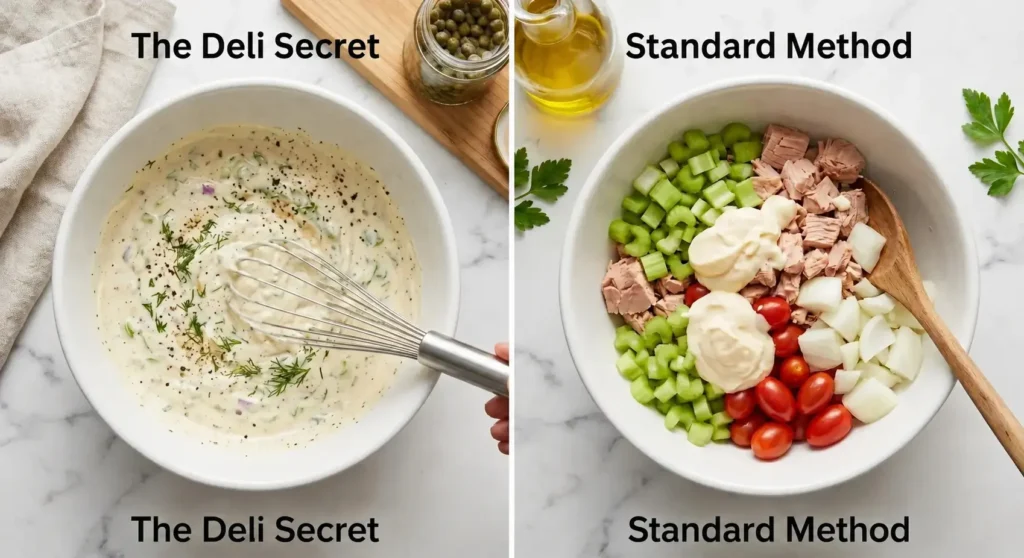
One advanced trick I learned after years of making tuna salad at home is to season the dressing before adding the tuna. When the lemon juice, salt, black pepper, and mayonnaise are mixed first, the seasoning distributes more evenly throughout the salad.
It may seem small, but this technique gives the tuna salad a smoother flavor without random bites that taste too salty or bland.
Common Tuna Salad Mistakes and Why They Ruin the Texture
Using poor technique can turn a fresh tuna salad recipe into a heavy, soggy mess surprisingly fast.
Too much mayonnaise overwhelms the clean tuna flavor and creates soup-like consistency. Poorly drained tuna releases water later and weakens the dressing. Large onion chunks create overpowering bites that dominate the seafood pairing.
Important Tuna Salad Tips
- Always drain canned tuna extremely well
- Use fresh lemon juice instead of bottled juice
- Finely chop crunchy vegetables for better texture
- Let the salad chill before serving
- Add salt gradually because pickles already contain sodium
How to Fix Tuna Salad if You Added Too Much Mayo
If your tuna salad becomes too creamy, add:
- More drained tuna
- Extra chopped celery
- Hard-boiled eggs
- Fresh herbs
- Additional dill pickles
These ingredients rebalance the texture quickly.
Healthy Swaps and Tuna Salad Variations That Actually Work
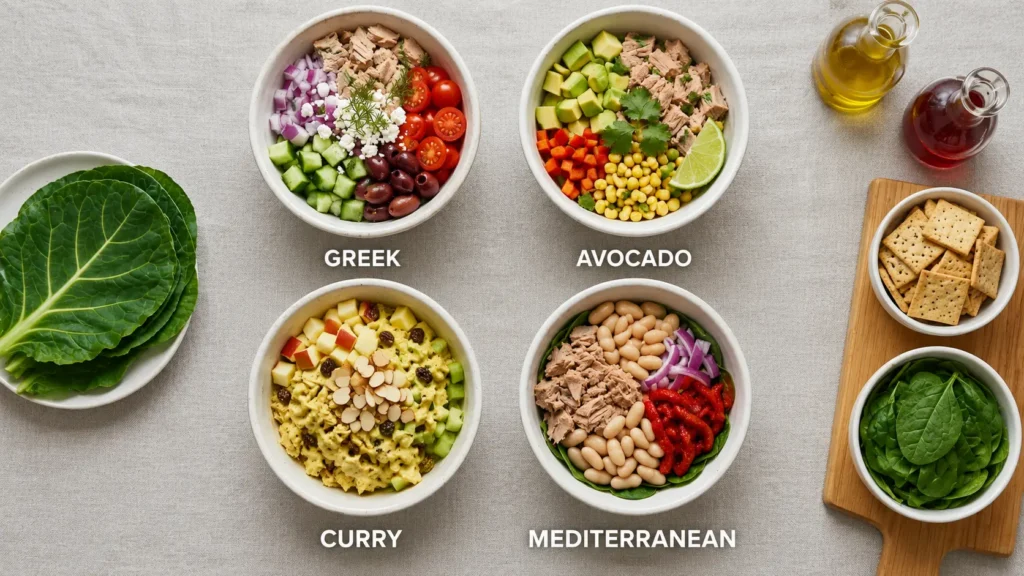
A customizable tuna salad can easily match different diets and flavor preferences without ruining the texture.
Mayo Alternative Ratio Guide
- Replace half the mayonnaise with Greek yogurt for a lighter creamy salad.
- Use mashed avocado at a 1:1 ratio for healthy fats and creamy consistency.
- Substitute tahini at a 3:1 ratio with mayonnaise because tahini is thicker and more intense.
- Mix olive oil and Dijon mustard for a delicious no-mayo option.
Regional Add-In Ideas
- Southern style: chopped hard-boiled eggs and sweet pickle relish
- Northeastern style: extra fresh dill and dill pickles
- Mediterranean style: capers, parsley, olive oil, and lemon juice
- Sweet-savory style: diced apples, raisins, and chopped almonds
- Spiced up tuna salad: curry powder with Greek yogurt
Best Veggies for 5-Day Meal Prep Tuna Salad
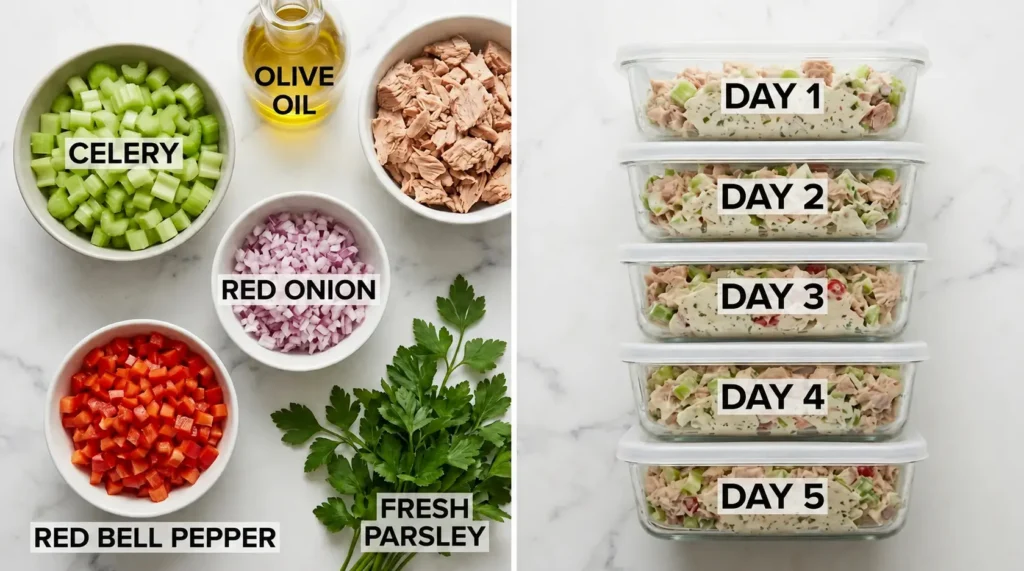
Not every vegetable keeps its crunchy texture after refrigeration. Celery works well for about three days, but water chestnuts stay crisp much longer. Finely sliced green onions soften faster than chopped celery, while carrots hold their texture surprisingly well.
For meal prep, I usually combine celery with water chestnuts because the crunch factor lasts longer without becoming watery.
My Experience Making This Tuna Salad Recipe at Home
The first time I made homemade tuna salad, I added too much mayonnaise because I wanted it extra creamy. It looked great at first, but after an hour in the fridge, the salad became heavy and almost soupy.
What changed everything was learning how important draining the tuna properly really is. I also realized that letting the salad rest before eating gives the flavors time to blend together naturally. Now I always make tuna salad at least 30 minutes ahead.
One small trick I still use is adding a little extra lemon juice right before serving. It wakes up the flavor and makes leftovers taste fresh again.
Why Tuna Salad Continues to Be a Reliable High-Protein Meal
A good tuna salad recipe is more than just convenient. It’s filling, versatile, and easy to adapt for different meals throughout the week.
Because canned tuna is naturally high in protein and relatively low in calories, tuna salad often works well for balanced lunches and light dinners. Fresh vegetables also add texture and freshness without much effort.
Benefits of Tuna Salad
- High-protein meal for quick lunches
- Easy meal prep option
- Uses affordable pantry ingredients
- Customizable for different diets
- Works as sandwiches, wraps, salads, or snacks
- Delicious both cold and warm in tuna melts
Helpful Background About Tuna Salad and American Deli Culture
Classic tuna salad became popular in American cuisine because it transformed affordable canned seafood into a satisfying lunch entrée. Deli counters helped popularize creamy tuna salad sandwiches served on whole-wheat bread with lettuce and tomato.
Over time, different regions added their own touches. Some families prefer sweet pickle relish, while others insist on dill-heavy tuna salad with fresh herbs and lemon juice. That flexibility is one reason tuna salad comfort food remains so timeless.
Tuna Salad Safety FAQ and Mercury Guidelines
According to standard FDA and EPA guidance, most healthy adults can safely enjoy moderate amounts of tuna weekly as part of a balanced diet. Albacore tuna contains more mercury than skipjack tuna, so portion frequency matters.
| Tuna Type | Suggested Moderate Intake |
| Skipjack / Light Tuna | 2–3 servings weekly |
| Albacore Tuna | About 1 serving weekly |
| Children & Pregnant Individuals | Follow physician and FDA guidance |
Storage, Freezing, and Reheating Best Practices
Tuna salad should always be stored in the refrigerator inside an airtight container. Because it contains seafood and mayonnaise, avoid leaving it at room temperature for long periods.
Storage Guidelines
- Refrigerator: 3–4 days
- Freezer: Not recommended
- Meal prep containers: Best within 2–3 days for maximum crunch
If the tuna salad seems dull after refrigeration, add a squeeze of fresh lemon juice before serving to refresh the flavor.
Quick Cleanup Tips for Tuna Smell and Plastic Containers
To remove tuna smell from your hands, rub them with lemon juice and a little salt before washing. For plastic containers, rinse immediately and soak with baking soda and warm water to reduce lingering seafood odors.
This quick cleanup trick works especially well for meal prep containers.
Real Questions People Ask About Tuna Salad
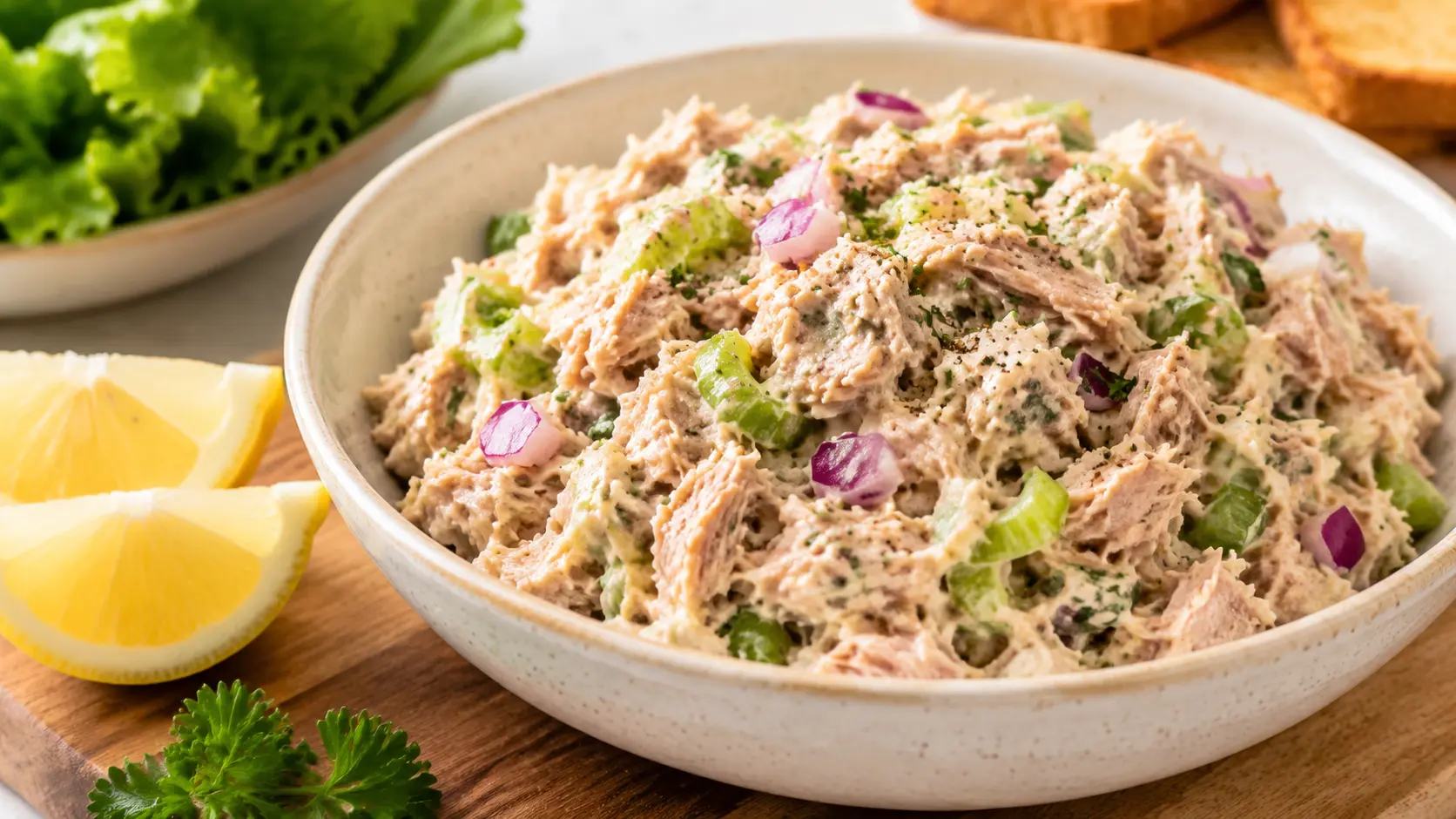

Tuna Salad Recipe
Ingredients
Equipment
Method
- Drain the canned tuna very well using the can lid to press out excess liquid until the tuna looks dry and flaky.
- Transfer the tuna to a medium-sized mixing bowl and gently break it apart with a fork for your preferred texture.
- In a small bowl, whisk together the mayonnaise, Dijon mustard, lemon juice, minced garlic, salt, and black pepper until smooth and creamy.
- Add the chopped celery, red onion, dill pickles, fresh dill, and parsley to the tuna bowl.
- Pour the dressing over the tuna mixture and gently fold everything together until evenly coated without overmixing.
- Taste the tuna salad and adjust with extra lemon juice, salt, or pepper if needed for brightness and balance.
- Cover and refrigerate the tuna salad for at least 30 minutes so the flavors can blend and the texture can firm up slightly.
- Serve chilled on sandwiches, lettuce wraps, crackers, toast, or over salad greens.
Notes
Final Thoughts on Making the Best Tuna Salad Recipe at Home
A truly great tuna salad recipe doesn’t need complicated ingredients. The secret is balancing creamy dressing, crunchy vegetables, bright lemon juice, and properly drained tuna. Once you learn those basics, you can customize it endlessly for sandwiches, lettuce wraps, tuna melts, or simple healthy lunches.
If you enjoy practical homemade meals made with pantry ingredients, save this tuna salad recipe for later and explore more related recipes on Cookiva Recipe. Small adjustments in texture, seasoning, and freshness can completely transform something as simple as canned tuna into a meal you’ll actually crave again and again.