Chicken Paella Recipe: 7 Easy Secrets for Perfect Rice

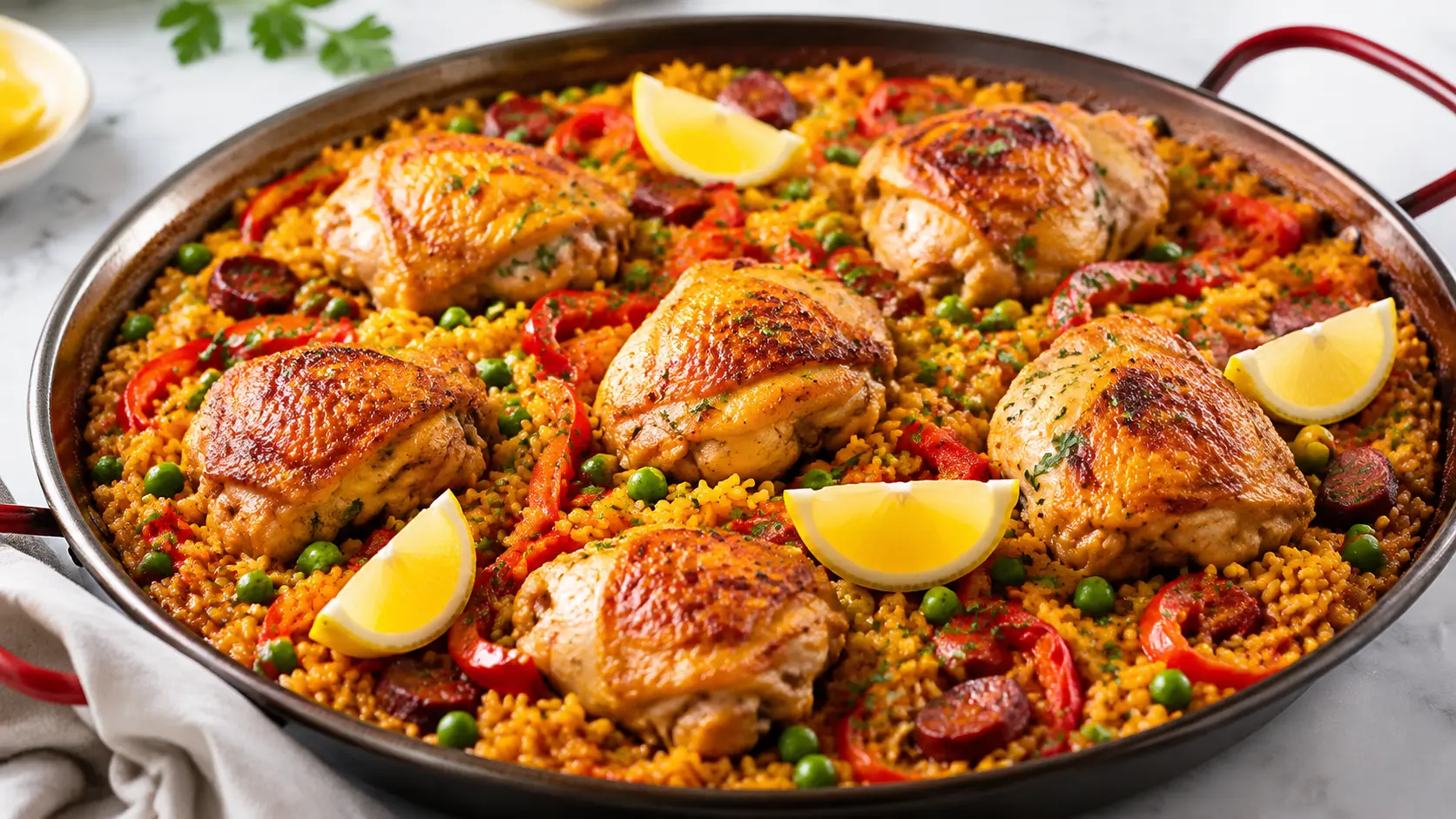
There’s something special about carrying a hot paella pan straight to the table while everyone waits for that first scoop of golden rice. A good Chicken Paella Recipe is not just about saffron or crispy rice at the bottom of the pan. It’s about slow conversation, the smell of smoked paprika filling the kitchen, and the sound of chicken sizzling while the broth reduces into deeply flavorful rice.
This version is inspired by the kind of easy family chicken paella often served during long Sunday lunches in Spain. It’s practical enough for homemade meals during the week, but still impressive enough for guests. The juicy chicken thighs, aromatic herbs, sweet red bell pepper, and smoky saffron-infused rice create layers of flavor that taste like they took all day, even though most of the cooking is wonderfully hands-off.
The best part is that this recipe works for real home kitchens. You do not need a professional paella burner or an outdoor fire pit to make a flavour-packed paella with crispy socarrat. You just need patience, the right rice, and a few simple techniques that make a huge difference.
What Makes Chicken Paella Recipe Different From Other Rice Dishes
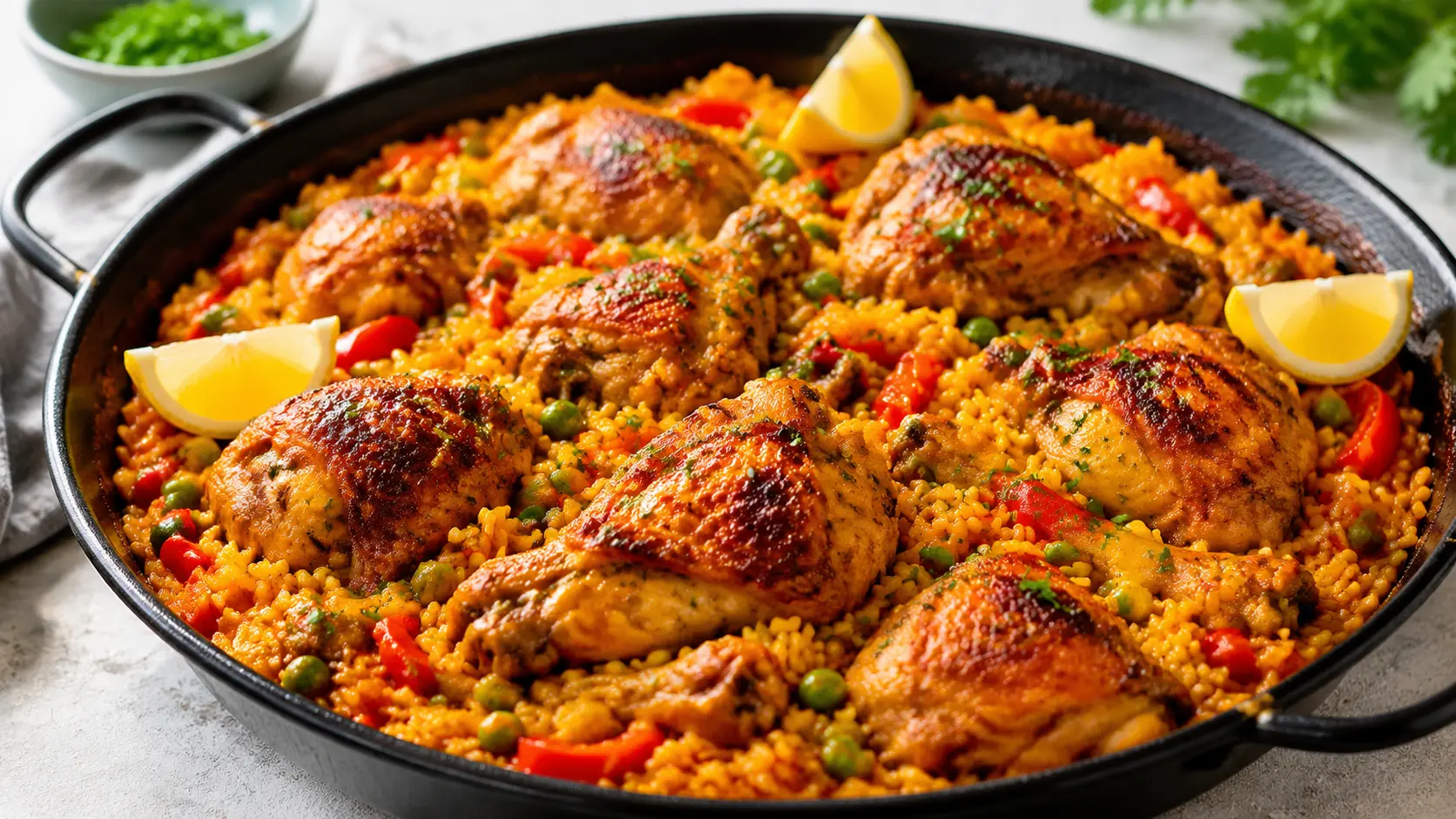
Chicken paella, or Paella de Pollo, is a traditional Spanish rice dish cooked in a wide shallow pan where the rice absorbs broth, olive oil, saffron, and the flavor from browned meat. Unlike risotto, the rice is not stirred continuously. Instead, the grains cook undisturbed so they stay separate and develop the famous crispy crust called socarrat.
A classic paella usually combines rice, stock, olive oil, vegetables, and proteins like chicken, seafood, rabbit, or chorizo depending on the region and family traditions. This chicken flavor only version is especially popular because it is affordable, filling, and easy to prepare in one pan.
In many Spanish homes, paella is treated as a social meal rather than a rushed dinner. It is often served directly from the pan with lemon wedges, a bowl of olives, and maybe a glass of wine or pan con tomate on the side.
Why This Chicken Paella Recipe Works Better for Home Cooks
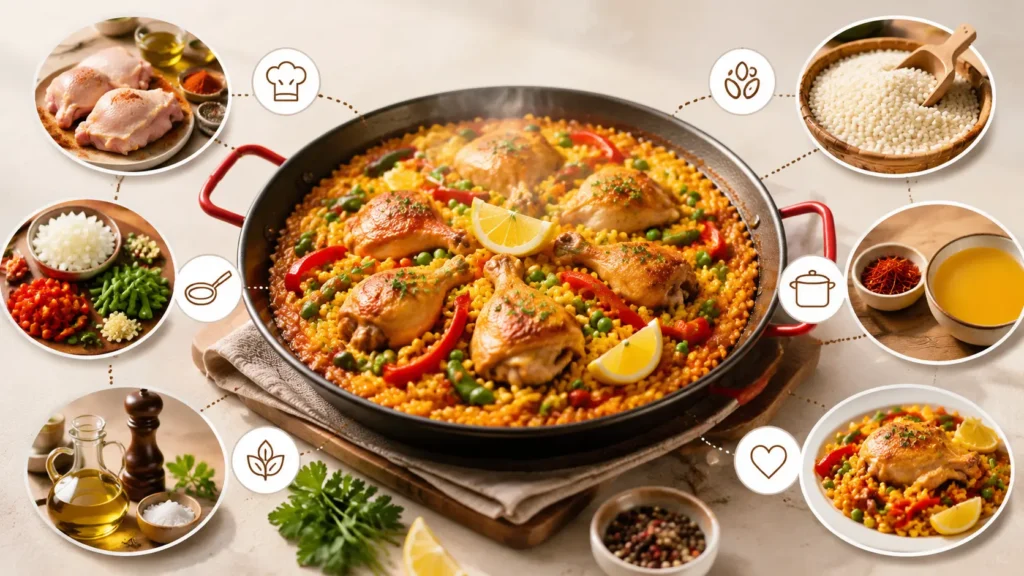
Most people make this mistake: they try to rush paella like a quick skillet dinner. Proper paella needs time for the rice to absorb flavor and for the bottom layer to slowly crisp.
This recipe focuses on practical techniques that work on a standard stove. The juicy chicken thighs stay tender because they contain more fat and connective tissue than chicken breast, which helps prevent that rubbery texture many recipes end up with after simmering.
The rice itself becomes deeply savory from browned chicken, tomato purée, smoked paprika, garlic, onion, and chicken stock. The final result is rich without feeling heavy, especially when paired with lemon juice and fresh parsley.
Realistic Cooking Timeline for Better Results
| Step | Time |
| Ingredient prep | 15 minutes |
| Browning chicken | 10 minutes |
| Building the flavor base | 10 minutes |
| Simmering the rice | 20–25 minutes |
| Resting time | 5 minutes |
| Total realistic time | About 1 hour |
| Recipe Details | Information |
| Prep Time | 15 minutes |
| Cook Time | 45 minutes |
| Total Time | 1 hour |
| Servings | 4 |
| Difficulty | Medium |
| Cuisine | Spanish |
| Calories | Moderate comfort meal |
How the Right Rice Changes the Entire Paella
Rice is the heart of paella, and choosing the wrong type is the fastest way to end up with soggy rice or something closer to Spanish risotto.
Bomba rice and Calasparra rice are traditional short round rice varieties because they absorb more liquid while staying firm. Long-grain rice works in a pinch, but the texture will be lighter and less creamy inside. Arborio rice absorbs well but releases too much starch, making the paella sticky.
Rice Comparison Guide for Better Texture
| Rice Type | Liquid Ratio | Final Texture |
| Bomba rice | 1:3 | Firm grains with deep flavor absorption |
| Calasparra rice | 1:2.5 | Slightly chewy with excellent structure |
| Long-grain rice | 1:2 | Separate grains but less traditional |
| Arborio rice | 1:3 | Creamy and softer, closer to risotto |
Bomba rice absorbs almost three times its volume in liquid, which is why the broth matters so much in paella. This small detail changes everything.
Ingredients That Build Authentic Spanish Flavor
A great Chicken Paella Recipe relies on layering flavor slowly. Every ingredient contributes something important, from smoky paprika to aromatic garlic and saffron floral flavor.
Ingredients for 4 Servings
- 4 chicken thighs, bone-in skin-on preferred
- 2 tablespoons olive oil
- 1 onion, diced
- 1 red bell pepper, sliced
- 1/2 pound sliced green beans or flat beans
- 4 garlic cloves, sliced
- 1 cup canned crushed tomatoes
- 1 teaspoon smoked paprika
- 1/4 teaspoon saffron threads
- 1 1/2 cups bomba rice or paella rice
- 3 cups chicken stock
- 100g frozen peas
- Salt and black pepper
- 1 bay leaf
- 1 rosemary sprig
- Fresh flat-leaf parsley
- Lemon wedges for serving
You can add cooked prawns, chorizo, calamari, or artichoke hearts if you prefer a paella mixta style meal. However, traditional Spanish family recipes often keep the focus on chicken flavor only.
Good Better Best Ingredient Shopping Guide
| Ingredient | Good | Better | Best |
| Saffron substitute | Turmeric + smoked paprika | Spanish yellow food dye | Real saffron threads |
| Rice | Long-grain rice | Arborio | Bomba or Calasparra |
| Stock | Store bought | Homemade stock | Homemade roasted chicken stock |
| Paprika | Standard smoked paprika | Spanish smoked paprika | La Vera smoked paprika |
Why Chicken Thighs Stay Juicy While Chicken Breast Turns Dry
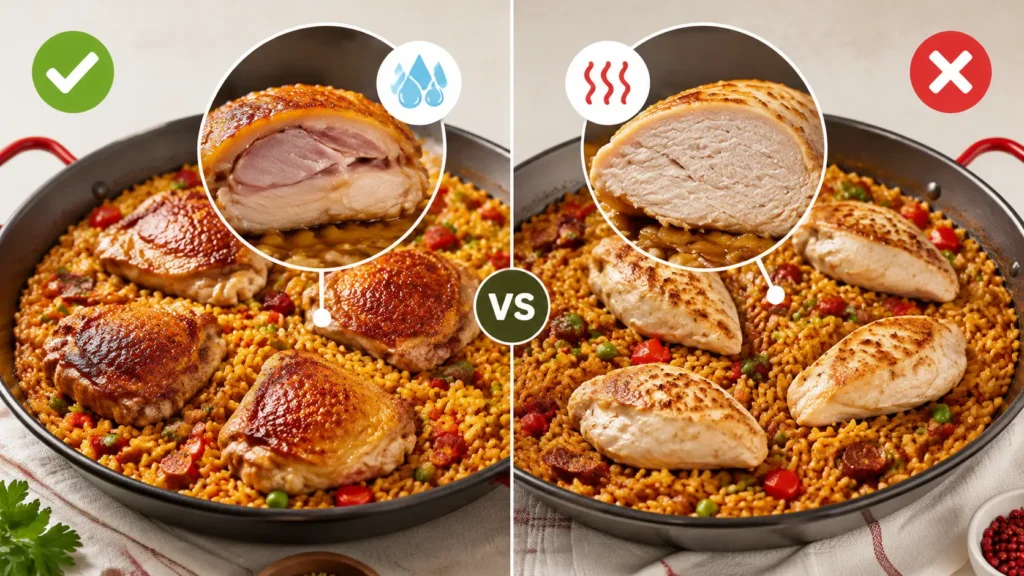
Chicken thighs are one of the secrets behind truly satisfying paella. They contain more fat and connective tissue than chicken breast, so they stay tender during the simmering process.
When the rice cooks for 20 minutes or more, chicken breast often tightens and becomes rubbery. Bone-in skin-on chicken thighs slowly release flavor into the broth while staying juicy inside. The browned skin also adds depth to the fondo, the rich flavor base at the bottom of the pan.
If you only have skinless boneless thighs, they still work beautifully. Just reduce the simmer time slightly.
What Equipment Helps You Cook Paella Evenly on a Standard Stove
Traditional paella pans are wide, which creates a challenge on standard kitchen burners because the center heats faster than the edges.
A large heavy-bottomed pan or paella pan works best. If your burner is smaller than the pan, rotate the pan slightly every few minutes during simmering. This simple rotating pan technique helps distribute heat more evenly and prevents raw rice around the edges.
If you cook paella often, a paella burner for outdoor cooking is worth considering. But for most home cooks, a regular stove works perfectly with patience.
Never use a gas burner indoors unless it includes proper safety controls.
How to Make Chicken Paella Recipe the Right Way
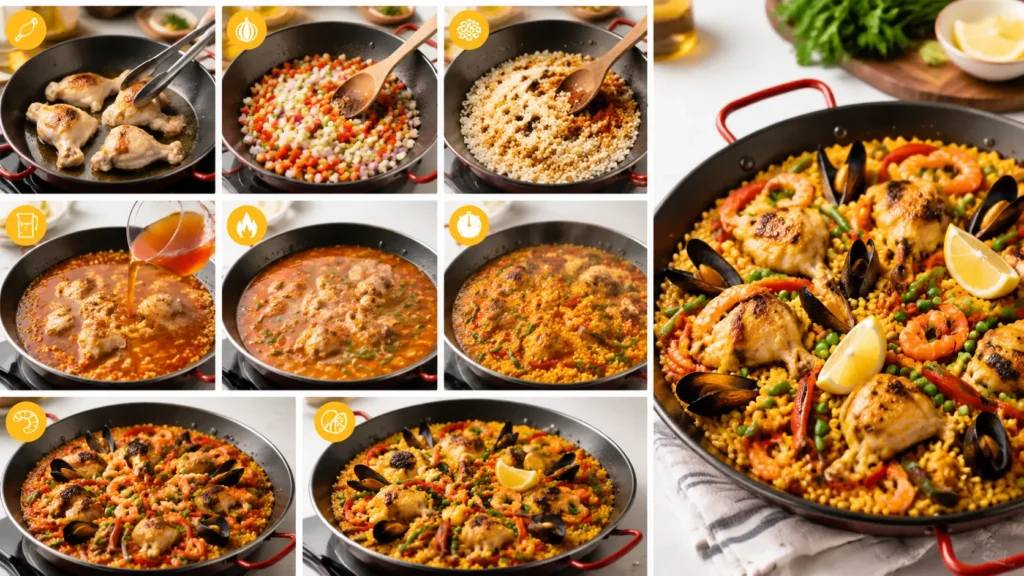
The key to excellent paella is building flavor gradually while resisting the urge to stir constantly. Once the rice goes in, the structure of the dish depends on keeping the grains mostly undisturbed.
The process starts by browning the chicken until deeply golden brown. Those browned bits left behind in the pan become part of the flavor base. Then the vegetables, garlic, tomato, and spices cook down into a concentrated mixture before the stock and rice are added.
Step-by-Step Instructions
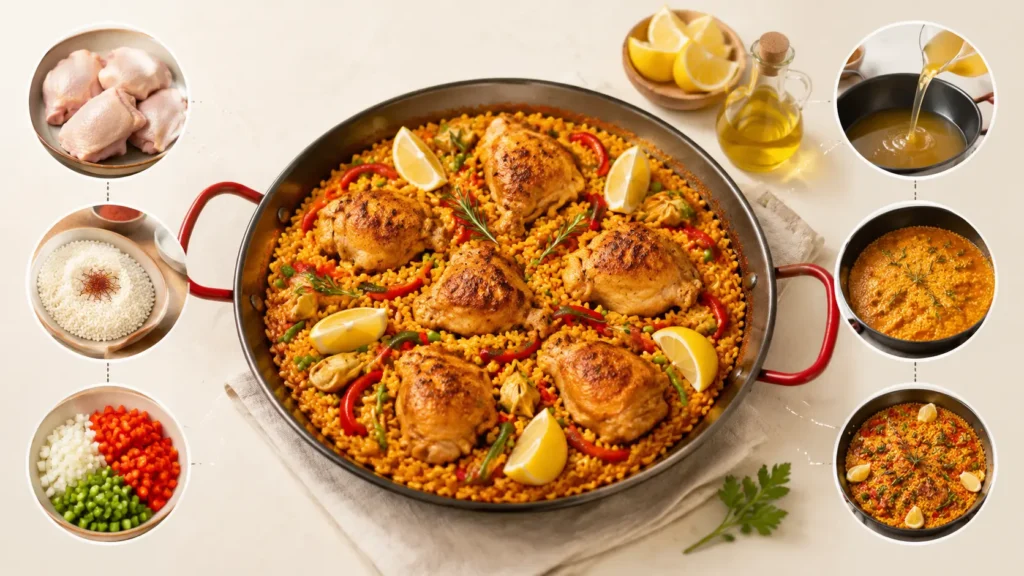
- Heat olive oil in a paella pan over medium-high heat. Season the chicken thighs with salt and black pepper, then brown them skin side down for about 8 minutes until crispy golden brown.
- Flip the chicken and cook the second side for 3 minutes. Remove to a plate while keeping the accumulated juices.
- Add onion, red bell pepper, and green beans to the pan. Sauté vegetables for about 5 minutes until softened and lightly caramelized.
- Add sliced garlic and cook briefly until fragrant. Stir in crushed tomatoes and smoked paprika. Let the tomato mixture cook until the juice evaporates and the mixture darkens slightly.
- Pour in chicken stock and bring everything to a simmer. Add saffron threads and bay leaf.
- Stir in the bomba rice and spread rice evenly across the pan using a wooden spoon or spatula. Return the chicken to the pan.
Pro Tip: Do not stir the rice after this point. Stirring releases starch from the grains, which creates sticky rice instead of separate flavorful grains. Paella should feel light and structured, not creamy like risotto.
- Simmer over medium-low heat for 10 minutes. Add frozen peas and continue cooking another 10 to 15 minutes.
- Listen carefully near the end of cooking. The socarrat begins forming when the sizzling sound becomes sharper and slightly crackly.
How to Know the Socarrat Is Forming Without Burning It
- The sound changes from bubbling to a sharper sizzling sound.
- You will smell toasted rice rather than wet broth.
- A narrow spatula should meet slight resistance underneath.
- If the smell turns bitter or smoky, reduce the heat immediately.
If needed, increase the heat for 90 seconds to 2 minutes at the very end to finish the crispy rice at the bottom.
- Remove from heat and rest 5 minutes under aluminum foil or a clean kitchen towel before serving.
- Garnish with parsley and lemon wedges.
One Small Technique That Makes the Flavor Taste Restaurant-Level
Most beginner recipes rush the tomato step, but allowing the tomato purée and garlic to cook until slightly darker creates a much deeper flavor base. I learned this after making several bland paellas that tasted watery even with good stock.
When the tomato juice evaporates and the mixture becomes thicker and slightly jammy, the sweetness concentrates and balances the smoky paprika beautifully. It only takes a few extra minutes, but the difference is huge.
Common Chicken Paella Mistakes and How to Avoid Them
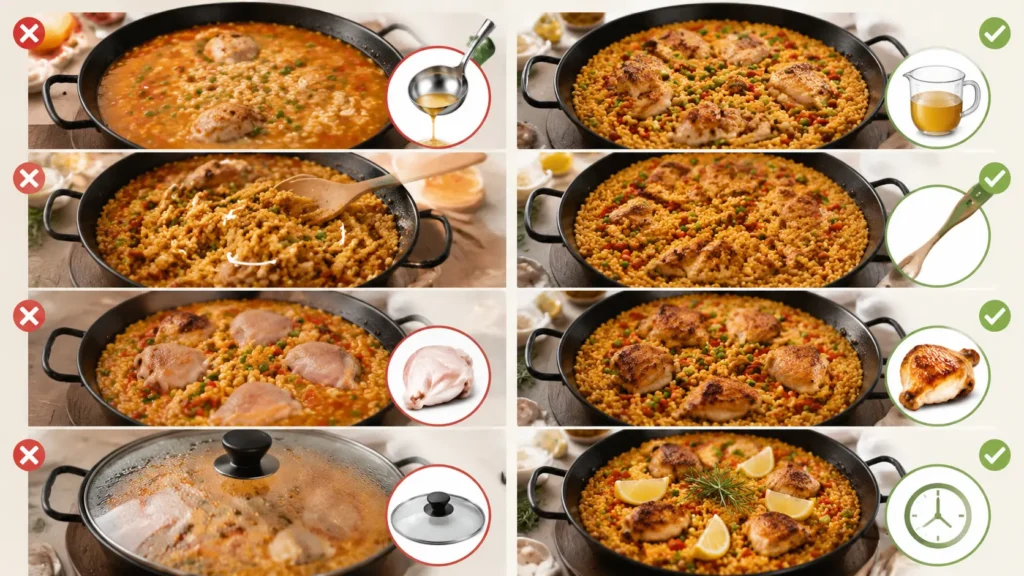
One of the biggest problems with homemade paella is uneven cooking. Another is stirring too much because people are used to making risotto.
Using too much liquid can also destroy the texture, especially with long-grain rice or Arborio. Paella should feel moist but never soupy.
Key Mistakes to Avoid
- Do not stir constantly after adding rice
- Avoid overcrowding the pan with too much seafood and meat
- Never skip browning the chicken first
- Do not cook over high heat the entire time
- Taste the broth before adding the rice
- Let the paella rest before serving
Practical Variations and Ingredient Swaps That Actually Work
Paella has always been flexible depending on what families had available. Even in Spain, recipes change from one household to another.
Easy Substitutions for Hard-to-Find Ingredients
| Traditional Ingredient | Easy Substitute |
| Bomba rice | Long-grain rice |
| Flat beans | Regular green beans |
| Piquillo peppers | Red bell pepper |
| Saffron | Turmeric + smoked paprika |
| Rabbit | Chicken thighs |
| Spanish chorizo | Smoked sausage |
Other Variations Worth Trying
- Add prawns and calamari for seafood paella flavor
- Stir in chopped cooked spinach for extra vegetables
- Use white wine for added acidity
- Add artichoke hearts near the end
- Include clams for a paella mixta version
If you enjoy this style of cooking, related recipes like seafood paella recipe, fideuà, or pan con tomate pair beautifully with the same Spanish flavours.
My Experience Making This Recipe at Home
The first time I made paella, I treated it like fried rice and stirred it constantly. The flavor was good, but the rice turned soft and sticky with no socarrat at all.
What finally changed the result was lowering the heat and trusting the simmer. I also started using chicken thighs instead of breast meat, which made the texture dramatically better.
One small trick I use now is rotating the pan every few minutes because my stove heats unevenly. That simple habit keeps the edges from staying undercooked while the center overcooks.
Why Chicken Paella Often Feels More Balanced Than Heavy
Paella is filling, but it can also be surprisingly balanced depending on how you build it. The combination of protein, rice, olive oil, and vegetables creates a satisfying one-pan dinner without needing rich cream sauces.
Adding more green beans, peas, bell peppers, or artichokes can lighten the overall feel while increasing fiber and nutritional density.
Simple Ways to Make It Lighter
- Add extra vegetables like flat beans or spinach
- Use skinless boneless chicken thighs
- Reduce added chorizo
- Serve with a fresh cucumber tomato salad
- Pair with fruit salad instead of heavy dessert
Why Paella Became a Sunday Tradition in Spain
Paella is deeply connected to Spanish social cooking traditions. It is often cooked outdoors, shared directly from the pan, and eaten slowly with family or friends.
Traditionally, people gather around the pan and eat outward from their section using a wooden spoon. The dish encourages conversation because everyone waits together while the rice cooks.
That communal feeling is part of why paella remains such a beloved comfort food. It is not only about the recipe itself but also about the experience surrounding it.
Storage, Freezing, and Reheating Without Drying the Rice
Paella stores surprisingly well, especially chicken paella. The key is reheating gently so the rice does not dry out and the chicken stays tender.
Storage Times
- Refrigerator: Up to 3 days
- Freezer: Up to 2 months
- Reheat temperature: Until fully hot throughout
The Skillet Reheat Method
Add a splash of broth or water to a skillet over medium-low heat. Cover loosely and warm slowly for several minutes. This keeps the rice moist while helping preserve the texture.
The Microwave Method
Place the paella in a microwave-safe bowl with a spoonful of water. Cover lightly and heat in short intervals while stirring gently once or twice.
FAQ – Real Questions Home Cooks Ask About Chicken Paella
Chicken Paella Recipe
Ingredients
Equipment
Method
- Heat olive oil in a paella pan over medium-high heat. Season the chicken thighs with salt and black pepper, then cook skin side down until deeply golden and crispy, about 8 minutes.
- Flip the chicken and cook the second side for 3 minutes until lightly browned. Transfer to a plate while keeping the juices.
- Add onion, red bell pepper, and green beans to the pan. Sauté for about 5 minutes until softened and lightly caramelized.
- Stir in the sliced garlic and cook for 1 minute until fragrant. Add crushed tomatoes and smoked paprika, then cook until the tomato mixture thickens slightly and darkens in color.
- Pour in the chicken stock and add saffron threads and bay leaf. Bring the broth to a gentle simmer.
- Stir in the bomba rice and spread it evenly across the pan using a wooden spoon. Return the chicken thighs to the pan with any accumulated juices.
- Reduce the heat to medium-low and simmer without stirring for 10 minutes. Add the frozen peas and rosemary sprig, then continue cooking for another 10 to 15 minutes until the rice is tender.
- Listen for a sharper sizzling sound near the end of cooking to check for socarrat forming underneath. If needed, increase the heat briefly for 1 to 2 minutes to create the crispy crust.
- Remove the pan from the heat and let the paella rest uncovered for 5 minutes. Garnish with parsley and serve with lemon wedges.
Why This Chicken Paella Recipe Deserves a Spot in Your Rotation
A truly good Chicken Paella Recipe is about more than rice and chicken. It is about patience, shared meals, and learning how small techniques create huge differences in flavor and texture.
Once you understand the rice, the no-stir rule, and how to build the flavor base slowly, paella becomes much less intimidating. It turns into the kind of recipe you make for Sunday lunch, casual gatherings, or even quiet evenings when you want comfort food with bold Spanish flavor.
Save this recipe for later, serve it straight from the pan, and do not forget the lemon wedges. And if you enjoy flavour-packed Spanish cooking, explore more related recipes on Cookiva Recipe including seafood paella, pan con tomate, and creamy Salmorejo.