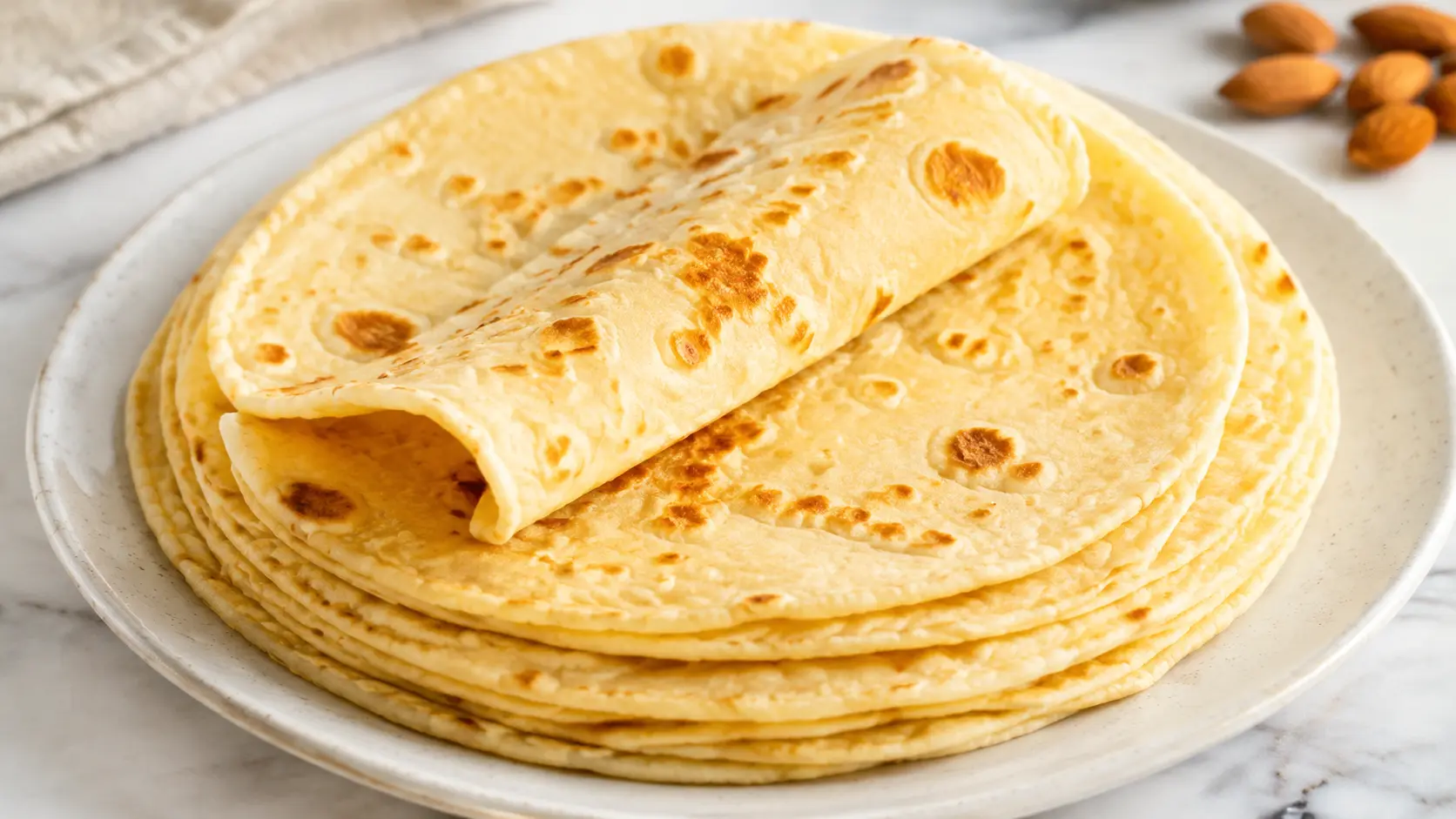
Almond flour tortilla recipe 5 Secrets for Soft Wraps

There’s something frustrating about spending good money on almond flour only to end up with tortillas that split the second you fold them. I went through several batches before finally landing on a method that actually works consistently. Some doughs were too dry and crumbly, while others cooked beautifully on the outside but stayed gummy in the center. Once I understood how almond flour behaves differently from wheat flour, everything changed.
This almond flour tortilla recipe has become one of the most practical recipes in my kitchen because it solves all of those common problems. The tortillas stay soft and pliable, they bend without tearing, and they hold fillings surprisingly well for a grain-free recipe. They also happen to be gluten-free, keto-friendly, dairy-free, and naturally egg-free, which makes them useful for families managing multiple dietary restrictions.
The flavor is mild with a subtle toastiness from the almond flour, and the texture lands somewhere between a traditional flour tortilla and a soft keto flatbread. They work beautifully for tacos, wraps, quesadillas, meal prep lunches, and even crispy tortilla chips.
What Is an Almond Flour Tortilla Recipe and Why Do People Love It?
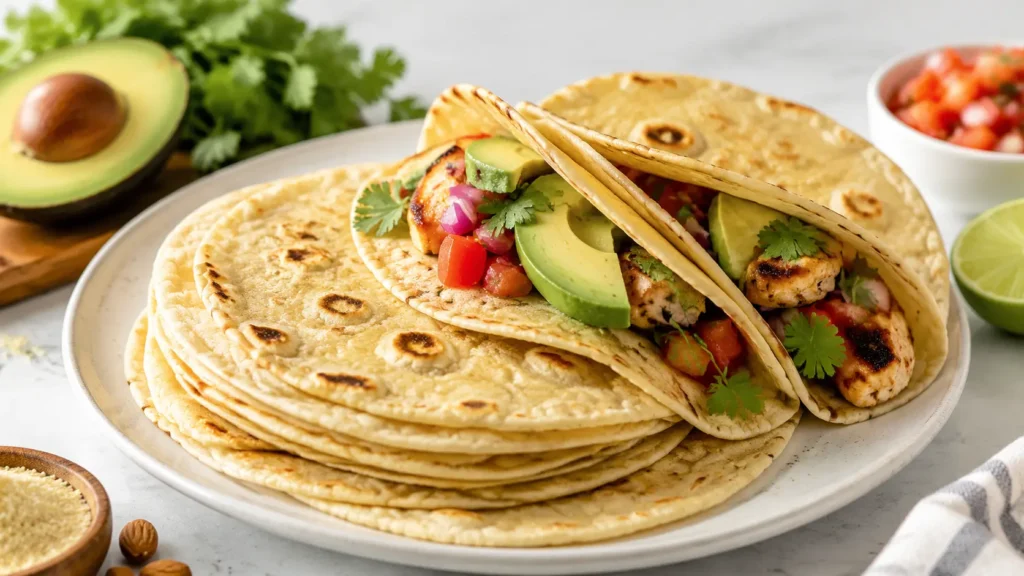
An almond flour tortilla recipe is a grain-free alternative to traditional flour tortillas made with finely ground almond flour instead of wheat flour. Because almond flour contains healthy fats and protein rather than gluten-forming starches, the dough behaves differently and needs help from binders like psyllium husk powder or xanthan gum to stay flexible.
These tortillas are commonly used for low-carb wraps, tacos, burritos, quesadillas, and quick lunches. Many people also use them as keto flatbread or a lighter substitute for sandwich bread. Since they are naturally gluten-free and dairy-free, they fit into several eating styles without feeling overly restrictive.
One reason these tortillas have become so popular is that they offer a softer texture than many store-bought keto tortillas. When made correctly, they stay tender even after cooling and can fold around fillings without cracking apart.
Why This Almond Flour Tortilla Recipe Works Better Than Most
The first thing you notice about these almond flour tortillas is the texture. They are soft, flexible, and sturdy enough to hold fillings without turning into crumbs halfway through lunch. The almond flour gives them a mild nutty flavor, while the coconut flour helps absorb moisture so the tortillas don’t feel greasy or heavy.
They also work especially well for meal prep because they reheat better than many grain-free tortillas. Most people make this mistake: they store tortillas while still warm, which traps steam and creates a slimy texture by the next morning. Cooling them completely before storing changes everything.
Another reason I keep making this recipe is cost. Store-bought keto tortillas can get expensive fast, especially brands made with almond flour.
| Homemade Almond Flour Tortillas | Store-Bought Keto Tortillas |
| Around $0.45–$0.70 per tortilla | Often $1–$2 per tortilla |
| Adjustable thickness | Fixed texture |
| No preservatives | Often includes gums and additives |
| Fresh flavor | Can taste dry or stale |
Quick Recipe Overview
| Detail | Information |
| Prep Time | 20 minutes |
| Cook Time | 10 minutes |
| Total Time | 30 minutes |
| Servings | 8 tortillas |
| Difficulty | Easy to Moderate |
| Cuisine | Mexican-Inspired |
| Texture | Soft and pliable |
| Best For | Wraps, tacos, quesadillas |
| Calories | About 190 per tortilla |
Why Super-Fine Almond Flour Matters More Than You Think
Not all almond flour behaves the same way. This is one of the biggest reasons recipes fail.
Super-fine blanched almond flour creates tortillas with a smoother texture and better elasticity. Almond meal, on the other hand, contains larger particles and almond skin, which leads to darker, grainier tortillas that crack more easily during rolling.
If your tortillas feel gritty or fragile, the flour is usually the culprit.
Best Options for This Recipe
- Super-fine blanched almond flour gives the softest texture
- Almond meal creates denser tortillas
- Homemade almond flour works if finely ground
- Sunflower seed flour works for a nut-free version
- Lupin flour can work in partial substitution for lower carbs
Using a digital kitchen scale also helps because almond flour compacts differently depending on humidity and storage.
Ingredients That Create Soft and Flexible Keto Tortillas
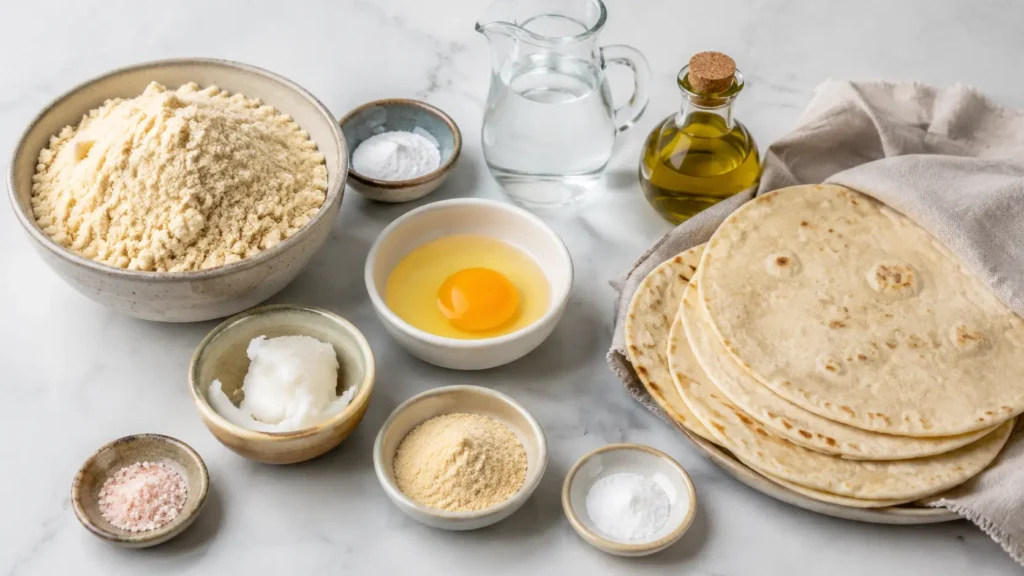
Every ingredient in this almond flour tortilla recipe has a specific job. Since there’s no gluten, the balance between moisture, fat, and binding matters much more than it does in wheat tortillas.
Main Ingredients
- 2 cups super-fine blanched almond flour
Creates structure, flavor, and softness - ¼ cup coconut flour
Absorbs excess moisture and prevents sogginess - 2.5 tablespoons whole psyllium husks or 1.5 tablespoons psyllium powder
Adds elasticity and flexibility - 1 teaspoon baking powder
Helps create a lighter texture - ½ teaspoon fine sea salt
Balances flavor - 1 tablespoon olive oil or vegetable oil
Adds pliability and prevents dryness - 1 cup warm water
Activates the binders and hydrates the dough
Substitution Guide for Allergies and Dietary Restrictions
| Ingredient | Best Substitute | Notes |
| Almond flour | Sunflower seed flour | Best nut-free option |
| Psyllium husk | Xanthan gum | Use less because it thickens quickly |
| Coconut flour | Small amount tapioca | Texture becomes softer |
| Olive oil | Canola oil | Neutral flavor |
| Psyllium powder | Whole psyllium husks | Slightly different texture |
Science Corner: Why Almond Flour Dough Usually Falls Apart
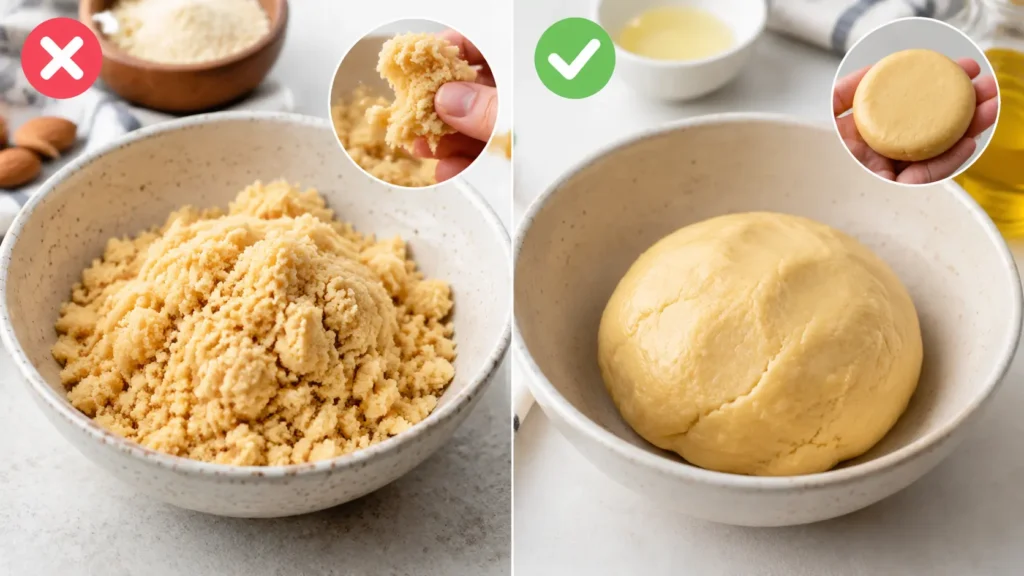
Traditional tortillas rely on gluten to create stretch and flexibility. Almond flour contains fat and protein, but no gluten network, so the dough naturally wants to crumble apart.
This is where psyllium husk or xanthan gum becomes important.
When warm water hits psyllium husk, it forms a gel-like structure called mucilage. That gel traps moisture and creates elasticity, which helps the tortilla bend instead of snap. If the water is too cold, the binder hydrates slowly and the dough stays fragile. If the dough rests for 5–10 minutes, the fibers fully absorb the moisture and become more flexible.
Think of it like building tiny elastic bridges between almond flour particles.
Simple diagram idea:
Almond flour particles + warm water + psyllium gel = flexible tortilla structure
The Best Equipment for Rolling Sticky Almond Flour Dough
You do not need fancy equipment, but the surface you roll on matters a lot because almond flour dough sticks easily.
Best Rolling Methods
- Parchment paper
The easiest and cleanest option - Plastic wrap
Good backup if parchment sticks - Silicone baking mat
Reusable but slightly trickier for transfer - Cut-open freezer bag or gallon zip bag
Excellent emergency substitute
Helpful Tools
- Rolling pin
- Non-stick skillet
- Cast iron skillet
- Spatula
- Kitchen towel
- Cooling rack
- Measuring cup
- Digital kitchen scale
If you make tortillas often, a tortilla press helps keep thickness consistent.
How to Make Almond Flour Tortilla Recipe the Right Way
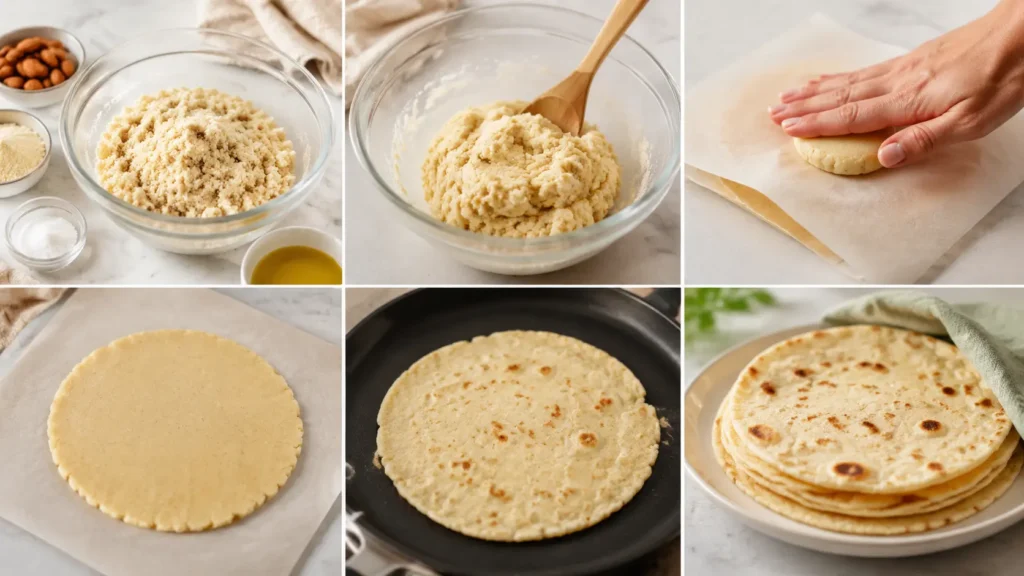
The biggest secret is controlling hydration and thickness. Too dry and the dough cracks. Too wet and the center turns gummy during cooking.
I like using a continuous-flow method for meal prep. While one tortilla cooks, I roll out the next. Once you get into rhythm, you can make a large batch surprisingly quickly.
1. Mix the Dry Ingredients Thoroughly
In a large mixing bowl, whisk together almond flour, coconut flour, psyllium husks, baking powder, and salt.
Make sure the binders distribute evenly. Clumps create weak spots that tear later.
2. Add Warm Water and Oil
Pour in the warm water and olive oil, then stir until a dough forms.
The dough may look loose at first, but within about 30 seconds the psyllium starts hydrating. Knead gently until smooth and slightly springy.
Let the dough rest for 5–10 minutes.
3. Roll the Dough to the Correct Thickness
Divide into 6–8 portions.
Place each ball between parchment paper and roll gently into a circle about 2mm thick. This is the sweet spot for pliability.
Too thick creates a pancake-like texture. Too thin makes peeling impossible.
Pro Tip for Perfect Thickness
A good visual cue is this: you should faintly see the shadow of your fingers through the dough when you lift it toward light.
4. Cook Slowly Instead of Aggressively
Heat a non-stick skillet or seasoned cast iron skillet over medium heat.
Cook each tortilla about 1–2 minutes per side until small golden spots appear. The smell should turn lightly toasted and nutty, not burnt.
If the outside browns too quickly while the center stays gummy, your heat is too high.
5. Steam Slightly After Cooking
Stack cooked tortillas under a clean kitchen towel.
That trapped warmth softens them naturally and improves flexibility.
Pro Tip That Makes Almond Flour Tortillas Stay Flexible Longer
Most beginner recipes skip this entirely: let the cooked tortillas cool on a metal cooling rack for two minutes before stacking them.
If they go directly into a container while steaming hot, trapped condensation creates sogginess and weak texture. A brief cooling period keeps the tortillas soft without becoming damp.
It sounds small, but this single step dramatically improves day-two texture.
Common Mistakes That Ruin Almond Flour Tortillas
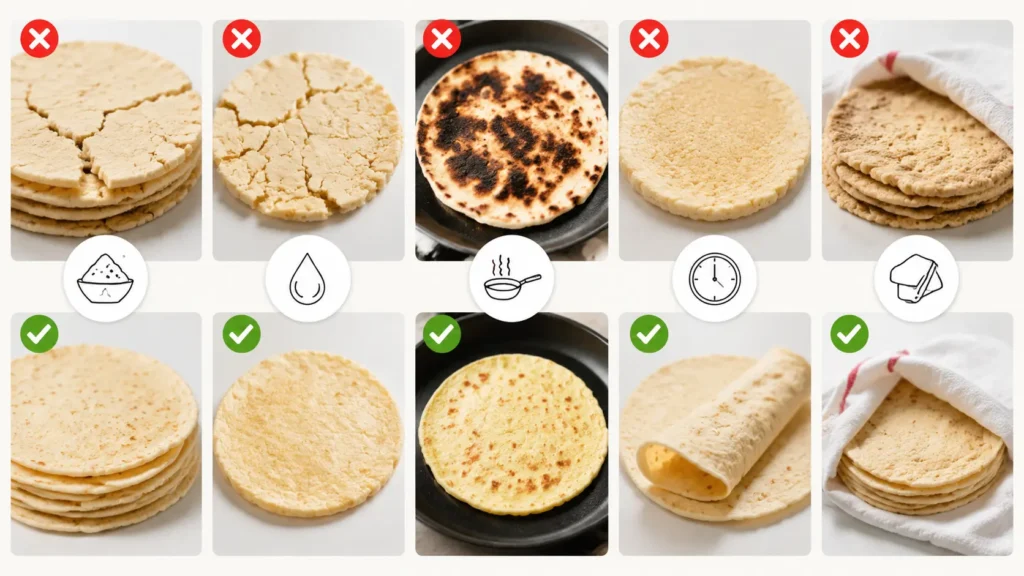
Almond flour behaves differently from wheat flour, so a few small mistakes can completely change the result.
Using Almond Meal Instead of Fine Almond Flour
This creates grainy tortillas that crack easily because the particles are too coarse.
Cooking Over High Heat
The outside cooks faster than the inside, leaving a gummy center.
Rolling Too Thin
Very thin tortillas tear during transfer and dry out quickly.
Skipping Rest Time
The dough needs time for the binders to hydrate properly.
Important Tips to Remember
- Always let the dough rest before rolling
- Cook on medium heat instead of high heat
- Cool completely before storing
- Use warm water for better elasticity
- Keep tortillas covered while cooking batches
How to Customize the Flavor Without Ruining the Texture
One of the best things about this dough is how adaptable it is.
Savory Variations
- Garlic powder and Italian herbs
- Paprika and onion powder
- Curry powder and cumin
- Chili powder with chili flakes
- Rosemary and thyme
Sweet Versions
- Ground cinnamon with sweetener
- Pumpkin pie spice
- Almond butter filling
- Nutmeg and ginger
Colorful Rainbow Tortillas
You can also blend in:
- Spinach powder
- Beet powder
- Turmeric
These work especially well for wraps and packed lunches.
My Experience Making This Recipe at Home
The first time I made almond flour tortillas, I treated them like regular flour tortillas and blasted the skillet on high heat. The outside browned beautifully, but the inside stayed wet and gummy.
After testing several batches, I realized almond flour needs a slower toast rather than aggressive heat. Once I lowered the temperature and let the dough rest longer, the tortillas became flexible and sturdy instead of fragile.
Another trick I learned over time is to roll one tortilla while another cooks. That continuous-flow method cuts prep time dramatically and keeps everything moving smoothly.
Benefits of Homemade Almond Flour Tortillas
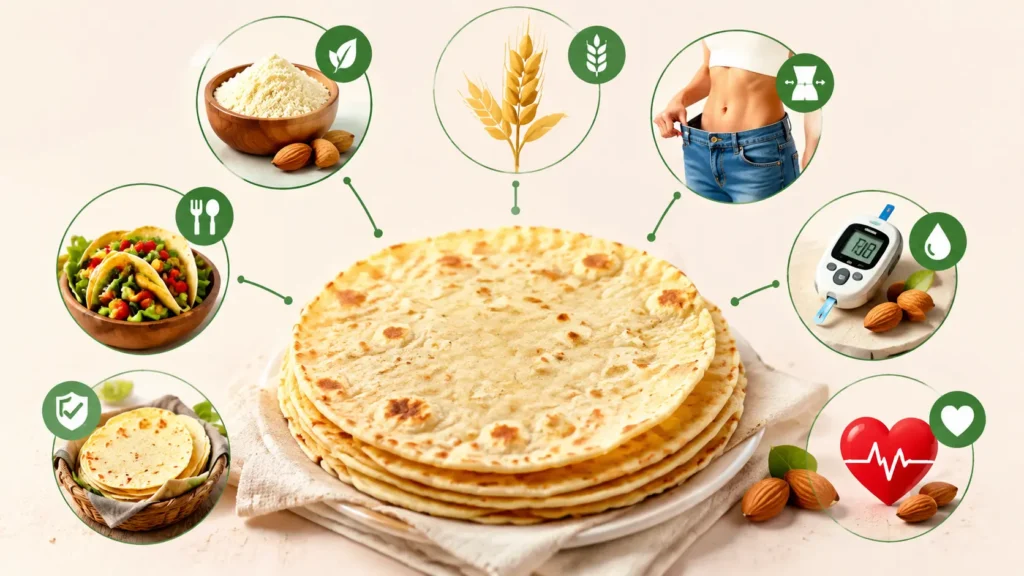
These tortillas are popular because they fit into many eating styles while still feeling satisfying and practical for everyday meals.
They are commonly enjoyed by people following gluten-free lifestyles, keto-friendly eating plans, or grain-free diets. Since almond flour contains healthy fats and fiber, the tortillas often feel more filling than standard wraps.
They also work well for meal prep because they store and freeze surprisingly well when cooled correctly.
Why Many People Prefer Them
- Lower in carbohydrates than wheat tortillas
- Naturally gluten-free and dairy-free
- Good source of healthy fats and fiber
- Useful for wraps, tacos, and quick lunches
- Easy to customize with spices and herbs
- Can become tortilla chips or flatbread
Best Uses for Almond Flour Tortillas Based on the Taco Test
These tortillas are flexible, but they are not identical to heavy-duty flour burrito wraps.
Best Uses
| Excellent For | Less Ideal For |
| Street tacos | Overstuffed burritos |
| Quesadillas | Wet enchiladas |
| Wraps | Giant loaded wraps |
| Keto flatbread | Heavy restaurant-style burritos |
| Tortilla chips | Extremely saucy fillings |
For best results, use moderate fillings rather than overloading them.
Helpful Background About Grain-Free Tortillas and Modern Keto Cooking
Grain-free tortillas became much more popular as keto cooking and gluten-free baking grew. Traditional tortillas rely heavily on wheat flour or corn, but almond flour opened the door for lower-carb alternatives with higher protein and fat content.
The challenge has always been texture. Early keto tortillas often cracked or felt rubbery. Modern recipes improved dramatically once cooks began combining almond flour with binders like psyllium husk and xanthan gum.
This recipe also doubles as a base for other recipes. The same dough can become:
- Grain-free crackers
- Mini pizza crust
- Crispy nachos
- Flatbread
- Air fryer chips
Storage, Freezing, and Reheating Best Practices
The biggest storage mistake is packing tortillas while they are still warm. Trapped steam creates condensation, which leads to slimy tortillas within hours.
Always cool them completely before storing.
Storage Times
- Room temperature: up to 2 days
- Refrigerator: 1 week
- Freezer: 2–3 months
Place parchment paper between tortillas before freezing to prevent sticking and freezer burn.
To reheat, wrap the tortilla in a damp paper towel and microwave for about 10 seconds. The steam restores flexibility and prevents cracking.
You can also warm them in a dry skillet for 20–30 seconds per side.
FAQ
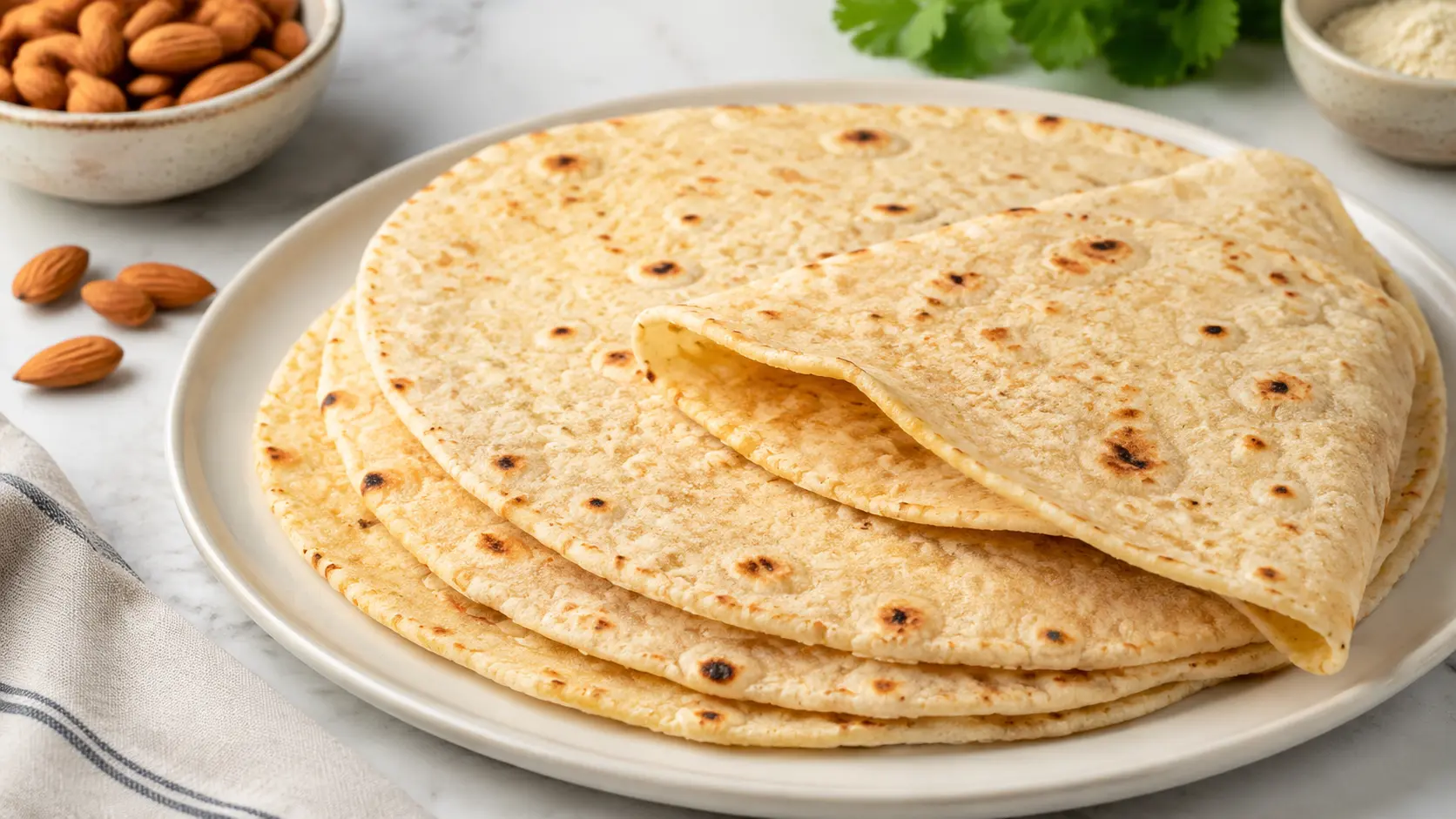
Almond Flour Tortilla Recipe
Ingredients
Equipment
Method
- In a large mixing bowl, whisk together the almond flour, coconut flour, psyllium husks, baking powder, and salt until evenly combined.
- Pour in the olive oil and warm water, then stir until a soft dough forms. Let the dough rest for 5–10 minutes so the psyllium can fully hydrate.
- Divide the dough into 8 equal portions and roll each piece into a ball. Keep unused dough covered to prevent drying out.
- Place one dough ball between two sheets of parchment paper and gently flatten it. Roll into a thin circle about 6–7 inches wide and roughly 2mm thick.
- Heat a non-stick skillet over medium heat until warm but not smoking. Carefully peel away the top parchment layer from the tortilla.
- Transfer the tortilla to the skillet and cook for 1–2 minutes until small golden spots appear and the surface looks dry.
- Flip the tortilla with a spatula and cook the second side for another 1–2 minutes until lightly toasted and flexible.
- Move the cooked tortilla to a cooling rack for 1–2 minutes, then cover with a clean kitchen towel to keep it soft. Repeat with the remaining dough.
Notes
Conclusion
Once you understand how almond flour dough behaves, homemade almond flour tortillas become surprisingly easy and reliable. They are soft, flexible, and versatile enough for everything from tacos and wraps to crispy tortilla chips and quick meal prep lunches.
The key is balancing hydration, thickness, and heat. Use warm water, let the dough rest properly, and cook slowly enough for the center to finish without burning the outside. Those small adjustments completely transform the final texture.
If you enjoy practical gluten-free and keto-friendly cooking, save this almond flour tortilla recipe for later and explore more related recipes on Cookiva Recipe, including grain-free flatbreads, low-carb wraps, and creative tortilla variations for everyday meals.