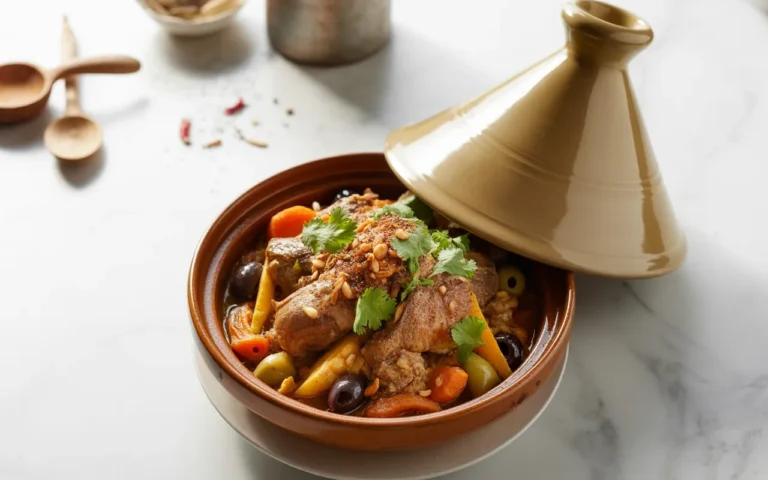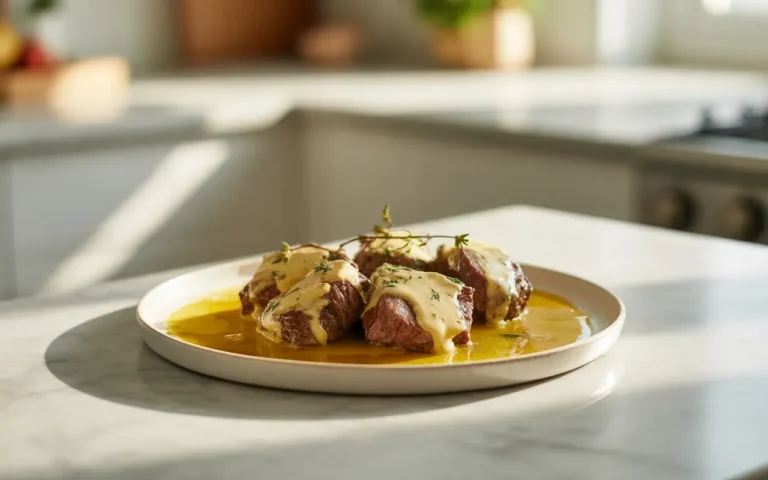
Chile Rojo Recipe: Easy 30-Minute Homemade Classic

There are some recipes that instantly take you back to a family kitchen, and for me, this chile rojo recipe is one of them. I still remember the smell of dried chiles toasting on a hot comal while onions and garlic softened in the pan. Those deep, smoky aromas that fill the whole house before you’ve even taken the first bite. This is the kind of dish that doesn’t rush. It simmers slowly, rewards patience, and somehow tastes even better the next day.
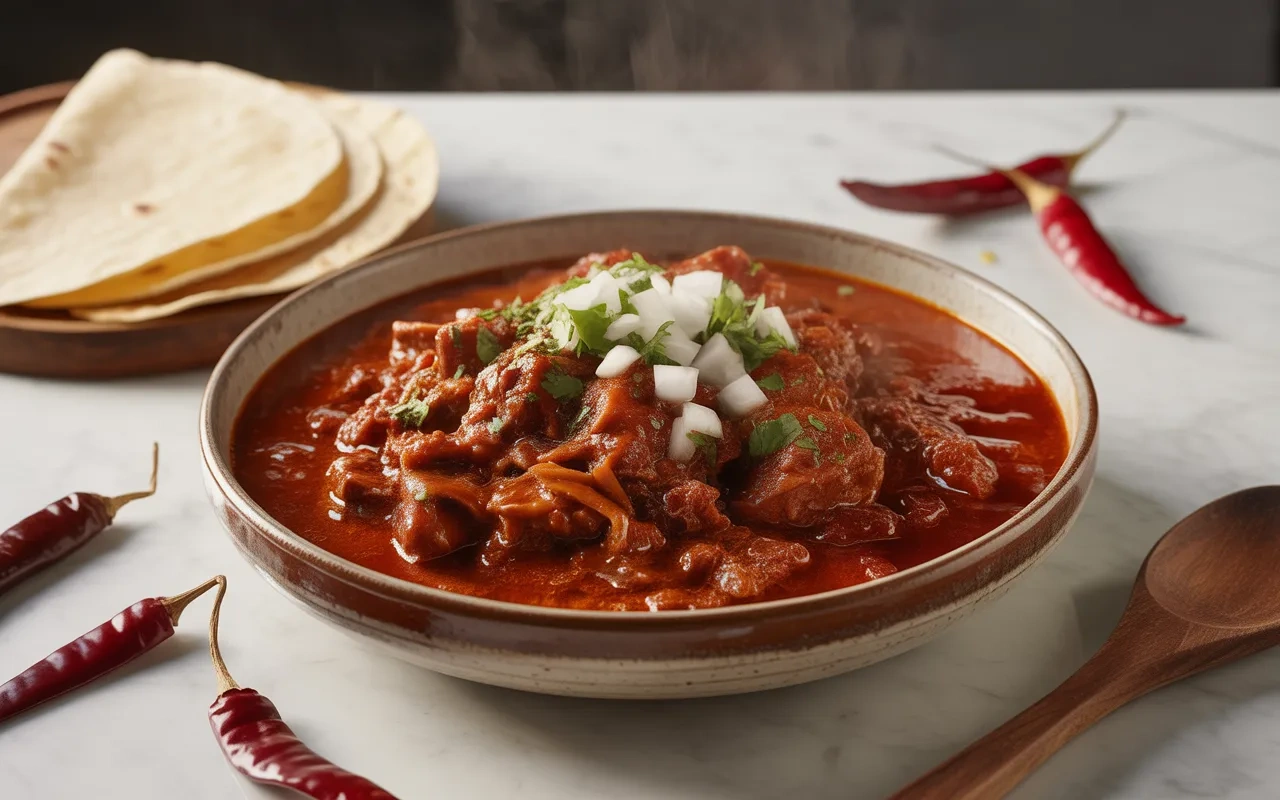
Carne con chile rojo, also known as Chile Colorado, is a rich Mexican stew made with tender beef simmered in a deeply flavored red chile sauce. It’s bold, slightly smoky, and layered with heat that builds gently rather than overwhelms. People love it because it’s simple at its core, but incredibly complex in flavor thanks to dried chiles, spices, and slow cooking. It’s the kind of meal that shows up for Sunday dinners, celebrations, and especially with warm flour tortillas straight off the comal.
What Is Chile Rojo Recipe and Why It’s So Loved in Mexican Kitchens
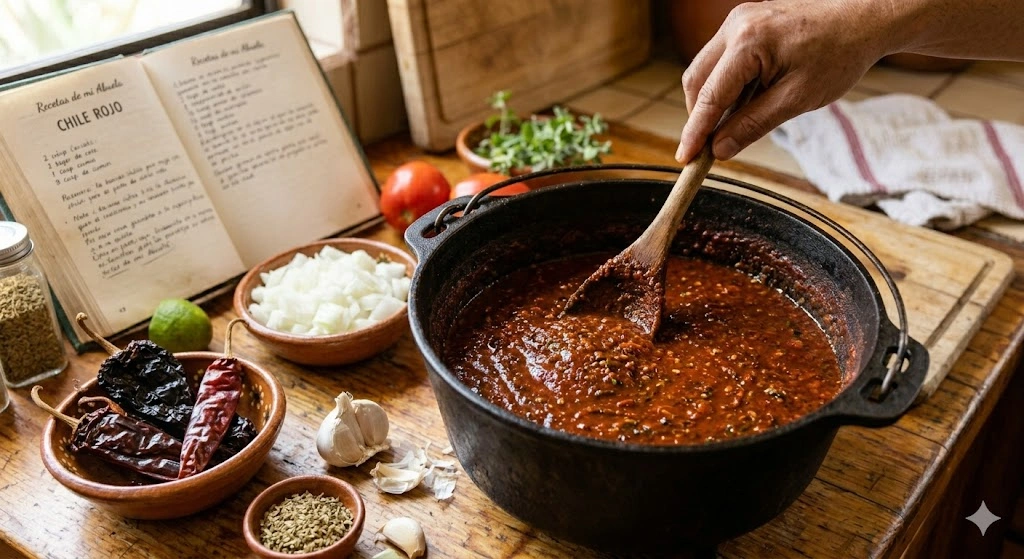
A chile rojo recipe is essentially a traditional Mexican red chile stew where dried chiles are rehydrated, blended into a sauce, and used to braise meat most commonly beef or pork. In many homes, it overlaps with Chile Colorado, carne con chile rojo, or even regional names like asado de puerco depending on where you are in Mexico or the U.S.vWhat makes it special is how foundational it is to Mexican cuisine. The red chile sauce becomes a base for tacos, burritos,
enchiladas, tamales, and even simple bowls of rice and beans. It’s not just one dish, it’s a building block of everyday cooking. Families still make it today because it’s affordable, flexible, and deeply satisfying. You can stretch it into multiple meals, freeze it for later, or serve it fresh for gatherings like Father’s Day, 4th of July cookouts, or Sunday family meals.
What Exactly Is chile rojo recipe (And How It Differs From Chile Colorado)
People often wonder if Chile rojo, Chile Colorado, and carne con chile rojo are the same thing. The answer is: mostly yes, but with subtle regional differences. Chile rojo usually refers to the red chile sauce itself, while Chile Colorado often refers to the finished stew. Carne con chile rojo is the most descriptive version; it literally means “meat with red chile.”
In everyday cooking, though, they’re interchangeable. What matters most is the technique: dried chiles, toasted carefully, blended into a smooth sauce, and slowly simmered with beef until everything becomes tender and rich. This dish is found across Mexico and Mexican American kitchens in places like Houston, California, and border towns, where every family adds their own signature touch.
Recipe Overview: Deep, Smoky, and Comforting Mexican Red Chile Stew
This chile rojo recipe delivers a thick, silky sauce with layers of smoky heat, earthy undertones, and a gentle richness from slow cooked beef. The texture should coat a spoon, not run off it, and the flavor should deepen as it rests. It works beautifully for weeknight meals, meal prep, or feeding a crowd. Serve it with flour tortillas (tortillas de harina), Mexican rice, or even spooned over refried beans for a full plate.
| Detail | Information |
| Prep Time | 15 minutes |
| Cook Time | 1 hour 30 minutes |
| Total Time | 1 hour 45 minutes |
| Servings | 6 |
| Difficulty | Medium |
| Cuisine | Mexican |
| Calories | ~318 kcal |
Ingredients and Why Each One Matters in Chile Rojo Recipe Flavor Building
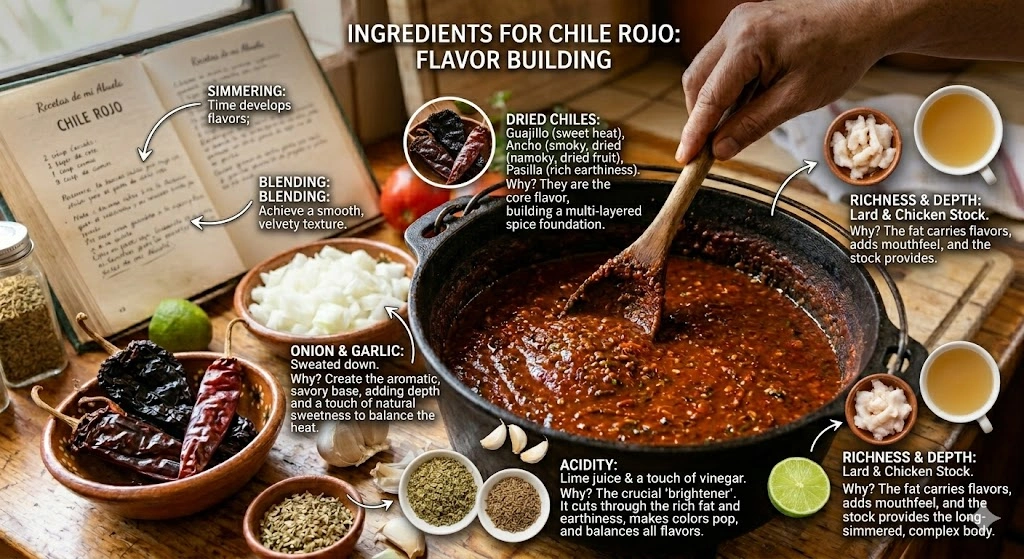
The magic of chile rojo comes from layering dried chiles with aromatics and slow cooked meat. Each ingredient plays a role in building depth, heat, or richness.
- Beef chuck roast (2 pounds) Best cut for tenderness after long simmering
- Dried chiles (guajillo, ancho, pasilla, chile de arbol) Guajillo gives color, ancho adds earthiness, arbol brings heat
- Onion and garlic cloves Build the savory base of the sauce
- Cumin, oregano, paprika, coriander seeds Classic Mexican spice profile
- Beef broth (or chicken broth) Creates body and depth
- Tomatoes (Roma or fresh) Optional but adds brightness in some regional versions
- Vegetable or olive oil Used for searing and blooming spices
- Salt and pepper Essential for balance
- Bay leaves Slow infusion during simmering
You can also serve it with pico de gallo, Mexican rice, or hominy for a heartier bowl.
Chile Pepper Comparison Table: Understanding Heat, Flavor, and Purpose
One of the biggest mistakes home cooks make is treating all dried chiles the same. In reality, each child has a job.
| Chile | Flavor Profile | Heat (SHU) | Role in Chile Rojo | Best Substitute |
| Guajillo | Tangy, slightly fruity | 2,500–5,000 | Color + base flavor | New Mexico chile |
| Ancho | Smoky, sweet, raisin-like | 1,000–2,000 | Body + depth | Mulato chile |
| Chile de árbol | Sharp, hot, earthy | 15,000–30,000 | Heat booster | Cayenne pepper |
| Pasilla | Earthy, mild bitterness | 1,000–2,500 | Complexity | Ancho |
| Chile piquin | Very hot, citrusy | 30,000–60,000 | Intense heat accent | Crushed red pepper |
Guajillo and ancho are the backbone of most chile rojo recipes, while arbol is used sparingly for heat control.
How to Make Chile Rojo Recipe the Right Way for Deep, Authentic Flavor
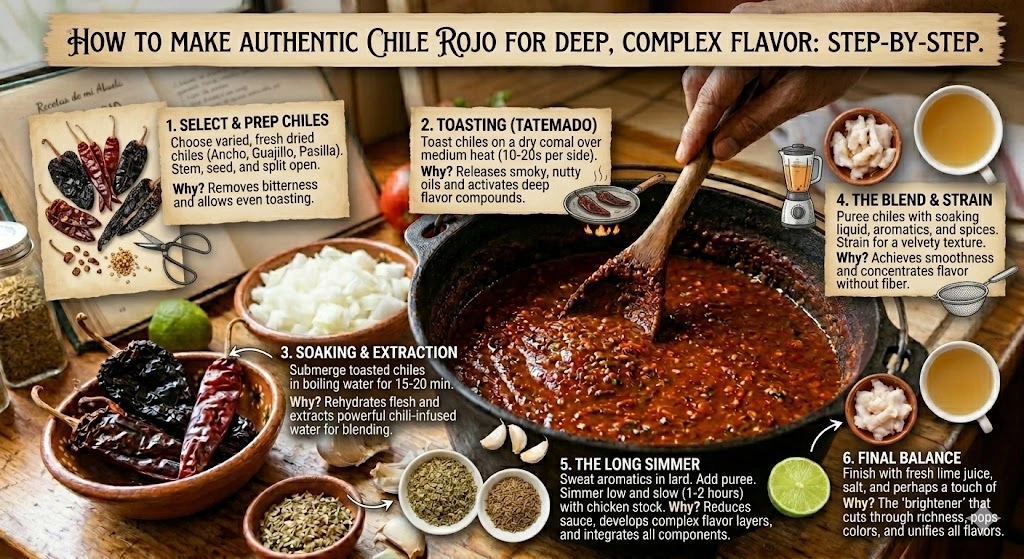
The process is simple, but timing and temperature matter more than anything else. First, you toast dried chiles briefly to release oils, then rehydrate them until soft. After blending into a sauce, you strain it for a smooth consistency sauce, then simmer it slowly with browned beef.
- Toast dried chiles for 10–15 seconds per side until fragrant (do not burn)
- Remove stems and seeds, then soak in hot water for 15–20 minutes
- Blend chiles with garlic, onion, spices, and broth until smooth
- Strain the sauce through a fine mesh strainer for silkiness
- Sear beef until golden brown sear, then simmer in sauce for 1–1.5 hours
- Adjust salt and let rest before serving
The final result should be a thick red sauce that clings to tender beef pieces.
Discover this Petrale Sole Recipe for a light, buttery seafood dish that’s quick, elegant, and perfect for weeknight dinners.
Pro Tip for the Best chile rojo recipe Flavor (Don’t Skip This Step)
If there’s one thing I’ve learned after making this chile rojo recipe hundreds of times, it’s that the soaking time matters just as much as the toasting. Most people rush this step and wonder why their sauce tastes thin or uneven. Here’s the real trick: after toasting and removing the seeds, let your dried chiles fully rehydrate in hot water for at least 20–30 minutes, not just until soft. When
they’re fully pliable, they blend into a smoother, silkier sauce that gives you that restaurant-style smooth consistency sauce instead of something gritty or watery. It might seem like a small detail, but this is what separates an average carne con chile rojo from a deeply flavorful, balanced salsa roja that clings perfectly to beef or pork.
Discover more comforting main dishes like this chile rojo recipe on Cookiva Recipe for flavorful homemade meals.
Common Mistakes and Why They Ruin chile rojo recipe (And How to Fix Them)
Most chile rojo failures happen long before the pot ever simmers. Once you understand these mistakes, the recipe becomes almost foolproof. Over-toasting dried chiles is the number one issue. The moment they start smoking or turning black, they release bitter tannins that make the entire sauce taste harsh and medicinal. You want fragrance, not smoke. Think 10–15 seconds per side, not minutes. Another common problem is skipping the straining step. Even if you have a
good blender, bits of chile skin can remain and give the sauce a gritty texture. A simple mesh strainer fixes this instantly and gives you that velvety finish you expect in authentic Mexican kitchens. Finally, people often simmer the sauce too aggressively. A hard boil breaks the balance of flavors and can dull the beautiful red color. Always keep it at a gentle low heat simmer so the sauce stays rich and vibrant.
Quick fixes to remember:
- Never let chiles smoke while toasting
- Always strain blended sauce for silky texture
- Keep simmer gentle, not boiling
- Use fresh dried chiles (old ones = flat flavor)
Variations, Substitutions, and When to Use Them
One of the reasons this chile rojo recipe is so loved in Mexican cuisine is its flexibility. Once you understand the base, you can easily adapt it depending on what you have or what region style you prefer. You can swap beef chuck roast for pork shoulder roast to create a richer, fattier version often seen in pork stew or asado de puerco variations. If you want something leaner,
pork loin works too, but it will be slightly less tender. For chile substitutions, New Mexican chiles are a great alternative to guajillo if you can’t find them locally. They bring a similar mild heat and color, though slightly less fruity depth. In a pinch, even a mix of paprika and a small amount of cayenne can mimic the heat profile, but you’ll lose complexity.
You can also adjust heat easily:
- More chile de arbol = stronger, sharper heat
- More ancho chiles = deeper, smoky sweetness
- More guajillo = brighter red, balanced flavor
This flexibility is why people use chile rojo as a base for everything from enchilada sauce to taco fillings and even tamales sauce.
My Personal Experience Making chile rojo recipe at Home
The first time I made this dish, I honestly underestimated how much difference technique makes. I rushed to the chile soaking stage and didn’t strain the sauce because I thought my blender had done enough work. The result? A slightly grainy, uneven sauce that didn’t have that deep restaurant style finish I was aiming for. Over time, I started treating each step with more respect, especially the chile selection. Buying fresh dried chiles from a Latin market or Mexican Mercado
instead of old supermarket packets completely changed the flavor. The difference was immediate: brighter color, deeper aroma, and a sauce that actually tasted alive. Now, I always toast gently, soak patiently, and strain without exception. It’s a small routine, but it consistently gives me that rich, bold chile rojo recipe flavor that reminds me why I love making this dish in the first place.
Benefits of Chile Rojo Recipe (Why It’s More Than Just a Stew)
Beyond flavor, this dish has a few real world benefits that make it a staple in so many homes. It’s not just delicious, it’s practical, nourishing, and incredibly versatile. First, it’s a great meal. The flavors deepen after a day or two, making leftovers even better than the first serving. That’s why it’s so popular for meal prep and family gatherings.
Second, it stretches easily. A single pot of carne con chile rojo can become tacos one night, burritos the next, and even a base for sopa de fideo or pozole stew depending on how you use it. And finally, it’s a deeply satisfying comfort food. The combination of slow cooked meat, warm spices, and rich red chile sauce creates a meal that feels grounding and traditional, something people often associate with family meals, holidays like Father’s Day, or big weekend gatherings.
Explore more authentic dishes like this chile rojo recipe on Cookiva Recipe, where you’ll find easy and delicious recipes for every occasion.
Key benefits at a glance:
- Excellent for meal prep and leftovers
- Highly versatile across Mexican dishes (tacos, burritos, enchiladas)
- Budget friendly when using dried chiles and stew cuts
- Deep, comforting flavor that improves over time
Supporting Background: Why Chile Rojo Matters in Mexican Cooking
Chile Rojo Recipe isn’t just one recipe, it’s a foundation of Mexican home cooking. Across regions, variations appear in Chile Colorado, carne adovada, and other slow simmered meat dishes, but the core idea remains the same: dried chiles transformed into a rich, flavorful sauce. Historically, dried chiles were one of the most reliable ways to preserve flavor year round, especially in regions where fresh produce wasn’t always available. That’s why dishes like this
became so important in everyday cooking. Today, it’s still widely used in both traditional kitchens and modern homes because it bridges the gap between simplicity and depth of flavor. Whether you’re cooking in Houston, California, or anywhere in the United States, this dish remains a staple of authentic Mexican inspired cooking.
Why Your Chile Rojo Turned Bitter (And How to Fix It)
This is one of the most common problems home cooks face, and it usually has nothing to do with skill, it’s about timing.
| Problem | Cause | Fix |
| Bitter, burnt taste | Over toasting chiles | Toast only until fragrant (15 seconds max) |
| Harsh medicinal flavor | Boiling chiles too long | Soak instead of boiling aggressively |
| Flat flavor | Old dried chiles | Use fresh, pliable chiles |
| Grainy texture | Weak blender or no straining | Always strain sauce after blending |
If you ever smell smoke while toasting chiles, you’ve already gone too far.
What I Learned Making Chile Rojo at Home Over the Years
The first time I made this, I rushed the chile toasting step because I thought darker meant better flavor. It didn’t. The sauce turned slightly bitter, and I couldn’t figure out why until I learned that dried chiles only need a few seconds of heat. Now I take my time. I toast lightly, soak patiently, and always strain the sauce even when I think my blender did a good job. That small step alone completely changed the texture of my chile rojo from “good” to restaurant quality.
Storage, Freezing, and Meal Prep for Chile Rojo
Chile rojo is one of those dishes that actually improves with time as the flavors settle.
- Refrigerator: 2–3 days in a sealed glass container
- Freezer: up to 3 months for best flavor
- Reheating: warm slowly over low heat to prevent sauce separation
For best results, store the sauce separately from the meat if possible. Glass containers preserve flavor better than plastic, especially for rich chile sauces.
Frequently Asked Questions About Chile Rojo Recipe
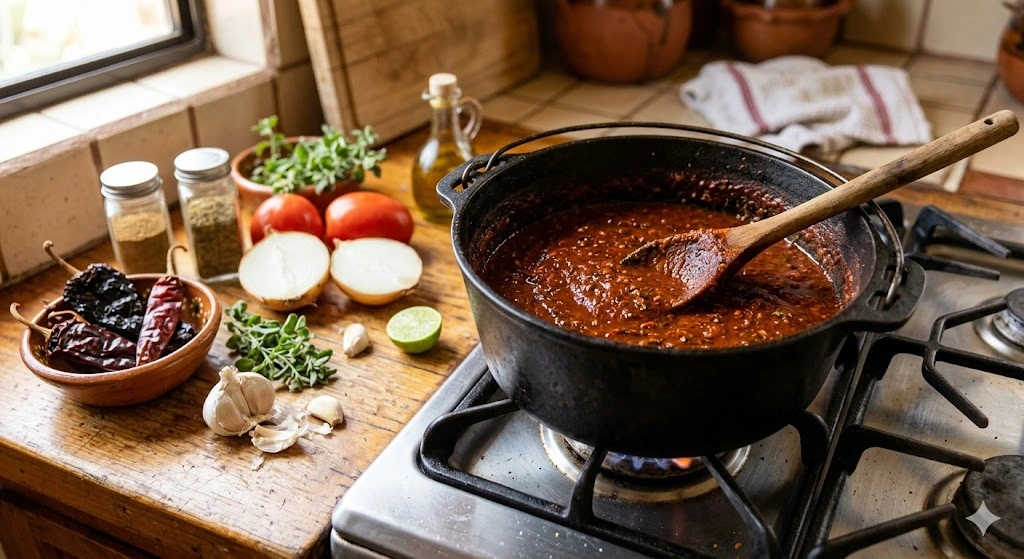

chile rojo recipe
Ingredients
Equipment
Method
- Heat a dry skillet over medium heat and lightly toast the dried chiles for 10–15 seconds per side until fragrant, being careful not to burn them.
- Place toasted chiles in a bowl of hot water and soak for 20–30 minutes until soft and pliable.
- In a skillet, heat vegetable oil and sear beef slices until browned on all sides for a rich flavor base.
- Add chopped onion, garlic, and tomatoes to a blender along with softened chiles and beef broth, then blend until completely smooth.
- Strain the chile sauce through a fine mesh strainer to ensure a silky, restaurant-style texture.
- Pour sauce into the pot with seared beef and bring to a gentle simmer over medium-low heat.
- Add cumin, oregano, salt, and pepper, then stir well so the flavors fully combine.
- Cover and simmer for 60–75 minutes until beef is tender and sauce thickens into a rich red consistency
- Stir occasionally and adjust seasoning if needed before serving hot.
Notes
- Use a mix of guajillo and ancho chiles for best authentic depth of flavor.
- Always strain the sauce for a smooth, restaurant-quality texture.
- Let the dish rest 15–20 minutes before serving to deepen flavor.
Final Thoughts on This Chile Rojo Recipe
This chile rojo recipe is more than just a meal, it’s a foundation of Mexican home cooking. Whether you serve it as tacos, spoon it over rice, or enjoy it with warm tortillas, it always brings comfort and depth to the table. If you’ve never made it before, start simple and trust the process. Once you get the balance of chiles right, you’ll find yourself coming back to it again and again.
Try this 16 Bean Soup Recipe for a hearty, protein-packed comfort meal that’s easy to make and perfect for cozy family dinners.