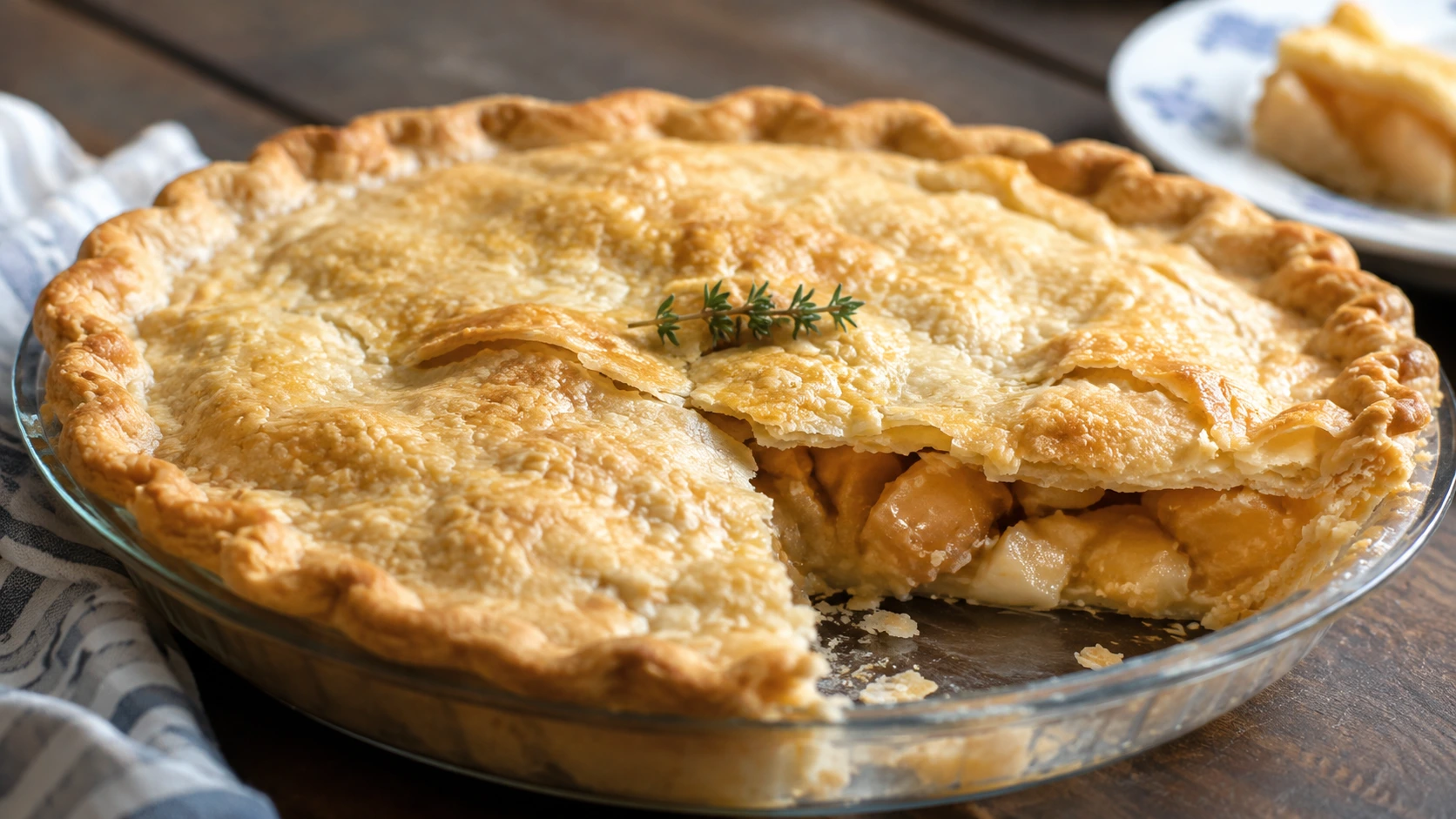
Vodka Pie Crust Recipe That Stays Flaky Without the Fuss

The secret to a great Vodka Pie Crust Recipe is not in the vodka alone. It is in keeping the butter cold and handling the dough just enough. I learned that after making a few crusts that looked fine but baked up tough instead of flaky.
Now this is the pie dough I make for everything from apple pie to chicken pot pie. It rolls out easily, bakes into crisp, buttery layers, and gives you a little more room for error than a traditional dough made with only water. I’ll also show you what vodka can actually do, what it cannot fix, and the small details that make the biggest difference. By the end, you’ll know exactly how to make a crust that feels easy instead of stressful.
What Is a Vodka Pie Crust Recipe?
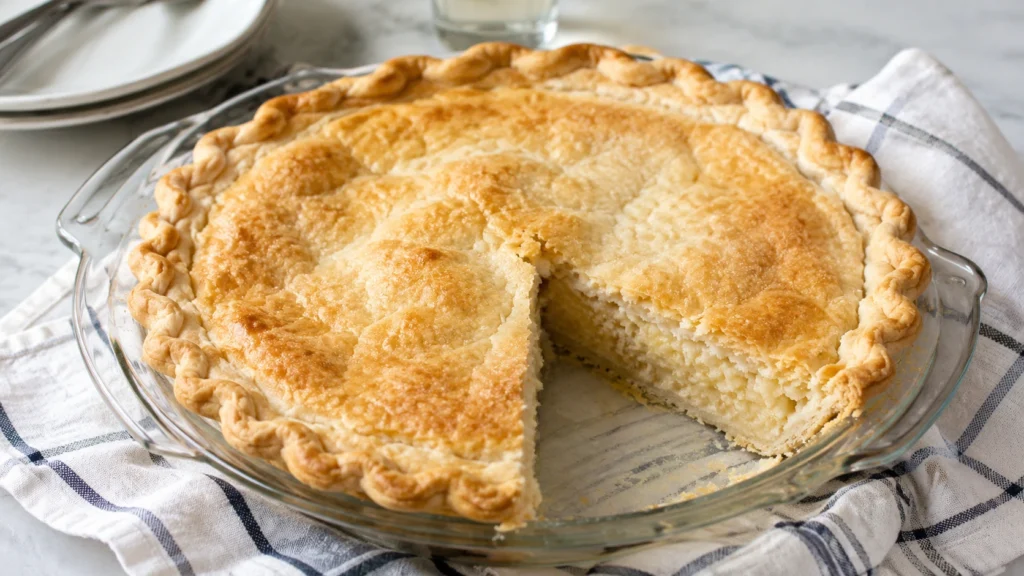
A Vodka Pie Crust Recipe is a homemade pie dough made with flour, butter, a little vodka, and cold water. It bakes into a flaky, tender crust and takes about 20 minutes to mix before chilling. People use it for both sweet and savory pies because it is easier to roll and less likely to become tough.
Unlike a regular pie crust, this version replaces part of the water with vodka. Since alcohol behaves differently than water, the dough stays workable without developing as much chewiness while you mix it.
When the crust bakes, most of the alcohol evaporates. What remains is a crust with crisp layers, rich buttery flavor, and a texture that works just as well for pumpkin pie as it does for a hearty chicken pot pie or a breakfast quiche.
One thing is worth saying upfront. Vodka is helpful, but it is not magic. If your butter melts before baking or you overwork the dough, the crust can still turn out dense. Think of vodka as a useful helper rather than a guarantee of success.
Recipe Overview: Why This Homemade Pie Crust Works
This recipe keeps things simple. You only need a handful of pantry staples, but each one has an important job. Cold butter creates steam as it melts in the oven, which forms flaky layers. The vodka helps the dough stay easy to handle without adding much extra moisture that could make the crust tough.
I also like that this dough works for almost every pie I bake. It is neutral enough for fruit pies, creamy custard pies, savory tarts, and even pot pies. If I’m making several pies for Thanksgiving, I often prepare the dough the night before so baking day feels much less rushed.
| Detail | Info |
|---|---|
| Prep Time | 20 minutes |
| Cook Time | Depends on your pie recipe |
| Total Time | About 2 hours 20 minutes (including chilling) |
| Servings | 2 standard 9-inch pie crusts |
| Difficulty | Easy |
| Cuisine | American Baking |
| Calories | About 250 per serving of crust |
| Cost | About $4–$6 for two crusts, depending on your butter |
Making it yourself usually costs less than buying two premium refrigerated pie crusts, especially if you already keep flour, butter, and salt in your kitchen.
What Ingredients Make the Best Vodka Pie Crust Recipe?
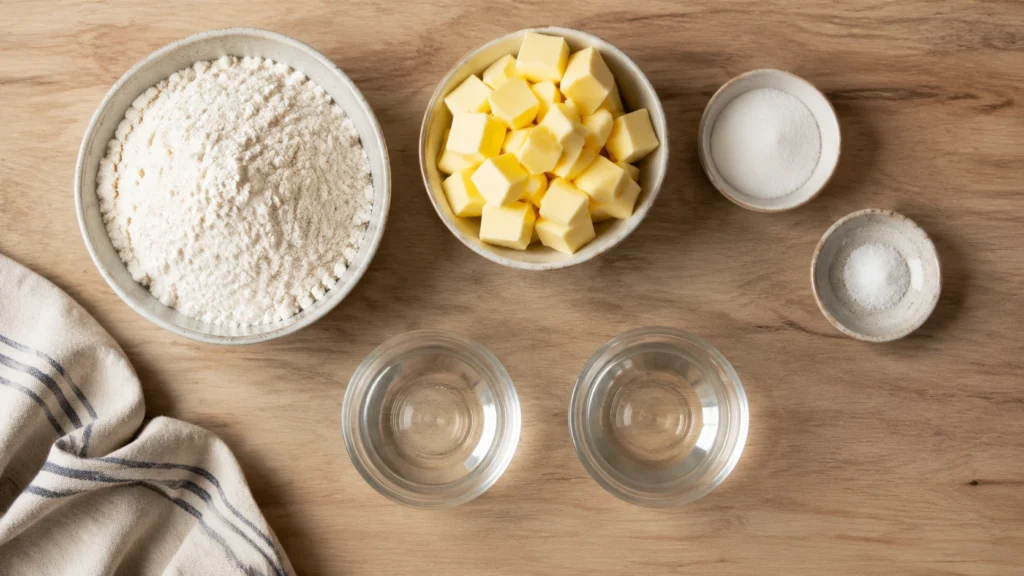
Good pie crust starts with simple ingredients that work together. None of them are fancy, but keeping them cold makes a huge difference. I like measuring everything before I begin so I can move quickly without warming the butter.
Ingredients
- 2½ cups unbleached all-purpose flour
- 1 teaspoon kosher salt
- 1 tablespoon granulated sugar (optional for savory pies)
- 1 cup cold unsalted butter, cut into small cubes
- ¼ cup ice-cold vodka
- ¼ cup ice water
If your kitchen runs warm, place the butter back into the refrigerator for a few minutes after cutting it into cubes. Those extra few minutes often make the dough much easier to work with.
Flour
All-purpose flour gives the crust enough strength without making it heavy. Bread flour has too much protein and can create a chewy crust, while cake flour is softer and may not hold its shape as well.
If you have pastry flour, you can replace about half of the all-purpose flour. The finished crust will be slightly more delicate and tender.
Butter
Cold unsalted butter creates the flaky layers everyone wants. As the butter melts in the oven, it releases steam that separates the dough into thin sheets.
European-style butter contains more butterfat and gives a richer flavor, but regular unsalted butter also produces excellent results.
Vodka
Vodka is the ingredient people ask about most. It adds liquid so the dough comes together, yet it does not encourage gluten the same way water does.
There are actually two ideas behind why it works. One says the alcohol slows gluten development, helping keep the crust tender. Another focuses on moisture control. Because vodka evaporates faster than water, the dough can be easier to roll without adding as much lasting moisture. Both ideas point to the same result: a crust that is easier to handle when mixed properly.
Keep the vodka in the freezer before you start. Ice-cold ingredients help the butter stay firm.
Ice Water
A small amount of ice water helps bring the dough together. Start with the listed amount and check the texture before adding more.
The dough should look a little rough and shaggy, but it should hold together when you squeeze a handful. If it falls apart like dry sand, add another teaspoon of ice water at a time.
This is one place where many recipes fall short. Different brands of flour absorb different amounts of liquid, and humidity can change the dough too. Don’t chase an exact number of tablespoons. Pay attention to how the dough feels.
Salt
Salt brings out the buttery flavor. Without it, the crust tastes flat even if the texture is perfect.
Kosher salt is my first choice, but table salt also works. If using table salt, reduce the amount slightly because it packs more tightly into a measuring spoon.
Sugar
A little sugar helps the crust brown and adds a subtle flavor. For savory pies, you can leave it out without changing the texture.
Ingredient Swaps That Actually Work
Not every substitute gives the same result. Here are the ones I have tested successfully.
- Replace half the butter with chilled vegetable shortening if you want a crust that keeps its shape a little better during baking.
- No vodka? Use the same amount of 80-proof bourbon or white rum for a light flavor change, or use ice water with 1 teaspoon of white vinegar. The crust will still be good, though it may not roll quite as easily.
- For a brighter flavor in fruit pies, mix a little lemon zest or orange zest into the flour before adding the butter.
- If you need a gluten-free version, use a quality 1-to-1 gluten-free flour blend that includes xanthan gum. You may need an extra teaspoon or two of cold water because these blends often absorb liquid differently.
One budget tip that rarely gets mentioned is the vodka itself. You only need about ¼ cup, so there’s no reason to buy an expensive bottle. A basic 80-proof vodka works just as well because the flavor cooks off during baking. Save the rest for future pie crusts or other recipes instead of letting it sit in the back of the cabinet.
How to Make Vodka Pie Crust Recipe Step by Step
This dough comes together faster than most people think. The biggest goal is to keep everything cold and avoid overmixing. You are not trying to make a smooth bread dough. A few butter pieces and a shaggy texture are exactly what you want.
If you’re using a food processor, work in short pulses so the butter stays cold. If you’re mixing by hand with a pastry cutter, don’t worry if the dough looks a little rough at first. It will come together as you press it.
1. Mix the dry ingredients
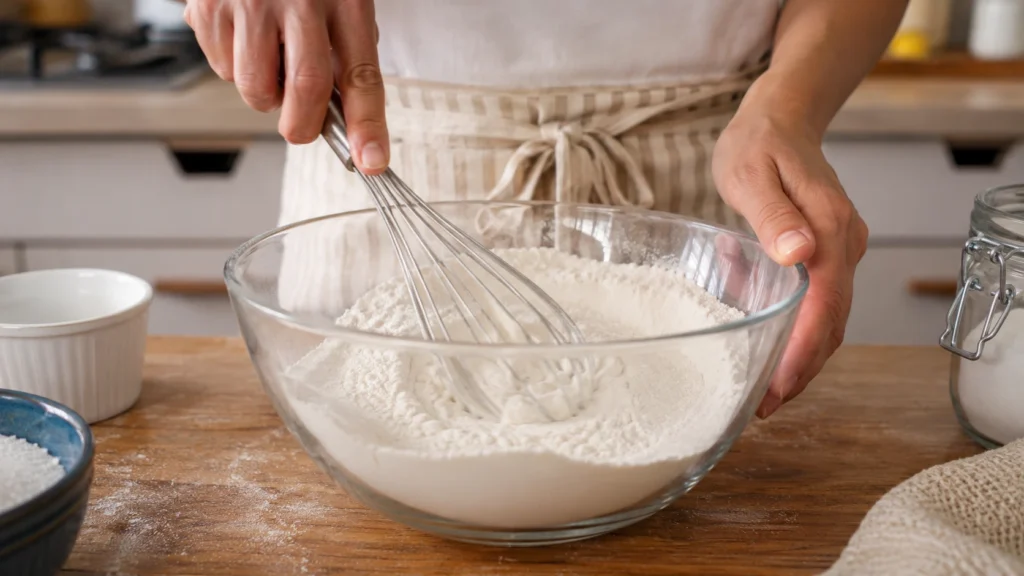
Whisk the flour, salt, and sugar together in a large mixing bowl or the bowl of a food processor.
This spreads the salt and sugar evenly so every bite tastes balanced.
2. Cut in the cold butter
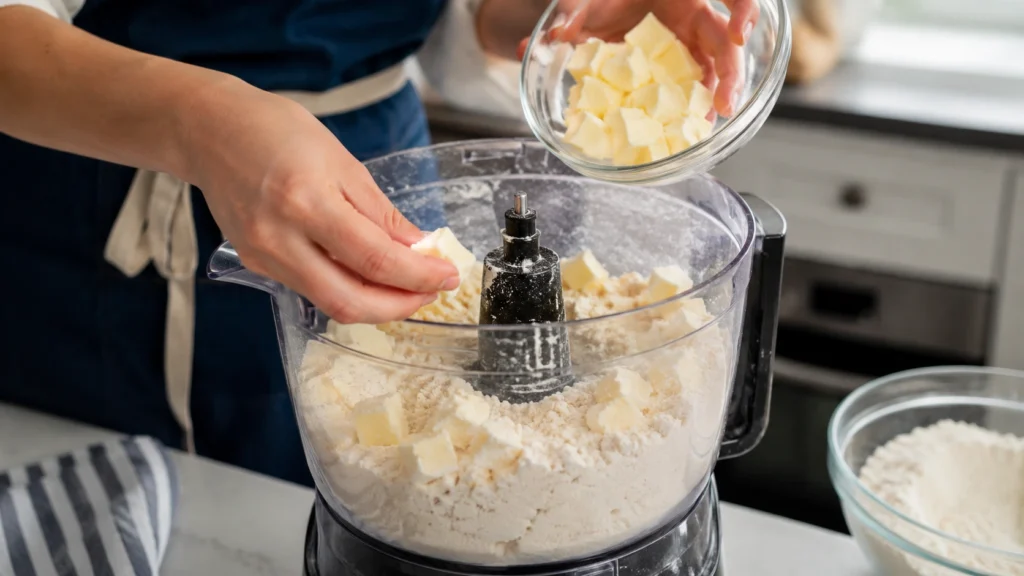
Add the cold butter cubes and pulse 8 to 10 times if using a food processor. If mixing by hand, use a pastry cutter until the butter pieces range from pea-sized to small marble-sized chunks.
The mixture should look crumbly with visible butter pieces. Those butter pockets create the flaky layers during baking.
3. Add the cold liquids
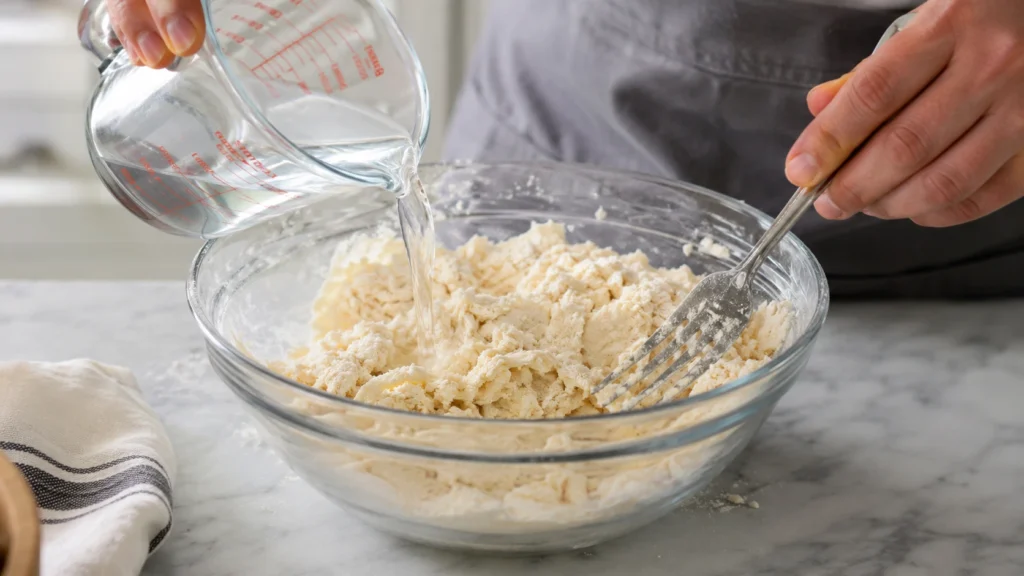
Mix the ice-cold vodka with the ice water. Slowly drizzle it over the flour mixture while pulsing a few times or gently stirring with a fork.
The dough should still look shaggy instead of smooth. If you squeeze a handful, it should stay together without feeling sticky.
Quick Troubleshooting Before You Keep Going
This is the point where many bakers get frustrated, but the fix is usually simple.
- If the dough falls apart like dry sand: Add 1 teaspoon of ice water at a time until it holds together when squeezed.
- If the dough feels sticky: Sprinkle in 1 tablespoon of flour and gently fold it in. Don’t knead.
- If butter starts getting soft: Stop immediately and chill the bowl for 10 to 15 minutes before continuing.
Different kitchens, flour brands, and humidity levels all affect how much liquid your dough needs. The feel of the dough matters more than following an exact number of tablespoons.
4. Bring the dough together
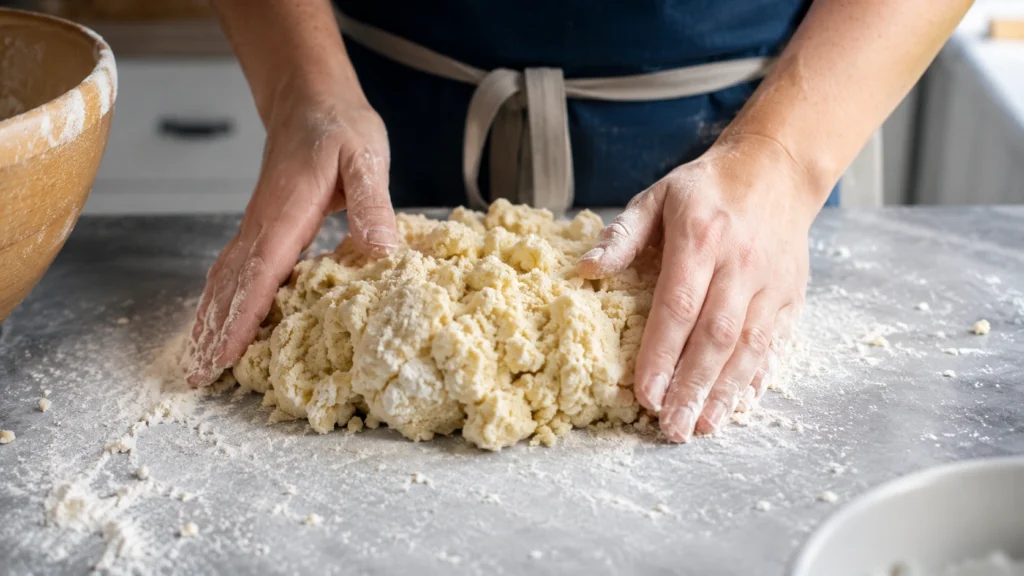
Turn the mixture onto a lightly floured work surface. Use your hands to gently press it together.
Don’t knead it like bread. Pressing keeps the butter pieces intact, which helps the crust bake into crisp, flaky layers.
5. Divide and shape
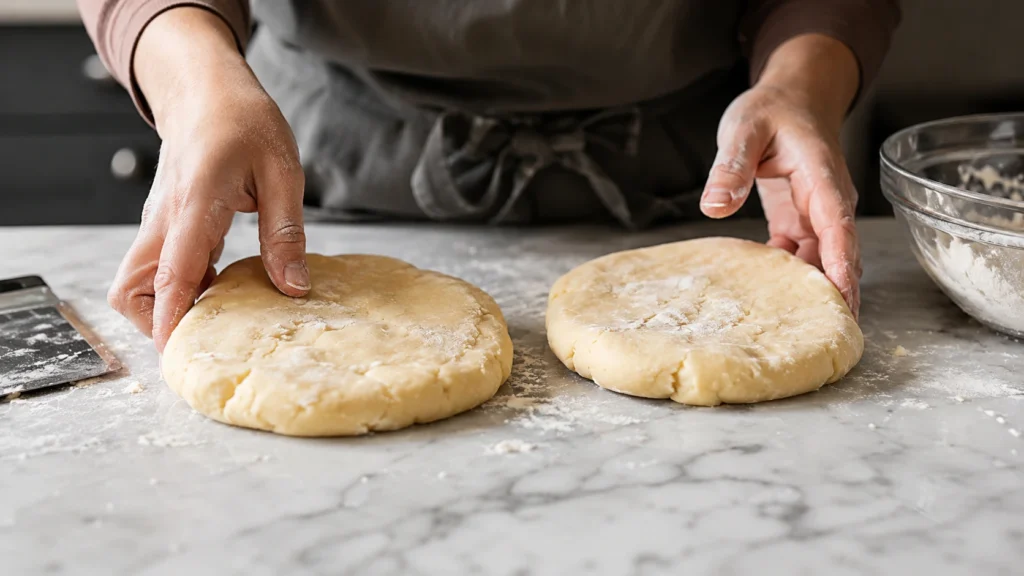
Cut the dough into two equal portions and gently press each into a 1-inch thick disk.
Wrapping the dough as flat disks instead of balls helps it chill faster and makes rolling much easier later.
6. Wrap and chill
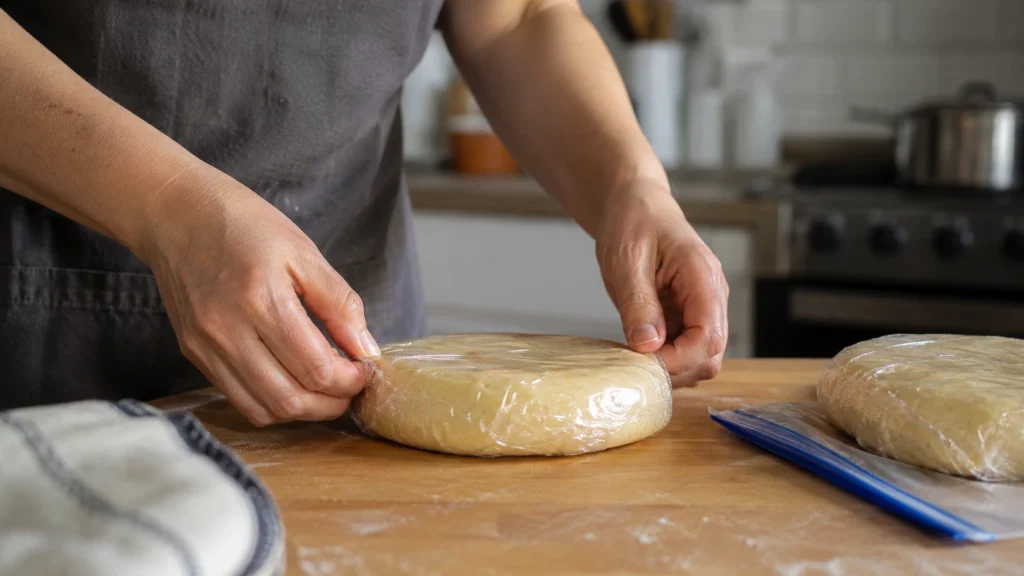
Wrap each disk tightly in plastic wrap or place it in a freezer-safe bag.
Refrigerate for at least 2 hours. Overnight is even better because the flour fully hydrates and the butter becomes firm again.
The dough should feel cold and firm but not rock hard.
7. Roll out the dough
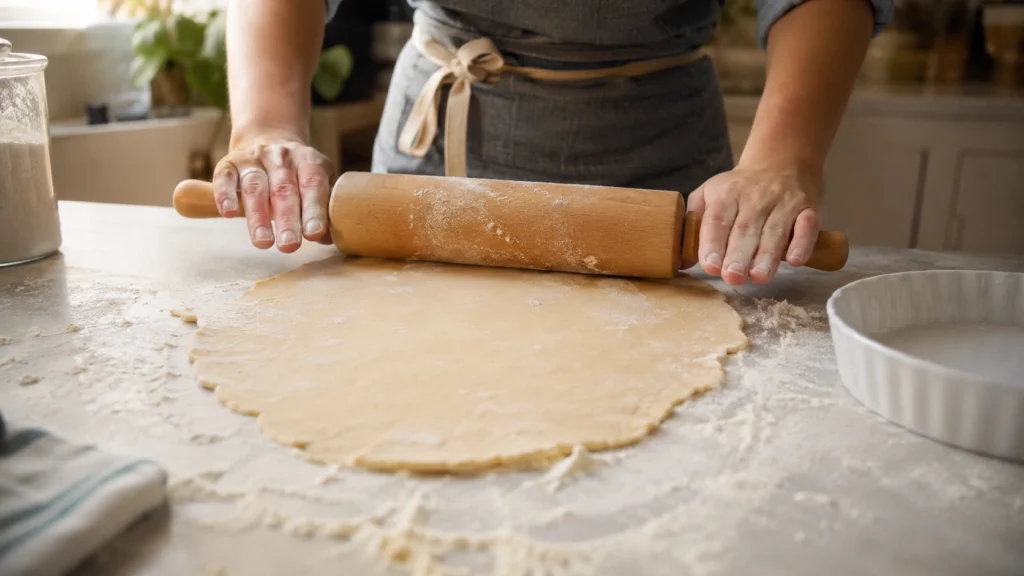
Lightly flour your countertop and rolling pin. Roll from the center outward, turning the dough a quarter turn every few passes.
When finished, the dough should be about ⅛ inch thick and large enough to fit your pie plate with a little overhang.
If the dough starts sticking, dust the surface lightly with flour instead of pressing harder with the rolling pin.
8. Line the pie plate
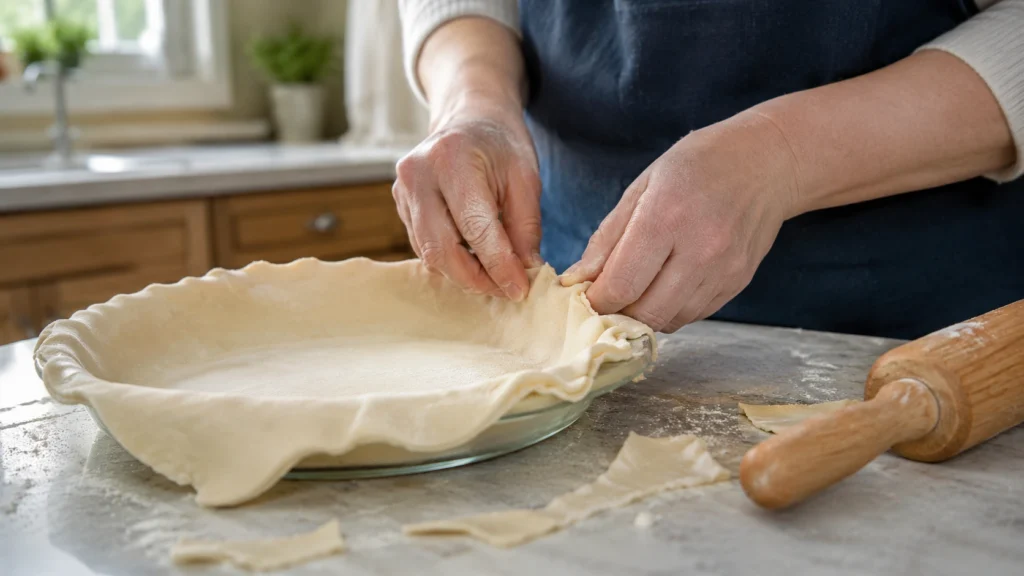
Carefully roll the dough around the rolling pin and unroll it over the pie plate.
Gently ease it into the corners without stretching it. Stretching causes the crust to shrink while baking.
Trim any extra dough, leaving about a 1-inch border. Fold the edge underneath itself and crimp as desired.
9. Chill one last time
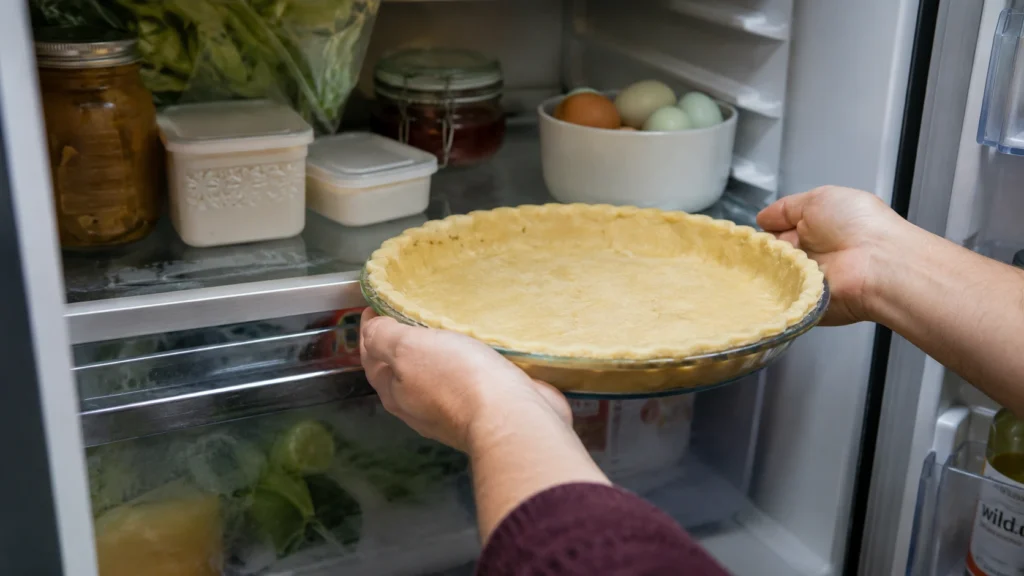
Place the prepared crust in the refrigerator for 20 to 30 minutes before baking.
This final chill firms the butter again, helping the crust keep its shape and reducing shrinkage in the oven.
10. Bake according to your pie recipe
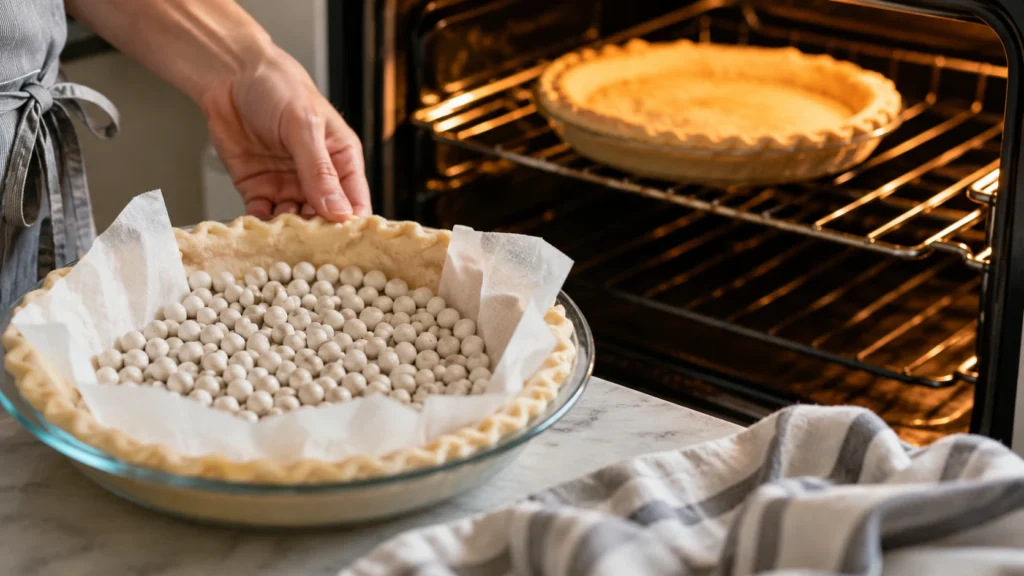
For a filled pie, add the filling and bake as directed.
If your recipe calls for a blind bake, line the crust with parchment paper, fill it with ceramic pie weights or dry beans, and bake until the edges turn light golden and smell buttery. Remove the weights and continue baking if your recipe requires a fully baked crust.
What Is the Most Common Mistake That Ruins Vodka Pie Crust?
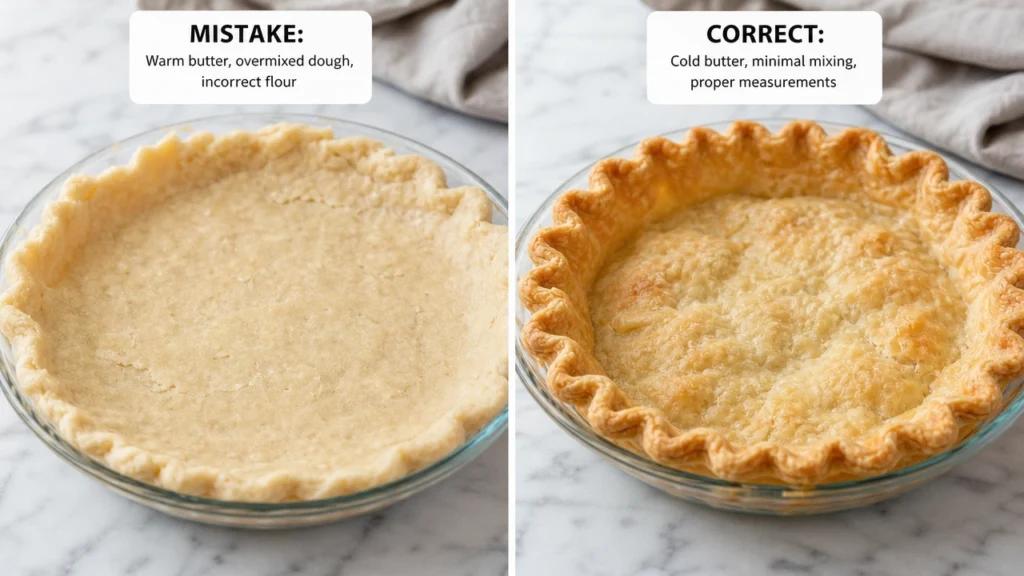
The biggest mistake is thinking vodka makes the recipe foolproof.
Vodka helps create a dough that is easier to work with, but it cannot fix warm butter, too much mixing, or incorrect flour measurements. I learned this the hard way when I rushed one batch during summer. The butter softened before the dough even reached the refrigerator, and the finished crust baked up flat instead of flaky.
Another common problem is adding too much flour while rolling.
A light dusting keeps the dough from sticking. Too much bench flour dries the surface and can leave the crust tough after baking. Brush away extra flour before placing the dough into the pie pan.
One more mistake is trying to force the dough to become perfectly smooth.
A slightly rough, shaggy dough is exactly what you want. Those uneven butter pieces melt in the oven, creating steam that separates the layers. If you mix until perfectly smooth, those layers disappear.
Quick Tips to Remember
- Keep everything cold from start to finish.
- Stop mixing early while the dough still looks shaggy.
- Judge the dough by feel, not exact liquid amounts.
- Never stretch the dough when lining the pie plate.
- Always chill before baking for the flakiest results.
Why One Simple Step Makes a Bigger Difference Than the Vodka
If I could only give one tip, it would be this: chill the dough twice.
Most recipes tell you to chill it after mixing, but the second chill after lining the pie plate is just as important. That short rest lets the butter firm up again after rolling.
When the cold butter hits a hot oven, it creates steam that lifts the layers apart. That’s what gives you a crisp, flaky crust instead of one that slumps or turns greasy.
What Easy Variations Can You Try at Home?
Once you master the basic dough, it’s easy to make it fit different recipes.
- Add 1 teaspoon lemon zest for apple pie or blueberry pie.
- Mix in ½ teaspoon cinnamon or pumpkin pie spice for fall desserts.
- Skip the sugar for savory pies like quiche or chicken pot pie.
- Replace half the butter with chilled shortening for a crust that holds decorative edges better.
- Use bourbon instead of vodka if you want a light caramel note in pecan pie.
- For a dairy-free version, use a good plant-based baking butter, keeping it just as cold as regular butter.
Once you’ve mastered this crust, browse our dessert recipes for more homemade pies and baked treats that use the same simple techniques.
What to Serve With Vodka Pie Crust Recipe
A good pie crust works with almost any filling, so think about the meal or season before you decide what to bake. This dough has a mild, buttery flavor that lets the filling shine without overpowering it.
- Classic apple pie – The flaky layers stay crisp under juicy apples and warm cinnamon.
- Pumpkin pie – A rich custard filling pairs perfectly with the buttery crust. Top each slice with fresh whipped cream.
- Chicken pot pie – This crust turns golden and crisp while holding up to a creamy filling.
- Breakfast quiche – Fill it with eggs, cheese, spinach, and peppers for an easy brunch.
- Blueberry pie – The sturdy crust supports juicy berries without becoming soggy.
If you’re serving a savory pie or quiche, our Fire Honey Recipe adds a sweet and spicy finish that’s great with cheese, roasted vegetables, or flaky pastry.
My Honest Experience Making This Recipe
The first time I made this dough, I thought adding more flour would make it easier to handle. It did the opposite. The crust baked up firm and lost the flaky layers I was hoping for.
The next time, I trusted the slightly shaggy dough and chilled it before rolling. The difference was huge. It rolled out smoothly, didn’t crack around the edges, and baked into crisp, buttery layers.
The biggest surprise was that the vodka wasn’t the real hero. Keeping the butter cold and resisting the urge to overmix mattered much more. Once I understood that, this became the pie crust I reach for every holiday season.
How to Store, Freeze, and Reheat Vodka Pie Crust
Keeping the dough cold is the best way to protect its texture. Wrap it tightly so it doesn’t dry out or absorb odors from the refrigerator or freezer.
| Storage Method | How Long |
|---|---|
| Room temperature | Up to 2 hours while working |
| Refrigerator (raw dough) | Up to 3 days |
| Freezer (raw dough) | Up to 3 months |
| Par-baked crust | Up to 2 days in the refrigerator |
| Fully baked crust | 2–3 days, covered, at room temperature or refrigerated |
If the dough has been frozen, thaw it overnight in the refrigerator before rolling. Don’t thaw it on the counter, or the butter may soften too quickly.
To freshen a baked crust, warm it in a 350°F (175°C) oven for about 8 to 10 minutes. This helps restore some of its crisp texture better than using a microwave.
How to Tell if Frozen Dough Has Gone Bad
Many recipes skip this, but it’s worth knowing.
If the dough has a sour smell, gray spots, freezer burn over most of the surface, or large ice crystals inside the wrapping, it’s best to make a fresh batch. Properly wrapped dough should still look pale and smell buttery after freezing.
Frequently Asked Questions
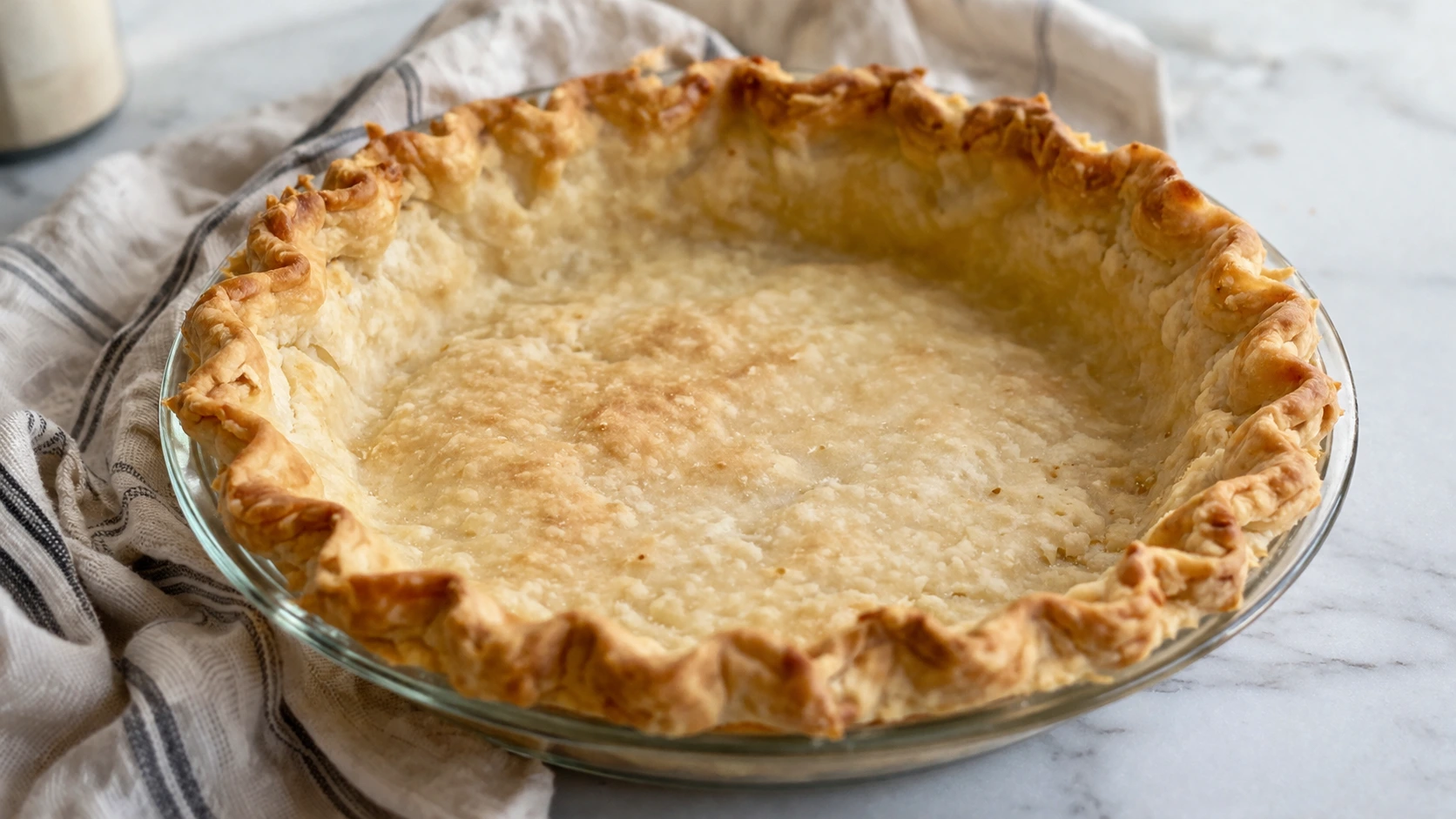
Vodka Pie Crust Recipe
Ingredients
Equipment
Method
- Whisk together the flour, salt, and sugar in a large bowl until evenly combined.
- Cut the cold butter into the flour using a pastry cutter or pulse in a food processor until the mixture looks like coarse crumbs with pea-sized butter pieces.
- Stir together the vodka and ice water, then drizzle it over the flour mixture. Mix just until the dough looks shaggy and holds together when squeezed.
- Turn the dough onto a lightly floured surface and gently press it together without kneading. Divide it into two equal portions and shape each into a flat disk.
- Wrap each disk tightly in plastic wrap and refrigerate for at least 2 hours, or overnight, until firm.
- Roll one dough disk into a ⅛-inch thick circle on a lightly floured surface, turning it often to prevent sticking.
- Transfer the dough to a 9-inch pie plate, gently ease it into the corners, trim the edges, and crimp as desired.
- Chill the shaped crust for 20 to 30 minutes before baking. Fill and bake according to your pie recipe, or blind bake with parchment paper and pie weights until the edges are lightly golden.
Notes
- Keep the butter, vodka, and water as cold as possible for the flakiest crust.
- If the dough feels dry, add ice water one teaspoon at a time until it just holds together.
- Chill the shaped crust before baking to reduce shrinking and help maintain crisp, flaky layers.
Final Thoughts on This Vodka Pie Crust Recipe
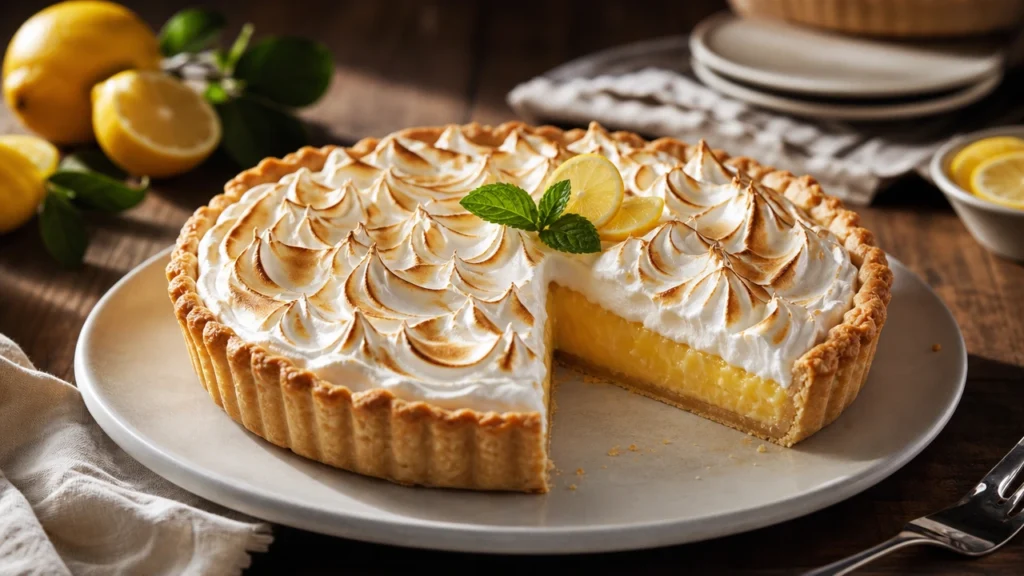
This Vodka Pie Crust Recipe keeps the process simple while giving you a crust that is crisp, buttery, and easy to work with. The vodka helps, but the real secret is keeping the butter cold, using just enough liquid, and stopping before you overmix the dough.
Once you’ve made it a couple of times, you’ll see that pie crust doesn’t have to feel intimidating. Save this recipe for holiday baking, weekend desserts, or savory dinners, and you’ll always have a dependable dough ready to go. If you make this recipe, I’d love to hear how it turned out. Leave a comment below and let me know what pie you baked first.
If you enjoyed this Vodka Pie Crust Recipe, try our Baked Salami Recipe next. It makes a savory appetizer that’s perfect for holiday gatherings, brunch spreads, or casual dinners, and it pairs surprisingly well with homemade quiche or other flaky pastry dishes.