
Ginataang Kalabasa Recipe: 3 Mistakes That Ruin Creamy Results

The first time I made Ginataang Kalabasa Recipe, I used way too much heat. The coconut milk split, and the sauce looked oily instead of creamy. It still tasted good, but I knew something was off.
Now I make this dish all the time at home. I’ve learned it’s not just about ingredients. It’s about timing, heat, and knowing what the squash should look like at each stage.
This version is my simple, reliable way to cook it. It uses basic pantry ingredients, but gives you a rich, creamy coconut sauce that clings perfectly to rice. Let’s break it down step by step so you can get it right on your first try.
What Is Ginataang Kalabasa Recipe and Why Do People Love It?

Ginataang Kalabasa Recipe is a Filipino vegetable stew made with kalabasa (kabocha squash), coconut milk, and often pork, shrimp, or leafy greens. It is creamy, slightly sweet, and usually served with hot steamed rice. It takes about 30–40 minutes to cook and is loved for its simple but rich flavor.
This dish comes from Filipino home cooking, where coconut milk is used to make vegetables more filling and flavorful. The squash softens into a creamy texture while the coconut milk becomes a rich sauce. It’s often eaten as a main dish or side dish for lunch or dinner.
The taste is mild, slightly sweet, and savory at the same time. The sauce should be thick enough to coat rice but still soft and spoonable.
Recipe Overview: What You Should Expect From This Dish
This dish is creamy, warm, and very comforting. The squash breaks down slightly into the coconut milk, creating a thick sauce. Pork adds richness, while sitaw keeps a light crunch.
It’s perfect for busy weeknights or simple family meals.
| Detail | Info |
|---|---|
| Prep Time | 15 minutes |
| Cook Time | 30 minutes |
| Total Time | 45 minutes |
| Servings | 4 people |
| Difficulty | Easy |
| Cuisine | Filipino |
| Calories | ~450 per serving |
| Cost | ~$4–$7 per batch |
Budget note (important gap most recipes miss)
- Kalabasa: $1–$2
- Coconut milk: $2–$3
- Pork belly: $2–$4
- Vegetables: $1–$2
Total cost stays low, even with meat added. This is one reason Filipino families cook it often.
Ingredients and What Each One Does in Ginataang Kalabasa Recipe

This dish uses simple ingredients, but each one matters.
- Kalabasa (kabocha squash) gives natural sweetness and thick texture
- Coconut milk creates the creamy sauce
- Pork belly adds richness and depth
- Sitaw (long beans) adds crunch and balance
- Garlic, onion, ginger build the flavor base
- Fish sauce (patis) adds salty umami depth
Key ingredients that matter most
Kalabasa is the star. If it’s underripe, your sauce will stay watery. If it’s too soft, it will dissolve completely.
Coconut milk controls the texture. Full-fat canned coconut milk works best because it stays stable under heat.
Pork belly is optional. You can swap it with shrimp, tofu, or skip it completely for a vegetarian version.
Simple substitutions that actually work
- Pork belly → tofu or chicken thigh
- Sitaw → green beans or snap peas
- Coconut milk → coconut cream for richer sauce
How to Make Ginataang Kalabasa Recipe Step by Step
The cooking process is simple. The key is layering flavors slowly.
Step 1: Build the aromatics

Heat oil in a pan over medium heat. Add garlic, onion, and ginger. Cook until fragrant and soft. This step builds the base flavor, so don’t rush it.
Step 2: Brown the pork
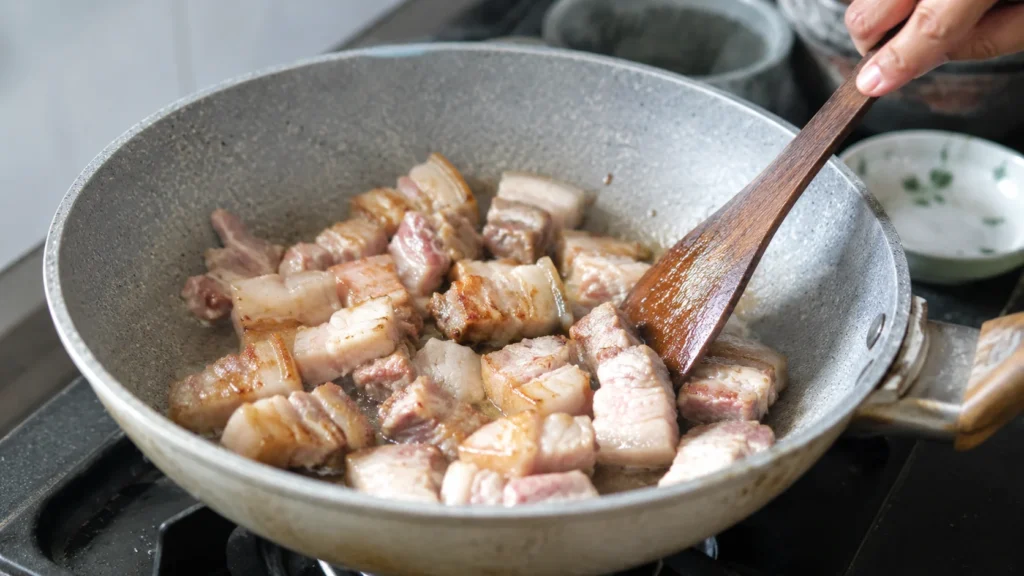
Add pork belly and cook until lightly browned. You want small golden edges for extra flavor. This adds depth to the sauce later.
Step 3: Add coconut milk
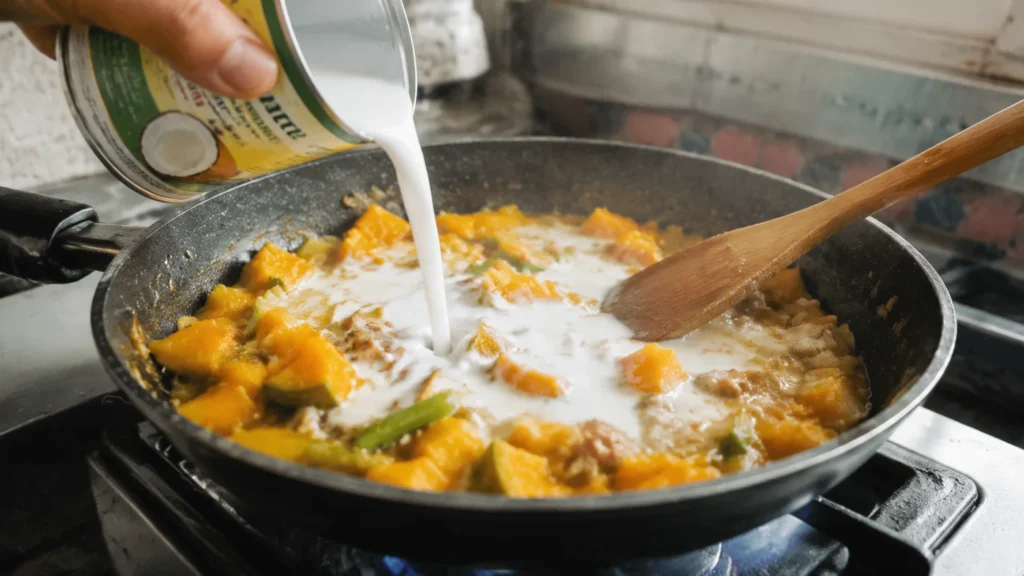
Pour in coconut milk and stir well. Let it come to a gentle simmer. Do not let it boil hard or it may split.
Step 4: Cook the squash

Add cubed kalabasa. Cover and cook for about 8–10 minutes. The squash should feel soft when pierced but still hold its shape.
Step 5: Add sitaw
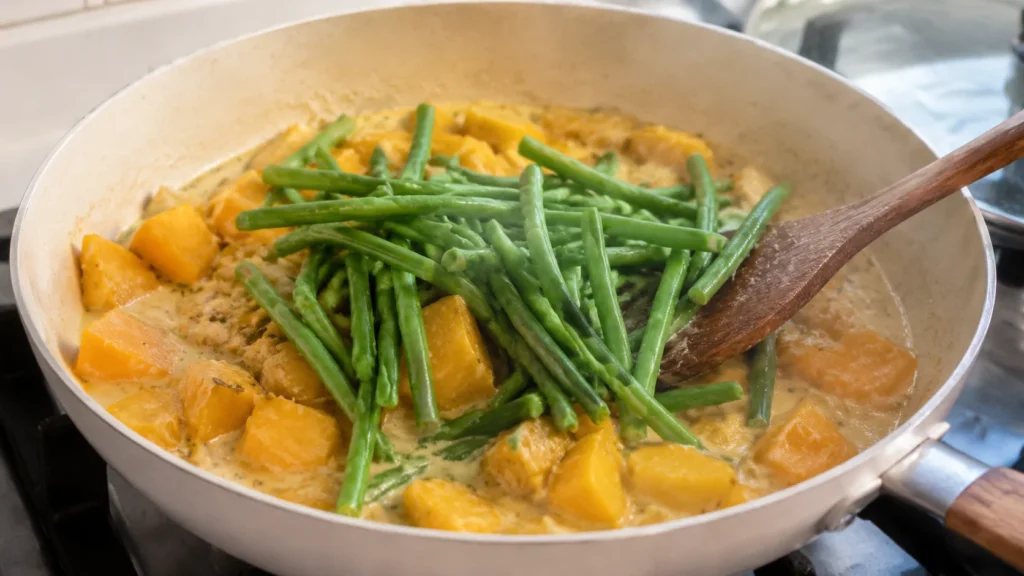
Add long beans and cook for 2–3 minutes. They should stay slightly crisp and green.
Step 6: Finish and season

Add fish sauce and adjust salt. Let everything combine for 1–2 minutes before serving.
The sauce should look creamy, not oily. It should lightly coat your spoon.
The Common Mistakes That Ruin Ginataang Kalabasa Recipe

Most problems with this dish come from heat and timing.
1. Boiling the coconut milk too hard
High heat breaks coconut milk. It separates into oil and curds.
Keep it at a gentle simmer only.
2. Overcooking the squash
If you cook kalabasa too long, it disappears into the sauce.
You want soft cubes, not mush.
3. Adding vegetables too early
Sitaw and greens cook fast. Adding them too soon makes them soggy.
Quick tips
- Use medium heat only
- Add squash before green beans
- Simmer, don’t boil
Pro Tip: The Secret to a Creamy Coconut Sauce That Never Breaks
The real secret is temperature control.
Coconut milk starts to separate around high heat. When it passes that point, the fats break away from the liquid. That’s why your sauce looks oily.
Keep the heat steady and low once the coconut milk goes in. Stir gently, not aggressively.
If it ever splits, remove it from heat and add a small splash of warm water while stirring slowly. This helps bring it back together.
Easy Variations You Can Try at Home
You can change this dish in many simple ways:
- Add shrimp for a lighter seafood version
- Use tofu for a vegetarian ginataang kalabasa recipe
- Add spinach or malunggay for extra greens
- Swap pork belly with chicken thigh for less fat
- Add chili for a spicy Bicol-style version
- Use coconut cream for a richer, thicker sauce
What to Serve With Ginataang Kalabasa Recipe

This dish is always best with rice. The sauce is made for it.
- Steamed white rice – soaks up the creamy sauce
- Fried fish – adds crunch and saltiness
- Grilled chicken – balances the richness
- Fried tofu – keeps it light but filling
- Pickled vegetables – cuts through the creaminess
If you like Filipino comfort food, this also pairs well with our homemade garlic fried rice recipe.
My Honest Experience Making This Recipe
The first time I made this, I rushed everything. I boiled the coconut milk too fast and ended up with a split sauce. I thought I ruined it.
But I learned something important: slow heat changes everything.
Now I always cook it on steady medium heat. The squash comes out soft but intact, and the sauce stays smooth. That one change fixed the whole dish for me.
How to Store, Freeze, and Reheat Ginataang Kalabasa Recipe
This dish stores well, but texture changes slightly over time.
- Room temp: 2 hours max
- Fridge: 3 days in airtight container
- Freezer: 1 month (best without coconut sauce mixed in)
Reheating tip
Warm it on low heat. Add 2–3 tablespoons of water or coconut milk. Stir gently to bring back the creamy texture.
Frequently Asked Questions About Ginataang Kalabasa Recipe

Ginataang Kalabasa Recipe
Ingredients
Equipment
Method
- Heat oil in a large skillet over medium heat. Sauté garlic, onion, and ginger until fragrant and slightly soft. The kitchen should smell rich and savory.
- Add pork belly and cook until lightly browned on the edges. This builds flavor and adds depth to the sauce.
- Pour in coconut milk and stir gently to combine. Bring to a gentle simmer, not a boil, to keep it creamy.
- Add kalabasa cubes and cover the pan. Cook for 8–10 minutes until the squash is tender but still holds shape.
- Add sitaw and cook for another 2–3 minutes. The beans should stay bright green and slightly crisp.
- Add spinach and let it wilt for about 30 seconds. It should soften quickly into the sauce.
- Stir in bagoong alamang for umami flavor and mix well. Let everything simmer for 1–2 minutes.
- Season with fish sauce to taste and adjust salt if needed. The sauce should look creamy and coat the ingredients lightly.
Notes
- Keep heat low once coconut milk is added to prevent curdling.
- Do not overcook kalabasa or it will turn mushy in the sauce.
- Add a splash of water or coconut milk when reheating to restore creaminess.
Final Thoughts on Ginataang Kalabasa Recipe

This Ginataang Kalabasa Recipe works because it keeps things simple. No complicated steps. Just good timing and steady heat.
Once you understand how coconut milk behaves, this dish becomes easy to repeat anytime.
It’s creamy, filling, and perfect with rice. More than anything, it’s a reminder that simple home cooking can still taste rich and satisfying.
If you make this, I would love to know how it turned out. Drop a comment below.