Baked Bacon Recipe: 7 Easy Secrets for Crispy Bacon

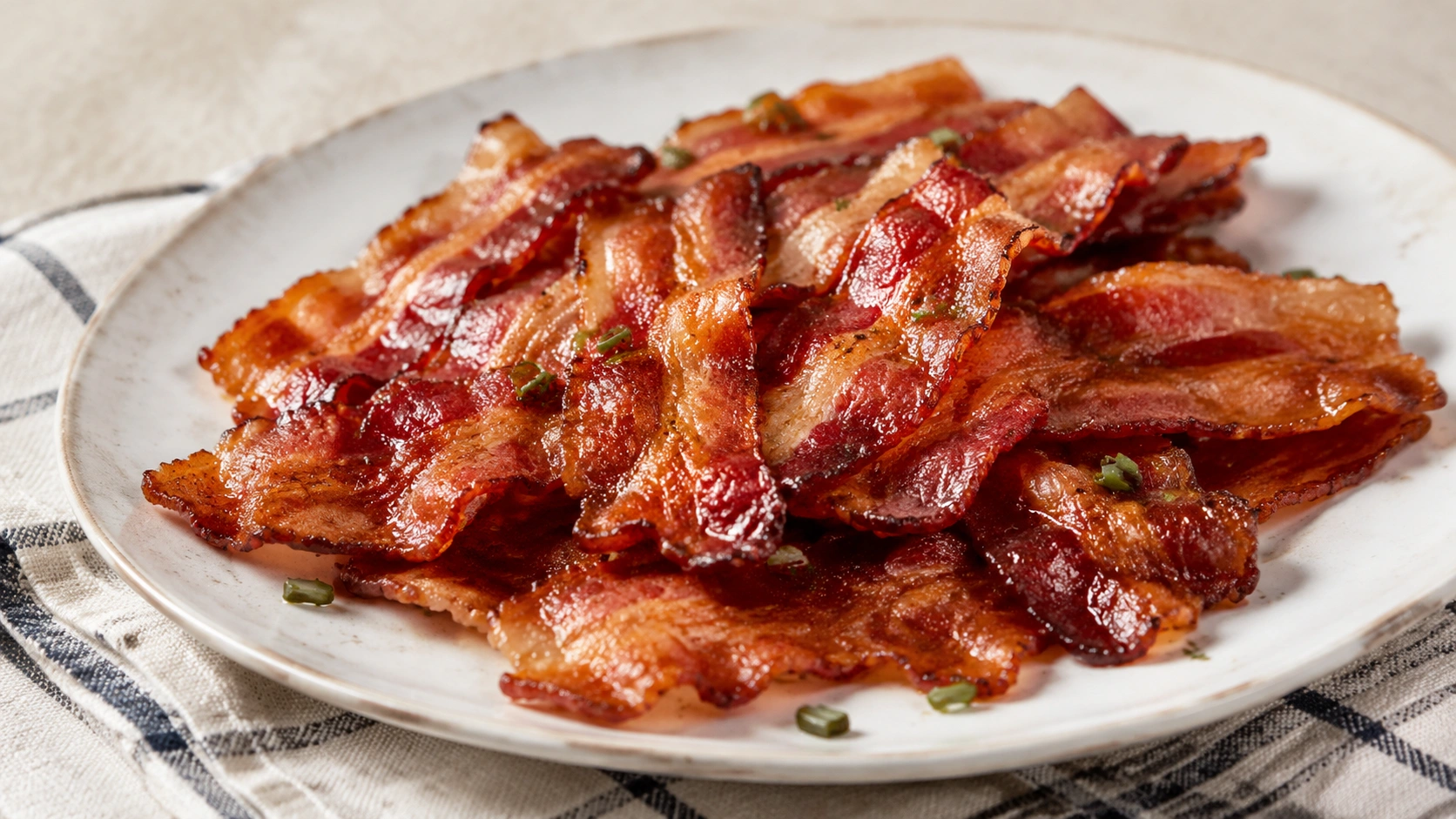
There is something deeply satisfying about pulling a tray of crispy bacon from the oven. The strips stay flat, the fat renders slowly, and your stovetop stays clean. This baked bacon recipe became my weekend standard after years of dealing with grease splatters and uneven skillet batches. Now I use it for brunch spreads, meal prep, breakfast sandwiches, and even bacon-wrapped chicken dinners.
The biggest advantage is consistency. Oven heat surrounds every slice, so the bacon cooks evenly without constant flipping or babysitting. It also works beautifully for thick-cut bacon, regular sliced bacon, and large family batches. If you have ever burned one side while the other stayed chewy, this method fixes that problem.
Whether you love extra-crispy bacon or slightly chewy strips, this guide walks you through every detail. You will also learn how to save bacon grease, reheat leftovers properly, and choose the right pan setup for your preferred texture.
What Is baked bacon recipe
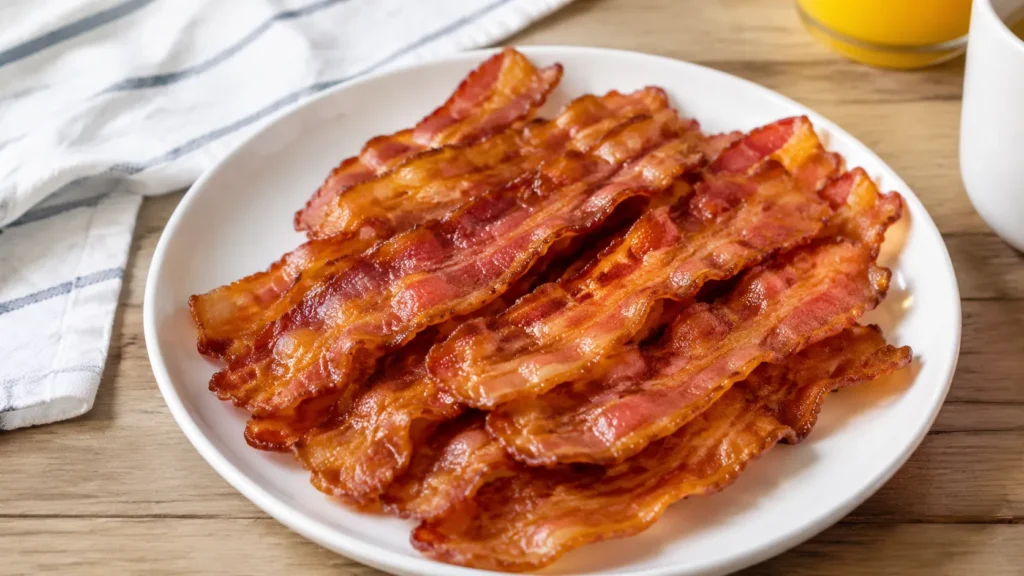
A baked bacon recipe is a method of cooking bacon in the oven instead of frying it on the stovetop. Bacon strips cook on a lined baking sheet at high heat, usually 400°F, until crispy and evenly browned. This method reduces splatter, handles larger batches easily, and creates more consistent texture.
Unlike pan-fried bacon, oven bacon cooks with surrounding heat instead of direct contact from below. That slower rendering process helps the fat melt evenly while the meat crisps gradually. The result is balanced texture, reliable browning, and easier cleanup.
Why This Recipe Works
Bacon contains a high amount of fat that begins rendering around 140°F. In the oven, the temperature rises steadily, allowing the fat to melt before the meat overcooks. That gradual rendering prevents burnt edges and undercooked centers. The Maillard reaction also plays a huge role. Bacon develops deeper flavor between roughly 280°F and 330°F. Baking at 400°F keeps the strips in that ideal browning window longer than many stovetop methods.
Using a rimmed baking sheet also helps maintain even heat exposure. Unlike a skillet with hot spots, the oven surrounds the bacon completely. That means fewer charcoal edges and more evenly cooked slices. A wire rack changes texture further. Elevating the bacon allows hot air to circulate underneath while excess fat drips away. The result is extra-crispy bacon with slightly less grease.
Convection ovens cook faster because moving air accelerates browning. Gas ovens often cook hotter underneath, while electric ovens maintain steadier heat. Understanding those differences prevents ruined batches and wasted bacon.
Recipe Overview
This oven baked bacon recipe produces crispy edges, rich smoky flavor, and evenly rendered fat. It works for regular sliced bacon and thick-cut bacon with very little hands-on effort. Cleanup stays simple when using parchment paper or aluminum foil.
| Detail | Information |
| Recipe Style | Oven baked bacon |
| Texture | Crispy edges with chewy center option |
| Best Temperature | 400°F |
| Cook Time | 10 to 20 minutes |
| Best Pan | Rimmed baking sheet |
| Cleanup Method | Parchment paper or aluminum foil |
| Best For | Brunch, meal prep, large batches |
| Difficulty | Easy |
| Yield | 8 to 16 slices |
| Bonus Benefit | Save rendered bacon grease |
Ingredients and Why They Matter
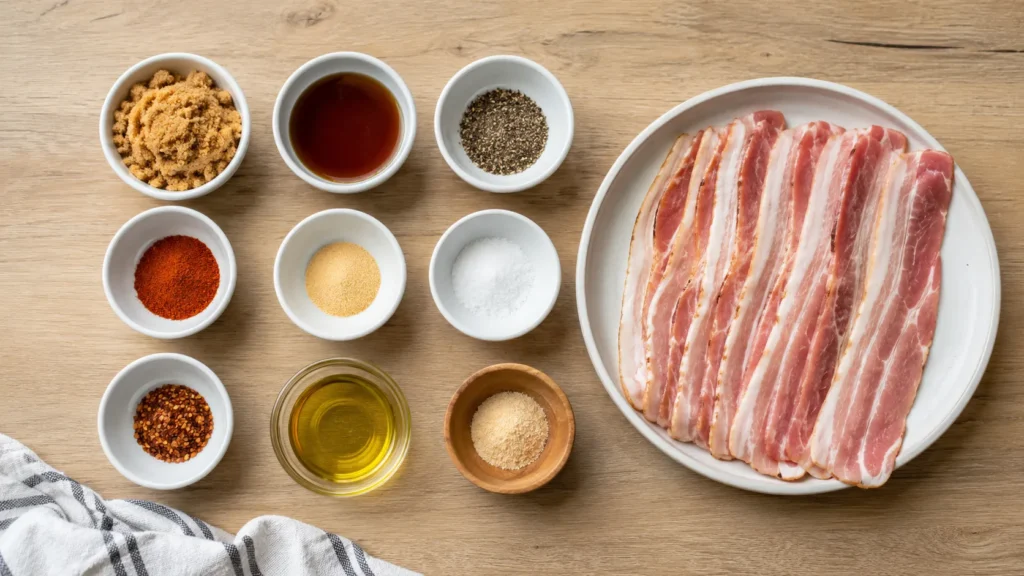
Bacon
The bacon itself determines the final texture more than anything else. Thick-cut bacon stays meatier and chewier. Thin-cut bacon crisps quickly and can overcook fast. Regular sliced bacon usually finishes around 14 to 16 minutes. Thick-cut bacon often needs 18 to 20 minutes for proper crispiness.
Parchment Paper or Aluminum Foil
Both options reduce cleanup dramatically. Parchment paper prevents sticking and handles rendered fat well. Aluminum foil creates easier grease disposal. If using foil-lined baking sheets, leave overhang on all sides. That makes cleanup much faster.
Rimmed Baking Sheet
A rimmed baking sheet keeps hot bacon grease contained safely. Flat cookie sheets can spill grease into the oven. Heavy-duty baking sheets also resist warping at high heat.
Wire Rack
A metal cooling rack creates extra-crispy bacon because heat reaches every side. Bacon cooked directly on the pan stays slightly richer because it cooks in rendered fat.
Optional Flavor Additions
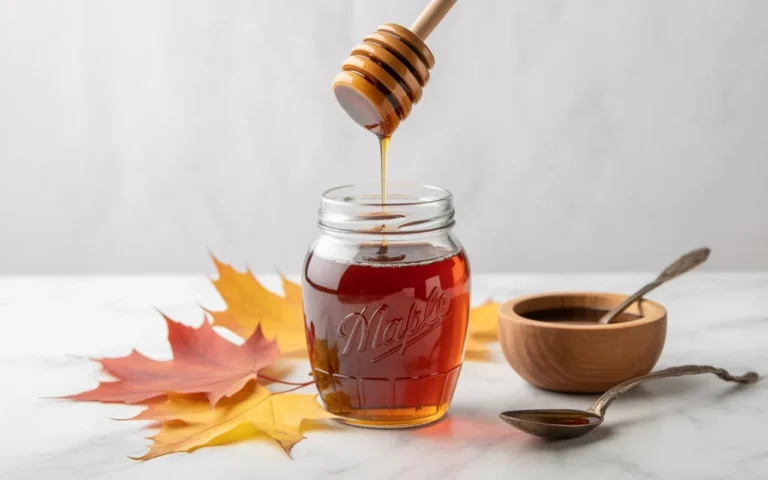
Brown sugar creates candied bacon texture but burns easily if added too early. Maple syrup works similarly. Black pepper, smoked paprika, or cracked chili flakes should go on during the final few minutes.
How to Make It Step by Step
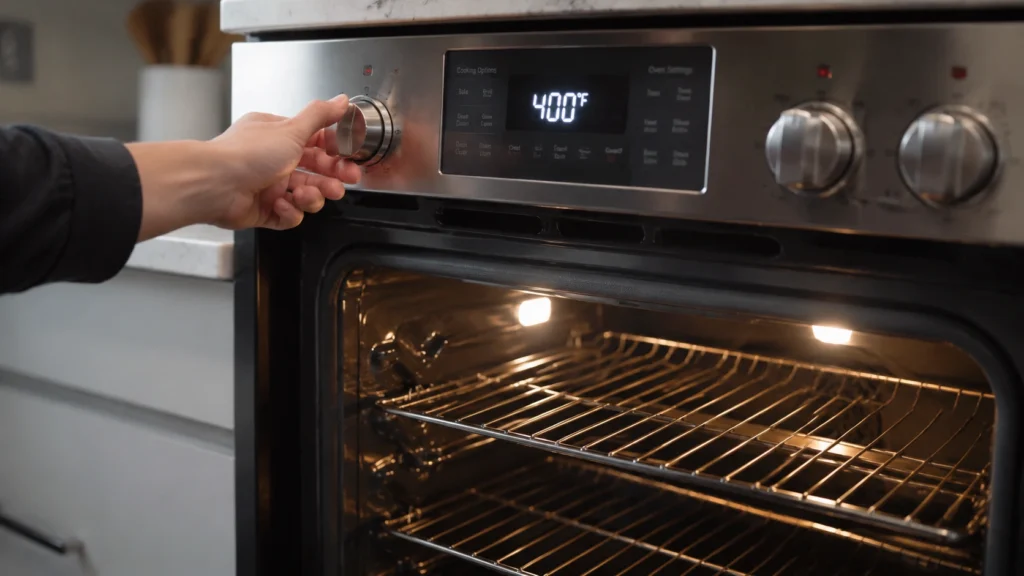
Preheat the oven to 400°F.
Arrange the rack in the middle position. A fully heated oven helps the bacon render evenly from the beginning.
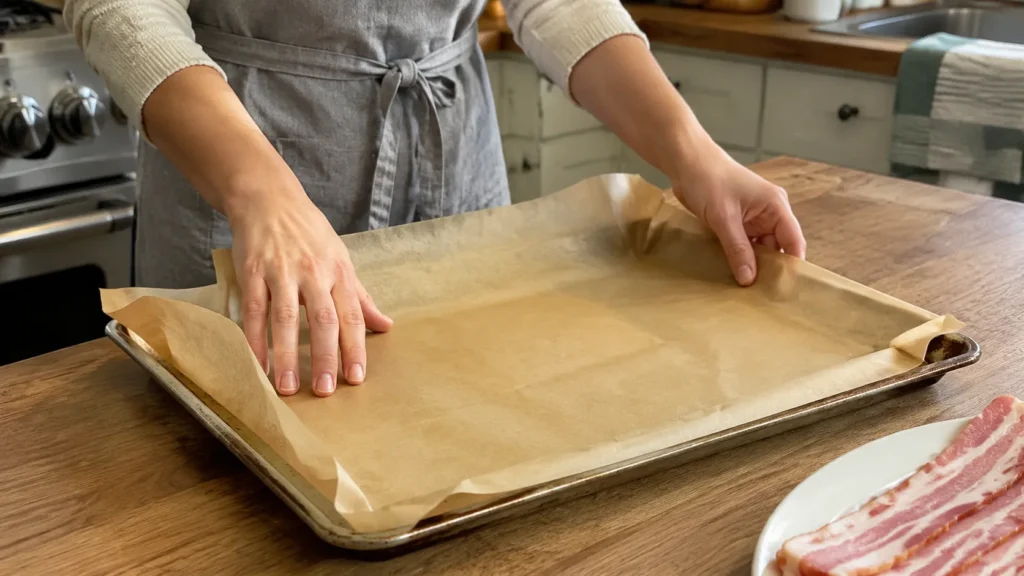
Line a rimmed baking sheet.
Use parchment paper or aluminum foil with slight overhang. This catches grease and prevents difficult cleanup later.
Arrange the bacon slices.
Place strips in a single layer without overlapping. Crowded bacon steams instead of crisping properly.
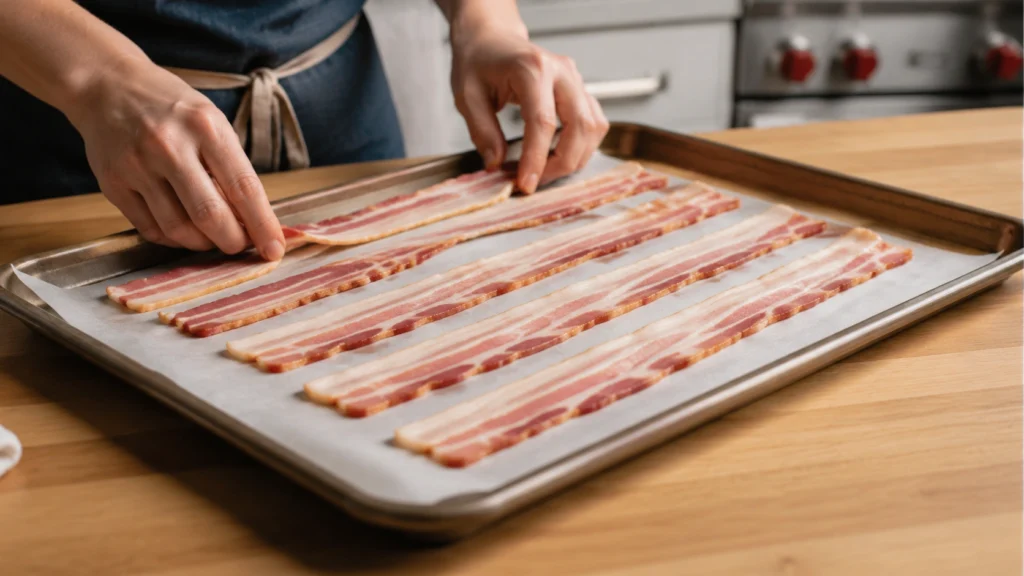
Choose your texture setup.
Lay bacon directly on the tray for slightly chewy centers. Use a wire rack for extra-crispy texture and faster fat drainage.
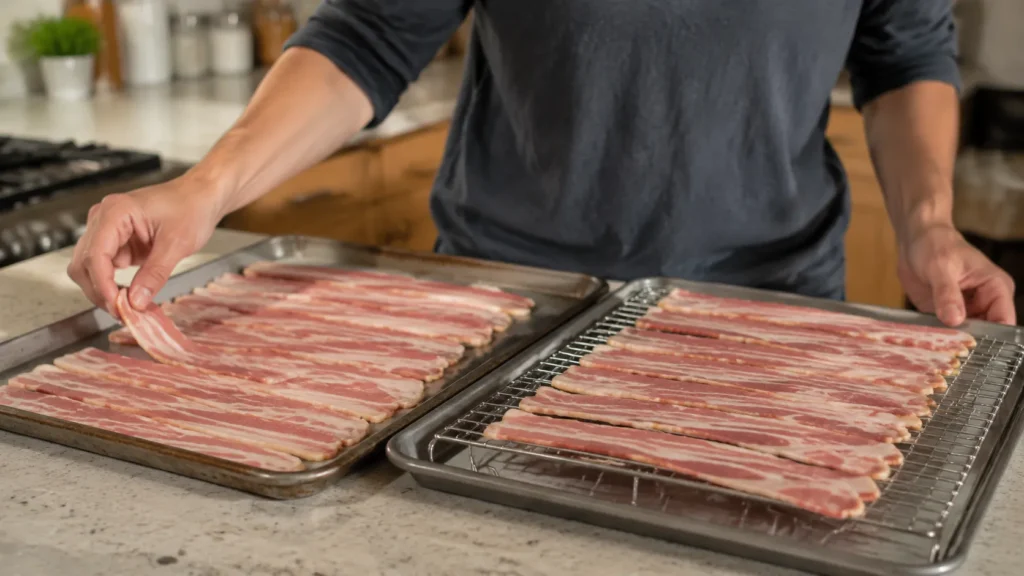
Bake the bacon.
Thin slices usually finish around 10 to 14 minutes. Thick-cut bacon may need 18 to 20 minutes depending on desired crispiness.
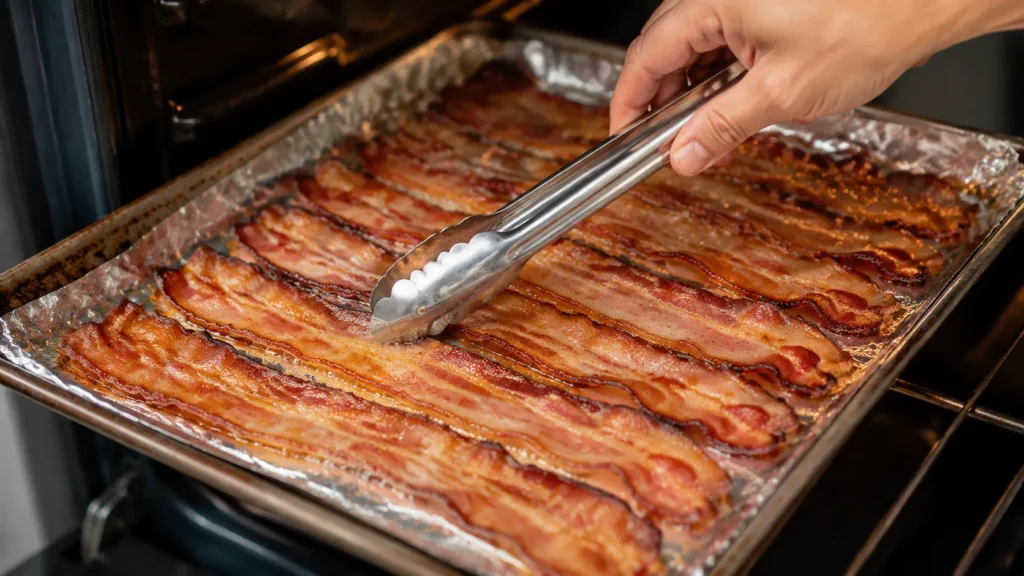
Watch carefully during the final minutes.
Bacon changes quickly near the end. Look for deep golden-brown edges and bubbling fat.
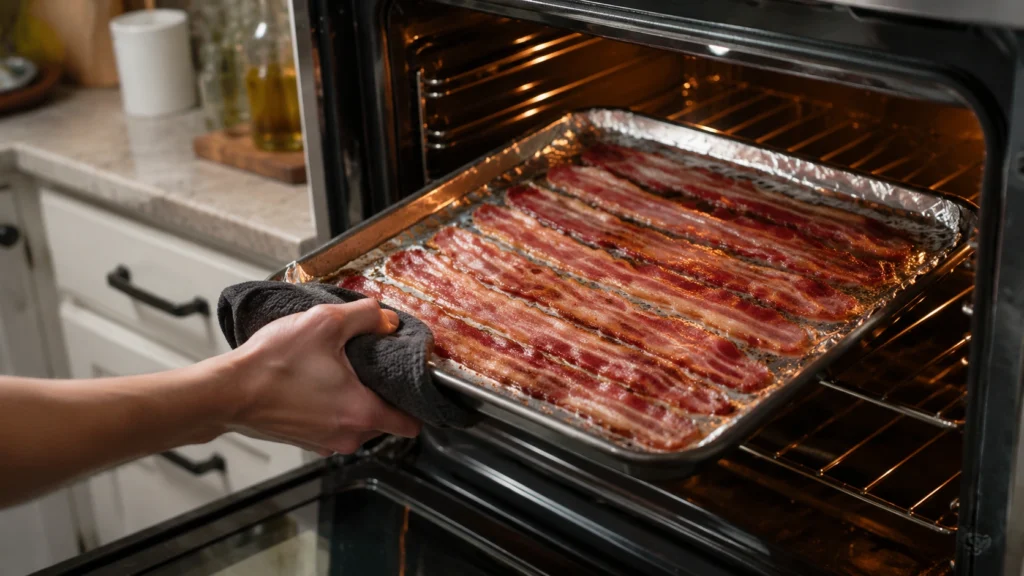
Rotate the pan halfway through.
This helps compensate for oven hot spots and improves even cooking.
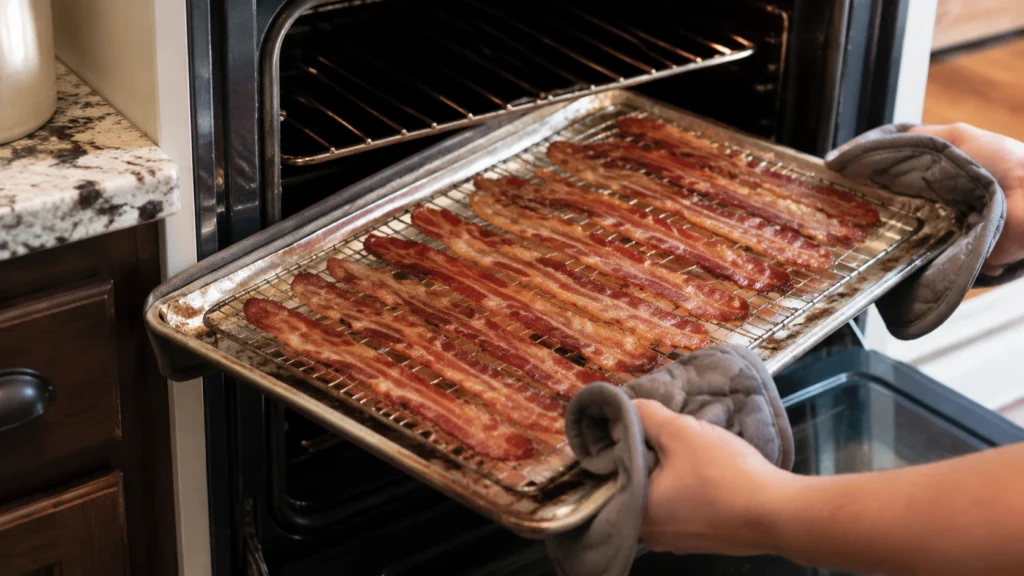
Transfer to paper towels.
Use tongs to move the bacon onto a paper towel-lined plate. Residual heat crisps the slices slightly more.
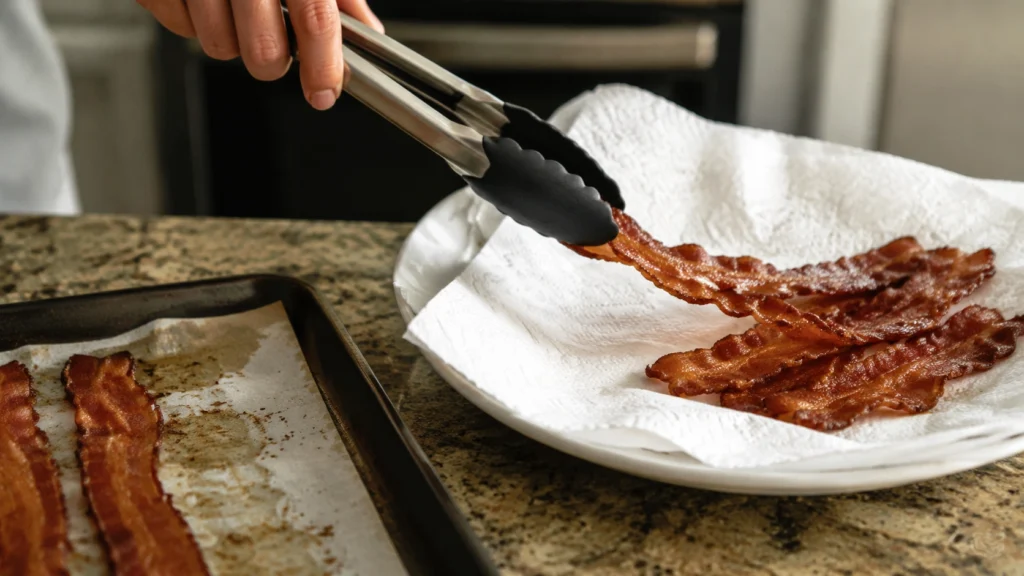
Save the rendered bacon grease if desired.
Pour warm grease through a fine mesh sieve into a glass jar. Refrigerate for future cooking.
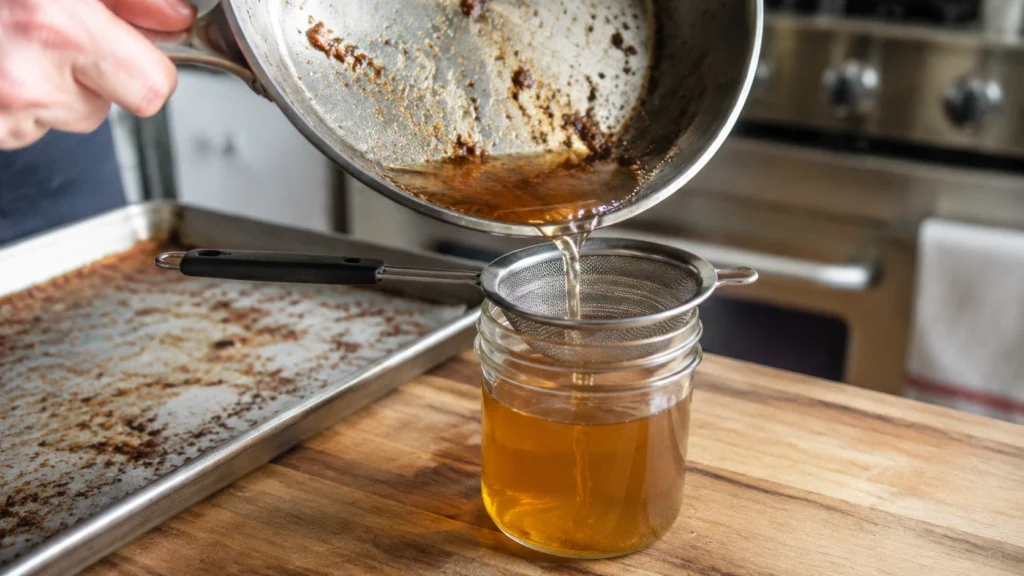
Cost Breakdown
Premium bacon can cost nearly twice as much per slice compared to budget brands. Thick-cut bacon also shrinks more after cooking because it contains higher moisture and fat content.
| Bacon Type | Approximate Package Price | Slices Per Pack | Estimated Cost Per Slice | Yield After Cooking |
| Budget Bacon | $5.49 per 16 oz | 18 to 20 | Low | Slight shrinkage |
| Mid-Range Bacon | $6.49 per 16 oz | 16 to 18 | Medium | Balanced texture |
| Premium Thick-Cut Bacon | $7.49 per 16 oz | 12 to 16 | Higher | More shrinkage |
| Organic Bacon | $8.50 per 16 oz | 12 to 16 | Highest | Rich rendered fat |
Budget bacon works perfectly for baked beans, bacon mac and cheese, or chopped salad toppings. Premium thick-cut bacon shines when served whole beside eggs or pancakes.
Saving rendered bacon grease also increases value. One pound of bacon can produce several tablespoons of stable cooking fat.
Mistakes That Ruin It
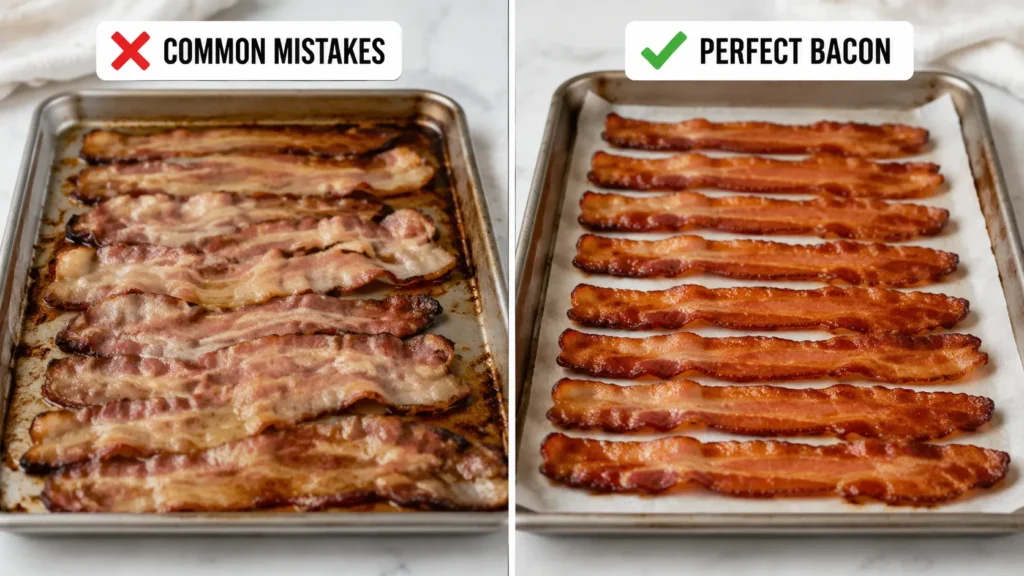
Starting with overlapping slices causes uneven cooking. The bacon steams instead of crisping. Using a flat baking tray instead of a rimmed baking sheet can create dangerous grease spills.
Skipping pan rotation increases the chance of burnt edges in ovens with strong hot spots. Adding maple syrup or brown sugar too early burns the sugars before the bacon finishes cooking.
Cooking thick-cut bacon at convection temperatures without adjustment often overcooks the edges. Lower convection ovens by about 25°F. Removing bacon too late also matters. Bacon continues crisping slightly after leaving the oven.
Using a flimsy sheet tray may cause warping from hot rendered fat.
Pro Tips
Cook two baking sheets at once for large brunches. Rotate both pans halfway through and swap rack positions for even results. For a second batch in an already hot oven, reduce the temperature slightly. Hot ovens brown bacon faster during later rounds.
Cold bacon straight from the refrigerator holds shape better than room-temperature strips. Use parchment paper when cooking sugary glazes. Brown sugar sticks aggressively to foil.
Check thin bacon earlier than expected. Some brands become crispy in only 10 minutes. A wire rack reduces grease reabsorption and creates drier, crispier texture.
Store bacon grease in glass containers only. Hot fat can warp plastic storage containers.
Variations
- Brown sugar baked bacon with a light sprinkle during the last 5 minutes
- Maple baked bacon brushed lightly with maple syrup near the end
- Black pepper bacon with coarse cracked pepper
- Spicy bacon using chili flakes and smoked paprika
- Candied bacon with brown sugar and maple syrup
- Turkey bacon baked at slightly lower temperature for gentler rendering
Storage + Reheating
Baked bacon stores surprisingly well when cooled completely before refrigeration. Moisture trapped in containers softens crisp texture quickly, so proper storage matters.
| Method | Storage Time | Best Container | Texture Result | Reheating Recommendation |
| Refrigerator | Up to 5 days | Paper towel-lined airtight container | Slightly softer | Oven or air fryer |
| Freezer | Up to 3 months | Layered freezer bag | Good after reheating | Air fryer works best |
| Microwave Reheat | 20 to 30 seconds | Paper towel-lined plate | Softer texture | Fastest method |
| Oven Reheat | 350°F for 5 minutes | Baking sheet | Crispy texture | Best overall result |
| Air Fryer Reheat | 350°F for 2 to 3 minutes | Air fryer basket | Very crispy | Excellent for meal prep |
Freeze bacon in separated layers with parchment paper between slices. That makes individual portions easier to grab later.
Chicken Katsudon Recipe makes breakfast prep easier while giving you crispy, evenly cooked bacon with almost no messy cleanup.
FAQ
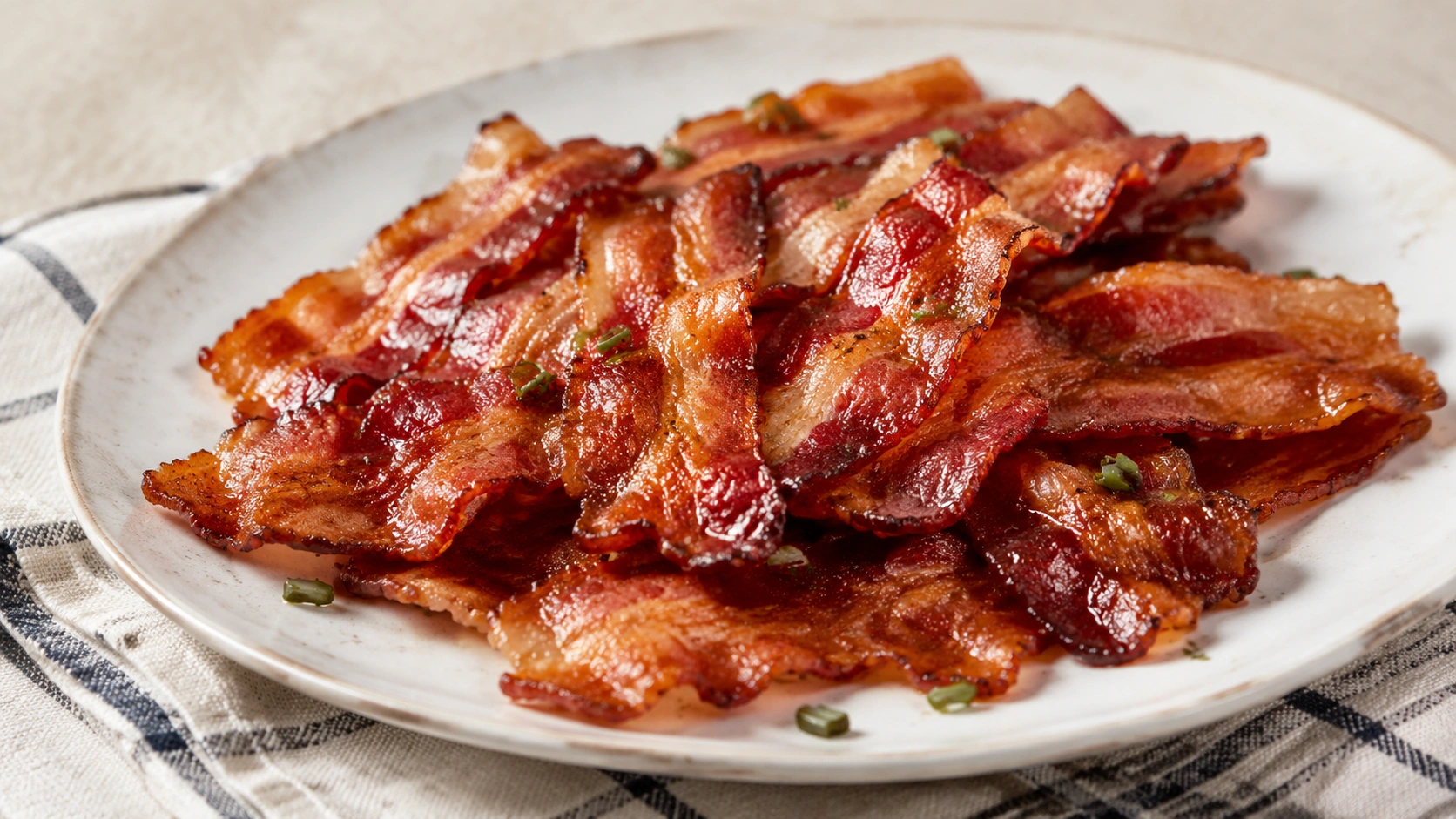

Baked Bacon Recipe
Ingredients
Equipment
Method
- Preheat the oven to 400°F and place the oven rack in the middle position. A fully heated oven helps the bacon cook evenly.
- Line a rimmed baking sheet with parchment paper or aluminum foil. This keeps cleanup quick and prevents grease spills.
- Place the bacon slices in a single layer on the baking sheet or wire rack. Avoid overlapping so the bacon crisps properly.
- Bake the bacon for 10 to 20 minutes depending on thickness and desired crispiness. Thin bacon cooks faster than thick-cut bacon.
- Rotate the baking sheet halfway through cooking for even browning. The bacon should look deep golden with bubbling fat near the edges.
- Remove the bacon when it reaches your preferred texture. Remember that it crisps slightly more after leaving the oven.
- Transfer the bacon to a paper towel-lined plate using tongs. Let it rest for 1 to 2 minutes before serving.
- Carefully pour the warm bacon grease into a heatproof container if saving for later cooking. Refrigerate after cooling completely.
Notes
Final Thoughts
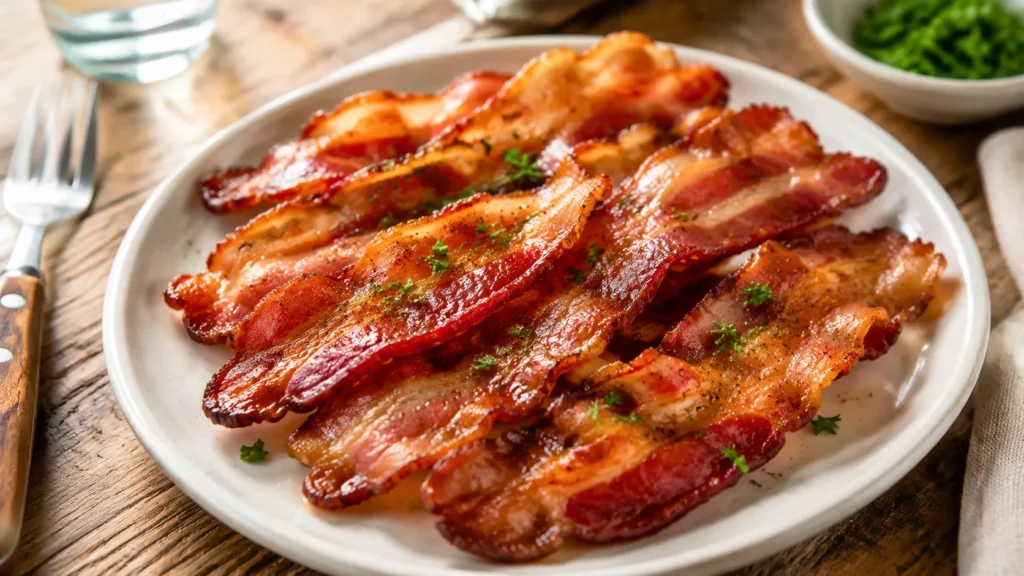
This baked bacon recipe solves nearly every common bacon problem. It reduces grease splatter, cooks evenly, handles large batches easily, and frees your stovetop for other breakfast dishes. Once you see how reliable oven bacon becomes, it is difficult to return to pan-frying.
The real key is learning how small adjustments affect texture. A wire rack creates extra-crispy bacon. Direct pan contact produces richer flavor. Thick-cut bacon needs more time, while thin slices finish quickly. Once you understand those variables, you can make perfect bacon exactly the way you like it every time.
Browse Cookiva Recipe for delicious recipes that make breakfast, dinner, and meal prep much easier.