Chimichurri recipe: 5 Easy Secrets for Better Flavor

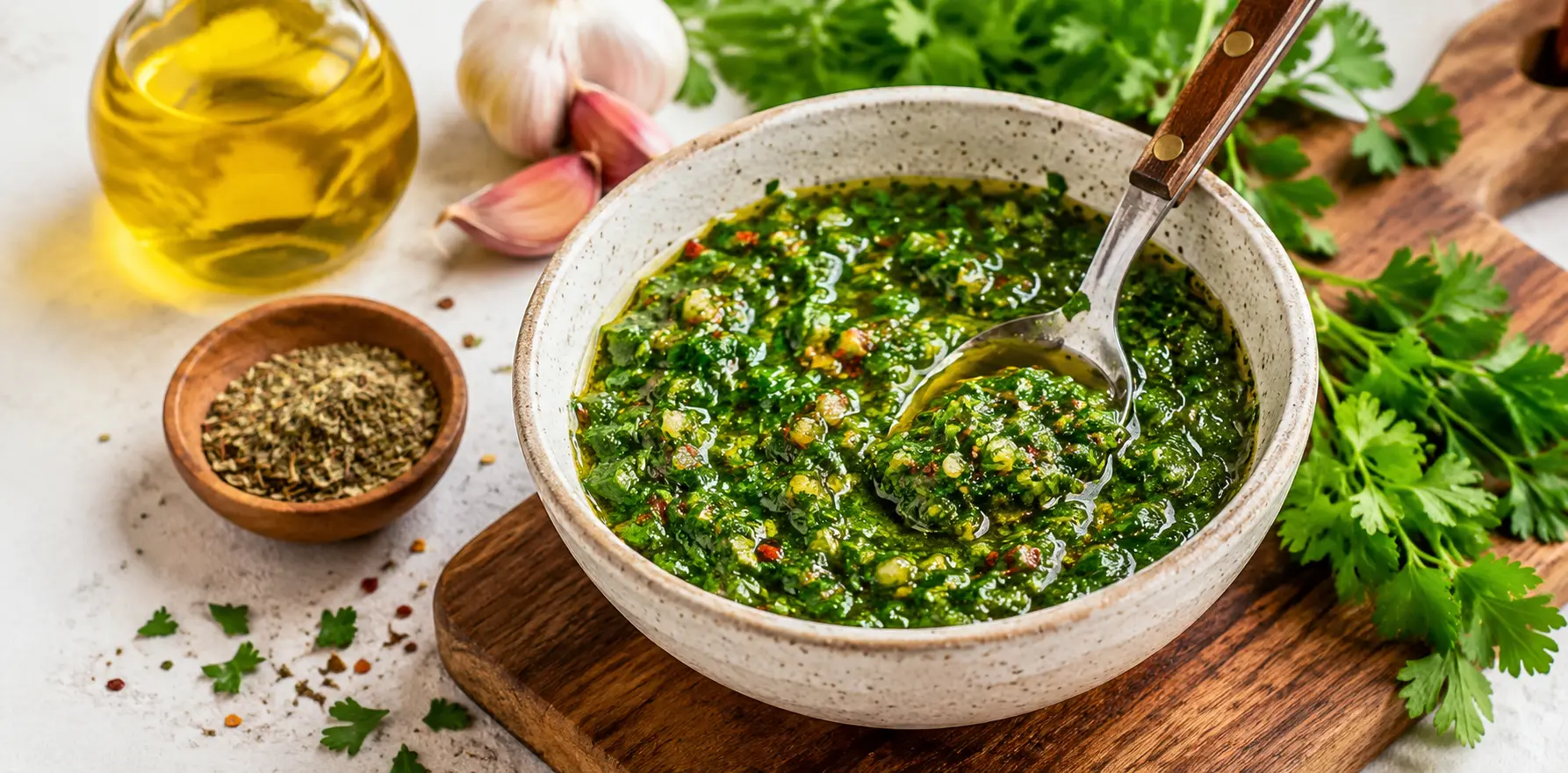
Chimichurri Recipe That Makes Everything Taste Better. Ever grilled a steak and felt it needed something special? This chimichurri recipe is a fresh green sauce made with parsley, garlic, vinegar, olive oil, and oregano that instantly lifts any meal. It tastes bold, tangy, and garlicky with a fresh herb smell that wakes up your food. It is quick, budget-friendly, and ready in minutes, making it way better than store-bought sauces. You can drizzle it on meat, veggies, or bowls for easy flavor.
I started making homemade chimichurri after one summer cookout where the grilled meat was slightly overcooked, but nobody cared because the sauce completely saved dinner. That’s the beauty of traditional Argentinian chimichurri. It’s bold, garlicky, fresh, herby, and sharp in the best possible way. The parsley, oregano, olive oil, garlic, and red wine vinegar blend together into a fresh herb condiment that works as a dipping sauce, flavorful marinade, and finishing sauce all at once.
The best part? This easy chimichurri sauce recipe comes together in under 10 minutes, tastes even better the next day, and instantly upgrades everything from grilled fish to quinoa bowls and roasted vegetables.
What Makes Chimichurri Recipe So Special?
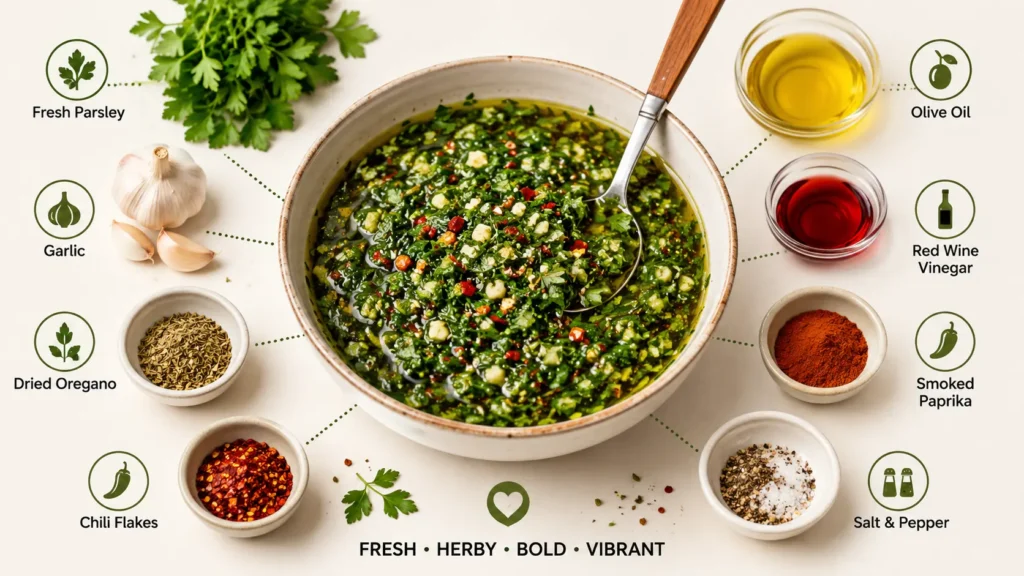
Chimichurri is a classic green sauce from Argentina and Uruguay, traditionally served with grilled steak and other grilled meats. At its core, it’s a no-cook herb condiment made from chopped parsley, garlic, oregano, olive oil, vinegar, and chili flakes. Unlike creamy sauces or heavy marinades, chimichurri stays light and fresh while still delivering bold flavor.
The texture depends on how it’s prepared. Some cooks prefer a rustic hand-cut version with visible flecks of herbs and garlic, while others use a food processor for a smoother, spoonable sauce. Both are delicious, but they create slightly different eating experiences.
People commonly use chimichurri as a topping for grilled steak, grilled chicken, grilled shrimp, pork, tofu, roasted potatoes, grain bowls, and roasted veggies. It’s especially popular during summer cooking because it pairs beautifully with grilled vegetables and smoky foods fresh off the grill.
Why This Chimichurri Verde Works Better Than Most Versions
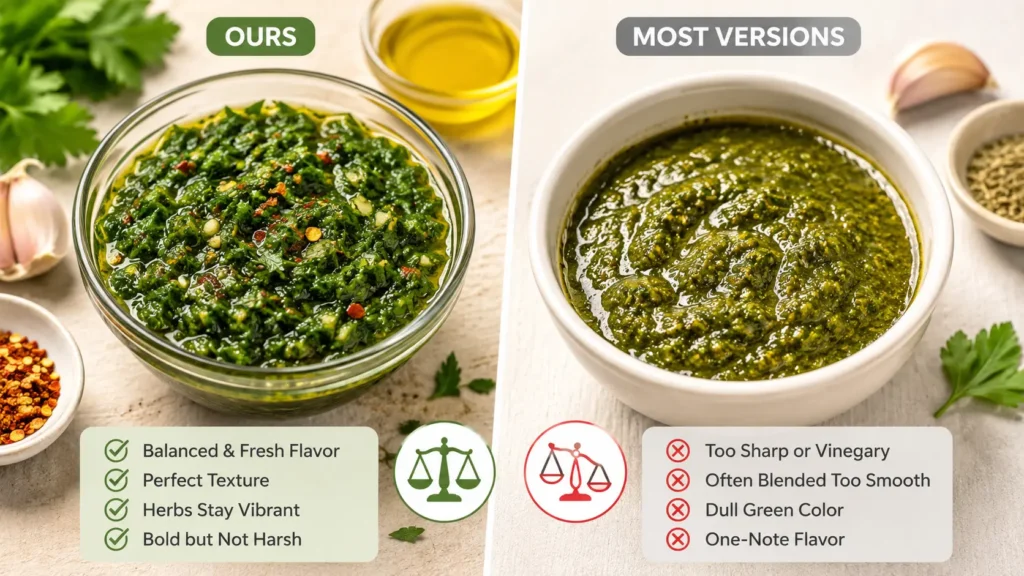
A lot of chimichurri recipes taste overly sharp or oddly bitter. After testing several batches at home, I realized the small technique details matter more than people think.
This version balances fresh tangy flavor with earthy oregano depth and rich olive oil without turning into a smooth green paste. The garlic stays bold but not harsh, and the vinegar adds brightness instead of overwhelming acidity.
One thing I especially love is how adaptable it is. You can make it thicker for grilled Chimichurri Steak Recipe nights or slightly looser for grain bowls and roasted cauliflower steaks.
Quick Recipe Overview
| Detail | Information |
|---|---|
| Prep Time | 10 minutes |
| Cook Time | 0 minutes |
| Total Time | 10 minutes |
| Servings | 4–6 |
| Difficulty | Easy |
| Cuisine | Argentine cuisine |
| Texture | Rustic, spoonable sauce |
| Best For | Grilled steak, chicken, vegetables, tofu |
Ingredients That Build Authentic Chimichurri Flavor
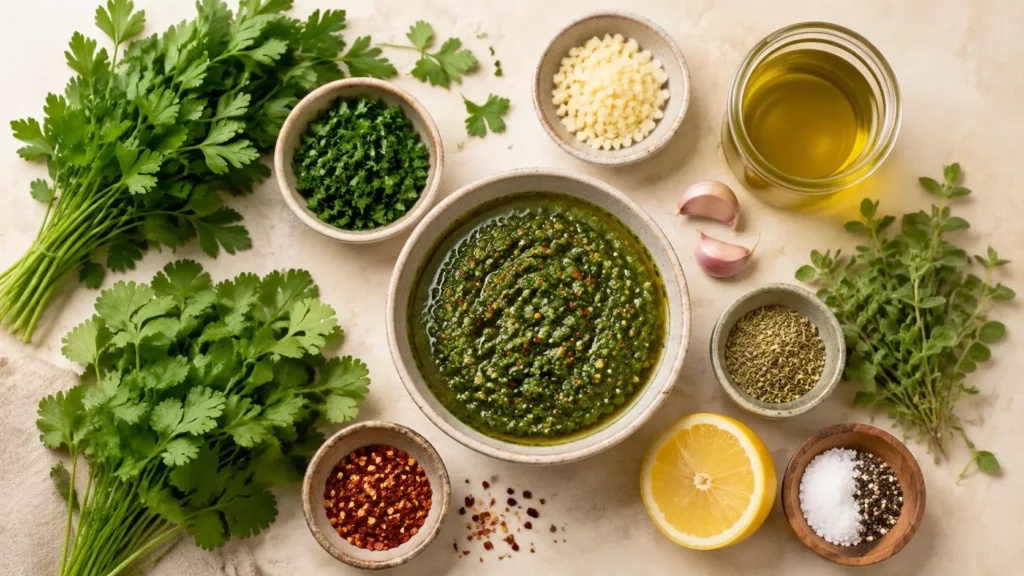
The ingredients are simple, but each one has an important job. Chimichurri depends on balance. Too much vinegar and it becomes harsh. Too much oil and it loses brightness. Fresh herbs create the signature vibrant green sauce, while dried oregano gives the sauce its classic Argentinian depth.
Chimichurri Ingredients
- 1 bunch fresh flat-leaf parsley, finely chopped
- 1 garlic clove minced, or more if you like a sharper garlic bite
- ¼ teaspoon dried oregano
- ¼ teaspoon red pepper flakes or red chili flakes
- ¼ teaspoon smoked paprika
- 2 tablespoons red wine vinegar
- ⅓ cup extra-virgin olive oil
- Sea salt and black pepper, season to taste
- Optional chopped shallot for mild onion flavor
- Optional fresh cilantro for a brighter herbal finish
The Secret Is the Acid
Red wine vinegar is the backbone of chimichurri sauce. A good-quality aged red wine vinegar creates tangy sharp flavors with depth, while cheap vinegar can taste flat and aggressive. White wine vinegar works in a pinch, but traditional Argentinian chimichurri usually leans on red wine vinegar because it complements grilled meats beautifully.
Fresh vs. Dried Herbs — What’s Worth Buying?
| Ingredient | Best Choice | Flavor Impact |
|---|---|---|
| Parsley | Fresh parsley | Non-negotiable for vibrant herbs and bright flavor |
| Oregano | Dried oregano | Gives authentic earthy savory depth |
| Cilantro | Optional | Adds citrus brightness but changes the traditional profile |
| Garlic | Fresh garlic | Better texture and stronger aroma than garlic powder |
Ingredient Swaps for Different Flavor Preferences
| Missing Ingredient | Swap | Flavor Impact |
|---|---|---|
| Flat-leaf parsley | Curly parsley | Slightly rougher texture |
| Cilantro | Extra parsley | Cleaner, less polarizing flavor |
| Red wine vinegar | White wine vinegar | Brighter and lighter tangy notes |
| Olive oil | Avocado oil | More neutral taste |
How to Make Chimichurri Recipe the Right Way
The best chimichurri doesn’t happen by accident. It’s less about complicated cooking and more about proper texture and timing. Most people rush the process, blend everything too aggressively, or skip the resting time that allows the flavors to meld.
You can make this by hand on a wooden cutting board for a traditional mosaico texture, or use a food processor for convenience. I usually choose based on what I’m serving. Hand-cut chimichurri sits beautifully on grilled skirt steak because the herbs stay distinct, while a mortar and pestle creates a more emulsified sauce that coats grilled vegetables extremely well.
Step-by-Step Instructions
- Combine the red wine vinegar, sea salt, and dried oregano in a small bowl. Let it sit for 10 minutes so the oregano blooms and softens properly. This prevents gritty texture and creates deeper flavor.
- Finely chop the fresh parsley, garlic, and optional shallot. If using a food processor, pulse gently instead of fully blending.
- Add the chopped herbs, red pepper flakes, smoked paprika, and black pepper to the bowl.
- Stir in the extra-virgin olive oil slowly until the sauce becomes glossy and spoonable.
- Let the chimichurri rest at room temperature for at least 15 minutes before serving.
- Taste and adjust. Sometimes a tiny extra splash of vinegar or pinch of salt completely changes the final balance.
Science Tip — Why Chimichurri Sometimes Tastes Bitter
If using a food processor, pulse the herbs first and stir in the olive oil by hand afterward. High-speed blades can shear extra virgin olive oil and release bitter polyphenols. That’s why some chimichurri sauces taste strangely bitter even when using expensive oil.
Pro Tip for Best Results
If you have time, make chimichurri recipe one full day ahead. The garlic mellows overnight, the parsley infuses the oil, and the oregano softens into the sauce instead of tasting separate. Freshly made chimichurri is good, but Day 2 chimichurri tastes dramatically more balanced and cohesive.
Common Chimichurri Mistakes and Why They Ruin the Sauce
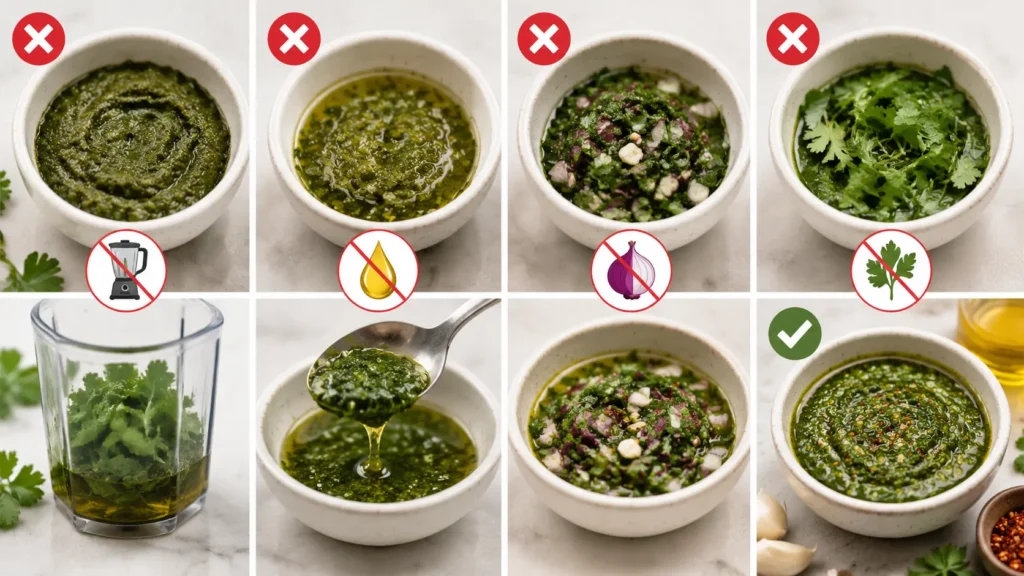
The biggest chimichurri mistakes usually come down to texture and moisture. Most people either over-process the herbs or add wet parsley straight from washing.
Wet herbs dilute the oil and vinegar, making the sauce watery instead of rich and glossy. Over-blending creates a smooth green paste instead of classic chimichurri with visible flecks and rough texture.
Another common mistake is skipping the resting time. Fresh garlic, vinegar, and oregano need a little time to settle together.
Avoid These Common Problems
- Spin parsley completely dry before chopping
- Do not blend continuously in the food processor
- Always bloom dried oregano in vinegar first
- Use good olive oil with balanced flavor
- Let the sauce rest before serving
Troubleshooting Watery Chimichurri
If your sauce separates quickly or looks watery, the herbs were probably too wet after washing. Dry them thoroughly using paper towels or a salad spinner. You can also add slightly more chopped parsley to absorb excess liquid and restore the rustic sauce texture.
Variations, Ratios, and When to Change the Formula
One reason chimichurri has stayed popular for generations is flexibility. You can easily adjust it depending on whether you need a marinade, dipping sauce, or finishing drizzle.
Ratio Guide for Different Uses
- More vinegar = stronger marinade for chicken, shrimp, or grilled pork
- More olive oil = smoother finishing sauce for grilled steak
- Extra chili flakes = spicy heat for grilled meats
- More parsley = brighter herbaceous chimichurri flavor
Practical Variations Worth Trying
- Add cilantro for citrus herbs and brighter flavor
- Use smoked paprika for subtle smoky flavor
- Stir into cooked quinoa or brown rice for easy grain bowls
- Spoon over roasted potatoes or crispy potatoes
- Serve with grilled halloumi or tofu for vegetarian meals
- Drizzle onto roasted broccoli or grilled zucchini
- Add lemon juice for sharper citrus brightness
My Experience Making This Chimichurri Sauce at Home
The first time I made chimichurri sauce from scratch, I completely destroyed the texture. I tossed everything into the food processor and let it run too long. What I got was basically green pesto instead of authentic chimichurri.
Now I pulse carefully and stop while the herbs still have structure. I also learned that drying parsley thoroughly matters far more than most recipes mention. One rushed batch with wet herbs tasted diluted and separated within minutes.
The biggest improvement came when I started making it ahead. Overnight chill changes everything. The sharp vinegar softens, the garlic settles down, and the olive oil richness becomes smoother and more rounded.
Benefits of Homemade Chimichurri Recipe
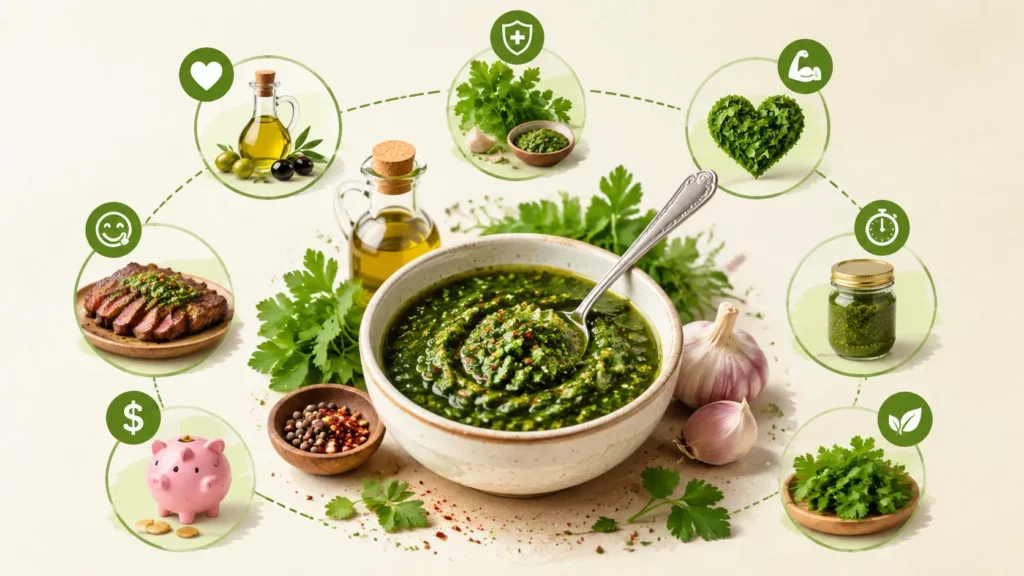
One reason people keep coming back to chimichurri is how much flavor it delivers from simple wholesome ingredients. Fresh parsley, garlic, oregano, olive oil, and vinegar create a sauce that feels bright and satisfying without being heavy.
It’s also incredibly practical. You can use one batch across several meals during the week, from grilled chicken and grilled shrimp to roasted vegetables and quinoa bowls.
Why People Love Chimichurri
- Naturally dairy-free and gluten free
- Fits vegan and Whole30 lifestyles
- Adds vibrant flavor without complicated cooking
- Works as marinade, dipping sauce, and finishing sauce
- Pairs well with grilled proteins and vegetables
- Easy to prepare in under 10 minutes
Why Traditional Argentinian Chimichurri Uses Dried Oregano
Many modern recipes focus almost entirely on fresh herbs, but authentic chimichurri recipes often include dried oregano for a reason. Dried oregano gives the sauce earthy savory depth that fresh oregano alone cannot fully provide.
In Argentina and across South America, chimichurri is closely connected to grilled meat culture and open-fire cooking. The strong vinegar, garlic, and oregano flavors are designed to cut through smoky grilled steak and rich meats.
Hand-Cut vs Food Processor Texture
| Method | Result | Best For |
|---|---|---|
| Hand-cut | Rustic mosaico texture | Steak and grilled meat |
| Mortar and pestle | Emulsified sauce | Roasted vegetables |
| Food processor | Faster and smoother | Quick weeknight meals |
Storage, Freezing, and Food Safety Best Practices
Fresh garlic in oil should not sit at room temperature for extended periods. Chimichurri is safest stored in the refrigerator inside an airtight container.
The color will naturally darken from vibrant green to a deeper olive shade after a couple of days. That’s completely normal and does not mean the sauce has spoiled.
Storage & Safety Guidelines
- Refrigerator: Best within 4 days
- Safe maximum refrigerated storage: About 1 week
- Freezer: Up to 3 months
- Resting time before serving: 15 minutes minimum
- Best flavor window: Day 2
Always use a clean spoon when serving to help preserve freshness.
FAQ – Real Questions People Ask
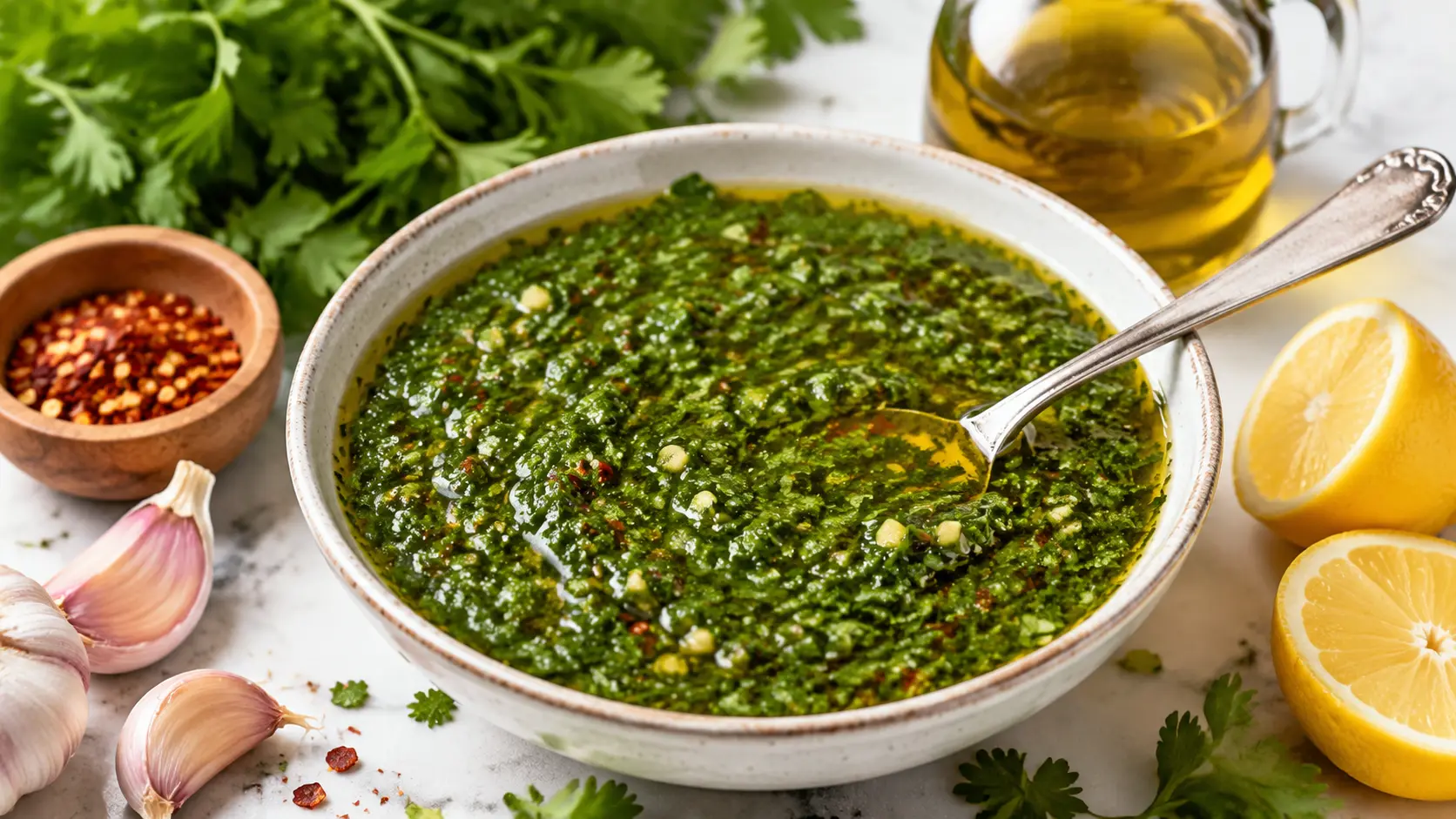

Chimichurri Recipe
Ingredients
Equipment
Method
- Combine the red wine vinegar, sea salt, and dried oregano in a small bowl. Let it sit for 10 minutes so the oregano softens and develops deeper flavor.
- Finely chop the parsley, garlic, and optional shallot until the herbs look bright and evenly textured. Avoid turning them into a paste.
- Add the chopped herbs, red pepper flakes, smoked paprika, and black pepper to the bowl. Stir until everything is evenly combined.
- Slowly pour in the extra-virgin olive oil while stirring. The sauce should look glossy and spoonable with visible herb pieces.
- Taste the chimichurri and adjust with extra salt, vinegar, or chili flakes if needed. The flavor should taste balanced, fresh, and tangy.
- Let the sauce rest at room temperature for at least 15 minutes before serving. This helps the garlic and herbs mellow and blend together.
- Serve over grilled steak, chicken, shrimp, roasted vegetables, potatoes, or grain bowls. Use as a marinade or finishing sauce.
Notes
Stir the olive oil in by hand to help prevent bitterness from over-processing.
Store leftovers in an airtight container in the refrigerator for up to 4 days.
Final Thoughts on This Homemade Chimichurri Recipe
A really good chimichurri recipe doesn’t need complicated ingredients or fancy equipment. It just needs balance, good herbs, proper texture, and a little patience. Once you make it at home, it’s hard to go back to store-bought sauces because the fresh tangy flavor is on another level.
Whether you spoon it over grilled steak, drizzle it onto roasted vegetables, or stir it into grain bowls, this vibrant chimichurri brings life to almost any meal. Save this recipe for summer grilling season, weeknight dinners, or anytime you need something fast that still tastes impressive.
If you enjoyed this recipe, bookmark it and explore more related recipes and homemade sauces on Cookiva Recipe for more easy kitchen inspiration.