Fluffy Vanilla Cake recipe: 8 Secrets for Soft Layers

Most people overbake vanilla cake and never know why. I did it too for years. The cake looked done on the outside, but the middle turned dry before frosting even touched it.
This fluffy vanilla cake recipe fixes that problem with a simple mix of butter, oil, room temperature eggs, and careful baking. The butter gives rich vanilla flavour, while the oil keeps the crumb soft for days. You get a cake that feels light, moist, and plush without needing fancy bakery equipment.
I have made this cake for birthdays, late-night cravings, and quick weekend cupcakes. It works as layer cakes, sheet cakes, and cupcakes without changing much at all. The best part is that the batter comes together in one bowl and a mixer is optional.
What Is Fluffy Vanilla Cake Recipe?
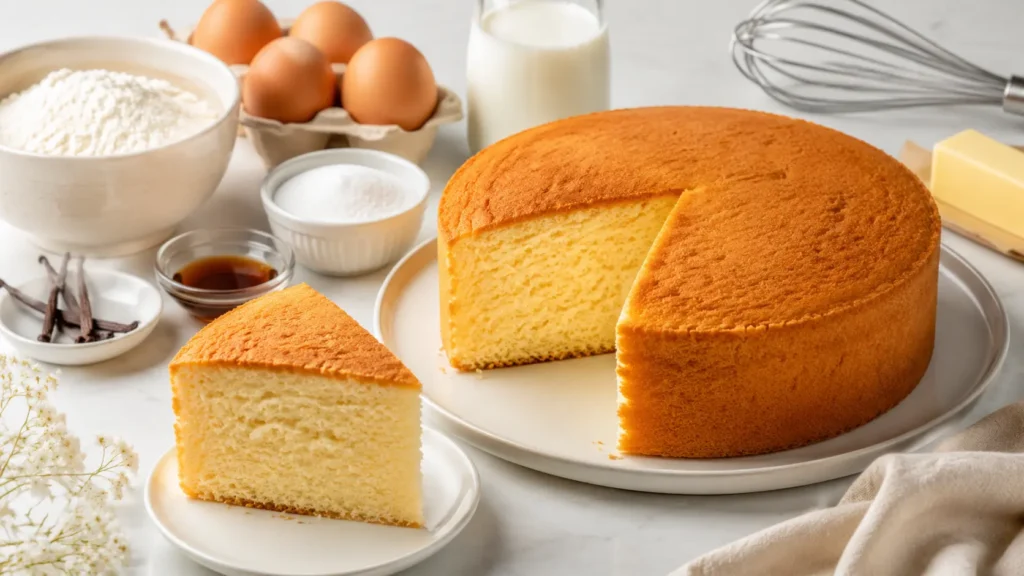
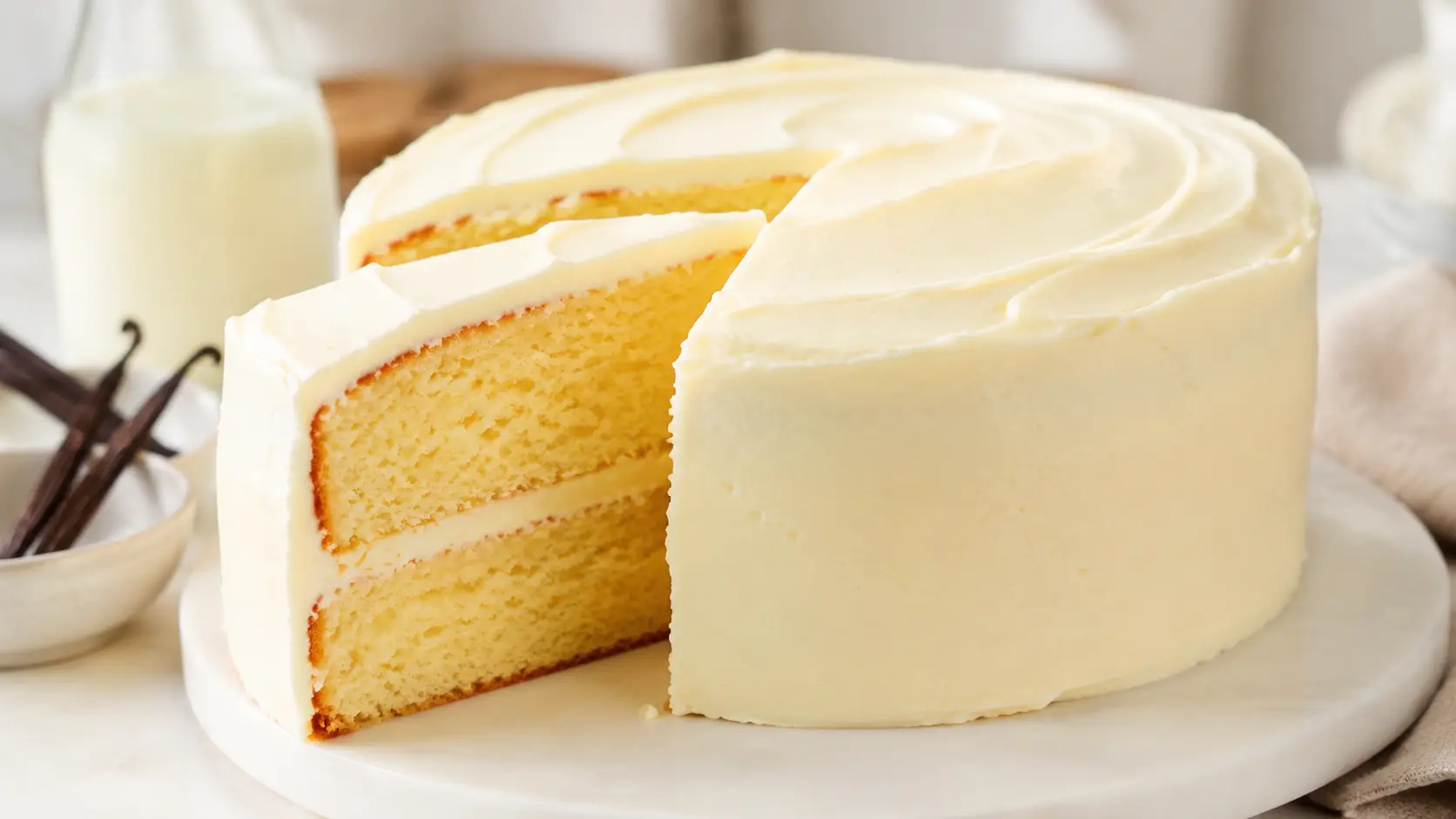
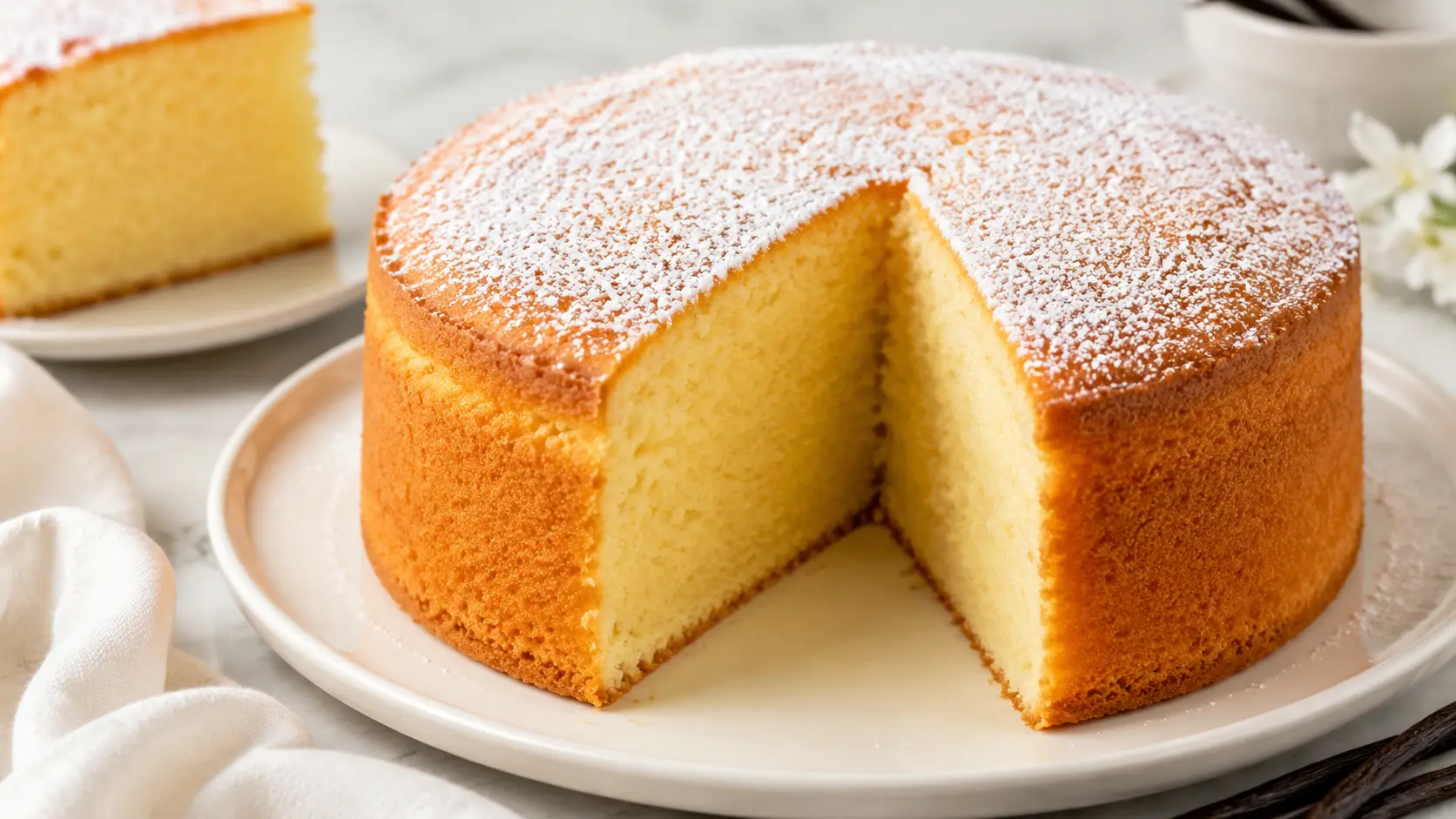
A fluffy vanilla cake recipe is a classic cake made with flour, eggs, sugar, butter, oil, milk, and vanilla extract. It is soft, moist, and light with a tender crumb and rich vanilla flavour. Most people serve it at birthdays, weddings, and family gatherings because it pairs well with almost any frosting.
This style of Vanilla Cake sits between a butter cake and a sponge cake. It has the rich taste of butter but the airy lift of whipped eggs. The crumb looks even and velvety instead of dense or greasy.
Many modern bakers use a hybrid fat system with both butter and vegetable oil. Butter adds flavour, while oil helps the cake stay moist longer. That balance is why this version works so well for layer cakes and cupcakes.
Why This Fluffy Vanilla Cake Recipe Works Better
This cake tastes rich without feeling heavy. The crumb stays soft for several days, which makes it great for birthdays and make-ahead desserts.
The mixing method also matters. Some cakes rely only on butter, which can dry out after one day. This recipe uses butter for flavour and oil for moisture. That small change creates a softer texture and better shelf life.
Another reason this recipe works is the careful balance of eggs, milk, and baking powder. Too much flour creates a dense crumb. Too much liquid makes the cake sink. This recipe keeps the structure stable while still feeling fluffy.
| Detail | Info |
| Prep Time | 20 minutes |
| Cook Time | 25–30 minutes |
| Total Time | About 1 hour |
| Servings | 10–12 |
| Difficulty | Easy |
| Cuisine | American dessert |
| Calories | ~340 per serving |
| Cost | About $7–$12 total |
What Ingredient Economics and Sourcing Really Mean
Vanilla cakes can become expensive fast. Vanilla bean paste, European butter, and cake flour raise the price quickly. The good news is that you can still make a moist vanilla cake without spending bakery-level money.
| Ingredient Tier | Key Components | Approx. Cost | Flavor & Texture Impact |
| Premium Bakery | Vanilla bean paste, cake flour, European butter | ~$18 | Ultra plush crumb and deeper vanilla flavour |
| Smart Standard | Pure vanilla extract, all-purpose flour, regular butter | ~$8 | Nearly identical softness and classic flavour |
| Budget Version | Imitation vanilla, vegetable oil, plain flour | ~$4 | Good rise with lighter flavour |
For most home bakers, the middle option is the sweet spot. A high-quality vanilla extract gives excellent flavour without the cost of vanilla beans.
What Ingredients Create the Best Texture
This cake keeps things simple. Every ingredient has a clear job.
- All-purpose flour
- Baking powder
- Salt
- Unsalted butter
- Vegetable oil or canola oil
- Granulated sugar
- Large eggs
- Vanilla extract
- Whole milk
Butter gives the cake its classic buttery flavour. Oil keeps the crumb moist longer because liquid fat stays soft even after cooling.
Whole milk adds richness and helps the batter emulsify properly. Low fat milk works, but the cake feels slightly less tender.
If you need substitutions, these work best:
- Use buttermilk for a slightly tangy flavor and softer crumb.
- Replace whole milk with full-fat soy milk plus 1 tablespoon vinegar for a dairy-free option.
- Greek yoghurt can replace part of the milk for extra moisture.
- Cake flour gives a softer crumb, but plain flour still works well.
What Most Recipes Skip About Homemade Cake Flour
A lot of recipes say to replace some flour with cornstarch to mimic cake flour. That helps lower protein, but it does not fully copy real cake flour.
Commercial cake flour is treated to absorb fat and liquid faster. That creates a lighter texture and more stable rise. If you use the cornstarch method, sift it at least four times. That extra aeration helps create a softer crumb.
What Mixing Method Creates the Fluffiest Cake
Different methods create different textures. That is why one vanilla cake feels tight and velvety while another feels airy like sponge cake.
| Mixing Method | How It Works | Texture Result | Best For |
| Traditional Creaming | Butter and sugar trap air | Classic fluffy birthday cake | Layer cakes and cupcakes |
| Reverse Creaming | Fat coats flour first | Tight velvety crumb | Wedding cakes |
| Hot Milk Method | Whipped eggs plus warm milk | Light sponge texture | Tea cakes |
This recipe uses a mix of traditional creaming and whipped eggs. That gives structure without making the cake heavy.
How to Make Fluffy Vanilla Cake Recipe Step by Step
The process is simple. You mix dry ingredients, whip the wet ingredients until fluffy, then bake carefully without disturbing the oven too early.
1. Prep the pans and oven
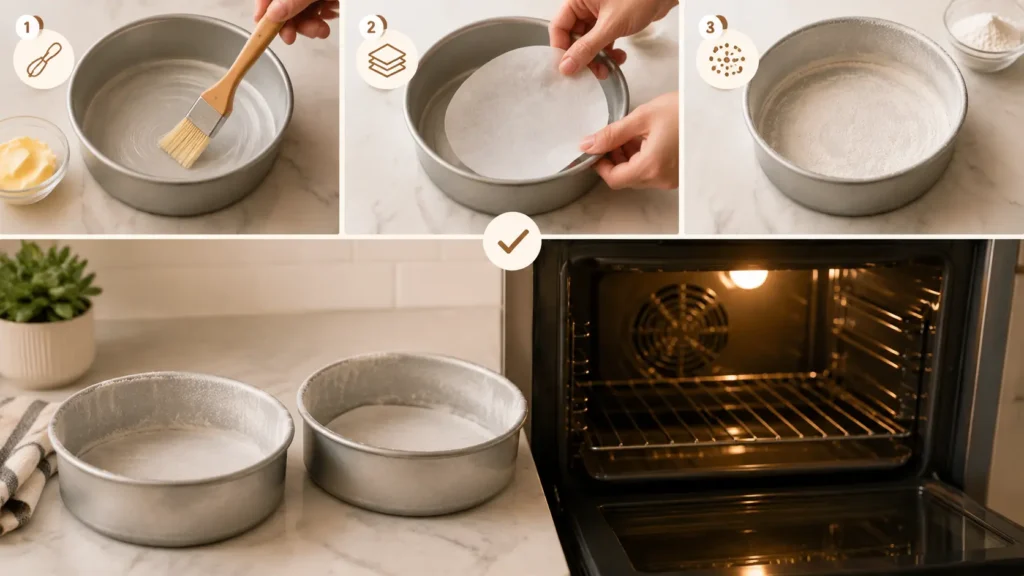
Preheat oven to 350°F or 180°C. Line the bottom of two 8-inch cake pans with parchment paper.
The Straight-Side Secret: Leave the sides mostly ungreased. The batter needs grip to climb evenly. That helps create flatter cake layers with less doming.
2. Mix the dry ingredients
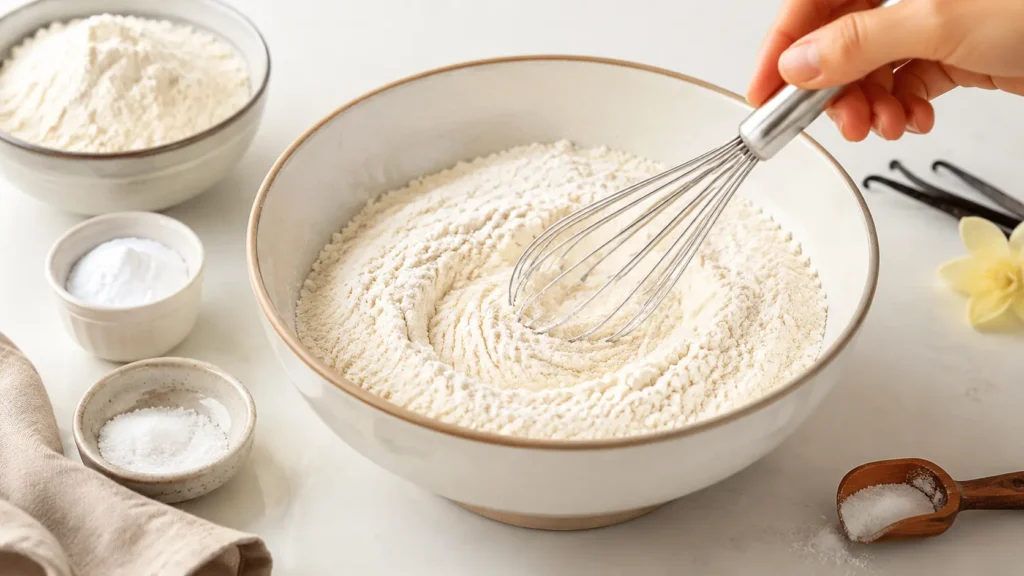
Whisk together flour, baking powder, and salt in a medium bowl. This spreads the leavening evenly so the cake rises smoothly.
3. Cream butter, oil, and sugar
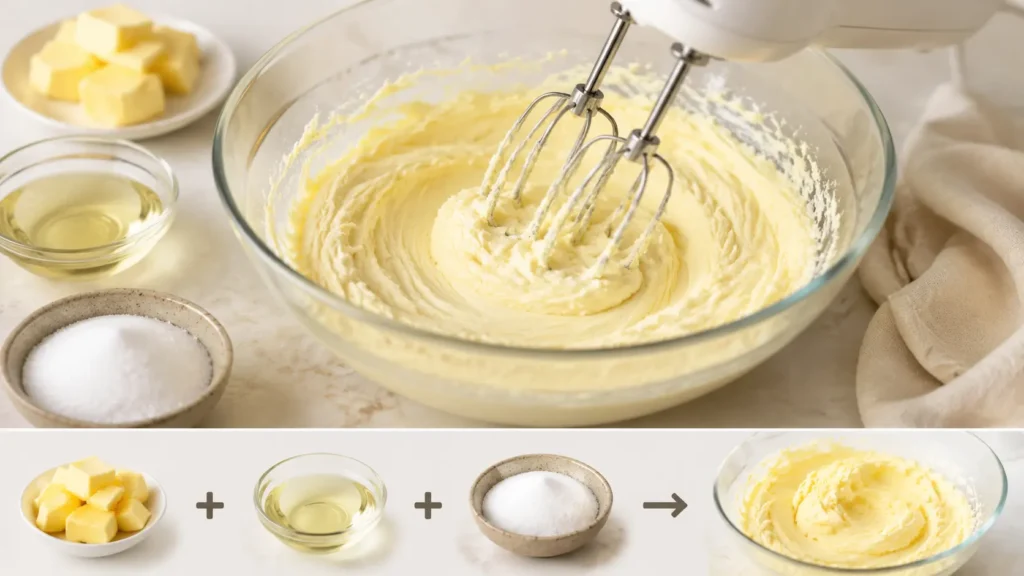
Beat the butter, oil, and sugar until pale yellow and fluffy. This should take about 3 minutes with a handheld mixer.
The mixture should look creamy, not grainy. Tiny trapped air bubbles help the cake rise.
4. Add eggs slowly
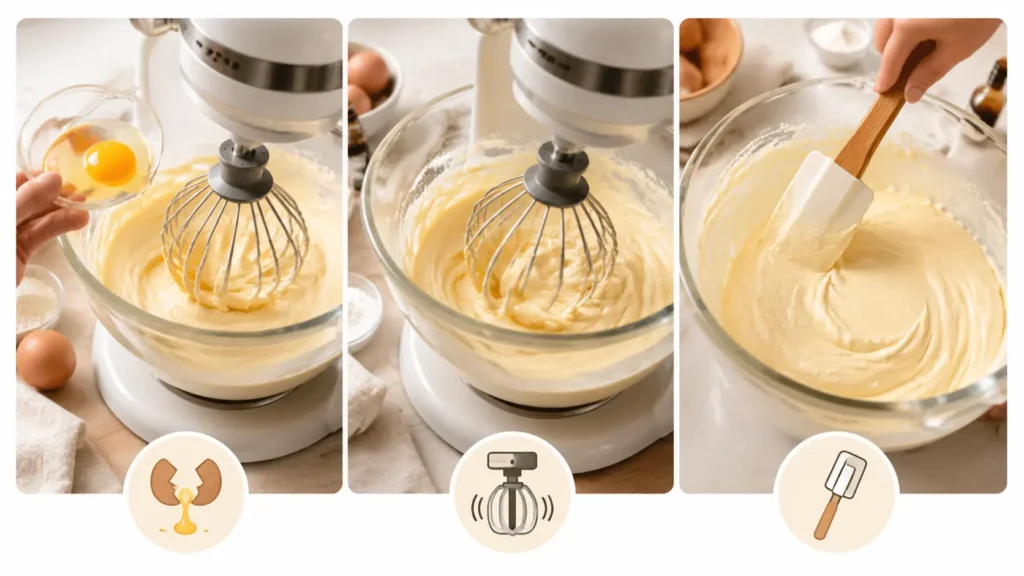
Add eggs one at a time while mixing on medium speed. Scrape the bowl after each addition.
If the batter looks curdled or like wet sand, your eggs were too cold.
5. Fix a broken batter fast
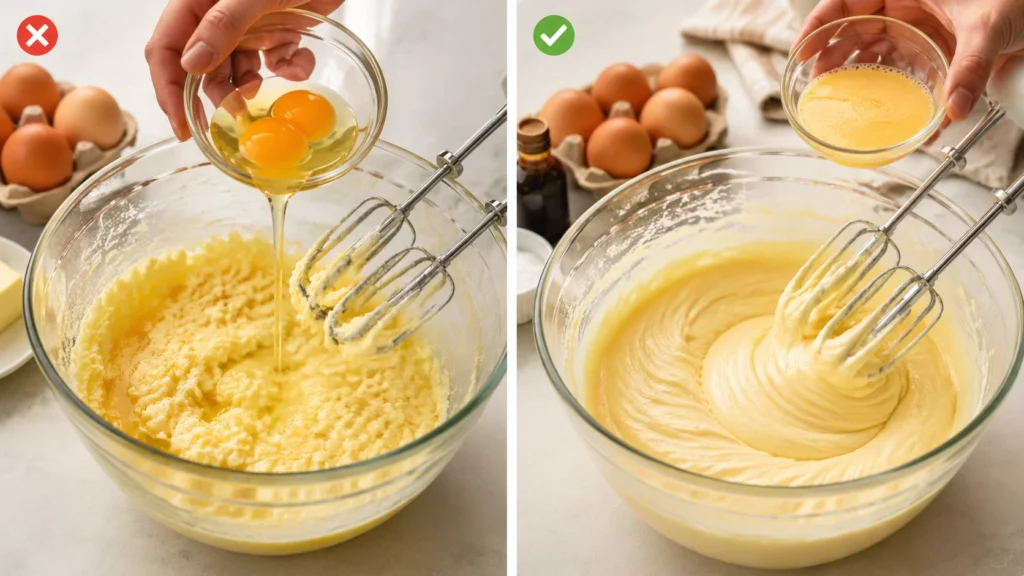
Cold eggs can shock softened butter and break the emulsion.
- What it looks like: grainy batter or separated liquid
- Why it happens: cold liquid hardens the butter fat
- Quick fix: place the bowl over warm water for 30 seconds while mixing
The batter should turn glossy again.
6. Add flour and milk in batches
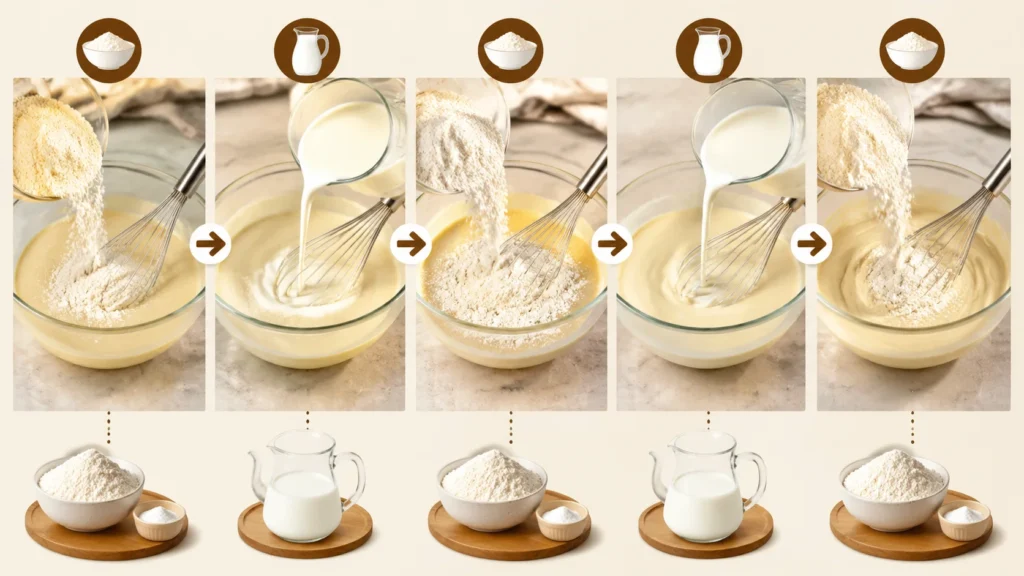
Alternate the dry ingredients and milk in three batches. Start and end with flour.
Do not over-mix batter here. Stop once the flour disappears. Over-mixing creates gluten and leads to a dense cake.
7. Bake carefully
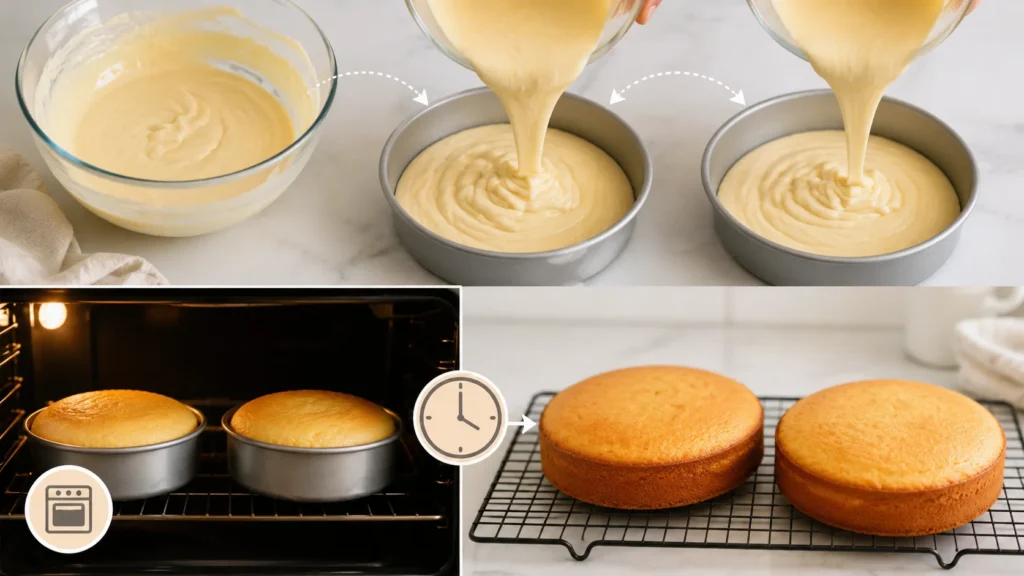
Divide batter equally between pans and bake for 25–30 minutes.
The edges should pull slightly away from the pan. A toothpick should come out with a few moist crumbs.
The 20-Minute No-Fly Zone: Do not open the oven during the first 20 minutes. Sudden cold air can collapse the rising structure and create a sinkhole in the middle.
8. Cool the cakes properly
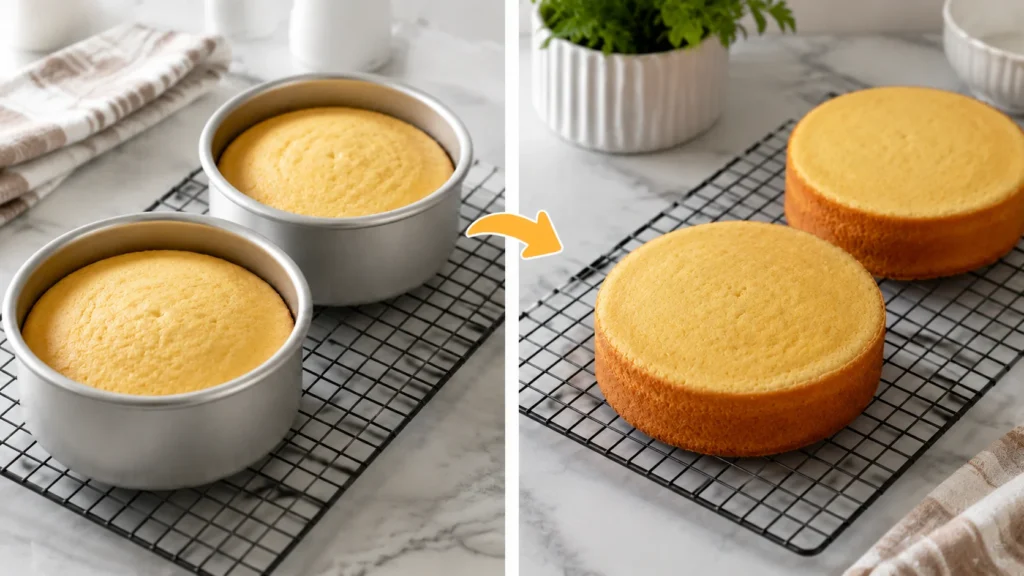
Cool the cakes in the pans for 10 minutes only. Then move them to a cooling rack.
Leaving them too long traps steam and makes the bottom soggy.
What Common Mistake Ruins Fluffy Vanilla Cake
The biggest mistake is adding cold ingredients to softened butter.
Cold eggs break the smooth batter structure. Once that happens, the cake loses trapped air and bakes up heavy.
Another common problem is over-mixing after adding flour. Flour develops gluten when mixed too long. That is good for bread, but terrible for soft cake.
Opening the oven too early is another issue. The cake rises before the structure fully sets. A blast of cool air can make the center collapse.
Quick tips:
- Use room temperature eggs and milk
- Stop mixing once flour disappears
- Do not slam the oven door
- Bake on the center rack only
- Cool cakes on a rack after 10 minutes
Why This Pro Tip Makes Flat Cake Layers
Wrap damp cake strips around your cake pans before baking.
Cake strips slow the heat around the edges. That helps the cake bake evenly instead of forming a dome. Flat layers stack better and waste less cake during trimming.
This trick also reduces dry edges because the outside does not cook too fast.
What Easy Variations You Can Try at Home
This vanilla cake recipe changes easily without ruining the texture.
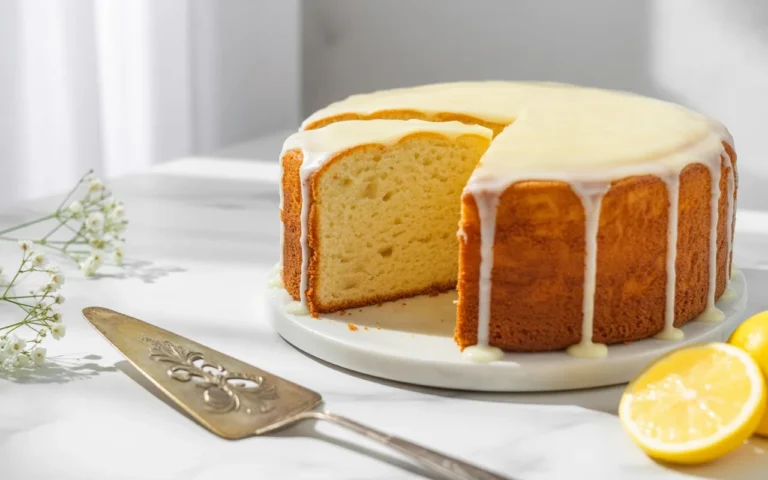
- Add lemon zest and Lemon Glaze for a fresh citrus version.
- Mix rainbow sprinkles into the batter for funfetti cake.
- Replace vanilla extract with almond extract for a bakery-style flavor.
- Add cocoa powder and hot coffee for a chocolate version.
- Use dairy-free soy milk plus vinegar for a vegan-friendly crumb.
- Fill the layers with strawberry jam and whipped cream for a strawberry shortcake feel.
What to Serve With Fluffy Vanilla Cake Recipe
This cake works with almost anything sweet.
- Fresh berries add brightness and balance the sweetness.
- Chocolate buttercream creates a richer dessert for birthdays.
- Lemon Frosting adds sharp citrus flavor against the buttery crumb.
- Ice cream turns warm cake slices into an easy party dessert.
- Our homemade caramel sauce recipe pairs perfectly with vanilla layers.
If you love soft desserts, our lemon yogurt cake recipe also works great for spring gatherings.
What High-Altitude Bakers Need to Change
High altitudes change how cakes rise. Lower air pressure makes cakes expand too fast before the structure sets.
If baking above 5,000 feet:
- Reduce baking powder by 1/4 teaspoon
- Add 2 tablespoons extra milk
- Reduce sugar slightly
- Raise oven temperature by 15°F
These small changes help prevent collapse after baking.
My Honest Experience Making This Recipe
The first time I made this cake, I opened the oven after 15 minutes because the top looked done. The center dropped almost immediately.
I also used fridge-cold eggs once and ended up with a greasy batter that baked unevenly. Warming the eggs in tap water fixed it completely.
The biggest surprise was how much softer the cake stayed after adding oil alongside butter. Even on day three, the crumb still felt moist.
How to Store, Freeze, and Keep Vanilla Cake Soft Longer
Cake texture changes because starches slowly harden as they cool and age. Good wrapping slows that process down.
Storage timeline
- Cool layers for 10 minutes in the pan.
- Wrap slightly warm layers tightly in plastic wrap.
- Store unfrosted layers away from fridge air whenever possible.
| Storage Method | Time |
| Room temperature | 2 days |
| Fridge | 5 days |
| Freezer | 3 months |
- Keep cake in an airtight container whenever possible.
- Wrap slices tightly with cling wrap or aluminum foil.
For reheating, microwave a slice for about 10 seconds. The warmth softens the butter and brings back moisture.
What People Commonly Ask About Fluffy Vanilla Cake Recipe
Fluffy Vanilla Cake Recipe
Ingredients
Equipment
Method
- Preheat the oven to 350°F and line two 8-inch cake pans with parchment paper. Leave the pan sides lightly ungreased for flatter cake layers.
- In a medium bowl, whisk together the flour, baking powder, and salt until fully combined and fluffy. This helps prevent uneven pockets in the batter.
- In a large mixing bowl, beat the butter, oil, and sugar for about 3 minutes until pale and creamy. The mixture should look light and slightly fluffy.
- Add the eggs one at a time, mixing well after each addition. Stir in the vanilla extract and scrape the bowl so everything mixes evenly.
- Add the dry ingredients in three batches, alternating with the milk. Mix just until the batter looks smooth and pourable. Do not overmix or the cake may turn dense.
- Divide the batter evenly between the cake pans and gently tap the pans once on the counter to remove large air bubbles. The batter should sit about halfway up the pans.
- Bake for 28–30 minutes until the tops are golden and a toothpick comes out with a few moist crumbs. Avoid opening the oven during the first 20 minutes.
- Let the cakes cool in the pans for 10 minutes, then transfer to a cooling rack. The layers should feel soft with slightly springy tops.
- For the frosting, beat the butter until creamy, then slowly add powdered sugar, vanilla, cream, and salt. Beat until fluffy and spreadable.
- Frost the cooled cake layers and decorate with sprinkles or fresh berries if desired. Chill for 20 minutes before slicing for cleaner cuts.
Notes
Final Thoughts on What Makes This Fluffy Vanilla Cake Recipe So Good
This fluffy vanilla cake recipe works because it balances flavor, moisture, and structure without making things complicated. The butter adds richness, the oil keeps the crumb soft, and the mixing method creates that light bakery-style texture people love.
It also works for real life. You can make it ahead, freeze it, turn it into cupcakes, or dress it up with fancy frosting for birthdays and weddings. If you make this, I would love to know how it turned out. Drop a comment on the Cookiva recipe and share your favorite frosting combination.