Russian Borscht Recipe: 7 Secrets for Perfect Color

Most people overcook borscht and never know why. I did it too for the first few times I made this soup. The flavor was good, but the bright ruby color turned dull and muddy by dinner.
This Russian Borscht Recipe fixed that problem for me. The broth stays rich, the beets keep their deep red color, and the vegetables turn soft without falling apart. It tastes even better the next day, which makes it perfect for meal prep or cold weekends.
This version takes inspiration from family-style Eastern European cooking, but it is also practical for busy home cooks. You do not need special training or fancy tools. You just need patience, a heavy pot, and a few simple tricks that many recipes skip.
What Is Russian Borscht Recipe?
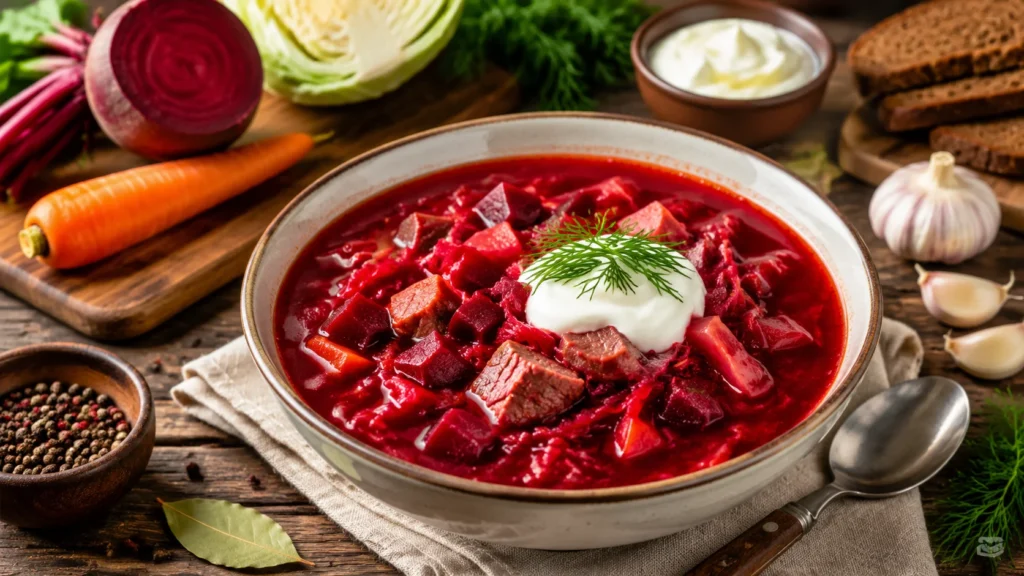
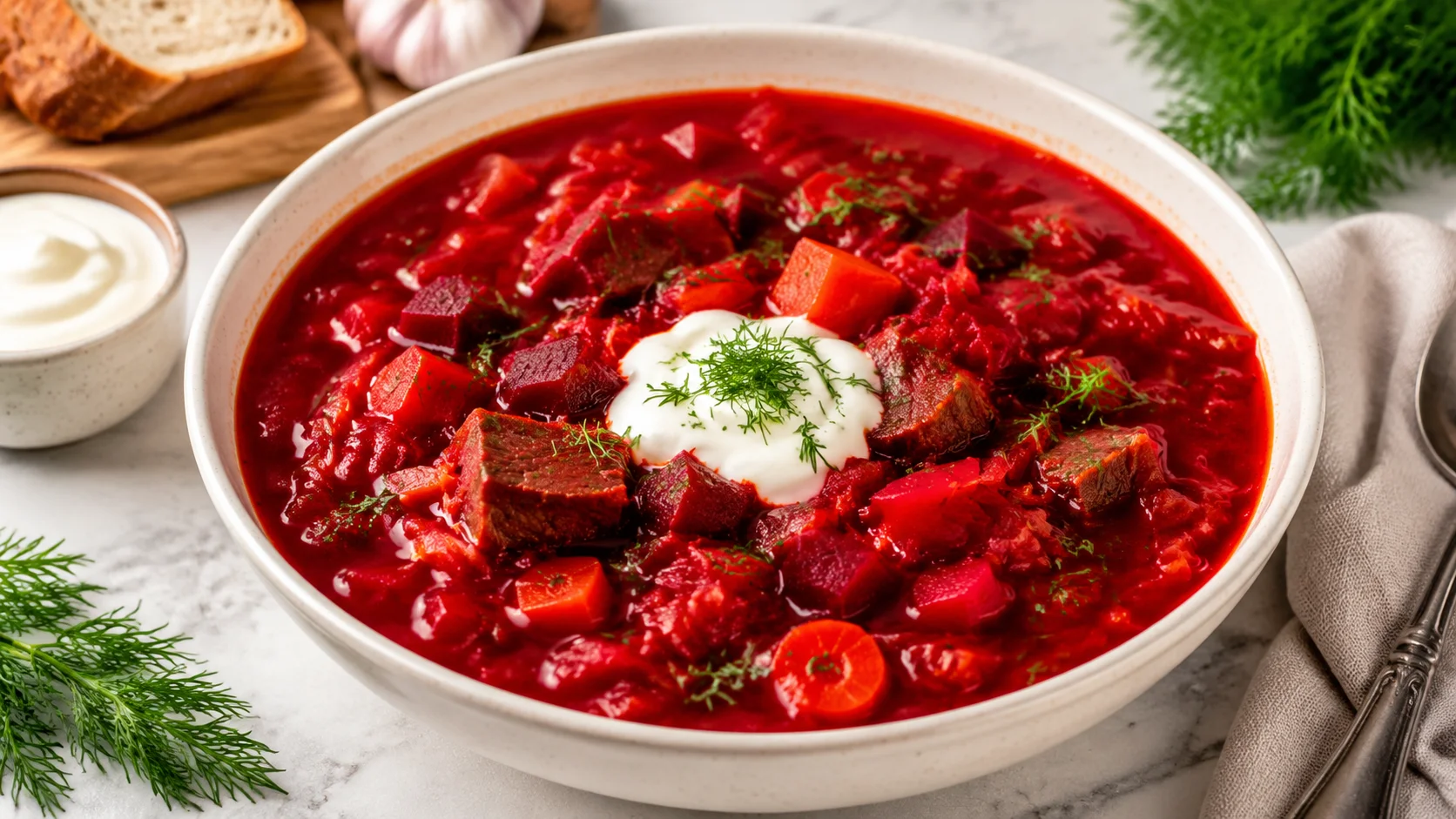
Russian Borscht Recipe is a hearty beet soup made with beets, cabbage, potatoes, carrots, and meat broth. It is rich, slightly sweet, lightly tangy, and takes about 2½ hours to make. Most people serve it hot with sour cream and fresh dill because the flavor becomes deeper as it sits.
Traditional Russian Borscht is common across Eastern European cuisine and Ukrainian cooking. Some families use beef stock while others prefer pork stock or chicken broth. The soup usually starts with a slow-cooked broth and a vegetable base called zazharka, which is a mix of sautéed onions, carrots, and beets.
A good bowl of borscht smells earthy, savory, and slightly sweet. The broth should look bright red, not brown. The potatoes should feel soft but still hold their shape when you scoop them with a spoon.
What Makes This Russian Borscht Recipe Worth Making?
This soup tastes rich without needing expensive ingredients. The vegetables slowly soak up the broth while the beets add sweetness and color. A spoonful of sour cream melts into the hot soup and makes the broth creamy without feeling heavy.
It is also one of the best make-ahead meals I know. The flavor gets deeper overnight, which makes leftovers even better. I often make a big pot on Sunday and eat it for two or three days.
| Detail | Info |
| Prep Time | 30 minutes |
| Cook Time | 2 hours 20 minutes |
| Total Time | 2 hours 50 minutes |
| Servings | 8 people |
| Difficulty | Medium |
| Cuisine | Russian / Eastern European |
| Calories | ~237 per serving |
| Cost | ~$14–$18 total |
What Ingredients Matter Most in Russian Borscht Recipe?
This soup uses basic vegetables, but each one changes the final flavor. Fresh ingredients matter here because the soup cooks slowly and every flavor has time to stand out.
Main Ingredients
- Beef or pork ribs
- Beets
- Potatoes
- White cabbage
- Carrots
- Onion
- Garlic
- Tomato paste
- Bay leaves
- Peppercorns
- Dill and parsley
- Sour cream
- Lemon juice or white vinegar
How to Choose the Best Beets
Fresh bunched beets usually taste sweeter and cook faster. Storage beets from bags or waxed packs often taste more earthy and less sweet. If your beets taste strong or bitter, add a tiny pinch of sugar with the vinegar.
The Secret Fat Component
Traditional recipes sometimes use salo, which is cured pork fat mashed with garlic. That gives borscht a silky texture many modern recipes miss.
| Style | Fat Used | Result |
| Traditional | Salo with garlic | Rich and creamy texture |
| Common Home Version | Olive oil or butter | Light but flavorful |
| Vegan Version | Sunflower oil | Clean and earthy flavor |
Why These Ingredients Matter
Beets are the star of the soup. They add sweetness, color, and that classic earthy flavor. If you use canned beets, the soup often tastes flat and slightly metallic.
Cabbage softens the broth and balances the sweetness from the beets. Yukon potatoes work best because they stay tender without turning mushy.
Tomato paste and vinegar protect the beet color. The acid helps keep the soup bright red during cooking.
Real Ingredient Swaps That Work
- Use chicken broth if beef broth feels too heavy.
- Swap pork ribs for beef shanks or marrow bones to save money.
- Use fresh parsley if you do not have dill.
- For vegetarian borscht, replace the meat broth with mushroom broth and white beans.
Waste-Zero Tip
Do not throw away beet greens if your beets come with tops attached. Slice them thin and stir them into the soup near the end, just like kale or spinach.
How to Make Russian Borscht Recipe Step by Step
This soup cooks in layers. First you build the broth. Then you make the zazharka. Finally, everything simmers together until the flavors blend into one rich pot of soup.
1. Make the Broth
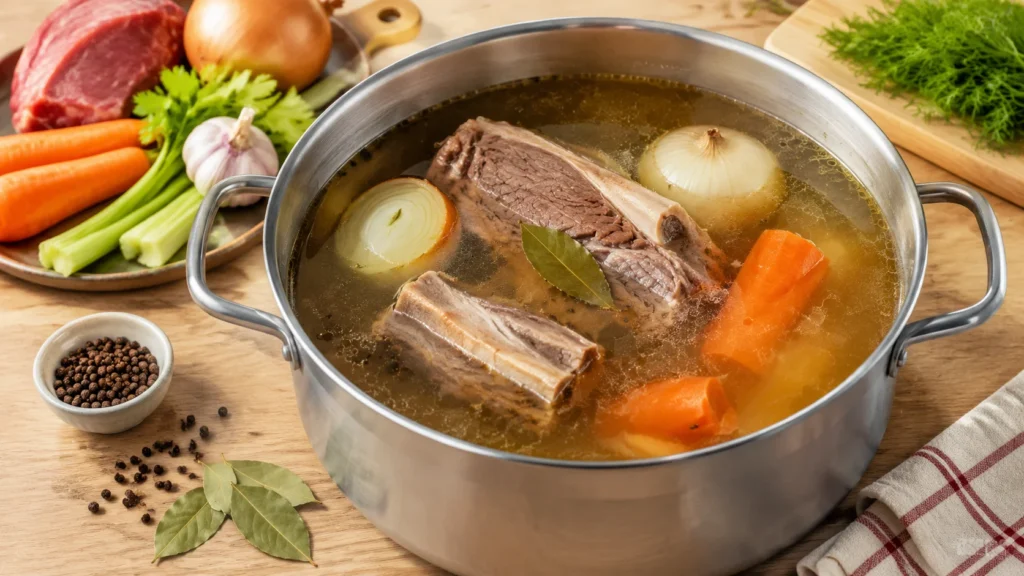
Add beef ribs or pork ribs to a large heavy-bottomed Dutch oven with water, celery, onion, carrot, bay leaves, and peppercorns.
Bring it to a gentle simmer, not a rolling boil. The broth should smell rich and savory after about 90 minutes. Skim off foam as it rises so the broth stays clear.
2. Prep the Vegetables
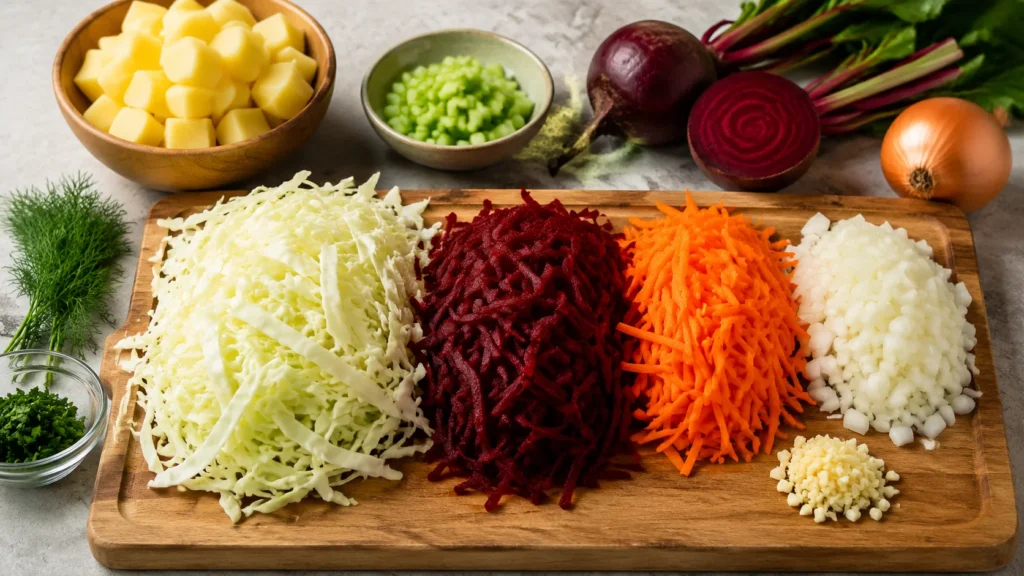
While the broth cooks, peel and chop the vegetables.
Keep sliced potatoes in cold water so they do not brown. Grate the carrots and beets separately because they cook at different speeds.
3. Build the Zazharka
Heat olive oil or butter in a skillet over medium heat.
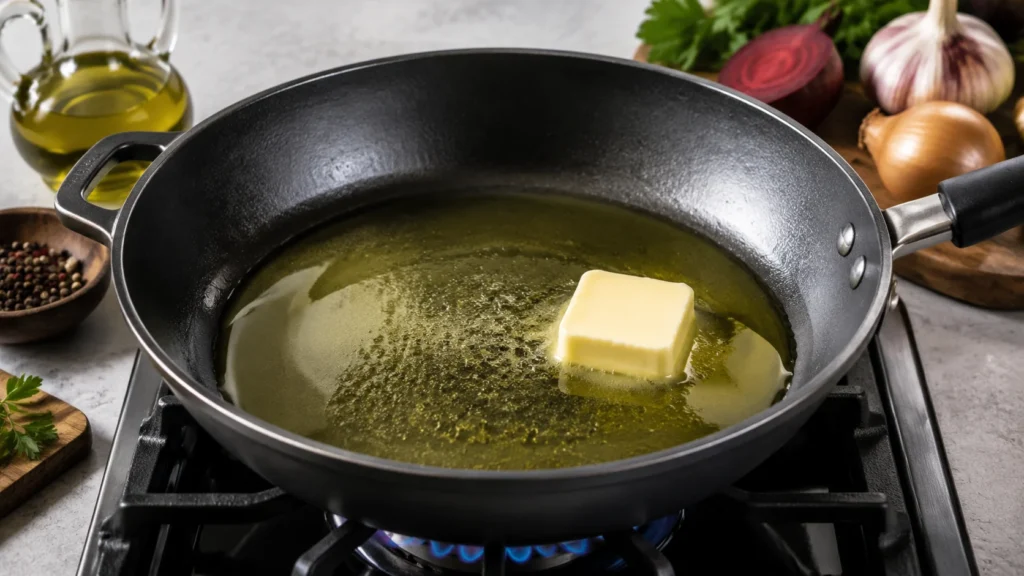
Cook onions first for about 5 minutes until soft and lightly golden. Then add carrots and stir for another 3 minutes. Add beets last so they soften without turning mushy.
This order matters. Adding the beets too early can make them lose texture and color.
4. Add Tomato Paste and Acid
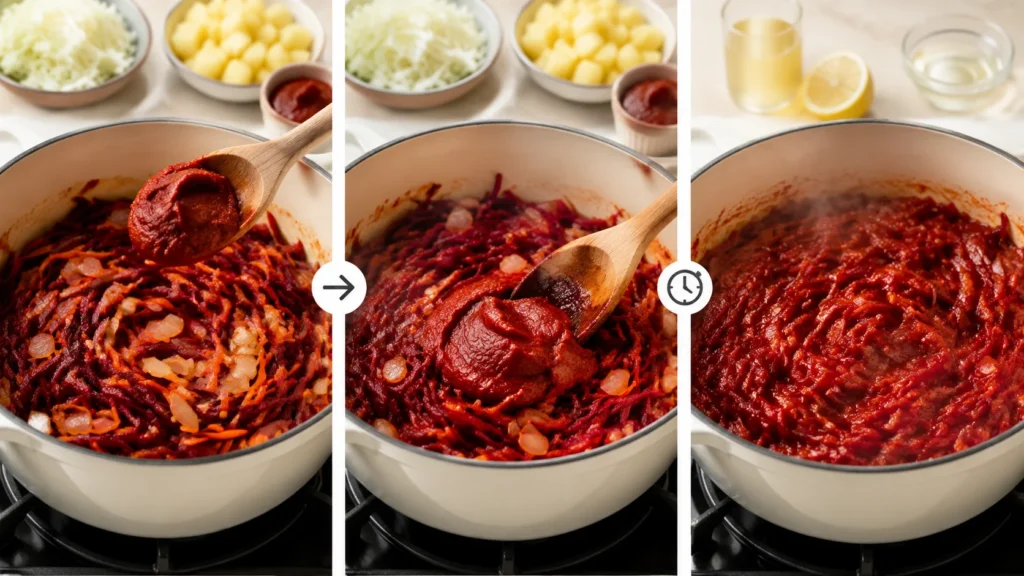
Stir tomato paste into the vegetables and cook for 30 seconds.
Now add lemon juice or white vinegar. This small step keeps the beets bright red instead of brown. You should notice the color become deeper almost right away.
5. Add Potatoes and Cabbage
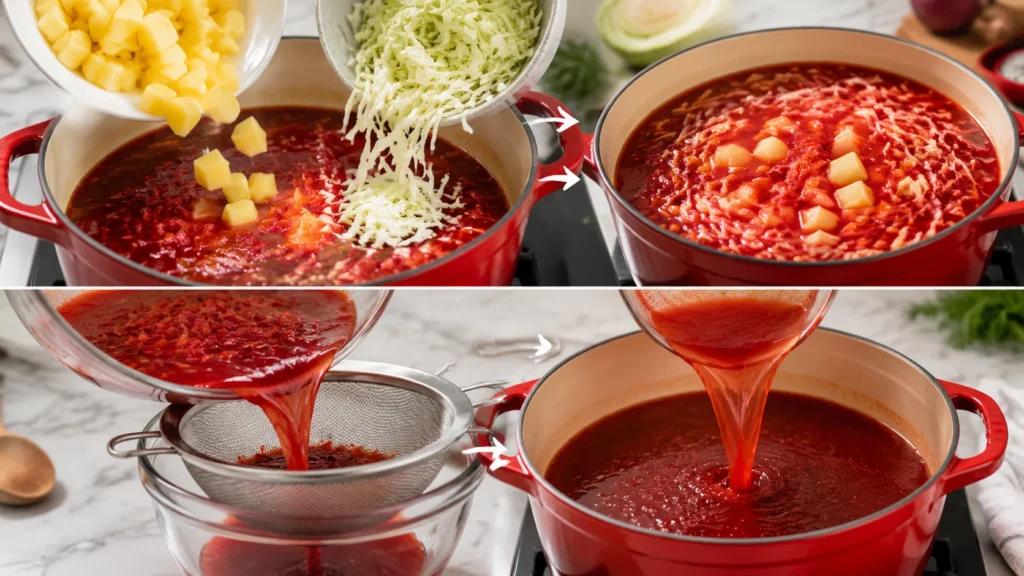
Strain the broth if needed, then return it to the pot.
Add potatoes first because they take longer to cook. After 10 minutes, add the cabbage. The soup should smell sweet and earthy at this stage.
6. Finish the Soup
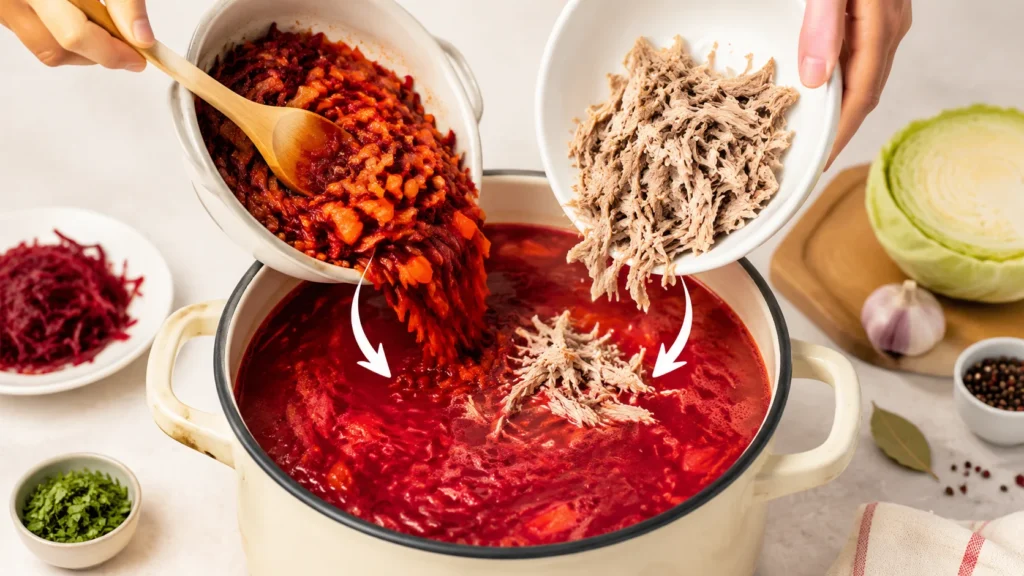
Stir in the zazharka and shredded meat.
Simmer gently for another 10 to 15 minutes until the potatoes feel tender when pierced with a fork. Add garlic, dill, salt, and black pepper right before serving for the freshest flavor.
What Common Mistake Turns Borscht Brown?
The biggest mistake is boiling the soup too hard after adding the beets.
Beets contain a pigment called betanin. Strong boiling breaks it down fast, which turns the soup brown or orange instead of deep ruby red. I ruined my first batch this way because I thought more heat meant faster cooking.
Another common mistake is adding cabbage too early. It overcooks and turns mushy while soaking up too much color from the broth.
Thin pots also cause trouble. Cheap pots create hot spots that burn the vegetables during the zazharka stage. Burned carrots and onions make the whole soup taste bitter.
Dos and Don’ts Troubleshooting Table
| Problem | Why It Happens | Fix |
| Soup turns brown | Beets boiled too hard | Lower heat and add vinegar |
| Vegetables feel mushy | Cabbage cooked too long | Add cabbage near the end |
| Broth tastes weak | Stock cooked too fast | Simmer slowly for deeper flavor |
| Soup tastes flat | Not enough acid | Add lemon juice or vinegar |
| Burnt flavor | Thin pot scorched vegetables | Use heavy-bottomed cookware |
Quick Tips
- Simmer gently after adding beets.
- Add vinegar early for color protection.
- Use a Dutch oven if possible.
- Add cabbage later than potatoes.
- Fresh dill makes a huge difference.
Why the Right Pot Makes Such a Big Difference
A heavy-bottomed Dutch oven spreads heat evenly. That matters because the zazharka cooks slowly and contains natural sugars from carrots and beets.
Thin pots create hot spots that burn the vegetables before they soften. Burned vegetables make the broth taste bitter. I learned this the hard way after scorching a batch in a cheap stock pot years ago.
A Dutch oven also keeps a steady simmer better than lightweight cookware. That helps protect the beet color and keeps the broth clear.
What Science Explains the Overnight Flavor Boost?
Borscht almost always tastes better the next day. That is not just tradition.
As the soup rests, potato starch slowly breaks into sugars. The vinegar and tomato paste also mellow out overnight. At the same time, the earthy flavor from the beets becomes smoother and less sharp.
The broth tastes more balanced after several hours in the fridge. This is why many families make borscht a day ahead.
What Easy Variations Can You Try at Home?
This soup changes from house to house, which makes it fun to customize.
- Add white cannelini beans for extra protein and a thicker texture.
- Use shredded chicken instead of beef for a lighter version.
- Make vegetarian borscht with mushroom broth and extra cabbage.
- Add dried mushrooms for a deeper earthy flavor.
- Try Green Borscht with sorrel for a fresh summer version.
- Add red bell peppers for a sweeter broth.
What to Serve With Russian Borscht Recipe
Borscht works best with simple side dishes that soak up the broth and balance the tangy flavor.
- Rye bread adds a chewy texture and mild sour flavor.
- Pierogi or Potato Bacon and Caramelised Onion Vareniki turn this into a full dinner.
- Our homemade chicken broth recipe works great if you want a lighter base.
- A cucumber salad adds freshness beside the rich soup.
- Bread Cheese with Honey makes a nice sweet finish afterward.
If you enjoy comforting soups, you might also like our Beef Barley Soup Recipe or Yellow Split Pea Soup for cold-weather dinners.
What Happened the First Time I Made This Recipe?
The first time I made this soup, I used a thin stainless pot and cooked everything too fast. The onions burned slightly before I noticed, and the soup turned dark instead of ruby red.
The next time, I switched to a Dutch oven and lowered the heat. That changed everything. The broth tasted cleaner, the vegetables stayed bright, and the kitchen smelled incredible once the dill and garlic hit the hot soup.
I also learned that grating beets gives a thicker soup while slicing them into matchsticks creates a clearer broth. Both work well. It just depends on the texture you like.
How to Store, Freeze, and Reheat Russian Borscht Recipe
This soup stores very well because the flavor deepens over time. Let it cool before placing it in the fridge.
| Storage Method | Time | Notes |
| Room Temperature | Up to 2 hours | Do not leave longer |
| Fridge | 3–4 days | Store in airtight container |
| Freezer | 2–3 months | Potatoes may turn grainy |
If you plan to freeze the soup, consider leaving out the potatoes and adding fresh ones later. Frozen potatoes can become mealy after thawing.
Reheat gently on medium heat until steaming hot. Avoid boiling hard or the beet color may fade.
What Questions Do People Ask About Russian Borscht Recipe?
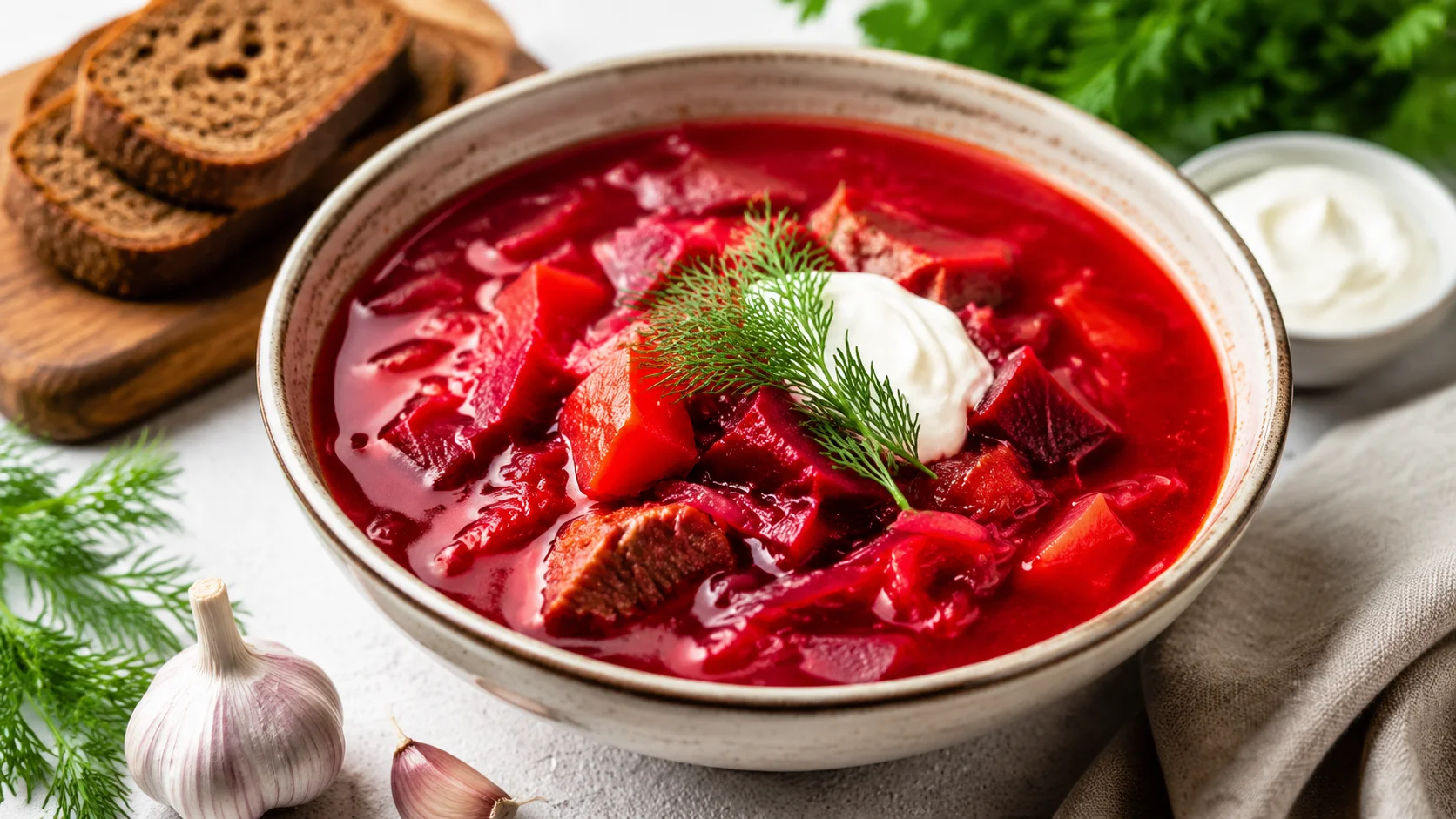
Russian Borscht Recipe
Ingredients
Equipment
Method
- Add water, pork ribs, onion, carrot, celery, bay leaves, peppercorns, and salt to a large Dutch oven. Bring to a gentle simmer and cook for 90 minutes until the broth smells rich and the meat is tender.
- Skim foam from the top while the broth cooks to keep it clear. Remove the meat, strain the broth, and shred the meat into bite-sized pieces.
- Peel and prep the vegetables while the broth simmers. Keep the potatoes in cold water so they stay bright and do not brown.
- Heat olive oil in a skillet over medium heat. Cook the chopped onion for 5 minutes until soft and lightly golden.
- Add grated carrots and cook for 3 minutes, stirring often. Stir in the grated beets and cook another 5 minutes until slightly softened.
- Mix tomato paste and lemon juice into the vegetable mixture. The beets should turn a deeper red color almost immediately.
- Return the strained broth to the pot and add potatoes first. Simmer for 10 minutes until they begin to soften.
- Add cabbage, shredded meat, and the beet mixture to the soup. Simmer gently for 10–15 minutes until the potatoes are fork tender and the broth looks bright red.
- Stir in garlic, dill, parsley, salt, and black pepper right before serving. Serve hot with sour cream on top.
Notes
Final Thoughts on Russian Borscht Recipe
This Russian Borscht Recipe works because it focuses on the small details many recipes skip. Gentle simmering keeps the broth clear. Vinegar protects the beet color. A slow zazharka builds flavor without burning the vegetables.
It is also flexible, budget-friendly, and perfect for make-ahead meals. You can keep it traditional or adjust it to fit your kitchen and pantry. If you make this, I would love to know how it turned out. Drop a comment on cookiva recipe.