Beef Salpicao Recipe: 3 Easy Secrets for Juicy Perfect Beef

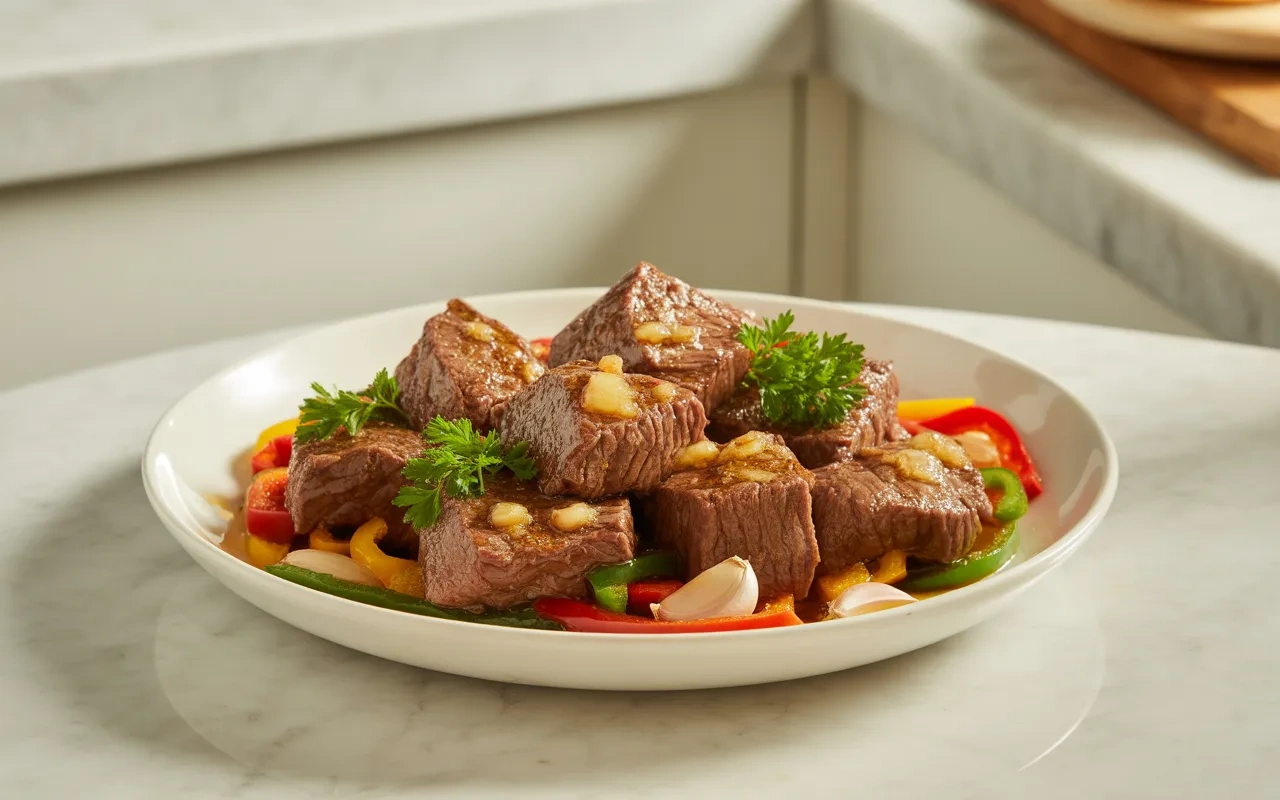
The smell of sizzling garlic, butter, and beef in a hot pan is enough to make anyone hungry before dinner is even ready. This Beef Salpicao Recipe is a Filipino favorite made with juicy steak bites cooked in a rich, savory sauce with soy sauce, Worcestershire sauce, and lots of garlic. It’s bold, garlicky, buttery, and perfect with garlic fried rice or steamed white rice.
What makes this dish so popular is how fast and easy it is to prepare while still tasting like restaurant-quality food. The beef stays tender and flavorful when cooked the right way, and the glossy sauce coats every bite beautifully. If you want a quick comfort meal that feels special without using complicated ingredients or techniques, this recipe is one you’ll want to make again and again.
What Makes Beef Salpicao Such a Popular Filipino Comfort Dish?
Beef Salpicao is a Filipino beef dish made with bite-sized cubes of steak quickly seared over high heat, then coated in a buttery garlic sauce flavored with soy sauce, Worcestershire sauce, oyster sauce, black pepper, and sometimes chili flakes. It’s commonly served with garlic rice or steamed white rice because the rich sauce naturally soaks into the rice beautifully.
Although many people associate it with restaurant dining, Beef Salpicao is also a popular home-cooked meal in the Philippines because it cooks quickly and uses everyday ingredients from the pantry. Some families make it with ribeye for extra marbling and tenderness, while others use sirloin or beef tenderloin cubed into small steak bites.
The dish is often compared to steak tapa or garlic steak bites, but salpicao has a distinct buttery, glossy coating and stronger garlic flavor. It’s especially popular for family dinners, celebrations, or casual entertaining because it feels impressive without requiring hours of cooking.
Why This Beef Salpicao Recipe Works Better Than Most
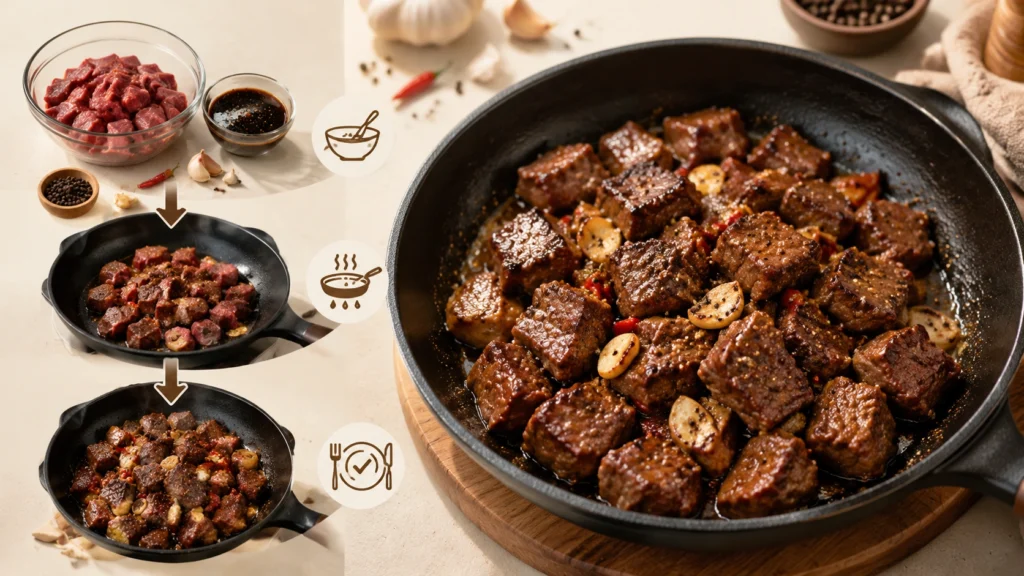
A lot of Beef Salpicao recipes taste good at first bite but end up chewy, watery, or lacking that rich restaurant-style sear. This method focuses on the details that actually matter: drying the beef properly, using high heat correctly, avoiding pan crowding, and timing the marinade carefully.
The result is savory beef salpicao with browned sides, juicy chunks, and a glossy sauce that coats the meat instead of pooling at the bottom of the serving plate. The garlic becomes golden and crispy rather than bitter, and the butter emulsifies into the sauce instead of separating.
How to Make Beef Salpicao the Right Way at Home
The secret to flavorful beef salpicao is balancing speed and heat. Everything cooks quickly, so preparation matters before the beef even touches the pan. Slice the garlic, mix the sauce in a small bowl, and pat the beef dry before heating the skillet.
A hot pan is critical here. Most people make this mistake: they start cooking before the pan is fully heated. That instantly drops the temperature and causes steaming instead of browning.
Step-by-Step Instructions
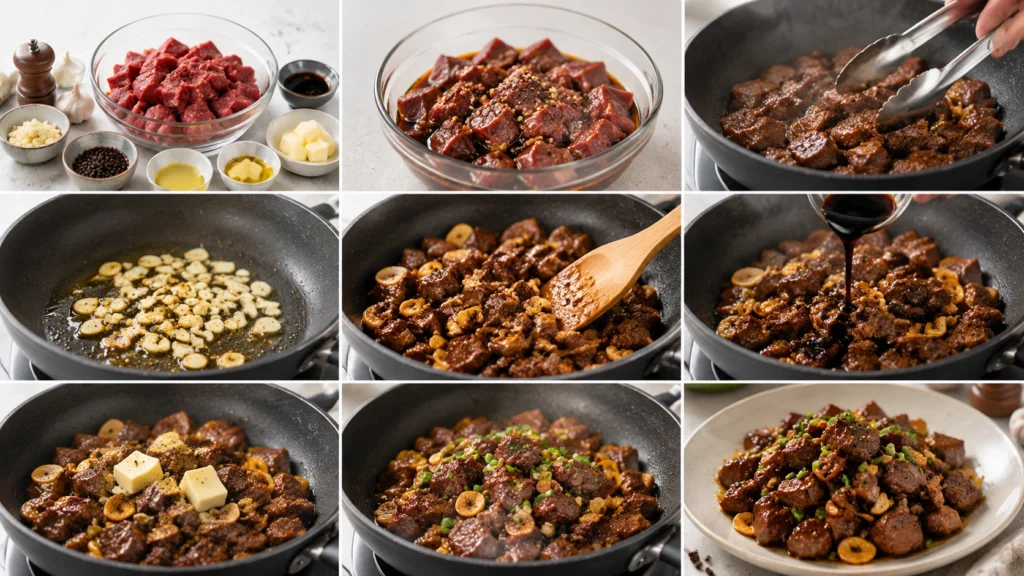
- Pat the beef cubes dry using paper towels. Season lightly with kosher salt and fresh cracked black pepper.
- In a ramekin or small bowl, whisk together soy sauce, Worcestershire sauce, oyster sauce, brown sugar, and chili flakes.
- Heat olive oil in a stainless steel pan, cast iron skillet, or wok over medium heat. Add thinly sliced garlic and fry gently while stirring often until golden brown and crispy. Remove with a slotted spoon and set aside.
- Increase to medium-high heat and allow the pan to heat for another 1–2 minutes.
- Add the beef cubes in a single layer. Do not crowd your meat. Sear for about 1½ to 2 minutes per side until browned and cooked to medium rare.
- Pour in the soy sauce mixture and toss quickly. The sauce should bubble immediately.
- Lower the heat slightly and stir in cold butter. As the butter melts, it emulsifies the sauce into a glossy coating.
- Add half the fried garlic back into the pan and toss everything together for another minute.
- Transfer to a serving dish and garnish with remaining fried garlic and chopped scallions.
- Serve immediately with garlic fried rice or steamed white rice.
Why Your Beef Salpicao Turns Tough and Chewy
This is the biggest issue readers struggle with, and it usually comes down to heat management or moisture control rather than the recipe itself.
| Problem | Likely Cause | Fix |
| Gray beef without crust | Pan not hot enough | Preheat 2–3 minutes before cooking |
| Rubbery texture | Overcooked beef | Cook to medium rare only |
| Watery sauce | Overcrowded pan | Cook in batches |
| Tough exterior | Marinated too long with salt | Keep marinade under 30 minutes |
| Bitter garlic | Heat too high during frying | Fry garlic on low-medium heat |
| Steamed beef | Wet surface from marinade | Pat beef dry before searing |
Salt timing matters more than many people realize. In short marinades, salt helps flavor penetrate the meat. But after long exposure, salt starts pulling moisture out through osmosis and can leave the exterior rubbery.
| Marinating Time | Result |
| Under 10 minutes | Surface flavor only |
| 15–30 minutes | Best balance |
| 30–60 minutes | Acceptable but dry carefully |
| Over 1 hour | Higher risk of chewy texture |
Which Pan Gives the Best Sear for Beef Salpicao?
Restaurant salpicao often tastes smokier because commercial wok burners generate far more heat than home stoves. That slightly charred “wok hei” flavor is difficult to fully recreate at home, but good cookware gets you surprisingly close.
| Pan Type | Sear Quality | Notes |
| Carbon steel wok | Excellent | Best heat response |
| Cast iron skillet | Excellent | Strong crust formation |
| Stainless steel pan | Very good | Great for browning |
| Non-stick pan | Weak | Beef tends to steam |
| Ceramic pan | Moderate | Needs longer preheat |
If you only own a non-stick skillet, cook smaller batches and let the pan fully recover heat between rounds.
Pro Tip for the Best Restaurant-Style Flavor
The single biggest upgrade you can make is drying the beef thoroughly before searing. Even a small amount of surface moisture lowers pan temperature and prevents the Maillard reaction from happening properly. I learned this after repeatedly wondering why my beef tasted good but lacked that deep steak crust you get in Filipino restaurants.
Now I always pat the beef cubes dry, let the pan preheat longer than I think necessary, and cook in small batches. That one adjustment completely changed the flavor, color, and texture of my Beef Salpicao recipe.
Common Mistakes That Ruin Beef Salpicao
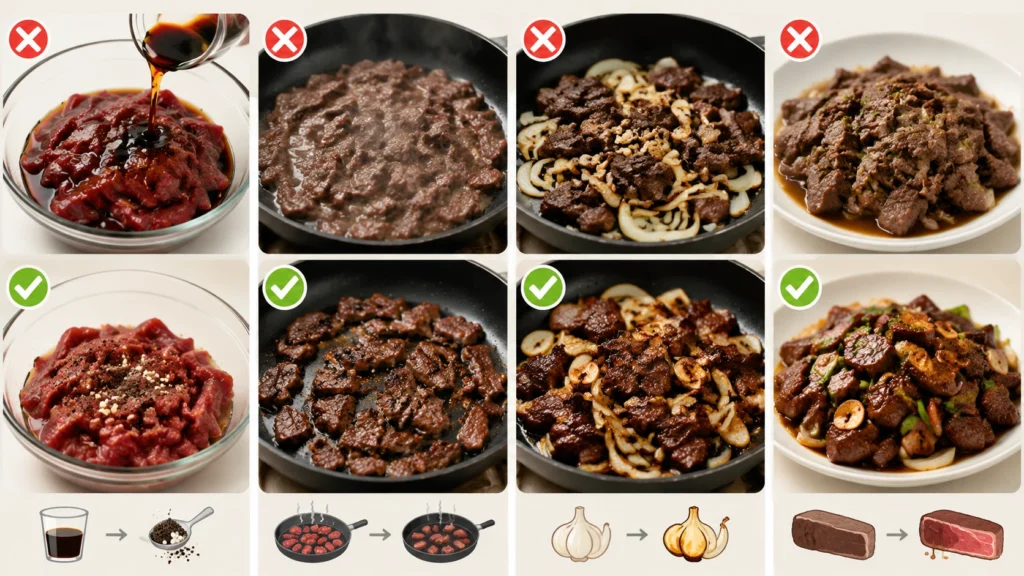
Many beginner recipes skip the small details that actually determine whether the dish becomes incredible or disappointing.
Using the wrong beef cut is one of the biggest issues. Beef chuck may seem affordable, but it doesn’t work well for quick searing. The connective tissue needs slow cooking to become tender.
Another common problem is adding too much beef at once. When the skillet becomes overcrowded, the accumulated juices create steam instead of browning the meat. You lose the flavorful crust entirely.
Garlic also burns quickly. Fry it slowly over low heat until light golden brown rather than dark brown.
Key reminders:
- Cook in batches if doubling the recipe
- Use medium-high heat for proper searing
- Pat the beef dry before cooking
- Add cold butter off-heat for a glossy sauce
- Avoid marinating with salt for too long
- Never move the beef too early while searing
Variations and Substitutions That Actually Work
One reason this dish stays popular is how adaptable it is for different kitchens and budgets.
- Add baby bellas or button mushrooms for extra umami flavor
- Use teriyaki sauce for a sweeter savory base
- Add chili flakes for spicy beef salpicao
- Swap ribeye with sirloin for a more affordable version
- Use coconut aminos for a lower sodium variation
- Add parsley or green onions for freshness
- Serve with Filipino Pancit Bihon instead of rice
- Pair with garlic green beans or sautéed chayote squash
- Make creamy beef salpicao by adding a splash of cream at the end
Ground beef salpicao versions exist, but the texture is completely different from traditional Filipino steak bites.
My Experience Making This Beef Salpicao Recipe at Home
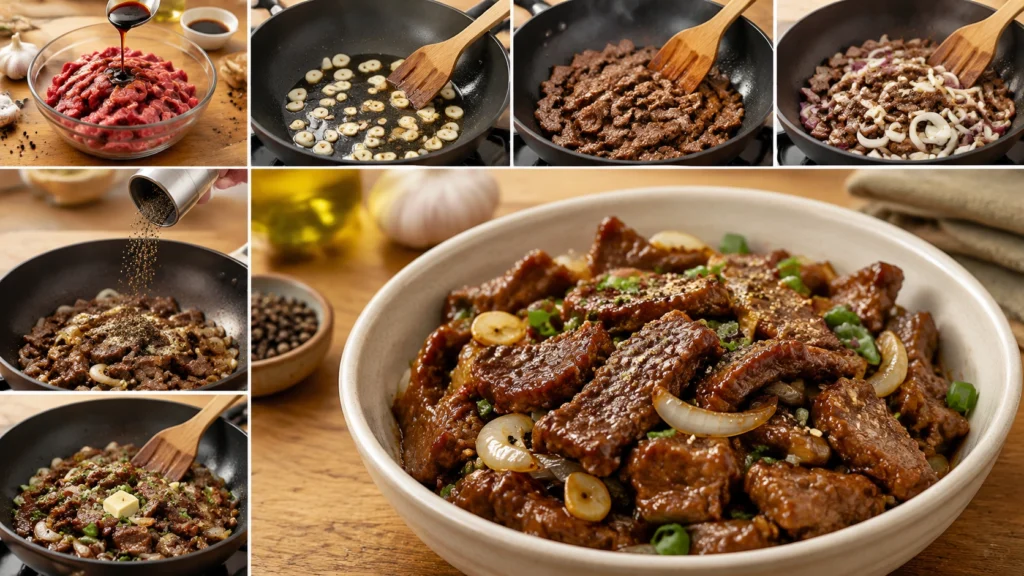
The first time I made Beef Salpicao, I completely crowded the pan because I was impatient and trying to cook everything at once. Instead of getting sizzling steak bites, I ended up with gray beef sitting in watery sauce. The flavor was still decent, but the texture was nowhere near what I remembered from Filipino restaurants.
What finally fixed it was cooking smaller batches and waiting longer before flipping the beef. I also stopped marinating for over an hour. That made a massive difference in tenderness.
One small trick I still use today is reserving part of the fried garlic for garnish instead of mixing it all back into the pan. The contrast between crispy garlic on top and buttery sauce underneath makes the final dish taste much more balanced.
Benefits of Beef Salpicao for Everyday Meals
Beef Salpicao is commonly enjoyed because it delivers strong flavor without requiring complicated preparation. Since the dish cooks quickly, it works especially well for busy evenings when you want something comforting but still satisfying.
The protein content is also fairly high, especially when made with lean sirloin or tenderloin. While the sodium can be elevated because of soy sauce and oyster sauce, simple ingredient adjustments can make it lighter without sacrificing too much flavor.
Some practical reasons people keep making this recipe:
- Quick cook time compared to slow braised beef dishes
- Works for both appetizer and main dish portions
- Easy to pair with rice or vegetables
- Flexible enough for different beef cuts
- Great for meal prep and leftovers
- Rich savory flavor with simple pantry ingredients
The Filipino Background Behind Beef Salpicao
Although many people associate salpicao with Spanish-inspired cooking because of the name, the Filipino version has evolved into its own style over time. Modern Filipino Beef Salpicao leans heavily into garlic, soy sauce, butter, and Worcestershire flavors rather than traditional Spanish seasoning profiles.
Today, it’s commonly served in Filipino restaurants as sizzling steak bites or family-style platters alongside garlic rice and side dishes like stir-fried spinach with garlic or ensaladang talong.
One reason it became so popular is versatility. It can feel casual enough for dinner at home but still impressive enough for celebrations or gatherings.
| Common Pairings | Why They Work |
| Garlic fried rice | Absorbs rich sauce |
| Steamed white rice | Balances saltiness |
| Pancit bihon | Adds texture contrast |
| Garlic green beans | Cuts richness |
| Mashed potatoes | Creamy comfort pairing |
If you enjoy dishes like chicken adobo, beef tapa, or lumpia, this recipe fits naturally into the same comforting Filipino food tradition.
FAQ – Real Questions People Ask
Storage, Freezing, and Reheating Without Ruining the Texture
Beef Salpicao stores fairly well, but reheating incorrectly can make the meat tough very quickly. The key is gentle reheating and avoiding excessive microwave time.
Storage guidelines:
- Refrigerator in airtight container: 3–4 days
- Freezer: up to 2 months
- Room temperature serving window: about 2 hours
For reheating, let the beef sit at room temperature for about 10 minutes first. Warm it in a skillet over low-medium heat with a spoonful of water or broth to loosen the sauce. Heat only until warmed through.
If using the microwave, use short intervals at lower power instead of blasting it on high heat. Adding a tiny piece of cold butter after reheating also helps restore the glossy sauce texture.
Beef Salpicao Recipe
Ingredients
Equipment
Method
- Pat beef cubes dry using paper towels to ensure a good sear and season lightly with salt and black pepper.
- In a bowl, mix soy sauce, Worcestershire sauce, oyster sauce, brown sugar, and chili flakes until well combined.
- Heat olive oil in a hot pan over medium heat and fry garlic until golden brown and crispy, then set aside.
- Increase heat to medium-high and let the pan get very hot before adding beef.
- Sear beef cubes in a single layer for 1½–2 minutes per side until browned and slightly caramelized.
- Pour in the prepared sauce and toss quickly until it starts bubbling and coats the beef evenly.
- Lower heat and add butter, stirring until it melts and forms a glossy sauce.
- Return fried garlic to the pan and mix gently for extra flavor and aroma.
- Remove from heat and garnish with chopped scallions before serving hot.
Notes
- Always use high heat to get a proper sear and avoid steaming the beef.
- Don’t overcrowd the pan; cook in batches for best texture.
- Let beef rest for a few minutes after cooking for juicier bites.
Conclusion
This Beef Salpicao recipe proves that a handful of simple ingredients can create something deeply flavorful and satisfying when the technique is right. The rich garlic aroma, buttery savory sauce, and tender steak bites make it one of those dishes people crave again and again. Once you learn how to manage the heat, avoid overcrowding, and time the marinade properly, this becomes an incredibly reliable recipe for weeknight dinners, gatherings, or comforting homemade meals. Save this recipe, pair it with garlic fried rice, and don’t be surprised when everyone asks for seconds.
Find more tasty inspiration on Beef Cutlets Recipe and make your everyday meals more exciting and satisfying.