Magnesium Oil Recipe: Easy 2-Ingredient DIY Spray

There’s something satisfying about making your own wellness staples at home especially when they’re this simple and genuinely useful. The first time I tried a magnesium oil spray, it was after a long, tiring day with sore shoulders and restless legs. That light, slightly salty mist felt cooling, calming, and surprisingly effective within minutes.
This magnesium oil recipe has become one of those small, reliable routines I come back to. It’s quick to make, costs a fraction of store bought versions, and you can customize it with calming essential oils like lavender or energizing blends like peppermint and eucalyptus. Whether you’re looking for muscle recovery support, better sleep, or just a simple way to unwind, this DIY approach fits right into everyday life.
Explore more wellness ideas and homemade remedies on Cookiva Recipe for simple and effective daily self-care.
What Is magnesium oil recipe and Why It’s Popular
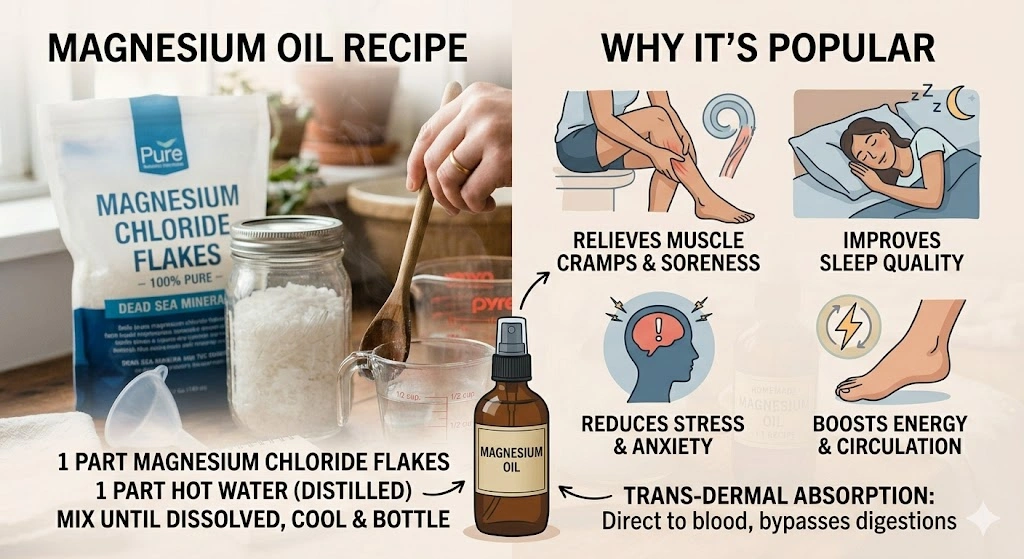
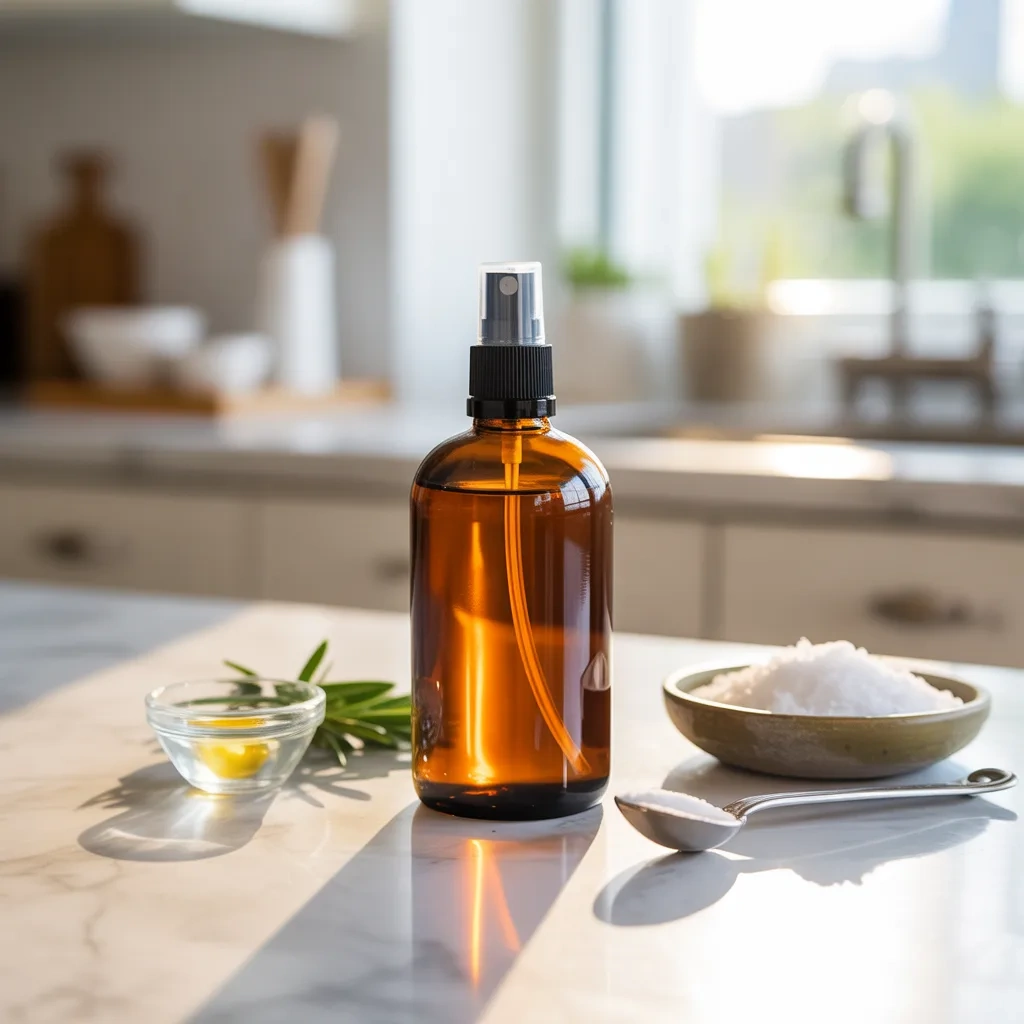
magnesium oil recipe isn’t actually an oil, it’s a concentrated solution made by dissolving magnesium chloride flakes in water. The result has a slightly slick, oil like texture, which is where the name comes from. It’s commonly used as a topical magnesium spray, applied directly to the skin.
Many people turn to magnesium oil as an alternative to oral supplements, especially when dealing with muscle tension, stress, or sleep issues. The idea is that applying magnesium directly to the skin may support relaxation and muscle function without involving the digestive system. If you’re looking into how to make magnesium spray, you’ll be pleased to know that the process is surprisingly simple. With just two main ingredients and about five minutes, you can create a customizable, affordable version that rivals many premium wellness brands.
Try this Lillet Spritz Recipe for a refreshing, elegant drink perfect for warm days, brunches, or easy entertaining at home.
Why Make Magnesium Oil recipe at Home Instead of Buying It?
Most guides say DIY is cheaper but let’s actually break it down.
Real Cost Comparison
| Option | Cost per 100 ml | Notes |
| DIY magnesium oil | ~$2–$4 | One time ingredient purchase, reusable |
| Store bought brands | $20–$40 | Often include branding + packaging costs |
| Refill (DIY) | <$2 | Only flakes needed after first batch |
A single bag of magnesium chloride flakes can make multiple batches, bringing the long term cost down even further.
Beyond cost, making your own means:
- You control concentration (mild vs strong)
- You avoid unnecessary additives
- You can customize scent and skin feel
Does Topical Magnesium Actually Work? (Simple Science Explained)
This is where things get interesting and a little debated.
Magnesium applied to the skin may be absorbed through:
- Sweat glands
- Hair follicles
- Tiny openings in the skin barrier
Some small studies suggest increases in magnesium levels after regular use, while others show mixed results. What most users agree on is the practical effect many report reduced muscle tension, improved relaxation, and better sleep routines.
The key takeaway:
- Absorption varies by person
- Skin hydration and concentration matter
- Consistent use tends to give the best results
Magnesium Oil Recipe Overview: Texture, Feel, and Best Use
This homemade magnesium spray has a slightly silky, mineral-rich texture that glides easily onto the skin. When first applied, it may feel a bit tacky and can leave a light salt-like residue as it dries, which is completely normal. The scent is fully customizable depending on the essential oils you choose, whether it’s lavender for a calming aroma, peppermint for a cooling sensation, or eucalyptus for a fresh, invigorating finish.
It works especially well:
- After workouts for sore muscles
- Before bed for relaxation
- During stressful days to reduce tension
Quick Recipe Summary
| Detail | Value |
| Prep Time | 5 minutes |
| Cook Time | 0 minutes |
| Total Time | 5 minutes |
| Servings | ~100 g (about 2/3 cup) |
| Difficulty | Easy |
| Use | Topical spray |
Ingredients and Why Each One Matters
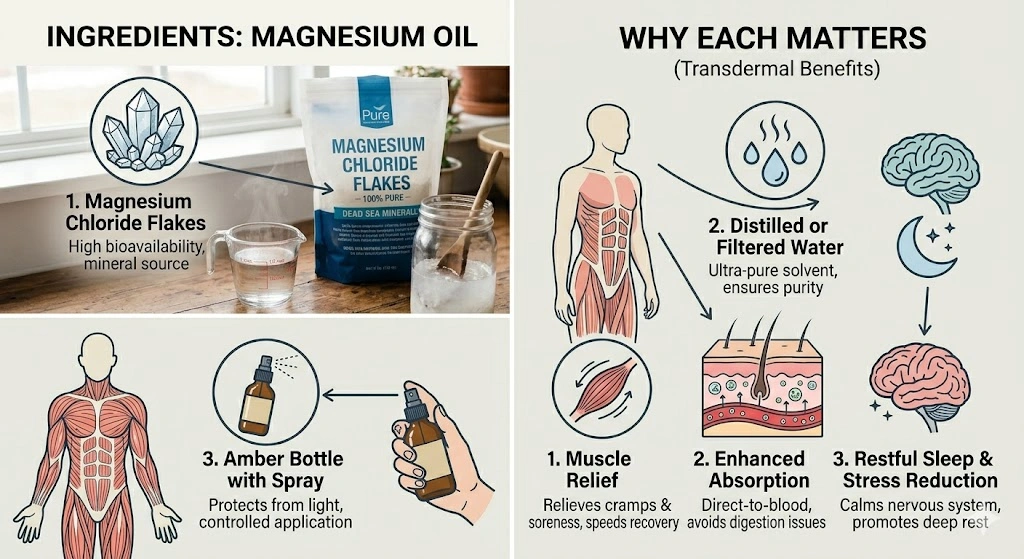
The beauty of this recipe is how minimal it is but each ingredient plays a key role.
- Magnesium chloride flakes – The active mineral source; highly bioavailable compared to magnesium sulfate
- Distilled water – Prevents contamination and extends shelf life
- Essential oils (optional) – Add scent and support relaxation (lavender, peppermint, eucalyptus)
Magnesium Chloride Quality Differences (Important)
| Type | Quality | Best Use |
| Food grade magnesium chloride | High purity | Best for DIY body products |
| Zechstein magnesium chloride | Premium source | Known for purity and trace minerals |
| Industrial grade flakes | Lower quality | Not recommended for skin use |
| Epsom salt (magnesium sulfate) | Different compound | Not the same as magnesium oil |
Beginner vs Advanced Magnesium Oil Ratios
You don’t have to stick to one formula. Adjust based on skin sensitivity:
| Strength | Ratio (Flakes : Water) | Best For |
| Mild | 1 : 1.5 | Sensitive skin, beginners |
| Standard | 1 : 1 | Most common use |
| Strong | 2 : 1 | Experienced users, intense muscle recovery |
How to Make Magnesium Oil recipe the Right Way
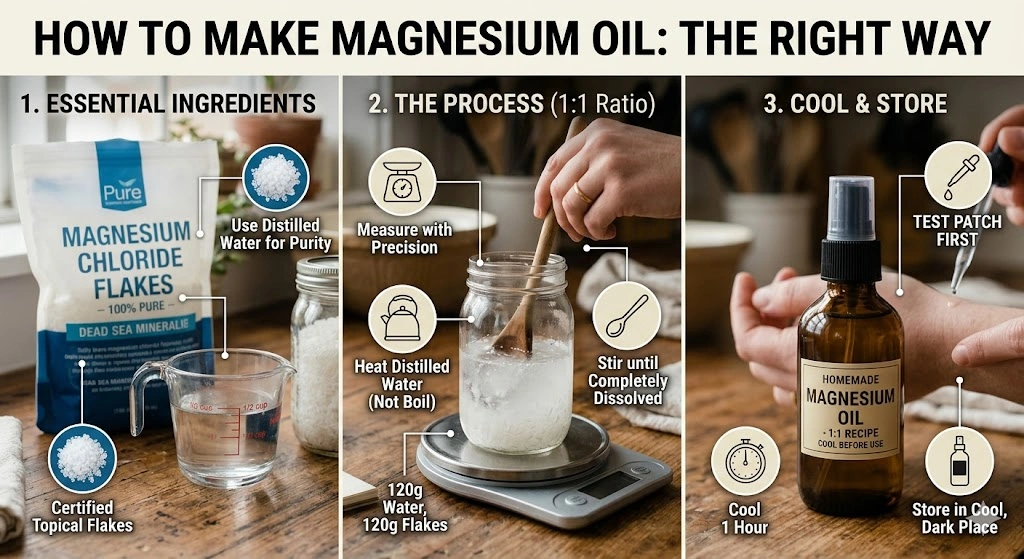
The process is straightforward, and if you’re wondering how to make magnesium oil, following each step carefully will help you achieve the best results.
Step by Step Instructions
- Heat distilled water until hot (not boiling).
- Add magnesium chloride flakes into a heat safe glass bowl.
- Pour hot water over flakes.
- Stir with a clean utensil until fully dissolved.
- Let the mixture cool to room temperature.
- Transfer into a clean glass spray bottle.
- Add 5–15 drops of essential oils if desired.
- Shake before use.
Why Magnesium Doesn’t Always Dissolve Properly (Fix This Fast)
If your mixture looks cloudy or grainy, here’s what’s likely happening:
- Water wasn’t hot enough → flakes won’t fully dissolve
- Too many flakes → solution is oversaturated
- Not stirred long enough → uneven texture
Fix: Reheat gently and stir again, or dilute with a small amount of warm water.
Pro tip for best results
One tip that has made a noticeable difference in my magnesium spray recipe is letting the solution cool completely before adding any essential oils. Mixing them in too early can cause separation or reduce their scent quality. Waiting just a few extra minutes creates a more stable, evenly blended spray that smells fresher and feels better on the skin.
How to Use Magnesium Oil recipe Safely and Effectively
Apply directly to clean skin common areas include:
- Feet (bottoms of feet absorb well)
- Calves, thighs, and lower back
- Shoulders and neck
Massage lightly and let it sit for 15–20 minutes, then rinse if needed.
Skin Reaction Guide (What’s Normal vs Not)
| Reaction | Meaning | Action |
| Mild tingling | Normal | Continue use |
| Moderate itching | Common for beginners | Dilute solution |
| Burning >10 minutes | Too strong | Rinse and reduce strength |
| Redness or irritation | Possible sensitivity | Stop use |
Always do a 24 hour patch test before regular use.
Functional Uses Beyond Muscle Relief
Magnesium oil isn’t just for sore muscles. It’s surprisingly versatile:
- Post workout recovery
- Restless legs at night
- Travel fatigue relief
- Desk posture tension
- Foot soak alternative (spray + massage)
Essential Oil Safety and Proper Mixing
If you’re following a recipe for magnesium oil, adding essential oils can be a great way to customize the spray—but it should always be done carefully.
Do:
- Use 5–10 drops per 100 ml
- Choose skin safe oils like lavender or eucalyptus
- Shake before each use
Don’t:
- Use citrus oils before sun exposure (photosensitivity risk)
- Overuse oils (can irritate skin)
- Skip emulsification if using larger amounts
For better blending, you can add a small amount of polysorbate 20 or 80 to help disperse oils evenly.
Common Mistakes and Why They Ruin the magnesium oil recipe
One thing I’ve noticed is that most people don’t struggle because the process is difficult—they run into problems because of small oversights. If you’re following a homemade magnesium spray recipe, using the right ingredients is one of the most important factors. Magnesium sulfate (Epsom salt) won’t produce the same result as magnesium chloride. Another common mistake is making the solution too strong too quickly, which can lead to uncomfortable skin reactions.
A Glow Recipe Ambassador is someone who represents the brand’s skincare philosophy, sharing product experiences and beauty inspiration.
Key Mistakes to Avoid
- Using Epsom salt instead of magnesium chloride
- Skipping a patch test
- Adding essential oils without proper dilution
- Not shaking before use
- Using a plastic bottle that reacts over time
Variations, Substitutions, and When to Use Them for Better Results
One of the biggest advantages of making a diy magnesium spray is the flexibility it offers. You’re not limited to a single formula—you can adjust the strength, scent, and even the overall feel to suit your skin and personal preferences. If your goal is relaxation, a calming blend with soothing essential oils works well. For post-workout recovery, a more cooling and invigorating combination may be a better choice. And if you have sensitive skin, simply lowering the magnesium concentration can make the spray much more comfortable to use.
Here are practical variations you can actually use at home:
- Gentle magnesium spray (for beginners or children)
Use a 1:1.5 ratio (flakes to distilled water). This reduces tingling and is better for daily use. - Strong recovery spray (for sore muscles)
Use a 2:1 ratio. Ideal after intense workouts or for stubborn tension in calves, shoulders, and lower back. - Magnesium oil with lavender (for sleep support)
Add 5–10 drops of lavender essential oil. Works well when applied to feet or neck before bed. - Cooling peppermint blend (for post workout)
Add a few drops of peppermint or eucalyptus. This creates a refreshing, cooling sensation on tired muscles. - Rose-infused magnesium oil (hydrating and soothing)
Steep dried rose petals in hot water (like herbal tea), strain, then use that liquid instead of plain distilled water. It gives a softer feel and light floral aroma. - Oil balanced version (for dry skin)
Mix a small amount of aloe vera gel or coconut oil after cooling. This helps reduce the salt like residue and improves skin feel. - Bath or soak alternative
Instead of spraying, dissolve 1–2 cups of magnesium chloride flakes in warm water and soak feet for 20–30 minutes.
The key is to match the version to your purpose. A strong spray isn’t always better comfort and consistency matter more.
Supporting Information: Why Magnesium Matters in Daily Life
Magnesium plays a role in hundreds of biochemical processes in the body, including muscle function, nerve signaling, and energy production. Despite that, many people don’t get enough through dieting alone. Modern factors like soil depletion, processed foods, stress, and even lifestyle habits (like caffeine or alcohol intake) can affect magnesium levels. That’s why you’ll often see it discussed in relation to relaxation, sleep routines, and muscle recovery.
Why Magnesium Intake Can Be Lower Than Expected
| Factor | How It Affects Magnesium |
| Soil depletion | Reduces magnesium content in vegetables |
| High stress levels | Increases magnesium usage in the body |
| Sweating (exercise) | Leads to mineral loss |
| Processed foods | Lower overall mineral intake |
| Caffeine & alcohol | May increase excretion |
Topical magnesium is often used as a complementary approach to support everyday wellness. If you’re interested in making a diy magnesium oil, one of its biggest advantages is that many people prefer applying it directly to the skin rather than taking oral supplements. While absorption through the skin can vary from person to person, it conveniently bypasses the digestive system and fits easily into a daily self-care routine.
A Quick Note on Magnesium Chloride vs Epsom Salt
This is one of the most important distinctions beginners often miss.
- Magnesium chloride flakes are used for magnesium oil because they dissolve easily and create that smooth, sprayable consistency.
- Epsom salt (magnesium sulfate) is better suited for baths, not sprays. It doesn’t create the same “oil like” solution and won’t behave the same way on the skin.
Understanding this difference alone can save you from one of the most common DIY mistakes.
Storage, Shelf Life, and How Long It Really Lasts
Storage conditions directly affect how long your magnesium oil stays fresh.
Shelf Life Guide
| Storage Method | Shelf Life |
| Room temperature | 3–6 months |
| Cool, dark place | Up to 6 months |
| Refrigerated | Up to 9 months |
Always store in a glass container and keep it sealed.
My Experience Making This magnesium oil recipe at Home
The first time I made magnesium oil, I rushed the process and didn’t fully dissolve the flakes. The result was a gritty spray that clogged my atomizer within a week. That experience completely changed the way I approached my magnesium oil recipe. Once I started using properly heated water and letting the mixture cool completely, everything improved. The texture became smooth, the spray worked perfectly, and I actually enjoyed using it every day. I also keep a slightly diluted version on hand for more sensitive areas, and it makes a noticeable difference in comfort.
Benefits of Magnesium Oil (Realistic and Practical)
A magnesium oil recipe is widely used because it fits easily into daily routines and supports overall comfort. If you’ve come across the term body spray recipe polys, it’s often associated with discussions about customizing homemade wellness sprays for different needs and preferences. Many people use magnesium oil to help promote relaxation after long days, support muscle recovery, and create a calming nighttime ritual. While results vary, it’s appreciated for how easily it integrates into a consistent self-care routine.
Explore more easy and refreshing drinks recipes to pair perfectly with your homemade favorites anytime.
Commonly Noted Benefits
- May help reduce muscle tension
- Often used for relaxation and sleep routines
- Convenient alternative to supplements
- Easy to customize and use daily
magnesium oil recipe FAQ Real Questions People Ask
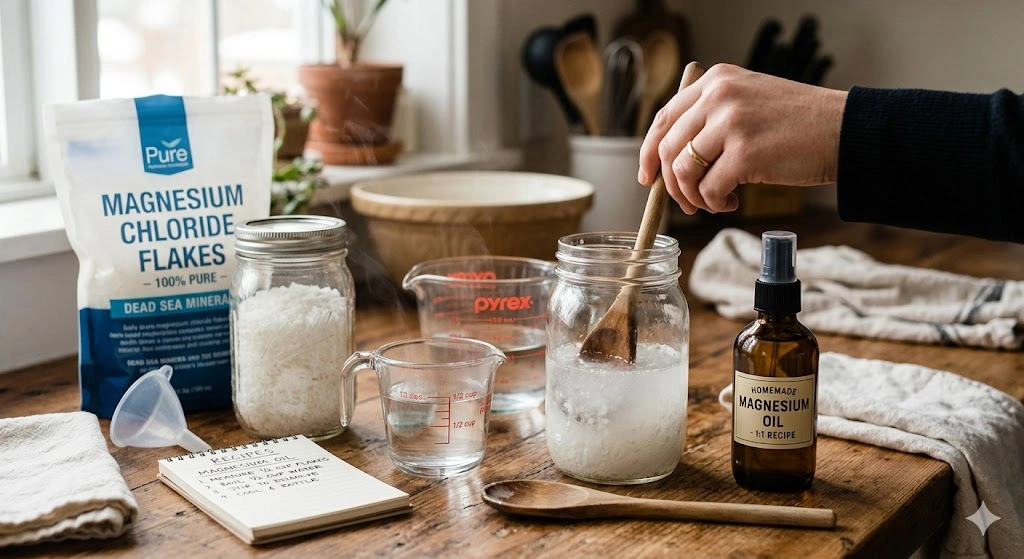

magnesium oil recipe
Ingredients
Equipment
Method
- Heat distilled water in a small saucepan until warm but not boiling, creating a clean base for dissolving flakes.
- Pour warm water into a glass bowl for safe mixing and easier handling.
- Add magnesium chloride flakes slowly, stirring until fully dissolved and the liquid becomes clear.
- Let the mixture cool completely to room temperature before handling further.
- Add aloe vera gel or essential oils if using, and mix gently for even distribution.
- Carefully transfer the liquid into a clean spray bottle using a funnel if needed.
- Shake lightly before each use to maintain consistency.
Notes
Conclusion: A Simple DIY That Actually Delivers
Once you make your own magnesium oil recipe, it’s hard to go back to store bought versions. It’s quick, affordable, and easy to tailor to your needs whether you’re focused on relaxation, recovery, or just building a simple wellness habit. If you’ve been curious about trying it, this is one of those recipes worth saving. Start simple, adjust as needed, and make it part of your routine.
Amish cough syrup recipe is a traditional homemade remedy often shared in folk medicine for soothing seasonal cough and throat irritation.