Buldak Noodles Recipe: Easy 15-Minute Homemade Heat

If you’ve ever scrolled through Instagram or TikTok, chances are you’ve seen the infamous fire chicken noodles, or buldak noodles, trending endlessly. I remember the first time I tried the classic instant version: I was instantly hooked by the fiery spice, chewy noodles, and bold flavor. But after a few bites, I realized I wanted something I could tweak at home less intimidating on the spice, more saucy, maybe even creamy. That’s how I started experimenting with homemade
versions, from creamy Buldak carbonara ramen noodles to buldak curry ramen, and even vegan buldak ramen versions that still hit all the flavor notes. This Buldak noodles recipe brings together everything I love about this dish: that satisfying chewy texture, the spicy sweet sauce, and, if you want, a creamy cheesy finish that makes every bite comforting. Whether you’re cooking for a quick lunch, a snack course, or just a noodle cravings meal at night, these noodles
can be adapted to your taste. From vegan swaps to spice level adjustments, this guide will walk you through all the steps I’ve learned through trial and error. By the end, you’ll understand what makes buldak noodles so addictive, how to cook them perfectly without turning them into mush, and even how to store or reheat leftovers without losing flavor or texture. Let’s dive in.
Looking for more bold and easy meals like this? Explore more delicious recipes on Cookiva Recipe and find your next favorite dish.
What Is Buldak Noodles recipe and Why It’s Popular
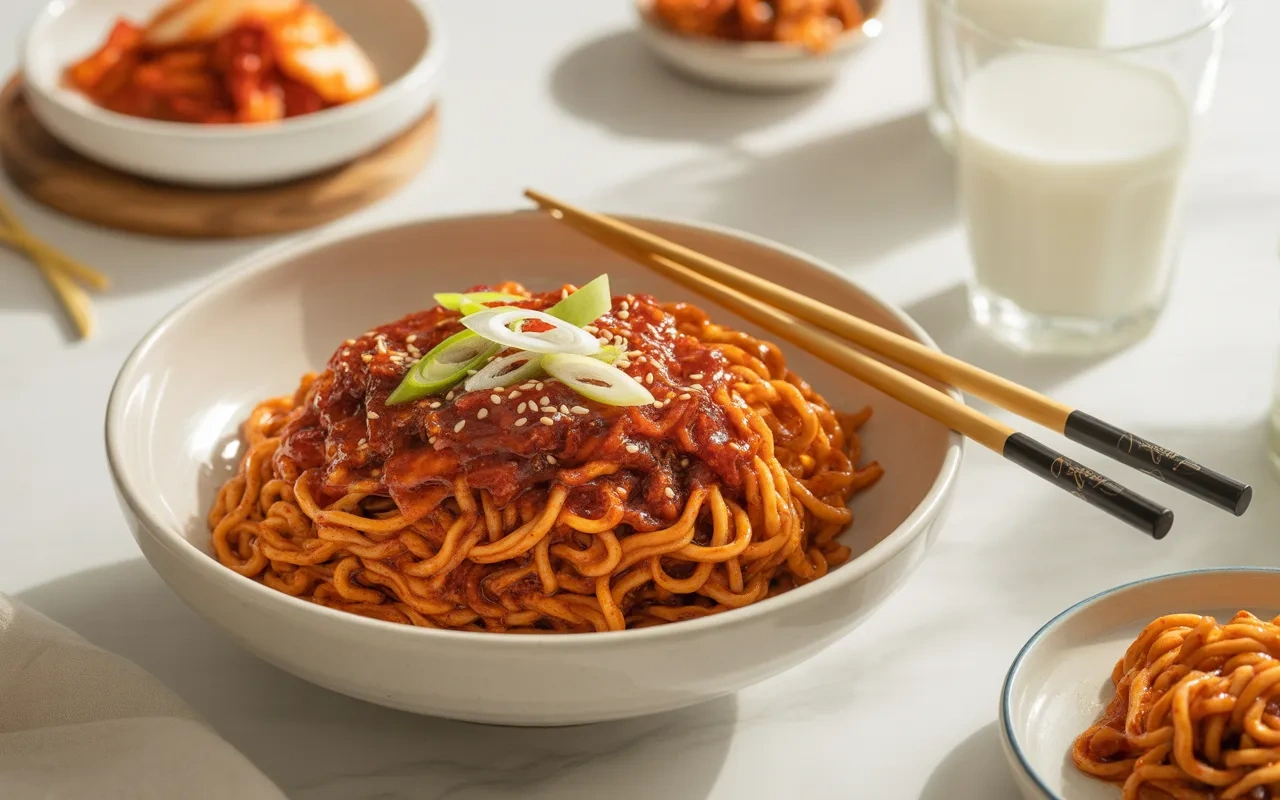
Buldak noodles recipe, also known as buldak bokkeum myun, started as a spin off of the traditional Korean fire chicken dish, famous for its extreme heat and savory sweet flavor. The instant ramen adaptation captured the world’s attention thanks to its viral presence on social media, making it a favorite for both Korean ramyeon enthusiasts and adventurous home cooks. Unlike other instant ramen, these noodles are coated in a spicy sauce that clings to every strand, offering a full flavored experience with just one pack.
People love this dish because it’s more than just spicy noodles it’s a comfort food with a kick, perfect for nights when you want a quick noodle meal that feels indulgent. Over time, chefs and home cooks started experimenting with creamy versions, like homemade Buldak carbonara ramen noodles or creamy buldak ramen noodles, and even international twists like Buldak Curry Ramen, adding cream, cheese, or curry spices to soften the heat while enhancing the sauce’s richness.
For a tangy twist on classic poultry, try this orange duck recipe to impress dinner guests with sweet, citrusy, and perfectly glazed flavors.
What Makes This Buldak Noodles Recipe Special
At its core, this recipe is built for flexibility. You can make it as spicy or mild as you want, add cheese for a creamy noodle texture, or go vegan with plant based cheese and stock powders. The sauce is rich, tangy, and clings beautifully to the noodles, making every bite satisfying. The combination of garlic, spring onions, and optional protein toppings, like tofu, meat, or a ramen egg, ensures that the flavor is layered and aromatic.
The chewy, slightly al dente noodles paired with the sauce’s creamy consistency make it ideal for quick comfort noodle meals, late night snacks, or even a show stopping dish for friends. And because I’ve tested it multiple ways, I can guide you on how to adjust spice, texture, and toppings for the perfect bowl every time.
Recipe Overview
| Prep Time | Cook Time | Total Time | Servings | Difficulty | Cuisine |
| 5 minutes | 5 minutes | 10 minutes | 1 | Easy | Korean |
Ingredients and Why Each One Matters
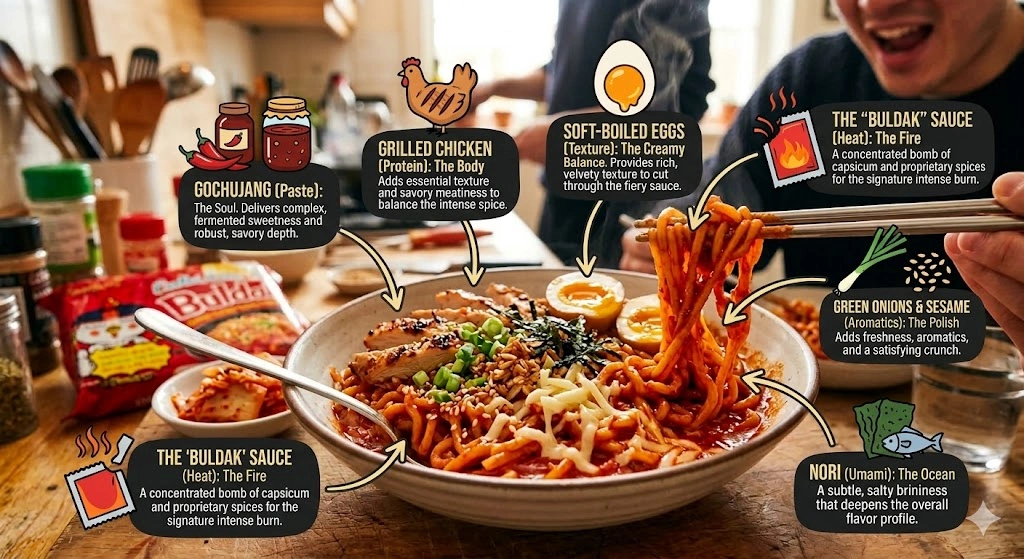
Every ingredient in this recipe plays a role, whether it’s building flavor, controlling spice, or enhancing the sauce’s creaminess.
Here’s why I use them, along with practical substitutions if needed:
- Buldak noodles The chewy, spicy backbone of the dish. Any spicy instant ramen works if unavailable.
- Garlic cloves finely chopped or minced garlic jar Adds depth and umami. Fresh garlic stir fried lightly gives the best aroma.
- Spring onions (chopped) Adds freshness and crunch; fried green onions create a pungent top layer.
- Cheese (mozzarella, American slice, or vegan Made With Plants block cheese) Melts into a rich, creamy sauce. Can be swapped for cheddar or plant based alternatives.
- Cream or double cream / soy milk Controls spiciness and adds creamy noodle consistency.
- Tomato paste & soy sauce forms the base of the sauce and balances sweetness and acidity.
- Chicken bouillon powder vegan / Massels stock powder Brings umami depth. Vegetable stock is an alternative for a milder flavor.
- Spices: paprika, turmeric, curry powder Add color and mild warmth without overpowering the dish.
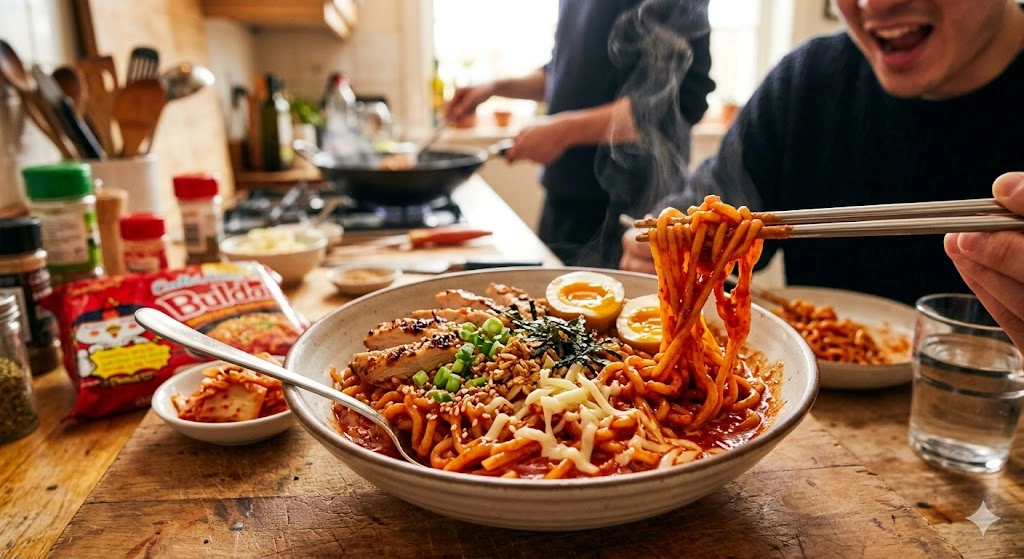
- Optional toppings: Boiled egg, tofu, kimchi, julienned carrot, cucumber, cabbage, sesame seeds, chili flakes, or tuna mayonnaise mixture.
Real Ingredient Cost Breakdown
| Ingredient | Estimated Cost | Used in Recipe |
| Instant Buldak noodles | $1.50 | 1 pack |
| Cheese | $0.40 | ¼ cup |
| Cream/milk | $0.30 | 2 tbsp |
| Garlic | $0.10 | 1 clove |
| Total per serving | ~$2.30 |
This makes the homemade version surprisingly affordable and allows for customization beyond the standard instant packet.
How to Make Buldak Noodles recipe the Right Way
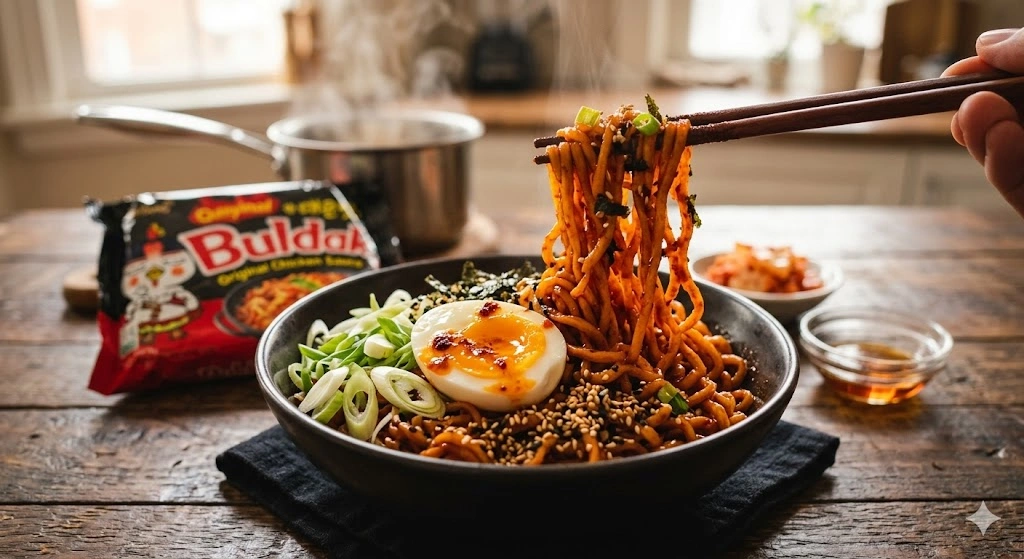
Cooking this dish is easier than it looks if you follow a few key principles. Reserve your noodle water, fry aromatics carefully, and combine sauce and noodles at the right time to get a perfect coating.
- Boil the noodles according to package instructions (around 5 minutes). Drain, reserving about 3/4 cup of noodle water. This will help create a silky, creamy sauce.
- Fry the aromatics: In a medium frying pan, heat 1 tbsp oil over medium heat. Add garlic and optional ginger paste and fry until golden and fragrant, about 30–60 seconds.
- Make the sauce: Add tomato paste, soy sauce, chicken bouillon powder, and spices. Stir over low heat until smooth. Add cream, cheese, and the reserved noodle water gradually, allowing the sauce to thicken and coat the back of a spoon.
- Combine noodles and sauce: Add drained noodles into the pan and toss gently until every strand is coated. Adjust spice with half or full sauce packet depending on preference.
- Top your noodles: Sprinkle chopped spring onions, sesame seeds, or chili flakes, and add optional protein or vegetables.
Texture Optimization Tip: Undercook noodles by 30 seconds, finish in the sauce, and toss gently. This keeps them firm and prevents sogginess.
Elevate your backyard cooking with this hibachi on Blackstone recipe for sizzling, restaurant-style flavors right from your griddle at home.
Pro Tip for Best Results
Use a non stick skillet to prevent the cheese and sauce from sticking or burning. It allows for even sauce coating and makes stirring much easier. When cooking aromatics, medium heat is key; high heat can quickly burn garlic, changing the flavor.
Common Buldak Noodle Mistakes and How to Avoid Them
- Overcooking noodles makes them mushy; always slightly undercooked and finished in sauce.
- Burning garlic Fry slowly over medium heat and stir constantly.
- Adding too much sauce too quickly. Gradually incorporate cheese or cream to achieve smooth consistency.
- Skipping noodle water This liquid helps emulsify the sauce for a silky texture.
Discover more bold and satisfying main dishes like this buldak noodles recipe to spice up your weekly meals.
Variations, Substitutions, and When to Use Them
This recipe is flexible for every dietary preference or ingredient availability:
- Vegan Buldak ramen version: Replace dairy cheese with plant based cheese and cream with soy milk.
- Buldak Curry Ramen: Add 1 tsp curry powder to the sauce for a creamy curried noodles dish.
- Cold noodles bibim guksu Korean spicy cold noodles style: Rinse cooked noodles in ice water and toss with spicy cold noodle sauce.
- Protein swaps: Tofu, chicken, or a ramen egg work beautifully depending on preference.
My Experience Making This Buldak noodles recipe
at Home
- When I first tried this at home, I accidentally added the entire sauce packet on my first go; it
- was almost inedible! Since then, I always recommend tasting as you go and adding the
- sauce incrementally. Another trick I learned is reserving noodle water. It really transforms the
- sauce into a creamy coating without watering it down. It’s a small step but makes a huge
- difference in texture.
Benefits of Cooking Buldak Noodles recipe at Home
Making Buldak noodles recipe yourself has several advantages. You control the spice, portion size, and ingredients, which is especially useful for dietary needs or vegan adaptations. It’s also quick, satisfying, and customizable: a great way to hit ramen cravings while experimenting with flavor.
- Quick comfort food ready in 10 minutes
- Customizable spice and creaminess
- Can incorporate fresh vegetables for added texture
- Cost effective alternative to packaged noodles
Spice up dinner tonight with Dave’s Hot Chicken recipe for crispy, fiery chicken that delivers bold Nashville flavors in every bite.
Supporting Background: Why This Buldak noodles recipe
Works
Unlike standard instant ramen, this approach balances spice with cream, cheese, and aromatics, creating a sauce that clings to every noodle. It blends traditional Korean flavors with techniques for a home cooked meal that’s accessible to everyone, even outside Korea.
FAQ Real Questions People Ask
Storage, Freezing, and Reheating Best Practices
Proper storage ensures your noodles stay tasty:
- Refrigerator: Up to 2 days in an airtight container
- Freezer: Not recommended
- Reheating: Use a pan with a small splash of water or microwave briefly, stirring halfway
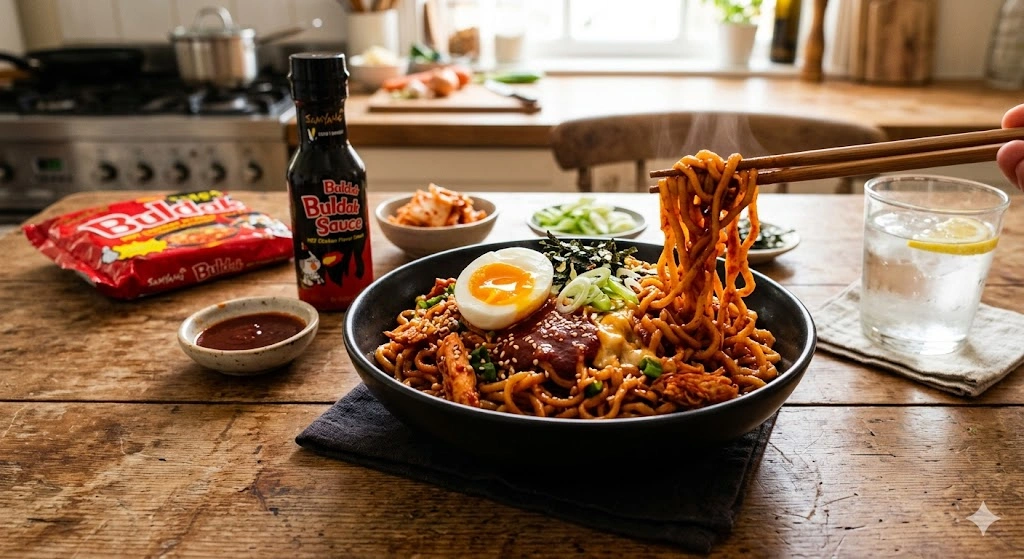

Buldak noodles recipe
Ingredients
Equipment
Method
- Boil the noodles in 375ml of water for 4–5 minutes until just al dente; drain and reserve 3/4 cup noodle water.
- Heat 1 tbsp oil in a medium frying pan over medium heat; add garlic and fry until golden and fragrant.
- Stir in tomato paste, soy sauce, chicken boullion powder, paprika, and turmeric; cook 30 seconds until aromatic.
- Add cream or soy milk and grated cheese, stirring gently until melted and smooth.
- Gradually add reserved noodle water to achieve a creamy, sauce-coated consistency.
- Add cooked noodles to the pan and toss gently until fully coated with the sauce.
- Reduce heat to low and simmer for 1–2 minutes to allow flavors to meld.
- Remove from heat, stir in chopped spring onions, and transfer to a serving bowl.
- Top with optional boiled egg, sesame seeds, chili flakes, or protein/vegetables as desired.
- Serve immediately while hot and creamy.
Notes
Conclusion
Cooking Buldak noodles recipe at home is both satisfying and versatile. You can adjust spice, add creamy cheese or plant based alternatives, and experiment with toppings to suit your taste. Bookmark this recipe for those nights when you crave a quick, indulgent noodle bowl meal, and don’t be afraid to try variations like Buldak Curry Ramen or bibim guksu Korean spicy cold noodles. Trust me, once you’ve mastered this, your ramen game will never be the same.
Learn how to make a rich and aromatic Tagine recipe that brings traditional Moroccan flavors to your home kitchen with ease.