
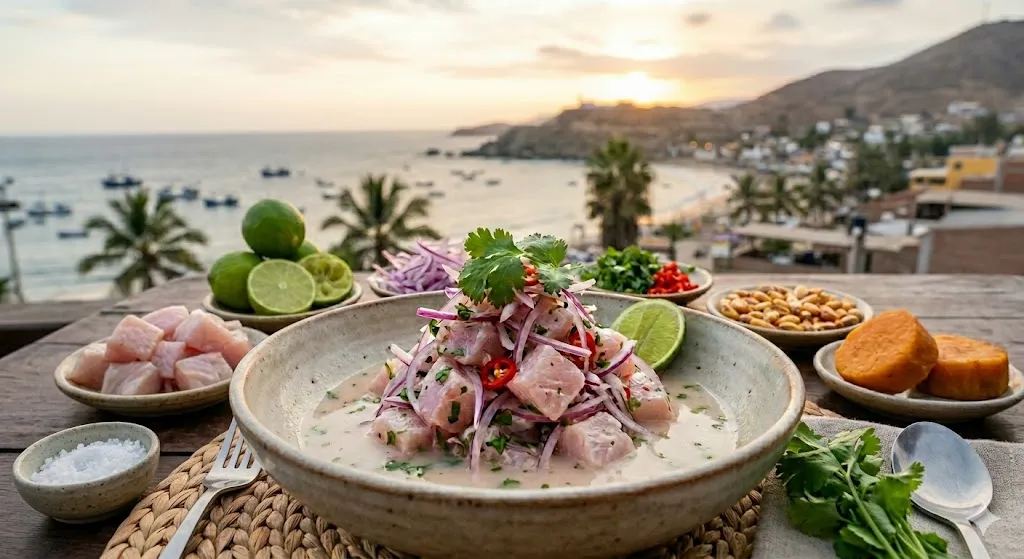
The first time I made a proper ceviche recipe fish at home, I was nervous. Raw fish? Just “cooked” in lime juice? It felt risky. But once I understood the science behind the citrus curing process and how to handle the fish safely, everything clicked. The result was unbelievably fresh bright lime aroma, tender bites of white fish, crisp cucumber, creamy avocado, and just enough heat from jalapeño peppers to wake everything up.
Fish ceviche is one of those dishes that tastes like summer in a bowl. It’s light, refreshing, and packed with clean flavors. Served with tortilla chips, on a tostada shell, or even in lettuce cups, it makes a beautiful appetizer or a light refreshing meal for warm evenings. But to get it right, you need more than a quick recipe; you need clarity, timing, and safe handling.
If you love bold, spicy flavors, this Buffalo Cauliflower Recipe delivers all the heat and crunch without needing any meat.
What Is Ceviche Recipe Fish and Why It’s Popular
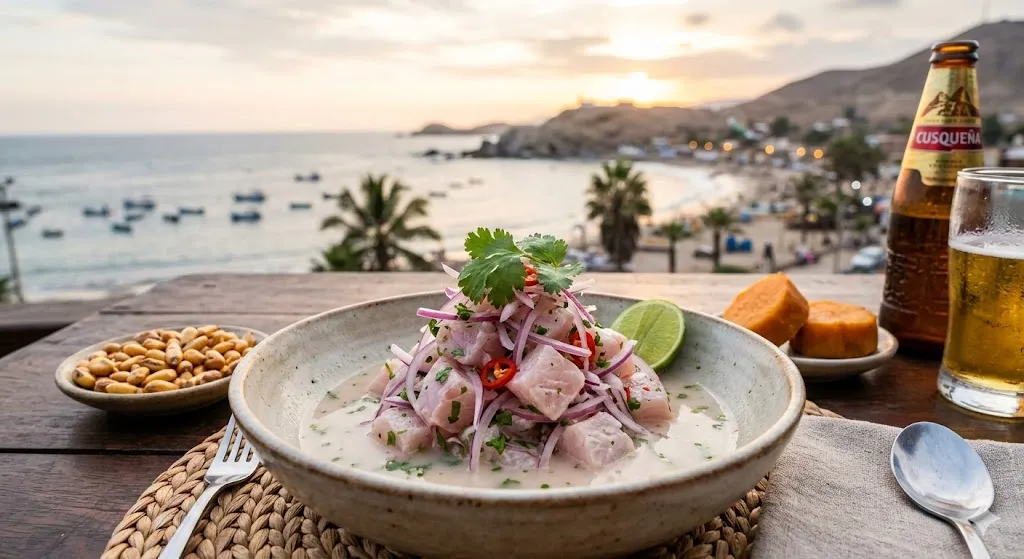
A classic Ceviche Recipe is a Latin American appetizer made with diced raw fish that is “cooked” in citrus juice, usually fresh lime juice, sometimes with lemon juice or even a splash of orange or grapefruit depending on the region. The acid denatures the proteins in the fish, turning it opaque and firm, much like heat would.
You’ll find variations across Peru, Mexico, Ecuador, Colombia, and coastal regions throughout Central America and South America. In Lima, Peru, ceviche is practically a national treasure. In Mexico, especially Sonoran style from Obregon Sonora, it’s often diced smaller and mixed with tomatoes, avocado, and serrano peppers.
People love Fish Ceviche because it feels clean and vibrant. It’s naturally gluten-free, dairy free, low-carb, and fits beautifully into many Healthy Fish Recipes collections. It’s also incredibly versatile; serve it as a seafood cocktail, spoon it into mini ceviche tostados, or pile it onto saltines for a casual gathering.
Food Safety Facts: What Lime Juice Actually Does (and Doesn’t Do)
Before we talk about ingredients, let’s clear up the biggest myth. Many recipes imply that lime juice “kills everything.” That’s not true.
Here’s the reality:
| Pathogen Type | Lime Juice Effect | What Actually Works |
| Vibrio species | Significant reduction | Fresh lime juice helps |
| Salmonella | 1–2 log reduction only | Proper sourcing + freezing |
| Anisakis parasites | No reliable effect | Freeze at -4°F for 7 days OR -31°F for 15 hours |
| General bacteria | Reduced but not eliminated | Cold storage + safe handling |
According to FDA guidelines, fish intended for raw consumption should be frozen to specific temperatures to kill parasites. Properly flash frozen fish is often safer than “fresh never frozen” fish. Lime juice changes texture. It does not sterilize fish.
How Regional Styles of Ceviche Differ
| Style | Fish Cut | Marinade Time | Key Ingredients | Texture |
| Peruvian Ceviche | Larger chunks | 1–2 hours | Chili peppers, lime, onion | Firm |
| Mexican Ceviche | Small dice | 15–45 minutes | Tomato, avocado, jalapeño | Tender |
| Ecuadorian | Often partially cooked | Longer | Tomato juice, citrus | Fully firm |
This recipe leans Mexican style smaller cubes, shorter marination, bright and fresh.
Recipe Overview: What to Expect From This ceviche recipe fish
This ceviche tastes clean and citrusy with subtle sweetness from ripe tomatoes and mango (optional). The texture is tender-firm, never rubbery. The aroma of fresh lime juice and cilantro hits immediately.
It works beautifully for:
- Summer meal gatherings
- Appetizer platters
- Light dinner
- Mariscos recipes nights
| Detail | Info |
| Prep Time | 30 minutes |
| Marination | 30–45 minutes |
| Total Time | About 1 hour |
| Servings | 4 servings |
| Difficulty | Easy but precision matters |
| Cuisine | Latin American |
| Calories | Approx. 218 kcal per 1 cup serving |
Ingredients and Why Each One Matters
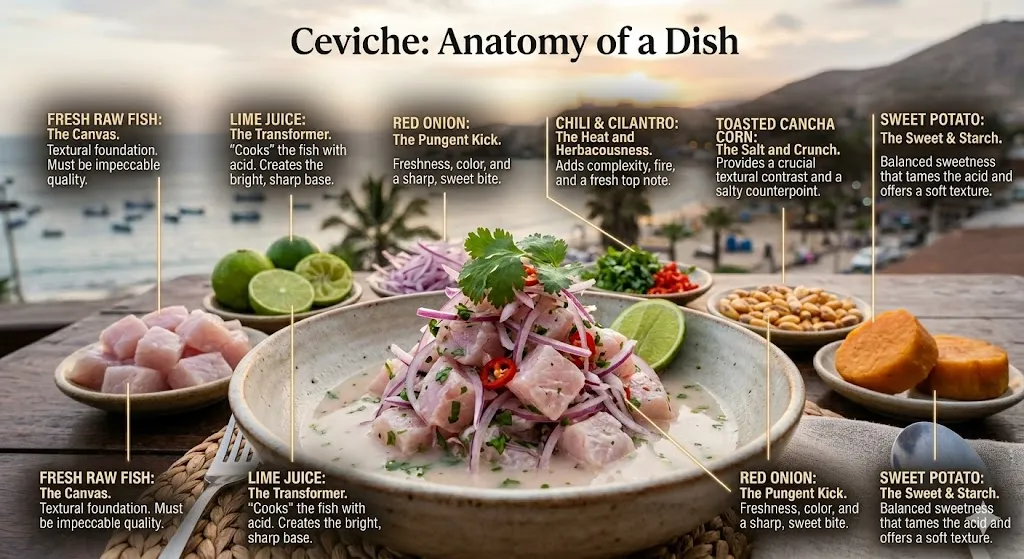
Great ceviche depends on balance. Each ingredient has a purpose.
- 1 pound fresh white fish (snapper, sea bass, halibut, mahi mahi, cod, tilapia, flounder, corvina, grouper): Lean, firm texture works best.
- 1 cup fresh lime juice (about 6–10 ripe limes): Drives the citrus curing process.
- Roma tomatoes or cherry tomatoes: Add sweetness and juiciness.
- English cucumber or Persian cucumber: Crunch and freshness.
- Red onion or shallot; Sharp bite.
- Cilantro: Signature aroma.
- Jalapeño peppers or serrano peppers: Heat control.
- Avocado: Creamy contrast.
- Kosher salt and black pepper: Flavor balance.
- Optional: mango, olive oil, crushed red pepper.
Lime Juice Deep Dive: Why Quality Matters
Choose ripe limes that feel heavy and give slightly when squeezed. Hard dark-green limes are underripe and too sour. Bottled juice lacks brightness and proper acidity. For 1 pound fish, use ⅓–½ cup lime juice. If too sour, add a small splash of olive oil.
Cost Breakdown Per Serving: Is Homemade Ceviche Worth It?
Budget Option (Approx. $12 total / $2–3 per serving)
- Frozen tilapia or Swai: $8/lb
- Basic produce: $4
Mid-Range (Approx. $24 total / $4–6 per serving)
- Fresh mahi mahi or snapper: $16/lb
- Premium produce + avocado: $8
Premium (Approx. $40+ total / $7–10 per serving)
- Sushi grade sea bass or Yellowfin Tuna
- Specialty peppers and mango
Restaurant comparison: $12–16 per serving.
Home savings: often 40–60%.
The Best ceviche recipe fish (and Frozen vs Fresh Truth)
Firm white fish works best. Snapper, halibut, sea bass, mahi mahi, cod, corvina, and rockfish are ideal.
Frozen vs Fresh
Properly flash frozen fish:
- Parasites neutralized
- Safer for raw use
- Available year-round
“Fresh never frozen” fish:
- May contain live parasites
- Slight texture edge
Safety winner: properly frozen.
Where to Actually Buy Safe ceviche recipe fish
Major Cities
- Whole Foods (labeled sushi grade)
- Asian seafood markets
- Ask fish counter directly
Suburbs
- Costco frozen tuna
- Regional grocery seafood counter
Rural/Online
- Specialty seafood suppliers shipping frozen
Ask: “Has this been frozen to kill parasites?”
Essential Equipment and Safe Setup
Use:
- Glass or ceramic mixing bowl (not metal)
- Dedicated cutting board for raw fish
- Sharp knife
- Airtight container
- Refrigerator bottom shelf storage
Acid reacts with metal. Always avoid it.
How to Make Ceviche Recipe Fish the Right Way
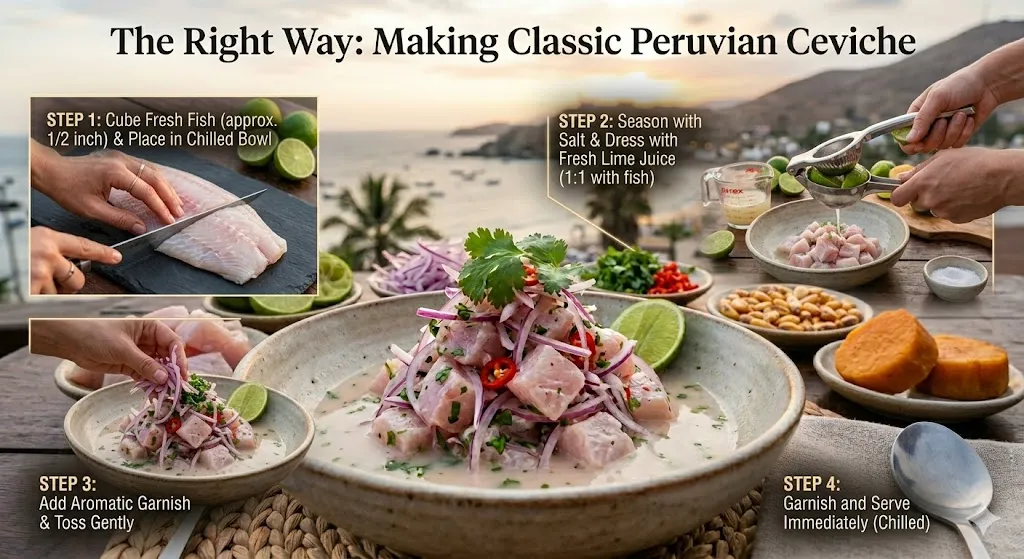
The goal is controlled curing not overcooking.
Step 1: Cut Fish Properly (Cube Size Matters)
Cut into ½ inch cubes.
Why size matters:
- ½ inch: ideal penetration in 30–45 minutes
- ¾ inch: needs longer
- 1 inch+: unsafe raw center
Acid penetrates only a few millimeters over time.
Step 2: Marinate
Place diced fish in a bowl. Cover fully with fresh lime juice. Refrigerate.
Marination Timeline (Texture Guide)
- 5 min: Surface opaque, center translucent
- 15 min: ⅓ cured, tender
- 30 min: ⅔ cured, ideal
- 45 min: Fully opaque
- 60+ min: Risk of rubbery texture
Most people over-marinate. Stop when slightly translucent inside.
Step 3: Strain and Mix
Strain excess citrus juice. Mix together tomatoes, cucumber, red onion, jalapeño, cilantro, salt.
Fold in avocado last.
Step 4: Combine and Serve
Serve cold immediately with tortilla chips, tostada shell, lettuce cups, or avocado halves.
Pro Tip for the Best Texture ceviche recipe fish
After 30 minutes, taste and check texture. If it’s just barely firm with a slight tender center, strain it immediately. The fish continues firming even in the refrigerator. Stopping early keeps it delicate instead of rubbery.
Common Mistakes and Why They Ruin the ceviche recipe fish
Over marinating is the biggest issue. Proteins tighten too much and become chewy.
Cutting fish too large leaves unsafe centers.
Using bottled lime juice makes the flavor flat.
Key reminders:
- Cut ½ inch cubes
- Use fresh lime juice
- Marinate no longer than 45 minutes
- Store cold at all times
Variations, Substitutions, and When to Use Them
Ceviche is adaptable.
- Add mango for sweetness
- Make Shrimp Ceviche with cooked shrimp
- Try Shrimp Ceviche Verde with extra serrano peppers
- Add scallops for Seafood Ceviche
- Turn leftovers into Tuna Tostadas
For less heat, skip chili peppers. For extra richness, drizzle EVOO.
My Experience Making This ceviche recipe fish
at Home
The first time, I left it in lime juice for nearly 2 hours because I thought “more is safer.” It turned rubbery. Now I check for 30 minutes. That small timing adjustment completely changed the texture. I also learned that frozen fish actually gave me more consistent results than “fresh” fish from a small seafood counter.
Benefits of Ceviche Recipe Fish
This dish feels light yet satisfying. It’s packed with lean protein and Vitamin C from citrus and vegetables.
It’s commonly enjoyed because:
- Quick preparation
- No heat required
- Naturally gluten-free and dairy free
- Protein-packed snack or appetizer
- Fresh and healthy flavor profile
It may help support balanced eating when paired with whole foods.
Storage, Shelf Life, and Make Ahead Strategy
Ceviche continues curing over time.
- 0–4 hours: Best texture
- Up to 24 hours: Safe but firmer
- 2 days: Very firm, quality declines
- 3 days: Not recommended
Make ahead tip: prep vegetables separately. Marinate fish only 30–45 minutes before serving.
Do not freeze after marinating.
ceviche recipe fish FAQ Real Questions People Ask
Does lime juice kill parasites?
No. Lime juice alters protein texture but does not reliably kill parasites like anisakis. Proper freezing is required for safety.
Can I use frozen fish?
Yes, and it may be safer. Just thaw slowly in the refrigerator.
How do I know when the fish is done?
It turns opaque and firm but should still feel tender, not rubbery.
Can I use cooked shrimp?
Yes. For Shrimp Ceviche, use fully cooked shrimp and marinate briefly for flavor.
Why is my ceviche rubbery?
Over-marinating tightens proteins too much.
How long can ceviche sit out?
Serve cold. Do not leave at room temperature longer than 1 hour.

ceviche recipe fish
Ingredients
Equipment
Method
- Cut the fish into ½-inch cubes and place in a glass bowl; the pieces should be uniform for even curing.
- Pour lime and lemon juice over the fish until fully submerged; gently stir to coat.
- Cover and refrigerate for 20–30 minutes, stirring once halfway, until the fish turns opaque and firm to the touch.
- Drain off most of the citrus juice, leaving a few tablespoons for moisture and flavor.
- Add red onion, jalapeño, tomatoes, cilantro, salt, and pepper; gently fold until evenly combined.
- Carefully fold in diced avocado and drizzle with olive oil if using; taste and adjust salt if needed.
- Chill for 10–15 minutes to let flavors meld, then serve immediately while fresh and vibrant.
Video
Notes
Conclusion
A great ceviche recipe fish isn’t complicated but it requires precision, quality ingredients, and proper safety steps. When done correctly, it’s one of the most refreshing, vibrant dishes you can make at home.
If you’ve been hesitant to try Fish Ceviche, this is your sign. Follow the timing, source responsibly, and taste as you go. Bookmark this guide, and explore more seafood recipes next time you’re craving something bright and coastal.