Amish Cough Syrup for Kids: What Parents Should Know

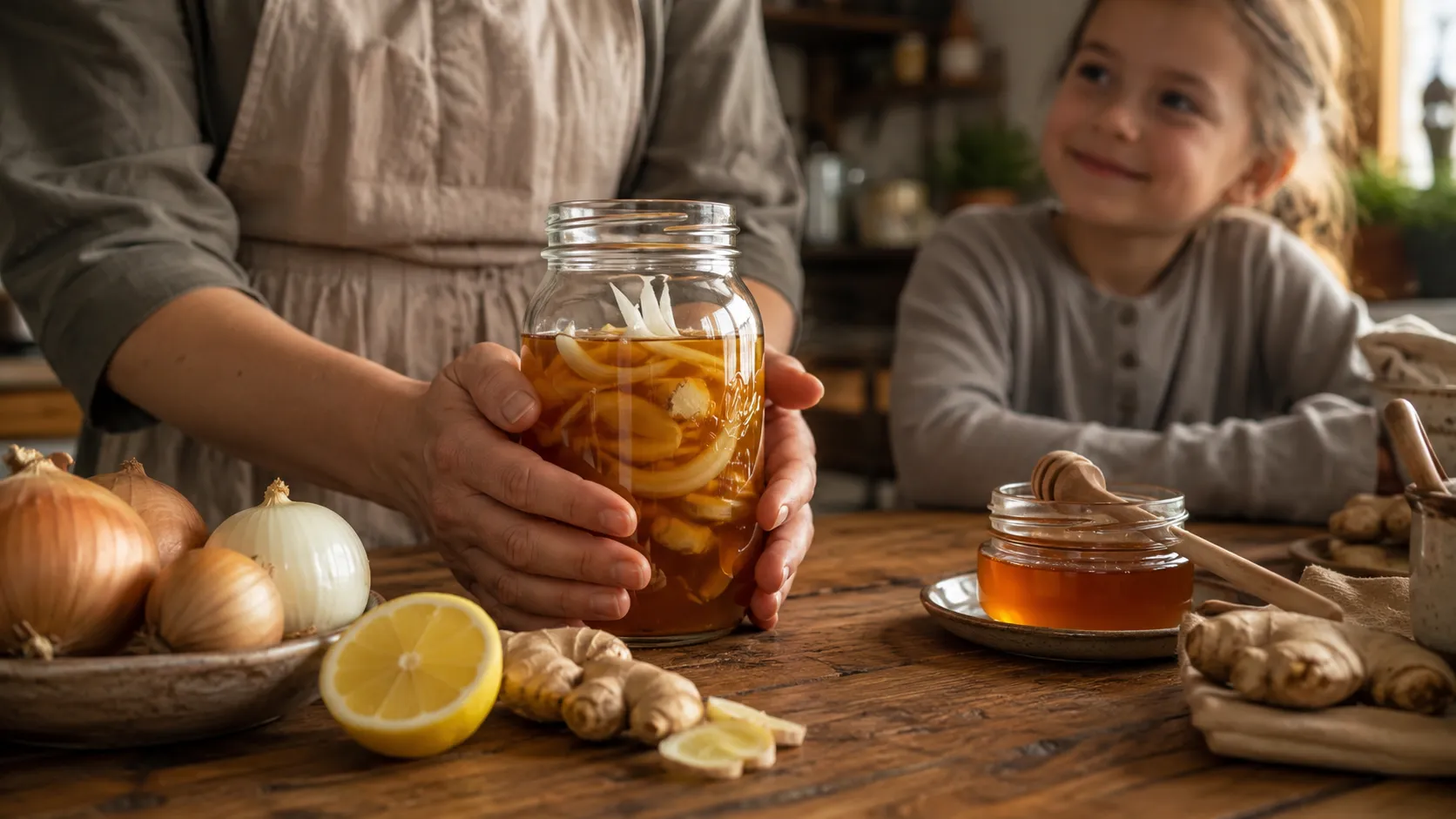
When a child develops a seasonal cough or sore throat, many parents begin looking for simple homemade options that have been passed down through generations. One traditional remedy that often appears in online searches is Amish cough syrup for kids. Families are also curious about an Amish cough syrup recipe for kids, hoping to learn whether this homemade mixture is appropriate for younger family members.
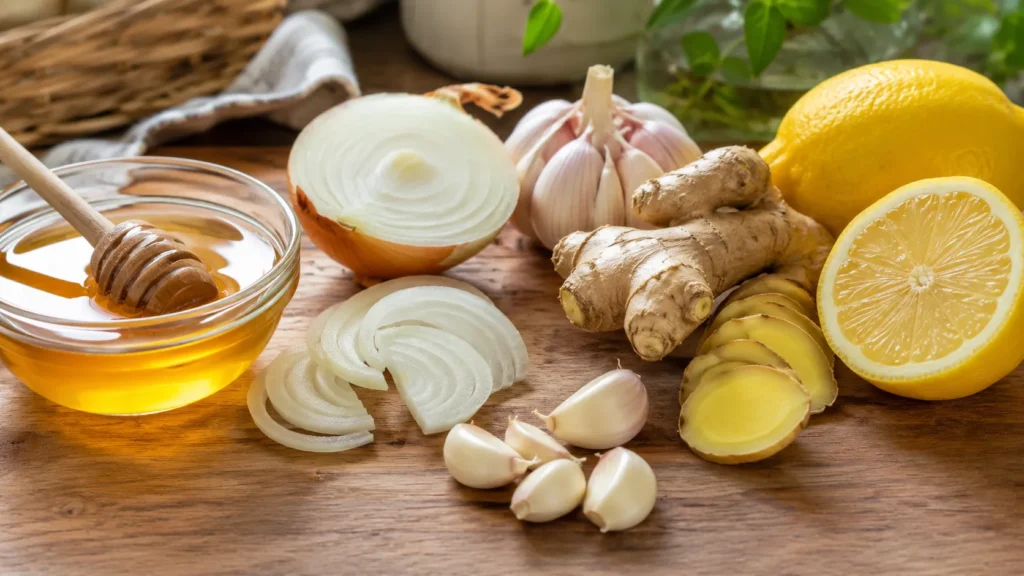
Traditional recipes usually combine pantry staples such as honey and onion, with some variations including ginger, garlic, or lemon. Although these ingredients have long been used in home kitchens, every child is different. Age, allergies, dietary needs, and existing health conditions should always be considered before introducing any homemade preparation.
This guide explains what parents should know about traditional Amish cough syrup, when extra caution is needed, and the important safety information every family should understand. If you’d like to see how this traditional mixture is prepared, you can also read our Amish Cough Syrup Recipe before deciding whether it’s suitable for your household.
What Is Amish Cough Syrup?
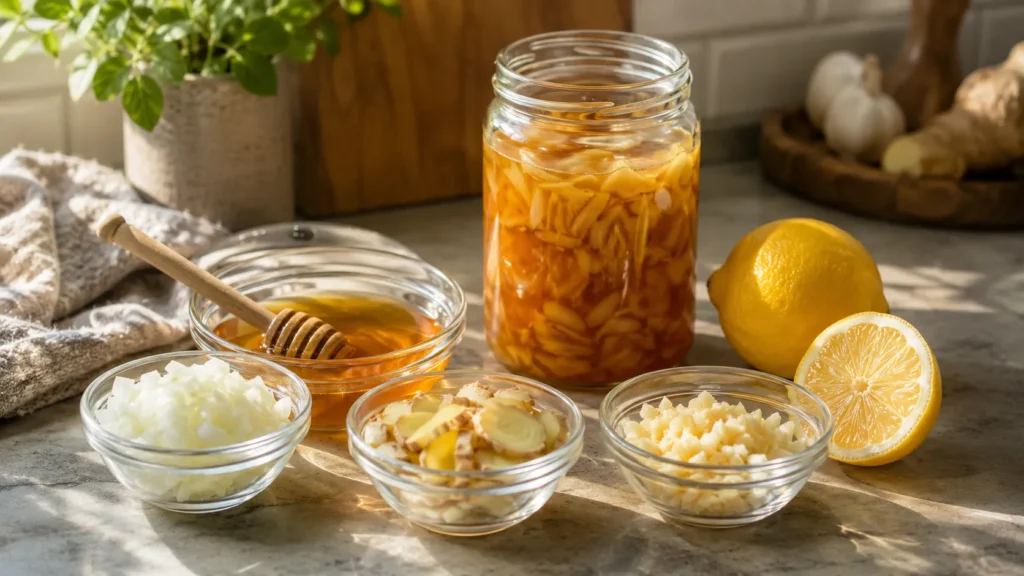
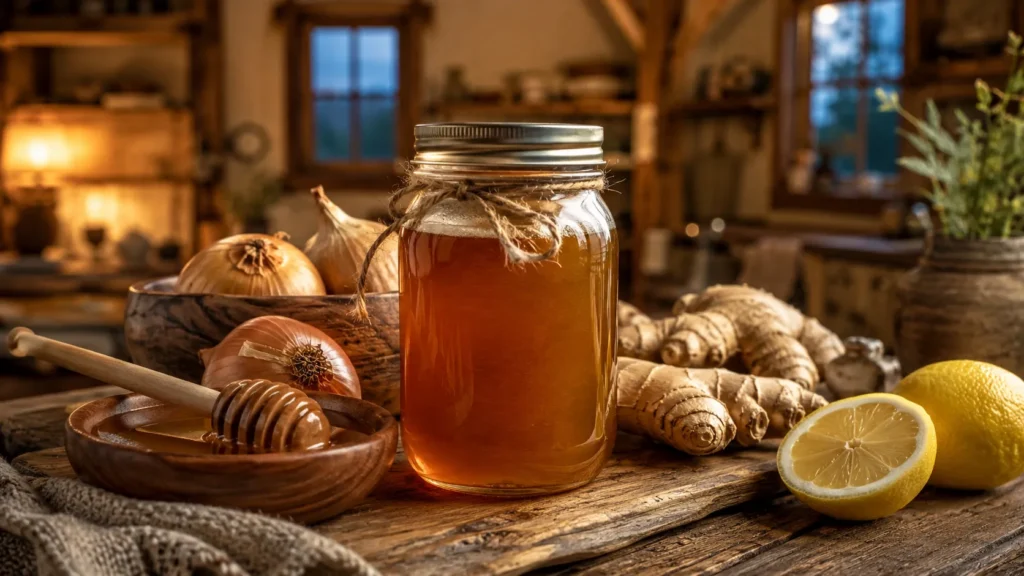
Homemade Amish cough syrup is a traditional mixture prepared from everyday kitchen ingredients rather than commercial products. While recipes differ from one family to another, honey and onion are the most common ingredients, with optional additions like garlic, ginger, or lemon depending on personal preference.
Unlike store-bought syrups, there is no official recipe or standardized formula. Because every household prepares it differently, parents should always know exactly which ingredients are being used before offering any homemade mixture to a child.
Many families appreciate these traditional recipes because they rely on familiar ingredients instead of artificial colors or preservatives. However, homemade preparations should always be approached with the same care as any new food introduced into a child’s diet.
Is Amish Cough Syrup for Kids Safe?
Whether a homemade syrup is appropriate depends on several important factors, including the child’s age, overall health, and the ingredients used in the recipe. Some parents prepare a homemade cough syrup for children using simple pantry ingredients, but that does not automatically mean it is suitable for every child.
One of the most important safety recommendations involves honey. Health experts advise that honey should never be given to babies younger than 12 months because of the risk of infant botulism. This recommendation applies regardless of the recipe being prepared.
Parents should also remember that homemade remedies are not a replacement for professional medical advice. If a child has persistent symptoms, difficulty breathing, or a high fever, medical evaluation is always the safest choice.
Ingredients Parents Should Know About
Understanding each ingredient helps parents make informed decisions before preparing a traditional recipe.
Honey
Honey provides natural sweetness and creates the smooth texture many traditional recipes are known for. An Amish honey cough syrup typically uses honey as its main ingredient, making age recommendations especially important.
Onion
An onion cough syrup for kids is one of the best-known traditional variations. When mixed with honey, the onion becomes much milder in flavor, although some children may still dislike its taste.
Ginger
Fresh ginger is sometimes added in small amounts for flavor. Since it has a naturally bold taste, many families use it sparingly.
Garlic
Garlic is an optional ingredient that appears in some traditional recipes. Whether it is included depends entirely on family preference.
Lemon
Lemon may be added to balance the sweetness of honey, but because it is naturally acidic, some children may prefer recipes without it.
When Should Parents Be Extra Careful?
Not every homemade recipe is suitable for every child. Parents should be especially cautious if a child:
- Is younger than one year of age.
- Has allergies to honey, onion, garlic, ginger, or lemon.
- Has diabetes or another condition that requires dietary restrictions.
- Takes regular medication or has ongoing medical concerns.
Carefully reviewing the ingredients before preparing any Amish cough remedy can help parents make informed choices for their family.
Tips for Parents Before Trying Homemade Recipes
If you’re thinking about preparing a traditional homemade recipe, a few simple precautions can make a big difference.
- Never give honey to babies under 12 months of age.
- Check every ingredient if your child has food allergies or sensitivities.
- Use fresh, clean ingredients and prepare the syrup in a sanitized container.
- Store the syrup properly and discard it if it develops an unusual smell, color, or appearance.
- If your child has an existing medical condition or follows a special diet, speak with a healthcare professional before introducing homemade remedies.

For trusted child health information, visit HealthyChildren.org from the American Academy of Pediatrics.
Can Homemade Amish Cough Syrup Be Part of a Healthy Diet?
For children over one year of age, homemade recipes prepared with familiar kitchen ingredients may occasionally be enjoyed as part of a balanced diet, depending on the ingredients used and the child’s individual nutritional needs.
Because honey is naturally high in sugar, moderation is important. Homemade recipes should be viewed as part of an overall healthy eating pattern rather than an everyday food.
Every child is different, so parents should consider age, allergies, and dietary requirements before introducing any homemade recipe.
Explore our easy Beef Salpicao Recipe for another homemade favorite.
Frequently Asked Questions
Can children have homemade Amish cough syrup?
Some parents prepare traditional homemade recipes for children over one year of age. Whether they’re appropriate depends on the child’s age, allergies, dietary needs, and the ingredients used.
Why can’t babies under one year have honey?
Health experts recommend avoiding honey before a child’s first birthday because of the risk of infant botulism.
What ingredients are commonly used?
Traditional recipes usually include honey and onion, while some families also add garlic, ginger, or lemon depending on personal preference.
Should parents talk to a healthcare professional first?
If a child has allergies, an underlying medical condition, or ongoing symptoms, consulting a healthcare professional before trying homemade remedies is always the safest approach.
Can homemade syrup replace prescribed medicine?
No. Homemade recipes should not replace professional medical advice or prescribed treatment. If symptoms become severe, persistent, or worsen, medical care should be sought promptly.
Conclusion
For many families, Amish cough syrup is a traditional homemade recipe that’s been shared from one generation to the next. If you decide to make it at home, choose fresh ingredients, keep food safety in mind, and always consider your child’s age before serving it.
You can find the complete method in our Amish Cough Syrup Recipe.