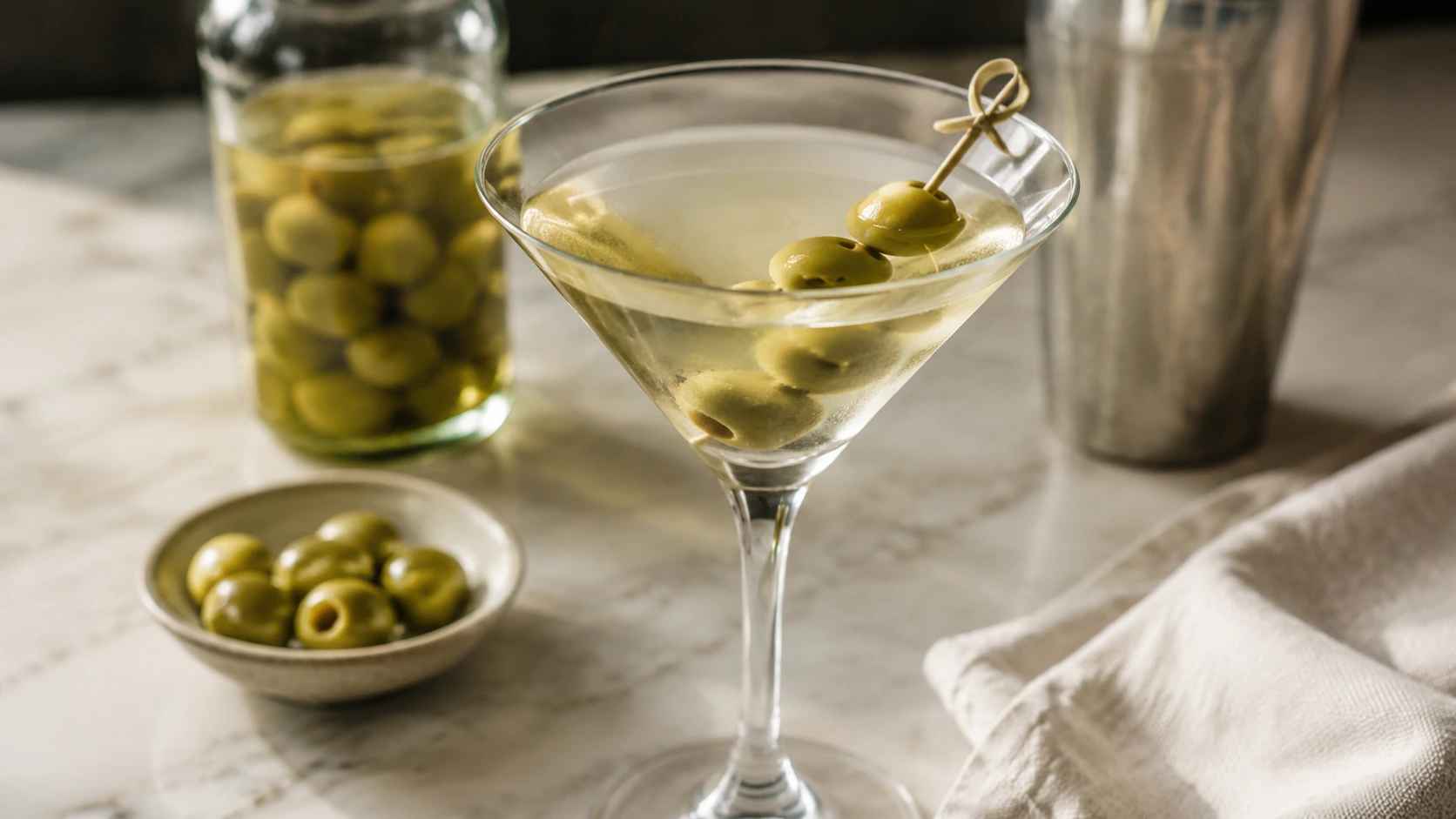
Dirty Martini Recipe Better Than the Steakhouse Version

I used to order a dirty martini every time I went to a nice restaurant. Then one evening I realized I could make one at home in less than five minutes. After a little testing, I found the ratio that gave me the bold olive flavor I was looking for without making the drink taste too salty.
This Dirty Martini Recipe is cold, crisp, savory, and incredibly simple. It uses just a few ingredients, but each one plays an important role. I’ll also show you why olive brine changes the drink so much, how to choose between gin and vodka, and the little tricks that make a homemade martini taste like it came from a great cocktail bar.
Making one at home also costs much less than ordering one out. Depending on the vodka or gin you choose, each drink usually costs around $2–$5, while many restaurants charge $12–$20 for a single dirty martini. Let’s start with what makes this classic cocktail so special.
What Is a Dirty Martini Recipe?
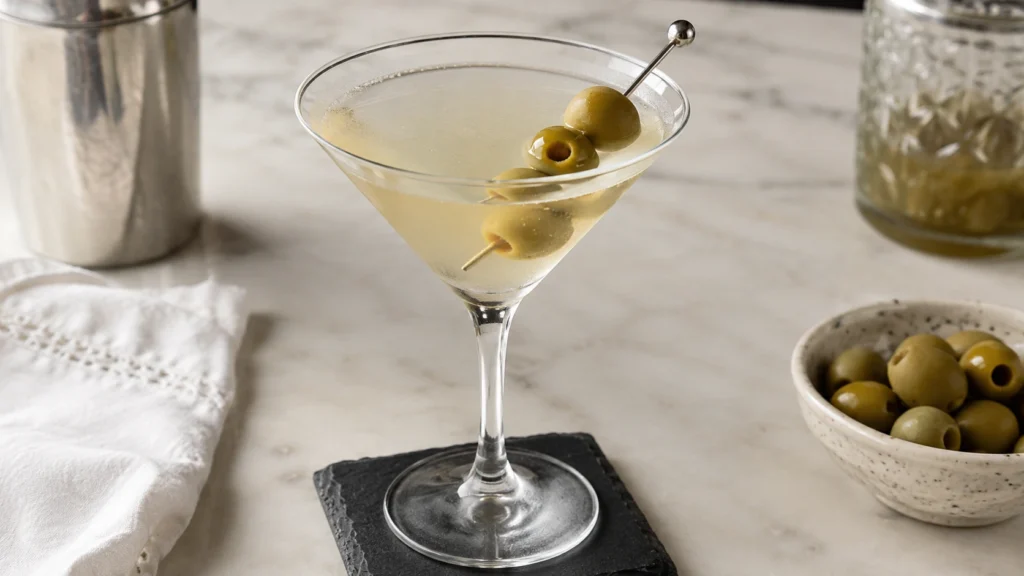
A Dirty Martini Recipe is a classic cocktail made with gin or vodka, dry vermouth, and olive brine. It has a clean, chilled texture with a bold, savory taste and takes about five minutes to make. Most people serve it straight up in a chilled martini glass with green olives because the salty brine gives the drink its signature flavor.
A dirty martini started as a twist on the classic martini in the early 1900s. Instead of keeping the drink crystal clear, bartenders began adding olive brine for extra flavor. Over time, the recipe became one of the world’s most popular savory cocktails.
The first versions often used muddled olives. Later, bartenders switched to olive brine because it created a smoother drink with a more balanced olive flavor. Today, you’ll find everything from lightly dirty martinis to extra dirty and even filthy versions with much more brine.
One reason this cocktail has lasted for over a century is its flexibility. You can make it with London dry gin for herbal notes or vodka for a cleaner, softer finish. Both work beautifully when paired with good olive brine.
Why Olive Brine Makes Such a Big Difference
Olive brine does more than make the drink salty. Salt naturally softens some of the alcohol’s sharpness while reducing bitterness from the vermouth. The tiny amounts of olive oil carried in the brine also add a richer mouthfeel, making the martini taste smoother without adding cream or sugar.
Recipe Overview: Why This Dirty Martini Recipe Works
This version keeps the ingredient list simple while focusing on balance. You get enough olive brine to taste every sip without covering up the gin or vodka. The drink stays crisp, cold, and smooth instead of becoming overly salty.
It also works for almost any occasion. Make one for a quiet evening, serve a batch at a dinner party, or enjoy it before a steak dinner or seafood meal.
| Detail | Info |
|---|---|
| Prep Time | 5 minutes |
| Cook Time | 0 minutes |
| Total Time | 5 minutes |
| Servings | 1 cocktail |
| Difficulty | Easy |
| Cuisine | American Cocktail |
| Calories | About 210–220 per serving |
| Estimated Cost | About $2–$5 per drink at home |
Why Homemade Saves Money
One of the biggest surprises is how affordable a homemade dirty martini can be.
- Budget vodka (like Tito’s or Kirkland): around $2 per drink
- Mid-range bottles (Grey Goose or Belvedere): around $3–$4 per drink
- Premium gin or vodka with specialty olives: about $5 per drink
Compare that with the typical $12–$20 price at many bars, and making them at home quickly pays for itself.
What Ingredients Make the Best Dirty Martini Recipe?
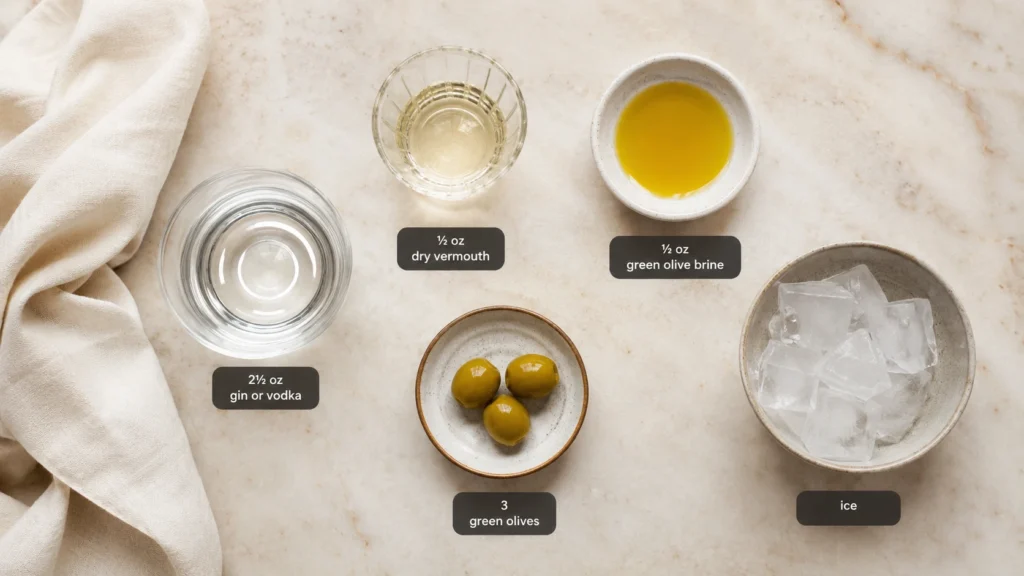
The beauty of this cocktail is that every ingredient matters. Since there are only a few of them, using good-quality ingredients makes a noticeable difference. You don’t need the most expensive bottle, but you do want fresh vermouth and flavorful olive brine.
Ingredients
- 2½ ounces gin or vodka
- ½ ounce dry vermouth
- ½ ounce green olive brine
- Ice
- 3 green olives for garnish
Why Each Ingredient Matters
Gin or Vodka
This is the base of the drink.
If you enjoy herbal, citrus, and botanical flavors, choose a London dry gin or another quality gin. If you prefer a smoother, cleaner cocktail that lets the olive brine stand out, vodka is the better option.
Both styles are classic. It simply comes down to your taste.
Dry Vermouth
Dry vermouth often gets overlooked, but it brings balance. It softens the alcohol and adds light herbal notes that keep the drink from tasting flat.
One common mistake is using an old bottle. After opening, keep vermouth in the refrigerator and try to use it within about a month for the freshest flavor.
Olive Brine
This is what makes a martini “dirty.”
The best brine usually comes straight from a jar of olives instead of a separate bottle. Brine from quality olives has more flavor and a richer texture.
Good choices include:
- Castelvetrano olives for a buttery flavor
- Spanish Queen olives for a classic martini taste
- Manzanilla olives for a slightly brinier finish
Green Olives
The garnish isn’t just decoration. As the olives sit in the drink, they continue adding subtle flavor.
Blue cheese-stuffed olives create a richer cocktail, while garlic-stuffed olives add another layer of savory flavor if you want something different.
Where to Find Good Olive Brine
This is one area many recipes skip.
The easiest places to get flavorful brine are:
- A jar of olives already in your pantry
- The grocery store olive bar
- Refrigerated gourmet olives
- Premium jarred brands like Mezzetta or Castelvetrano olives
I usually avoid inexpensive bottled olive brine sold by itself because it often tastes thinner than the liquid from a fresh jar of olives.
Easy Ingredient Swaps That Actually Work
If you’re missing one ingredient, here are the swaps I recommend after trying them myself:
- No gin? Use vodka for a cleaner flavor.
- Want extra olive flavor? Add another ¼ ounce of olive brine for an extra dirty martini.
- Like a lighter drink? Reduce the brine slightly and let the vermouth shine.
- No regular olives? Garlic-stuffed or blue cheese-stuffed olives both make excellent garnishes.
Not every substitution works well. Pickled onion or caper brine can overpower the drink with acidity, so I save those for other cocktails instead.
How to Make Dirty Martini Recipe Step by Step
Making a great dirty martini is more about technique than hard work. The whole process takes about five minutes, but each step helps create a colder, smoother, and better-balanced cocktail. I’ll explain what to look for along the way so you know you’re on the right track.
1. Chill Your Martini Glass
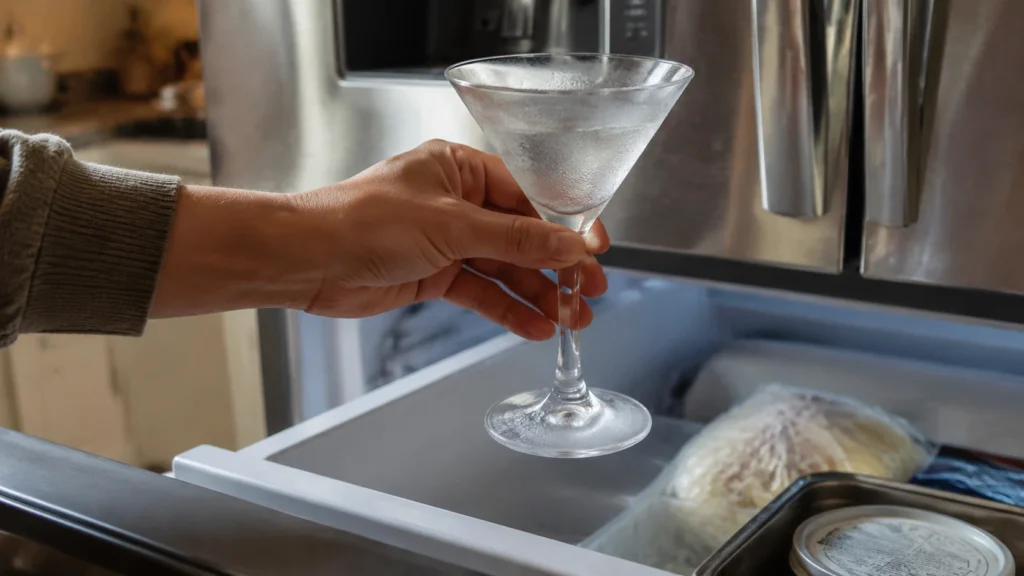
Place your martini or coupe glass in the freezer for at least 5 to 10 minutes. If you’re short on time, fill the glass with ice and cold water while you prepare the drink.
Visual cue: The outside of the glass should look lightly frosted.
Why it matters: A cold glass keeps your martini chilled longer without watering it down.
2. Measure the Ingredients
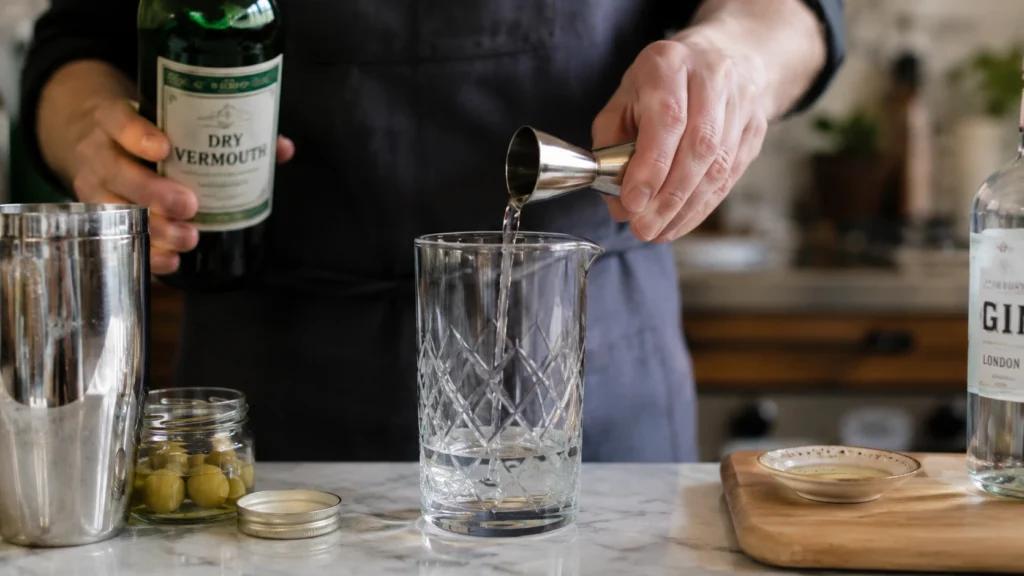
Pour the following into a mixing glass or cocktail shaker:
- 2½ ounces gin or vodka
- ½ ounce dry vermouth
- ½ ounce olive brine
Accuracy matters here. Even a little too much brine can make the drink overly salty.
Visual cue: The liquid should look clear with just a slight cloudy tint from the olive brine.
Why it matters: This ratio gives you a balanced dirty martini instead of an overpowering one.
3. Add Plenty of Fresh Ice
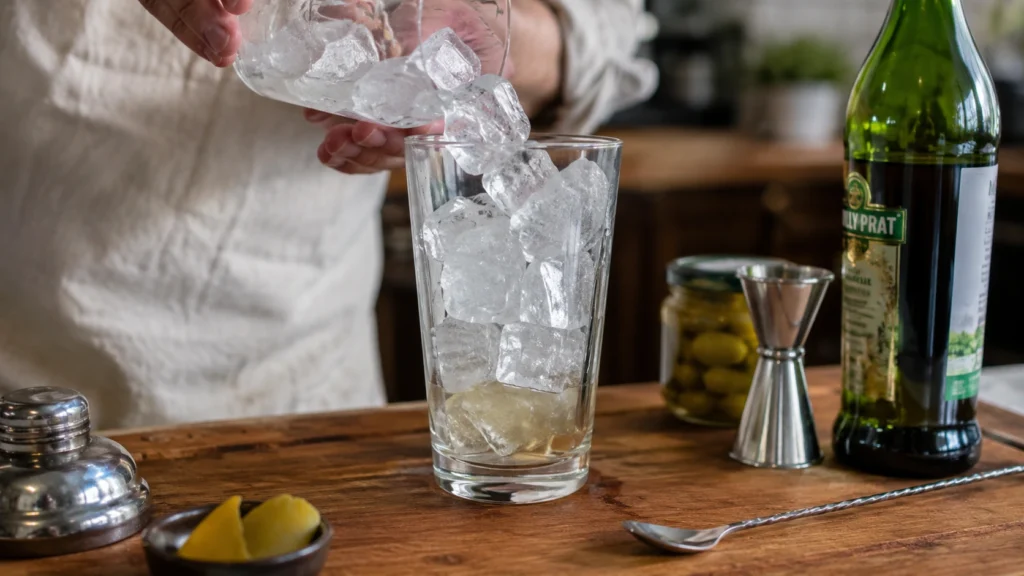
Fill the shaker or mixing glass about three-quarters full with fresh ice.
Avoid old freezer ice that has picked up odors.
Visual cue: The ice should completely surround the liquid.
Why it matters: More ice chills the drink faster while adding less unwanted dilution.
4. Shake or Stir
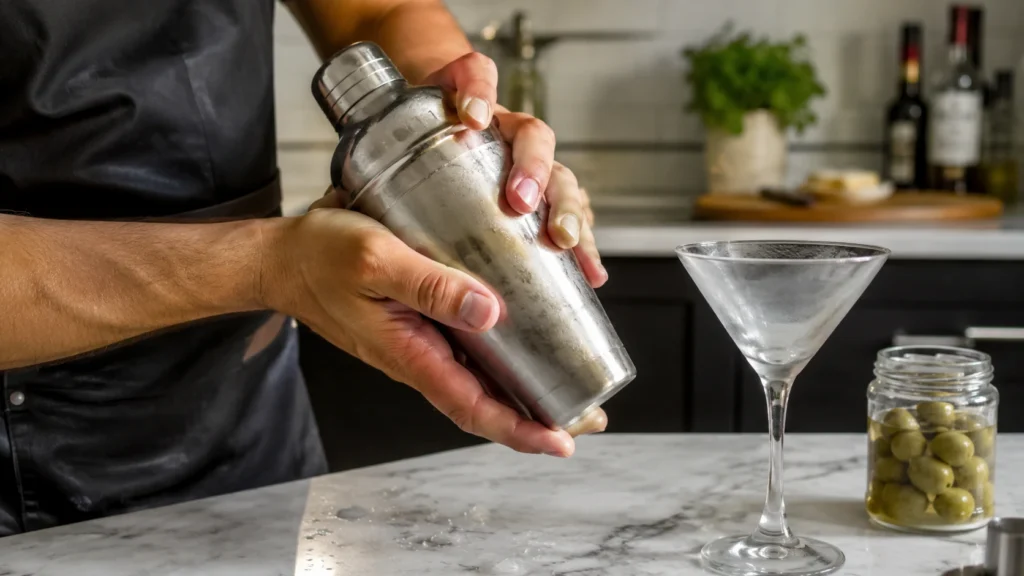
Now comes the biggest dirty martini debate.
For a smoother, crystal-clear martini, stir for about 30 seconds.
For an extra-cold drink with better olive brine mixing, shake for 15–20 seconds.
I usually shake dirty martinis because the olive brine blends more evenly with the gin or vodka.
Visual cue: The shaker should feel very cold and almost uncomfortable to hold.
Why it matters: The drink reaches the perfect serving temperature while the flavors come together.
5. Strain Into the Chilled Glass
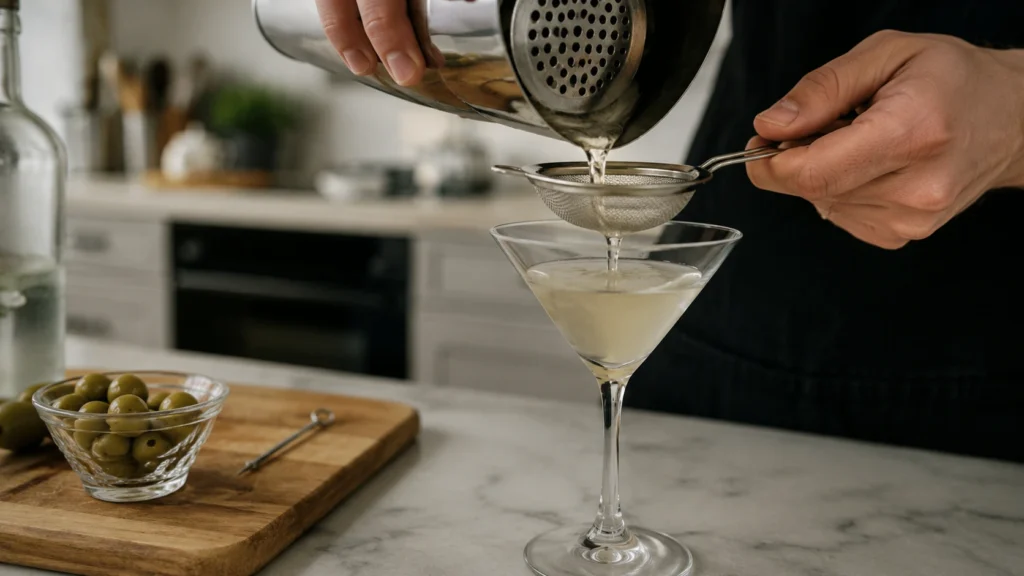
Empty any ice water from your chilled glass.
Strain the martini into the glass. For the smoothest texture, use a fine mesh strainer if you shook the drink.
Visual cue: The surface should look glossy with only a slight natural cloudiness if shaken.
Why it matters: Fine straining removes tiny ice chips that would keep melting in your drink.
6. Garnish and Serve Immediately
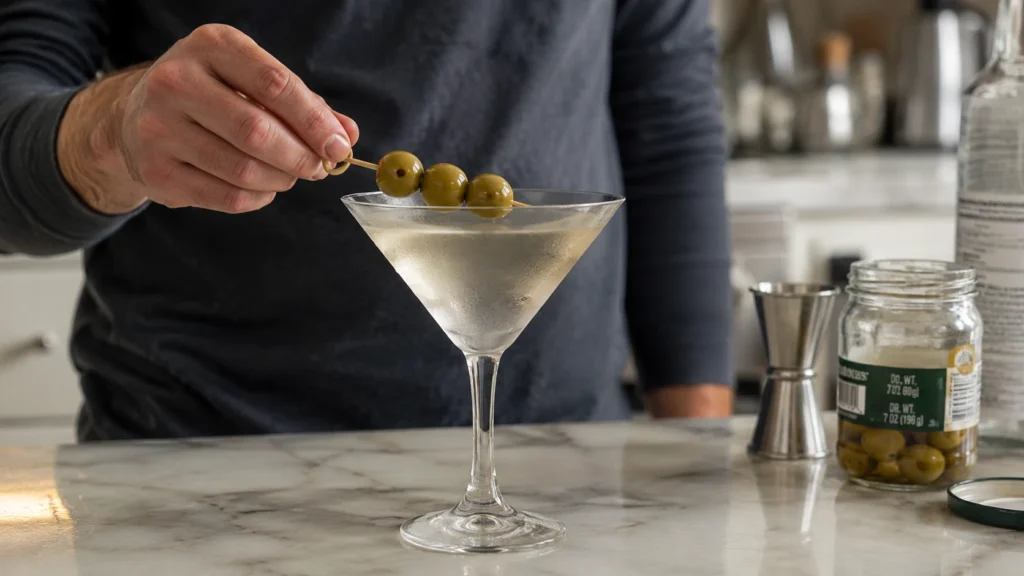
Add three green olives on a cocktail pick or skewer.
Serve right away while the martini is ice cold.
Visual cue: The olives should sit just above the drink, and the glass should stay frosty for the first few minutes.
Why it matters: Dirty martinis taste their best when they’re served as cold as possible.
Shake or Stir? Here’s My Choice
People have debated this for decades, and honestly, both methods work.
Stir if you want:
- A silky texture
- A crystal-clear martini
- Less dilution
Shake if you want:
- The coldest possible drink
- Better mixing of olive brine
- A slightly softer finish
For this recipe, I recommend shaking. Olive brine is heavier than gin or vodka, and shaking blends everything together better.
The Common Mistake That Ruins a Dirty Martini
The biggest mistake isn’t using the wrong vodka or gin.
It’s adding too much olive brine too soon.
Many people think more brine automatically makes a better martini. Instead, the drink becomes overly salty and hides the flavor of the spirit.
Start with ½ ounce. Taste it. If you love extra dirty martinis, add another splash next time.
Mistake #2: Using Warm Ingredients
Warm vodka, warm vermouth, and room-temperature glasses all work against you.
A dirty martini should be served ice cold. Chilling the glass and using refrigerated vermouth make a noticeable difference.
Mistake #3: Using Old Vermouth
Many people leave vermouth in the pantry for months after opening.
Fresh vermouth tastes bright and herbal. Old vermouth becomes dull and flat, which can make the entire cocktail taste tired.
Store opened vermouth in the refrigerator and replace it after about one month.
Mistake #4: Choosing Weak Olive Brine
Not all olive brines taste the same.
Brine from high-quality olives gives the martini a richer, cleaner flavor. Thin bottled brine often lacks the same depth.
Quick Tips to Remember
- Chill the glass before mixing.
- Measure the brine instead of guessing.
- Use fresh vermouth from the refrigerator.
- Choose flavorful olive brine from a good jar of olives.
- Serve immediately while the drink is very cold.
Pro Tip: The Secret That Makes a Big Difference
Here’s one small trick I learned after making dozens of dirty martinis.
Stir or shake the drink for temperature—not for time.
Instead of watching the clock, pay attention to the outside of the shaker or mixing glass. When it becomes heavily frosted and almost too cold to hold, the drink is ready.
This works because the cocktail has reached the ideal temperature while picking up just enough water from the melting ice. That tiny bit of dilution softens the alcohol, lets the olive brine shine, and creates the smooth texture that makes a great dirty martini.
Easy Variations You Can Try at Home
Once you’ve mastered the classic version, it’s fun to experiment. Small changes can create a completely different cocktail.
- Extra Dirty Martini: Add another ¼ to ½ ounce of olive brine for a stronger olive flavor.
- Filthy Martini: Double the olive brine for a bold, salty drink made for serious olive lovers.
- Gin Dirty Martini: Use a London dry gin for brighter herbal and citrus notes.
- Vodka Dirty Martini: Choose a smooth vodka if you want the olive brine to take center stage.
- Blue Cheese Martini: Garnish with blue cheese-stuffed olives for a richer, savory finish.
- Garlic Olive Martini: Use garlic-stuffed olives for extra depth without changing the base recipe.
- Pepperoncini Twist: Replace a small amount of olive brine with pepperoncini brine for a gentle kick.
- Lower-Alcohol Version: Make a 50/50 martini by using equal parts gin (or vodka) and dry vermouth before adding the olive brine.
If you enjoyed this Dirty Martini Recipe, browse our collection of drink recipes for more classic cocktails, refreshing beverages, and easy homemade favorites.
What to Serve With Dirty Martini Recipe for the Best Flavor
A dirty martini has a bold, salty flavor, so it pairs best with foods that are rich, creamy, or savory. I like serving it before dinner because it wakes up your taste buds without feeling too heavy.
Here are some of my favorite pairings:
- Cheese and charcuterie board – Sharp cheeses, cured meats, and crackers balance the briny cocktail beautifully.
- Grilled steak – A dirty martini is a classic match for a juicy steak with garlic butter.
- Shrimp cocktail or oysters – Cold seafood and olive brine are a natural pairing.
- Roasted nuts and marinated olives – An easy appetizer that takes just a few minutes to put together.
- Deviled eggs – Their creamy filling works surprisingly well with the crisp finish of the martini.
Hosting a cocktail night? Pair this Dirty Martini Recipe with our Baked Salami Recipe for a warm, savory appetizer that’s easy to make and perfect for sharing.
My Honest Experience Making This Recipe
The first dirty martini I made at home was almost undrinkable.
I thought adding extra olive brine would automatically make it better, so I poured it in without measuring. The drink turned out so salty that I couldn’t taste the vodka at all.
After a few more tries, I realized balance matters more than quantity. Measuring the brine, chilling the glass, and using fresh vermouth completely changed the drink. The biggest surprise was how much better homemade olive brine from a good jar of olives tasted compared to bottled brine I bought separately.
Now I always keep a jar of good green olives in the refrigerator because I know I’ll eventually make another martini.
How to Store, Batch, and Make Ahead Dirty Martini Recipe
Dirty martinis are always best served fresh, but you can prepare them ahead for parties if you skip the ice until serving.
If you’ve already mixed the drink with ice, strain it off the melting ice before storing it. Otherwise, it will continue to dilute and lose its crisp flavor.
Storage Guide
| Storage Method | How Long | Best Practice |
|---|---|---|
| Room Temperature | Up to 2 hours | Only if not served yet. Keep away from heat and sunlight. |
| Refrigerator (Undiluted Batch) | Up to 24 hours | Store in a sealed bottle or airtight container without ice. |
| Refrigerator (Already Diluted) | Up to 8 hours | Strain off the ice first, then chill. Flavor slowly softens. |
| Freezer | Not recommended | The alcohol won’t fully freeze, but the vermouth flavor changes over time. |
How to Batch Dirty Martinis for a Party
If you’re making drinks for guests, mix everything except the ice ahead of time.
For 12 cocktails, combine:
- 3¾ cups gin or vodka
- ¾ cup dry vermouth
- ¾ cup olive brine
Seal the mixture and refrigerate for up to 24 hours.
When it’s time to serve, pour one portion into a shaker with fresh ice, shake or stir, strain into chilled glasses, and garnish with olives.
This gives everyone a freshly chilled cocktail without making each drink from scratch.
Why Your Dirty Martini Didn’t Turn Out Right
Even simple cocktails can go wrong. Here’s how to fix the most common problems.
| Problem | Most Likely Cause | Easy Fix |
|---|---|---|
| Martini tastes too salty | Too much olive brine | Reduce the brine by ¼ ounce next time. |
| Drink tastes watery | Shaken too long or left on ice | Chill quickly and strain immediately. |
| Cocktail looks cloudy | Tiny ice shards after shaking | Double strain through a fine mesh strainer. |
| Alcohol tastes too harsh | Not enough chilling or dilution | Shake or stir a little longer with fresh ice. |
| Olive flavor seems weak | Thin bottled brine | Use brine from a fresh jar of quality olives. |
| Drink tastes flat | Old vermouth | Replace the vermouth with a fresh bottle kept in the refrigerator. |
Most dirty martini problems are easy to fix once you know which ingredient or step caused them.
Why the Dirty Martini Became a Classic Cocktail
The dirty martini has been around for well over a century, but it didn’t always look the way it does today.
Many cocktail historians trace its roots to 1901, when New York bartender John O’Connor reportedly experimented with the classic dry martini by muddling olives into the drink. Instead of adding fruit or sugar, he leaned into the salty, savory side of the cocktail.
As the recipe spread, bartenders found that using olive brine gave a cleaner, more consistent flavor than muddled olives. That simple change helped create the dirty martini we know today.
The drink became even more popular during the mid-1900s. Stories often connect President Franklin D. Roosevelt with serving martinis to guests at the White House, helping cement the cocktail’s reputation as a timeless classic.
Over the years, drinkers also changed the ratios. Earlier martinis usually contained more vermouth. Modern versions often use less vermouth and more olive brine, creating the bold, savory style many people prefer today.
If you’re making your first dirty martini, start with the classic version. You can always add more brine next time, but it’s much harder to fix a drink that’s too salty.
Frequently Asked Questions About Dirty Martini Recipe
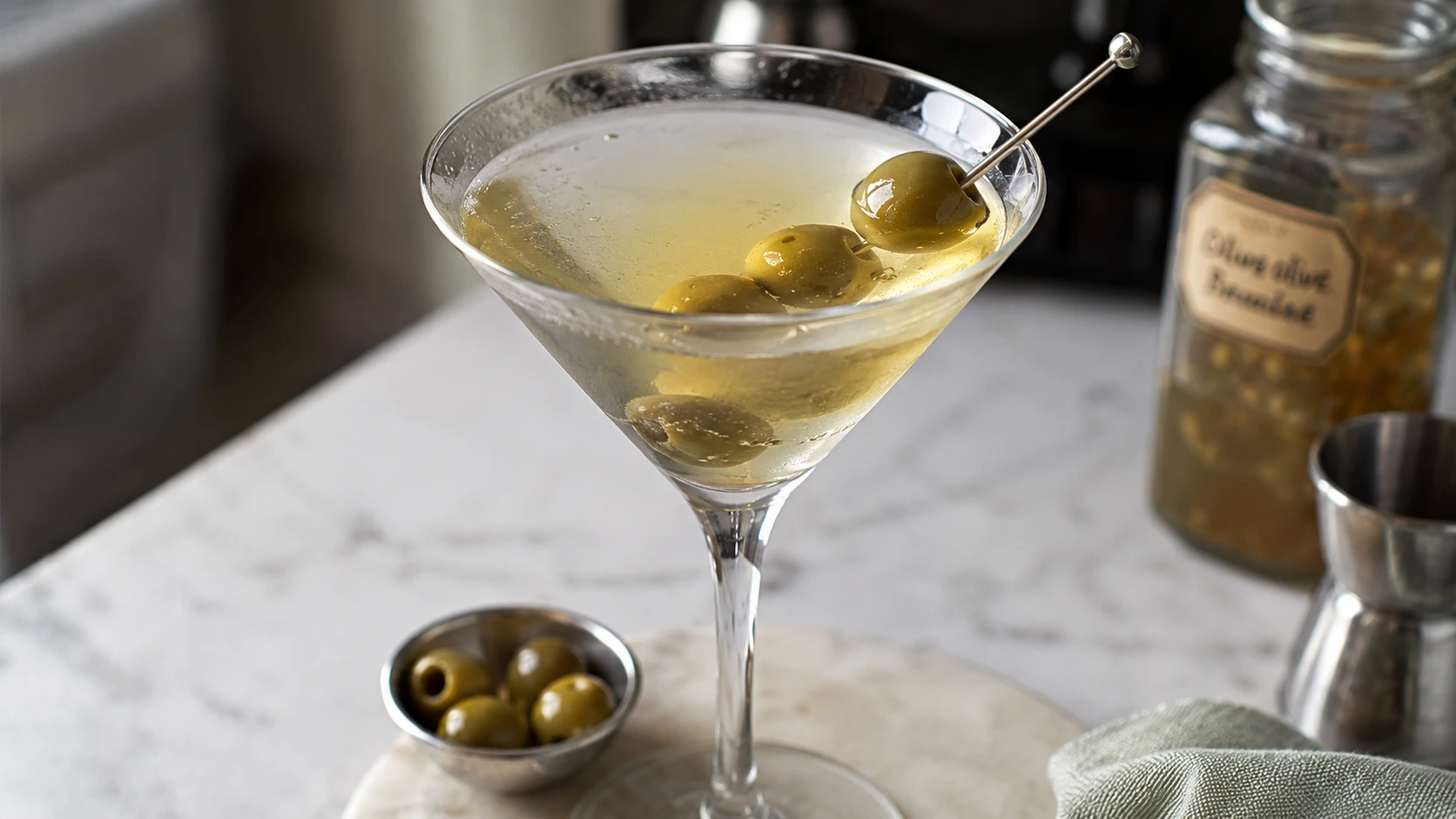
Dirty Martini Recipe
Ingredients
Equipment
Method
- Chill the glass. Place a martini glass in the freezer for 5–10 minutes, or fill it with ice water until frosty.
- Measure the ingredients. Add the gin or vodka, dry vermouth, and olive brine to a cocktail shaker or mixing glass. The mixture should look mostly clear with a slight cloudy tint.
- Add fresh ice. Fill the shaker about three-quarters full with ice so the ingredients are completely surrounded.
- Shake or stir. Shake for 15–20 seconds for an extra-cold martini, or stir for about 30 seconds if you prefer a crystal-clear drink. The shaker should become very cold and frosty.
- Strain the cocktail. Empty the chilled glass and strain the martini into it. Use a fine mesh strainer if desired for a smoother finish.
- Garnish and serve. Add three green olives on a cocktail pick and serve immediately while the drink is ice cold.
Notes
- Chill both the glass and the vermouth for the smoothest, coldest martini.
- Use olive brine from a quality jar of green olives for the best flavor.
- Taste before adding extra brine, since it’s much easier to make a martini dirtier than to fix one that’s too salty.
Final Thoughts on This Dirty Martini Recipe
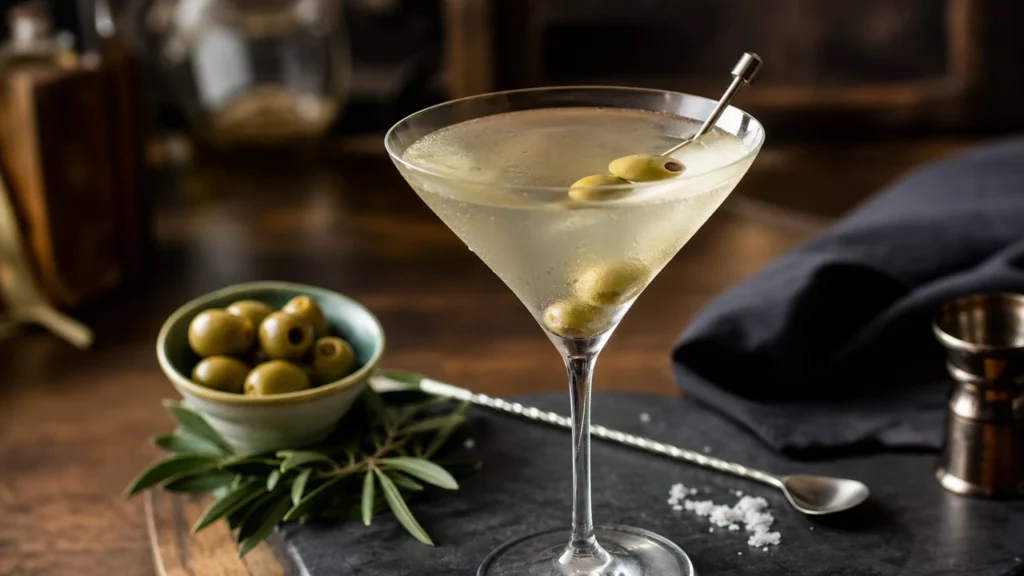
A great Dirty Martini Recipe doesn’t need complicated ingredients or expensive equipment. What matters most is using good olive brine, keeping everything well chilled, and measuring your ingredients carefully. Those three small details make the biggest difference.
Once you’ve made this recipe once or twice, you’ll find it’s easy to adjust. Add a little more brine for an extra dirty martini, switch between gin and vodka, or try different olives until you discover your favorite combination.
If you’re planning a steak dinner to go with this Dirty Martini Recipe, don’t miss our Chimichurri Recipe. Its fresh herbs, garlic, and tangy flavor pair beautifully with grilled meats, making it the perfect companion for a classic cocktail night.