Fenugreek Tea Recipe: The Complete Guide to Brewing It Right

The secret to a great Fenugreek Tea Recipe is not the ingredients. It is one small step most recipes skip. Most people leave the seeds in hot water for too long. That pulls out extra bitterness and hides the warm, maple-like flavor that makes this tea so enjoyable.
I have tested this recipe many times with whole seeds, ground fenugreek, and even dried fenugreek leaves. Whole seeds always give me the best balance of flavor and aroma. They create a smooth herbal tea with a gentle earthy taste instead of an overpowering bitter drink.
This guide goes beyond the basic recipe. I’ll show you how to control bitterness, compare different brewing methods, explain what research actually says about fenugreek tea, and share the small tricks that made the biggest difference in my own kitchen.
What Is Fenugreek Tea Recipe?
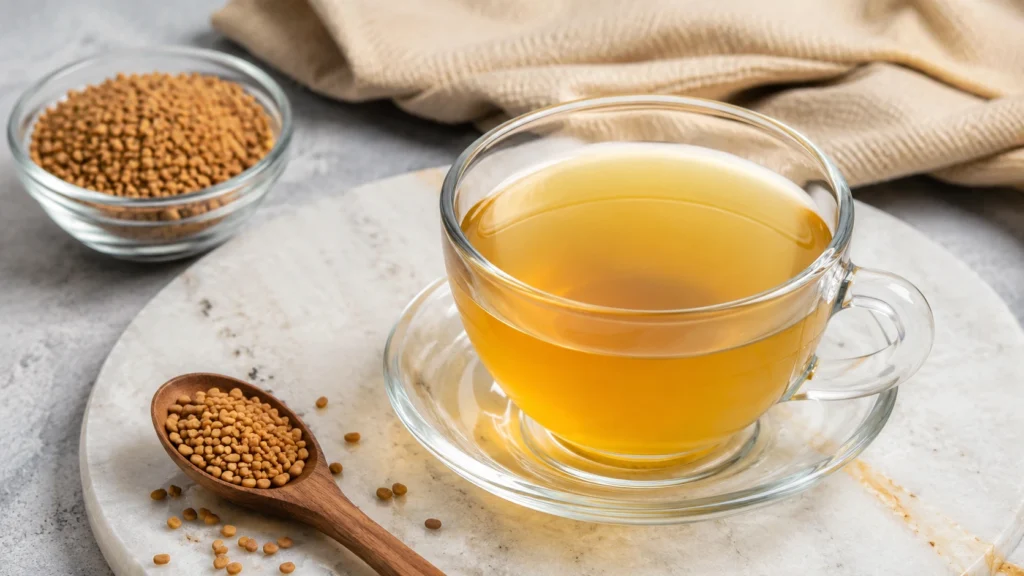
Fenugreek Tea Recipe is a simple herbal tea made with whole fenugreek seeds and hot water. It has a warm, earthy flavor with a light maple-like aroma and usually takes about 10 minutes to make. Many people enjoy it in the morning or after meals because it is naturally caffeine-free and easy to customize.
Fenugreek comes from a small herb that has been used in Indian, Middle Eastern, and Mediterranean cooking for centuries. The seeds are common in curries, spice blends, and pickles, but they also make an excellent herbal drink.
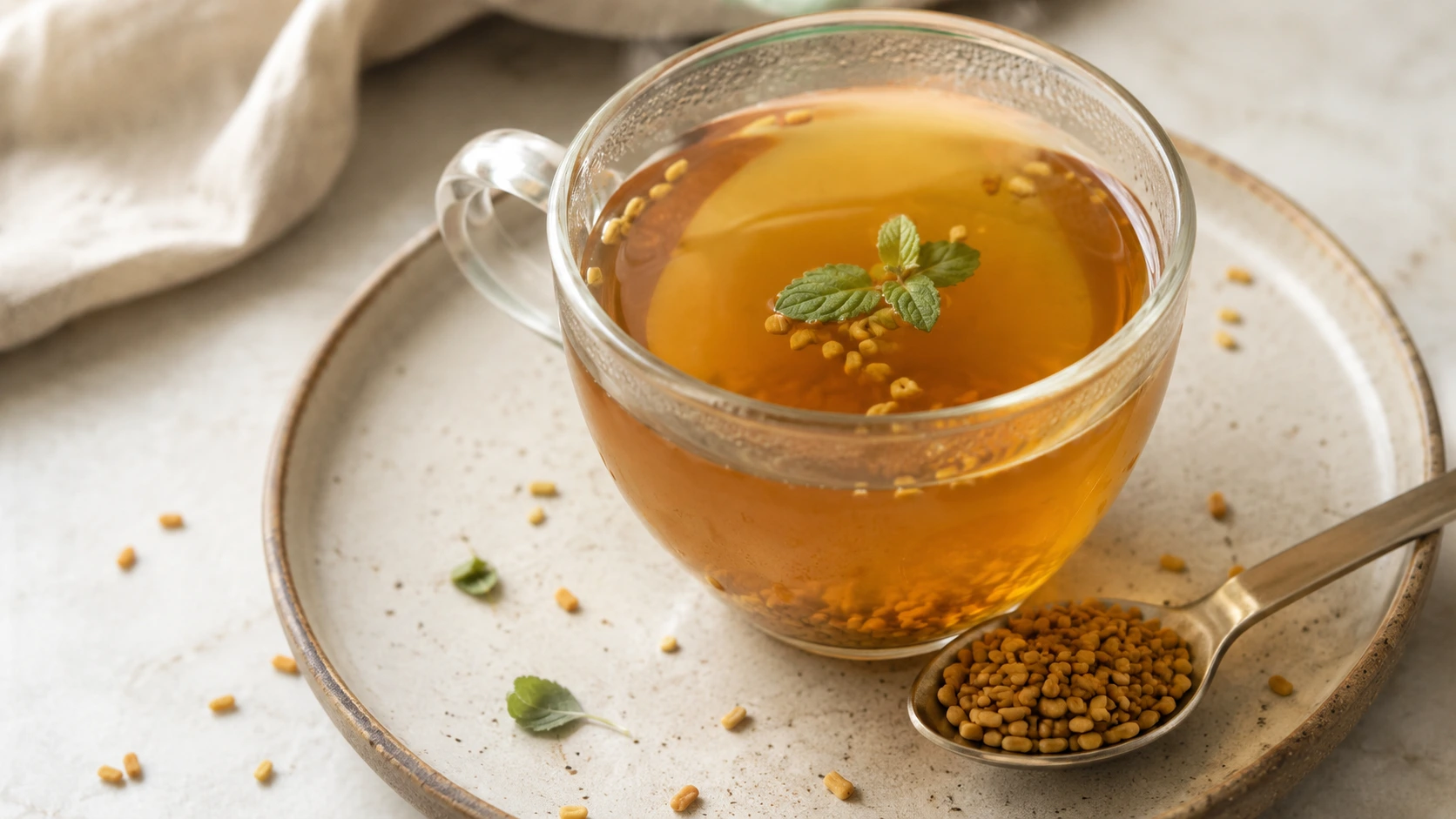
When brewed correctly, the tea has a clear golden color and a pleasant aroma with hints of maple syrup. The taste starts slightly nutty before finishing with a mild herbal bitterness. If you prefer a softer flavor, adding cinnamon, cardamom, or a little honey works well without hiding the character of the tea.
Why This Fenugreek Tea Recipe Is Worth Making
Many recipes simply tell you to boil the seeds and drink the tea. This version explains why each step matters so you can adjust it to your own taste.
Here’s what makes this recipe different:
- Uses whole seeds for cleaner flavor and less bitterness.
- Includes easy substitutions if you only have powder or dried leaves.
- Explains three brewing methods for different tastes.
- Shows simple ways to reduce bitterness naturally.
- Includes realistic storage advice for both seeds and brewed tea.
- Covers what current research actually says without making exaggerated health claims.
Whether you’re preparing a Fenugreek tea recipe for weight loss or simply looking for a comforting herbal drink, these tips help you brew a better cup every time.
Recipe Overview
This tea is warm, lightly earthy, and naturally caffeine-free. It pairs well with breakfast, makes a comforting afternoon drink, and can also be prepared ahead for busy mornings.
| Detail | Info |
|---|---|
| Prep Time | 2 minutes |
| Cook Time | 8 minutes |
| Total Time | 10 minutes |
| Servings | 2 cups |
| Difficulty | Easy |
| Cuisine | Indian-inspired |
| Calories | About 5–10 per cup (unsweetened) |
| Estimated Cost | About $0.08–$0.20 for 2 cups |
Real Cost Comparison: Seeds vs Tea Bags
One thing most recipes never mention is cost. Making your own tea is usually much cheaper than buying ready-made tea bags.
| Option | Typical Price | Estimated Cost Per Cup |
|---|---|---|
| Whole fenugreek seeds (bulk) | $0.30–$0.70 per ounce | Less than $0.05 |
| Organic whole seeds | $0.70–$1.20 per ounce | Around $0.08 |
| Fenugreek tea bags | $6–9 per box | About $0.35–$0.60 |
Buying whole seeds from an Indian grocery store is often the best value. They are usually fresher and cost much less than packaged herbal tea.
Where to Buy the Best Fenugreek Seeds
Finding good seeds is easier than many people think.
- Indian grocery stores: Usually the freshest option and often the lowest price.
- Middle Eastern markets: Great quality with good turnover.
- Health food stores: Good choice if you want organic seeds.
- Online retailers: Convenient when local stores don’t carry them.
Good fenugreek seeds should be firm, dry, and light brown. They should have a pleasant maple-like smell. Skip any package that smells musty or looks damp.
Ingredients and What Each One Does
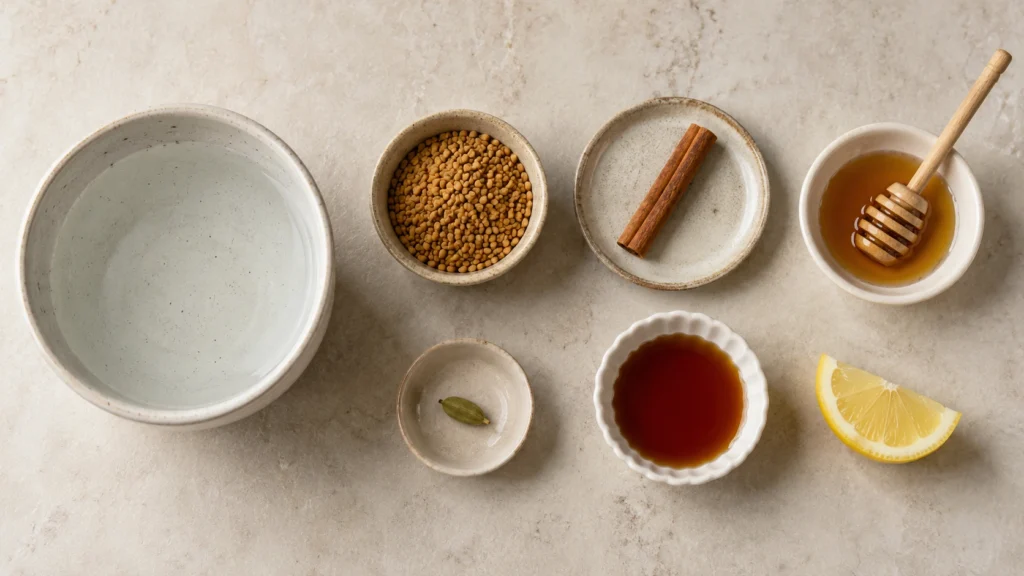
This recipe keeps things simple. A few ingredients are enough to make a flavorful cup while leaving plenty of room for your own favorite additions.
Ingredients
- 2 cups water
- 1 teaspoon whole fenugreek seeds
- 1 small cinnamon stick (optional)
- 1 cardamom pod (optional)
- Honey or maple syrup, to taste
- Lemon wedge for serving (optional)
Why These Ingredients Matter
Whole fenugreek seeds give the cleanest flavor. They release their aroma slowly, making the tea smoother than ground fenugreek.
Cinnamon helps soften the natural bitterness while adding gentle warmth. A cinnamon stick works better than ground cinnamon because it keeps the tea clear.
Cardamom adds a fresh, slightly sweet aroma that balances the earthy flavor without overpowering it.
Honey or maple syrup should be stirred in after the tea cools slightly. This keeps the flavor bright and prevents the honey from losing some of its natural qualities.
Ingredient Substitution Guide
| Ingredient | Best Substitute | Flavor Change | Notes |
|---|---|---|---|
| Whole fenugreek seeds | Ground fenugreek | Stronger and more bitter | Use only ½ teaspoon and strain well. |
| Whole fenugreek seeds | Dried fenugreek leaves (kasuri methi) | More herbal and slightly stronger | Use about 1 tablespoon. |
| Cinnamon stick | ¼ teaspoon ground cinnamon | Similar warmth | Tea may become cloudy. |
| Honey | Maple syrup or agave syrup | Slightly different sweetness | Add after brewing. |
| Fresh lemon | Lemon juice | Brighter flavor | Start with a small amount. |
Whole Seeds vs. Powder vs. Leaves
If I only have one option, I always choose whole seeds because they brew a cleaner cup and are much easier to strain.
Ground fenugreek works in a pinch, but it releases more bitter compounds due to its larger surface area. It also leaves tiny particles floating in the tea, making it slightly cloudy.
Dried fenugreek leaves, often sold as kasuri methi, create a pleasant herbal infusion with a stronger leafy flavor. If you’re familiar with a Fenugreek tea recipe indian style, you’ll know that both the seeds and leaves are used in different ways, each producing its own unique taste and aroma.
Now that your ingredients are ready, it’s time to brew the tea the right way. In the next section, I’ll show you three simple brewing methods, explain when to use each one, and share the visual signs that tell you your tea is ready.
How to Make Fenugreek Tea Recipe Step by Step
Making this tea is simple, but a few small details make a big difference. The goal is to pull out the pleasant herbal flavor without letting too much bitterness take over. Watch the color, smell, and taste as you brew instead of only following the timer.
Method 1: The Classic Simmer (My Favorite)
Step 1: Lightly rinse the seeds
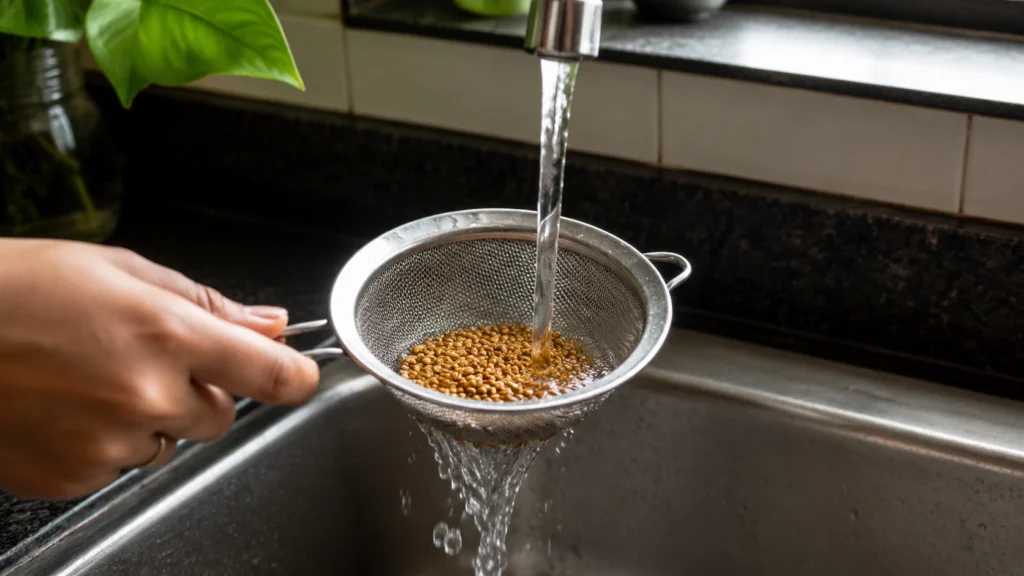
Place 1 teaspoon of whole fenugreek seeds in a small strainer and rinse them under cool water. This removes any dust and gives the tea a cleaner taste.
Step 2: Heat the water
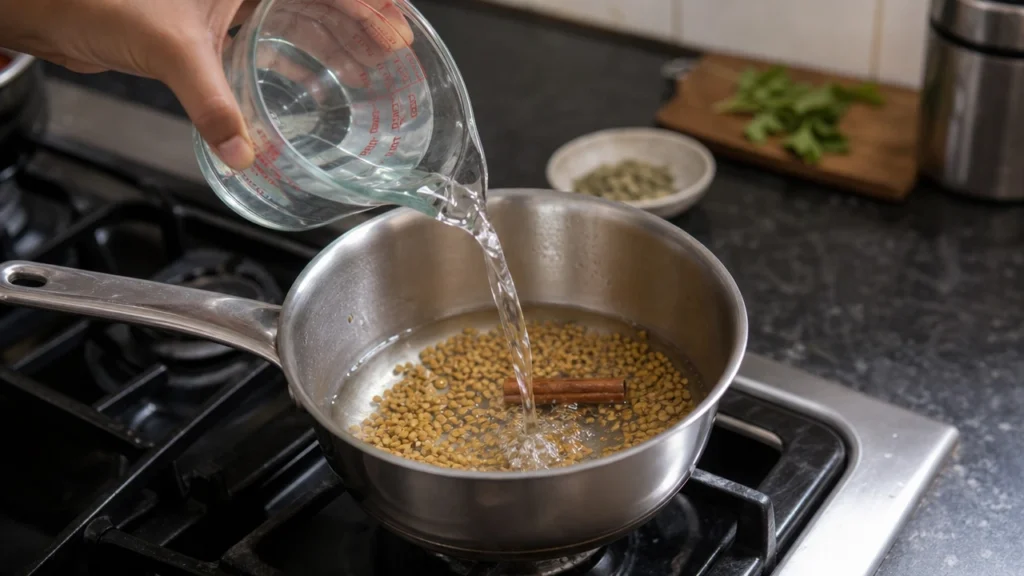
Pour 2 cups of water into a small saucepan. Add the rinsed seeds and an optional cinnamon stick or cardamom pod.
Step 3: Bring to a gentle boil
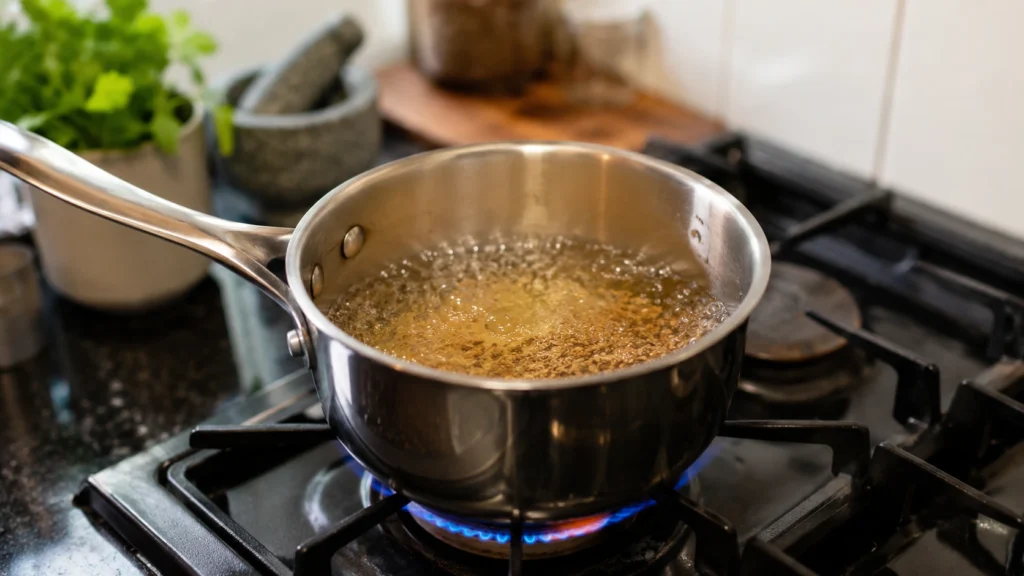
Heat until the water reaches a light boil. As soon as you see steady bubbles, reduce the heat to a gentle simmer.
Why this matters: A hard boil pulls out more bitter compounds. A gentle simmer creates a smoother cup.
Step 4: Simmer for 8 to 10 minutes
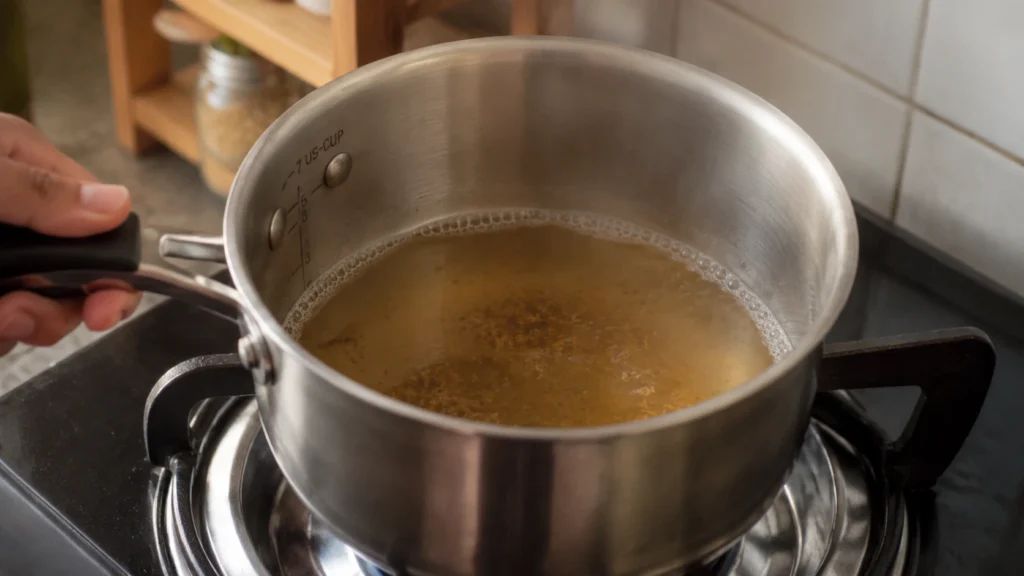
The tea will slowly turn pale golden. You’ll notice a warm, maple-like aroma with light earthy notes.
If you prefer a stronger drink, simmer for another 2 or 3 minutes. I rarely go beyond 12 minutes because the bitterness becomes much stronger.
Step 5: Strain and serve
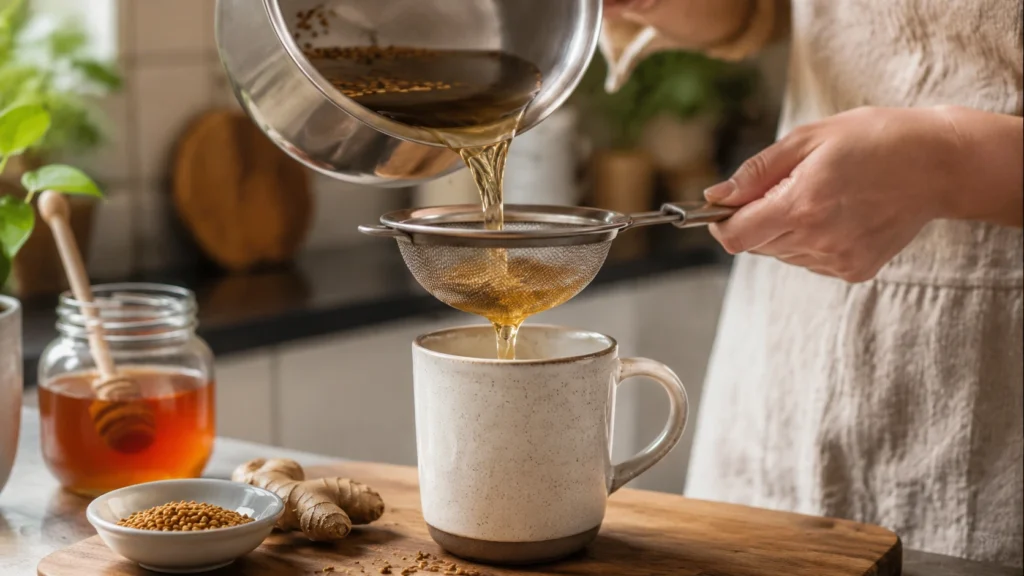
Pour the tea through a fine-mesh strainer into your favorite mug. Add honey, maple syrup, or a squeeze of lemon if you like.
Serve warm, or let it cool and pour it over ice for a refreshing drink.
Tip: If you’re wondering How to make fenugreek tea from powder, simply whisk the powder into hot (not boiling) water, let it steep for 3–5 minutes, then strain if needed before serving.
Three Ways to Brew Fenugreek Tea
Different brewing methods give very different results.
| Method | Time | Flavor | Bitterness | Best For |
|---|---|---|---|---|
| Hot Steep | 5–10 minutes | Mild | Low | Everyday drinking |
| Gentle Simmer | 8–12 minutes | Rich and balanced | Medium | Best overall flavor |
| Overnight Cold Soak | 8–12 hours | Light and refreshing | Very low | People who dislike bitterness |
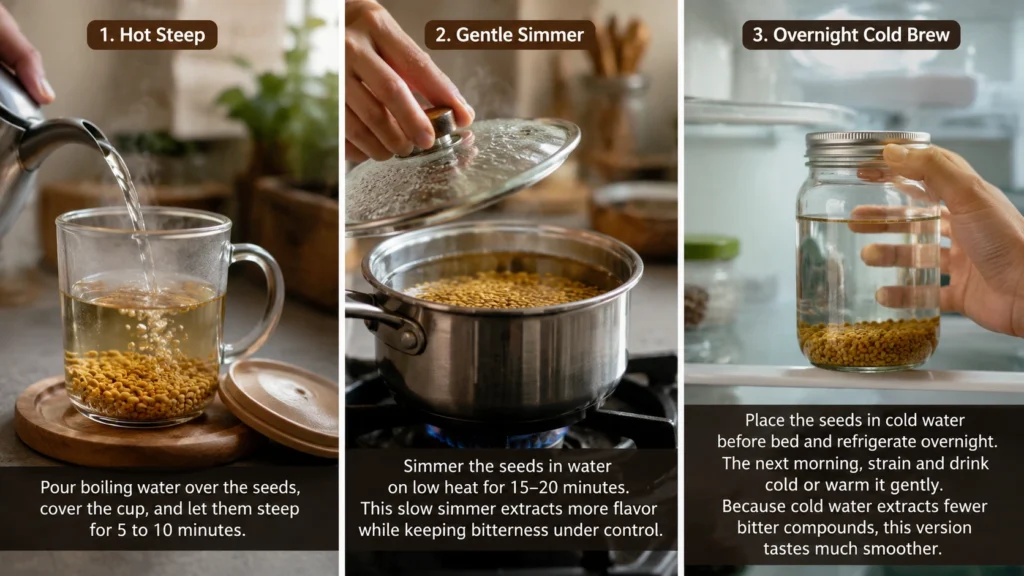
Method 1: Hot Steep
Pour boiling water over the seeds, cover the cup, and let them steep for 5 to 10 minutes.
This produces the lightest flavor and is the quickest option when you’re short on time.
Method 2: Gentle Simmer
This is the method in this recipe.
The slow simmer extracts more flavor while keeping bitterness under control.
Method 3: Overnight Cold Brew
Place the seeds in cold water before bed and refrigerate overnight.
The next morning, strain and drink cold or warm it gently.
Because cold water extracts fewer bitter compounds, this version tastes much smoother.
Add-Ins That Actually Improve the Tea
Instead of adding random ingredients, choose one based on the flavor you want.
| Add-In | Recommended Amount | What It Adds | Why It Works |
|---|---|---|---|
| Cinnamon stick | 1 small stick | Warm sweetness | Balances bitterness naturally |
| Cardamom | 1 pod | Fresh aroma | Softens earthy notes |
| Fresh ginger | 2–3 slices | Gentle heat | Brightens the flavor |
| Hibiscus | 1 teaspoon | Light tartness | Makes the tea more refreshing |
| Lemon juice | 1 teaspoon | Fresh citrus | Helps reduce the harsh finish |
| Honey | 1 teaspoon | Natural sweetness | Best stirred in after brewing |
| Fennel seeds | ½ teaspoon | Mild sweetness | Adds a softer herbal taste |
The Common Mistake That Makes Fenugreek Tea Too Bitter
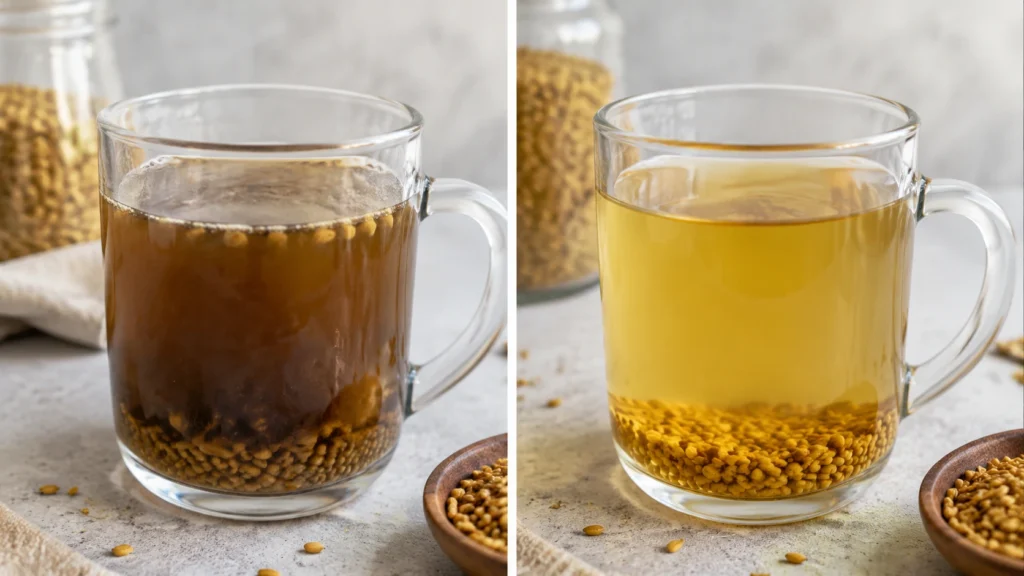
The biggest mistake is leaving the seeds in hot water for too long.
Heat pulls flavor from the seeds first. After that, it starts pulling out more bitter compounds. If your tea tastes unpleasant, the brewing time is usually the reason.
Another common mistake is using too many seeds. More seeds do not always make better tea. They often make a much harsher drink.
Ground fenugreek is another challenge. Because it has much more surface area than whole seeds, it releases flavor much faster. That also means it becomes bitter much faster.
Quick Fixes for Bitter Tea
- Reduce the simmering time by two or three minutes.
- Use whole seeds instead of powder.
- Add one cinnamon stick while brewing.
- Stir in honey after the tea cools slightly.
- Try the overnight cold-brew method.
Why Fenugreek Tea Tastes Bitter
Fenugreek seeds naturally contain compounds called saponins. These are responsible for much of the tea’s bitterness.
Hot water extracts these compounds much faster than cold water. That’s why a long boil creates a stronger, more bitter drink, while an overnight cold soak tastes much milder.
Lightly toasting the seeds in a dry pan for about one minute before brewing also helps mellow the flavor. Don’t let them darken too much—just toast until they smell warm and nutty.
Pro Tip: Toast the Seeds First
One small step changed this recipe for me.Heat the dry seeds in a pan over medium-low heat for about one minute before adding water.As soon as they smell slightly nutty and maple-like, remove them from the heat.
This simple step softens the earthy flavor and makes the finished tea taste smoother without adding anything else. Many people also search for How to make fenugreek tea for hair, and this gentle toasting method can improve the flavor if you’re preparing the tea for regular use as part of your wellness routine.
Discover more refreshing drinks recipes to enjoy homemade beverages for every season and occasion.
Easy Variations You Can Try
There are lots of ways to customize this recipe without changing the basic method.
- Add fresh ginger for a warming tea during cooler months.
- Brew with cinnamon and cloves for a richer spice blend.
- Mix in hibiscus for a brighter color and a lightly tart finish.
- Add fennel seeds if you prefer a naturally sweeter herbal tea.
- Chill the tea and serve it over ice with lemon for summer.
- Use unsweetened maple syrup instead of honey for a vegan version.
Each variation keeps the recipe simple while giving it a different personality. Once you find your favorite combination, it’s easy to make the tea your own.
What to Serve With Fenugreek Tea Recipe
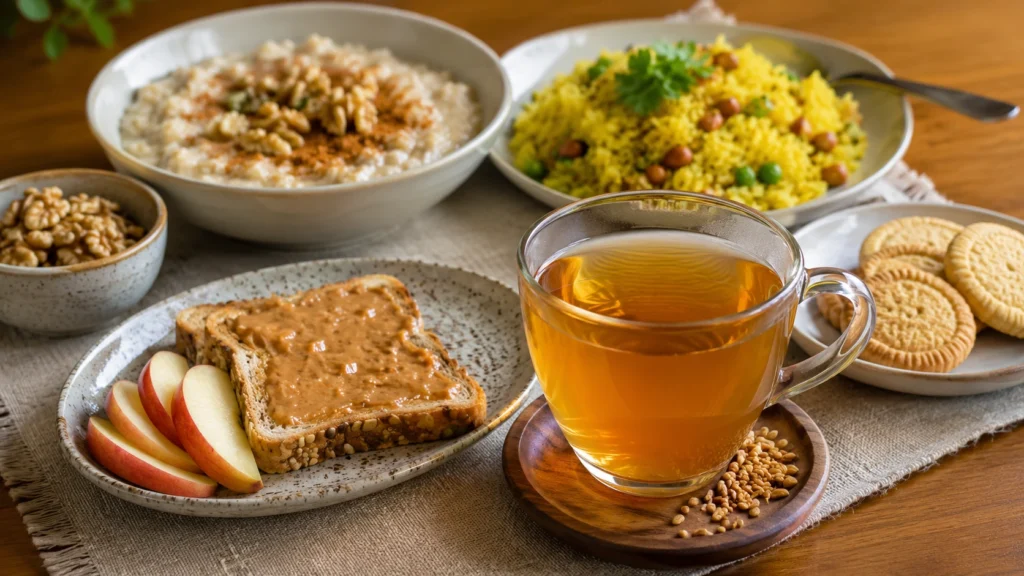
Fenugreek tea has a warm, earthy flavor that pairs well with both sweet and savory foods. I usually enjoy it with breakfast, but it also works as a light afternoon drink.
- Whole grain toast with almond butter adds a hearty start to the day.
- Fresh fruit like apples, pears, or oranges balances the tea’s earthy taste.
- Homemade oatmeal with cinnamon and walnuts makes a comforting breakfast.
- Indian-style vegetable upma or poha pairs naturally with fenugreek tea.
- Simple butter cookies or digestive biscuits are great if you want a light snack.
If you enjoy homemade wellness drinks, this Fire Honey Recipe is another simple recipe worth trying for its bold, spicy flavor.
My Honest Experience Making This Recipe
The first time I made this tea, I thought leaving the seeds in the pot longer would make it healthier. Instead, it became so bitter that I could barely finish one cup.
After a few more batches, I realized that enjoying the full Fenugreek tea benefits isn’t about brewing it longer—it’s about brewing it smarter. A gentle simmer of about 10 minutes gave me the best balance of flavor. Toasting the seeds for just one minute before adding the water made an even bigger difference. The tea smelled warmer, tasted smoother, and needed much less honey.
That small change has become part of every batch I make.
How to Store, Freeze, and Reheat Fenugreek Tea
Fresh tea always tastes best, but leftovers store surprisingly well if you handle them correctly.
Storage Guide
| Item | Best Storage Method | How Long |
|---|---|---|
| Brewed tea | Airtight container in the refrigerator | 3–5 days |
| Whole fenugreek seeds | Airtight jar in a cool, dark pantry | 2–3 years |
| Ground fenugreek | Airtight container away from heat | 6–12 months |
| Frozen brewed tea | Ice cube tray or freezer-safe container | Up to 3 months |
If you make a larger batch, freezing it in ice cube trays works well. Drop a few cubes into hot water whenever you want a quick cup.
Reheating
Warm the tea slowly over low heat until just hot. Avoid boiling it again because repeated boiling can make the flavor harsher.
What’s Actually in Your Cup?
Many people confuse the nutrition of whole fenugreek seeds with the nutrition of brewed tea.
The seeds themselves are rich in fiber, protein, iron, and other nutrients. However, when you brew tea, only the water-soluble compounds move into the liquid.
An unsweetened cup of fenugreek tea usually contains about 5 to 10 calories with very little protein, fat, or carbohydrates. It does provide small amounts of minerals and plant antioxidants, but it is not nutritionally the same as eating the whole seeds.
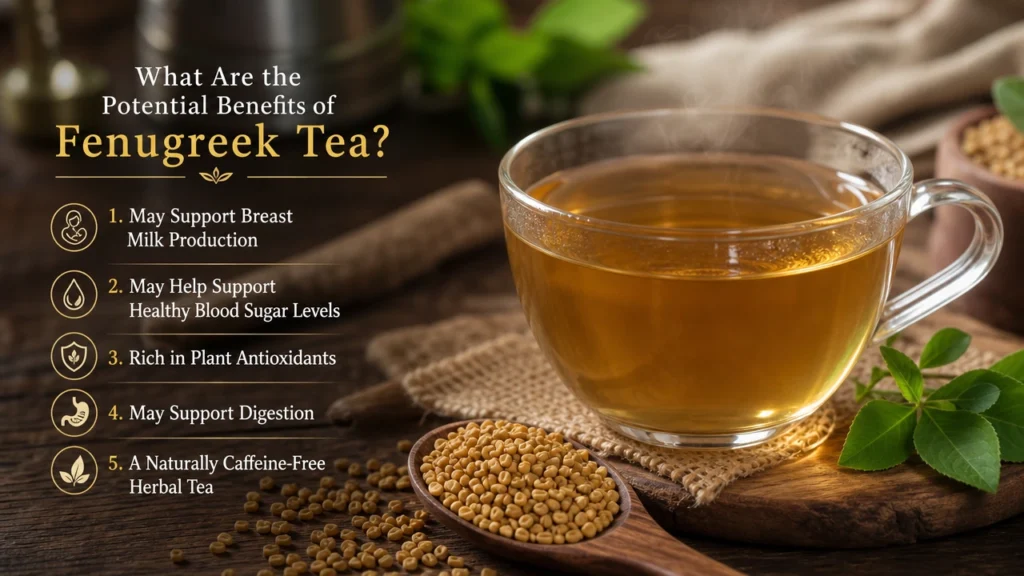
What Are the Potential Benefits of Fenugreek Tea?
Fenugreek has been used for centuries in traditional cooking and herbal remedies. While researchers have studied the seeds for several health uses, it’s important to remember that most studies looked at concentrated seed powder or supplements, not homemade fenugreek tea. That means a cup of tea may not provide the same amount of active compounds.
May Support Breast Milk Production
Fenugreek is one of the best-known herbs used by breastfeeding parents, which is why many people search for a Fenugreek tea recipe for breast milk. Some small studies have found that people who consumed fenugreek produced more breast milk than those who did not. Because the research includes different forms of fenugreek, including capsules, powders, and teas, results can vary from person to person.
May Help Support Healthy Blood Sugar Levels
Research suggests that fenugreek may help support healthy blood sugar levels and improve insulin sensitivity. Most of these studies used measured doses of ground seeds or supplements rather than brewed tea, so homemade tea should not be viewed as a treatment for diabetes or a replacement for prescribed medication.
Rich in Plant Antioxidants
Fenugreek contains natural plant compounds with antioxidant properties. This is one reason many people search for a Fenugreek tea recipe for inflammation as part of their overall wellness routine. Brewing the seeds allows some of these water-soluble compounds to infuse into the tea, creating a refreshing, caffeine-free drink that can be enjoyed as part of a balanced diet. While fenugreek shows promise in research, it should not be considered a substitute for medical treatment.
May Support Digestion
Many people drink fenugreek tea after meals because it has long been used as a traditional digestive aid. While scientific evidence is still limited, some people find that it helps them feel more comfortable after eating.
A Naturally Caffeine-Free Herbal Tea
Unlike coffee or black tea, fenugreek tea contains no caffeine. That makes it a good choice if you’re looking for a warm evening drink or simply want to reduce your caffeine intake.
Important Safety Notes
Fenugreek tea is generally enjoyed in moderation, but it isn’t suitable for everyone. Understanding Fenugreek tea side effects is important before making it a regular part of your routine. If you are pregnant, take blood thinners, use diabetes medications, or have another medical condition, speak with your healthcare provider before drinking it regularly. People with allergies to legumes such as peanuts, chickpeas, or soybeans should also use caution, as fenugreek belongs to the same plant family.
What Does the Research Really Say?
Research on fenugreek is promising in some areas, but it is important to understand what the studies actually tested.
| Use | Evidence | Form Studied | Honest Take |
|---|---|---|---|
| Breastfeeding support | Moderate | Capsules, powders, teas | Some parents report increased milk supply, but results vary. |
| Blood sugar support | Moderate | Mostly seed powder or supplements | Brewed tea contains lower amounts than supplements. |
| Digestion | Limited | Traditional use and small studies | Some people find it soothing after meals. |
| General wellness | Limited | Mixed forms | More high-quality research is still needed. |
Most studies looked at concentrated powders or supplements rather than homemade tea. That means you should not expect exactly the same results from one cup of tea.
If you have diabetes, take blood-thinning medication, are pregnant, or have another medical condition, talk with your healthcare provider before drinking fenugreek tea regularly.
Frequently Asked Questions About Fenugreek Tea Recipe
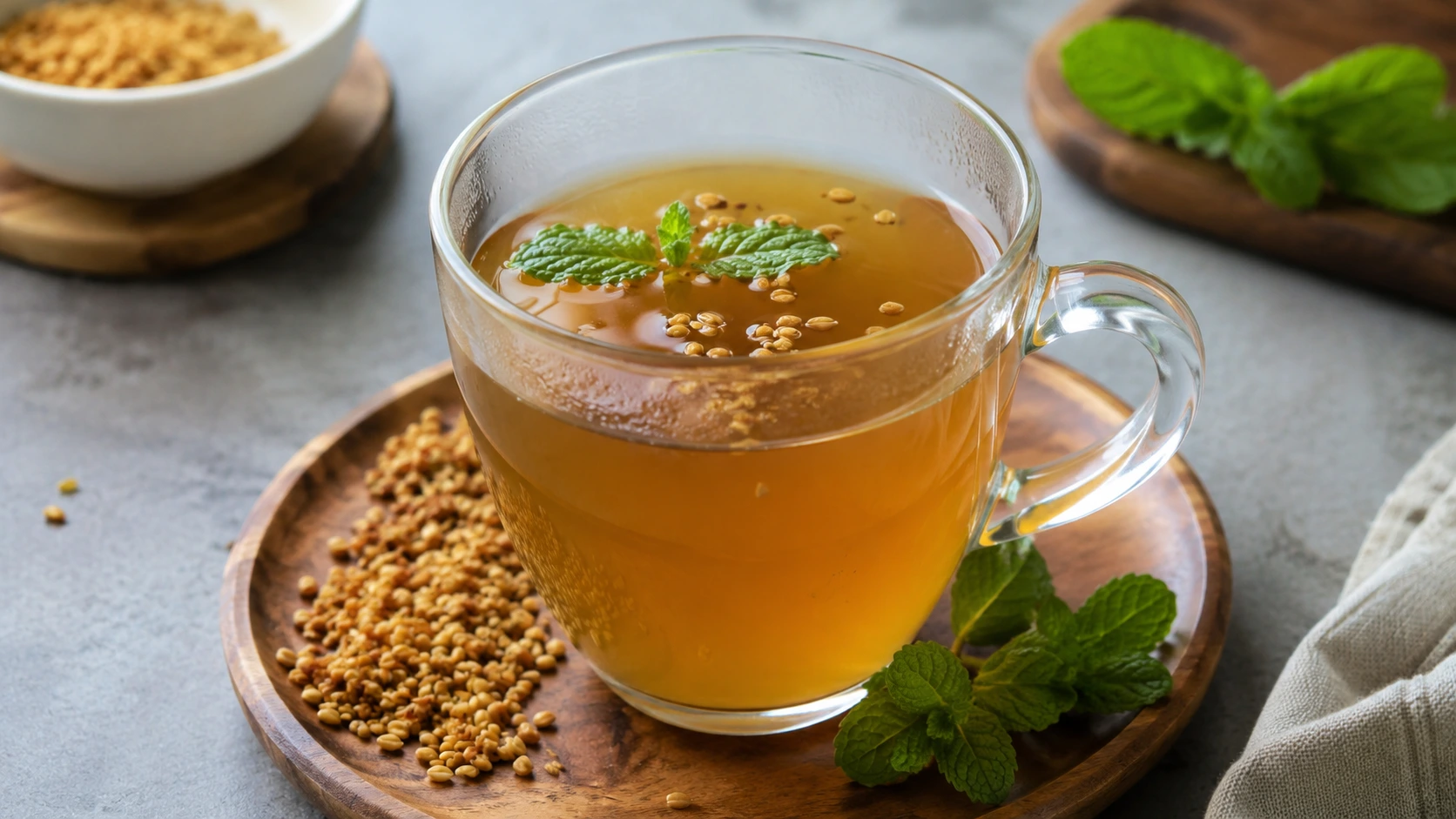
Fenugreek Tea Recipe
Ingredients
Equipment
Method
- Rinse the fenugreek seeds under cool running water to remove any dust or debris.
- Add the water, fenugreek seeds, cinnamon stick, and cardamom pod (if using) to a small saucepan.
- Bring the mixture to a gentle boil, then immediately reduce the heat to a low simmer.
- Simmer for 8 to 10 minutes until the tea turns a light golden color and develops a warm herbal aroma.
- Remove from the heat and strain the tea through a fine-mesh strainer into serving mugs.
- Stir in honey or maple syrup if desired, then add a squeeze of fresh lemon for a brighter flavor. Serve warm or let cool and pour over ice.
Notes
- Toast the fenugreek seeds in a dry pan for about 1 minute before brewing for a smoother, nuttier flavor.
- Avoid simmering longer than 10–12 minutes, as the tea can become noticeably more bitter.
- Store leftover tea in the refrigerator for up to 5 days and reheat gently without boiling.
Final Thoughts on Fenugreek Tea Recipe
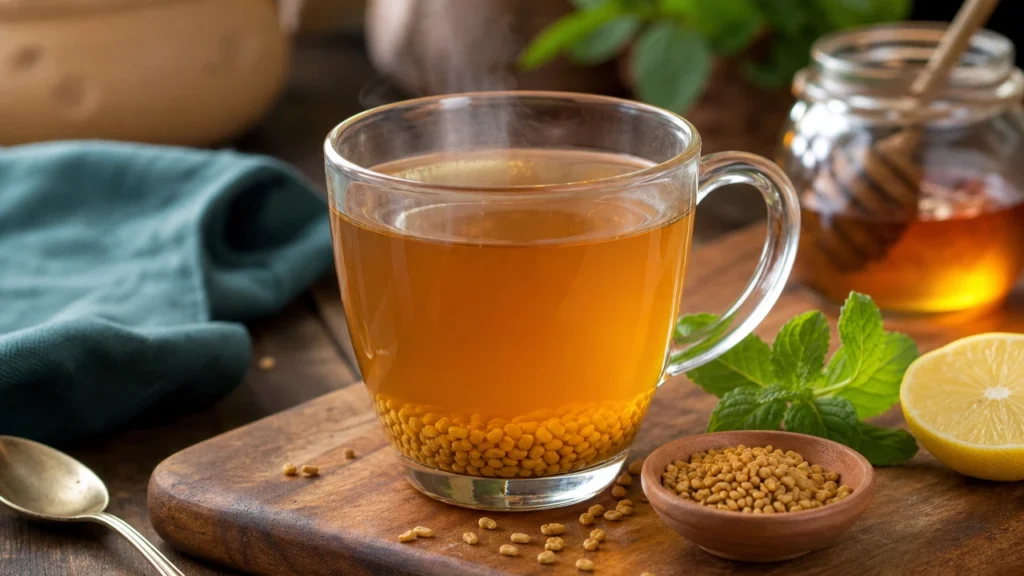
This Fenugreek Tea Recipe keeps things simple while giving you plenty of ways to adjust the flavor. A gentle simmer, fresh whole seeds, and a few optional spices are all you need for a smooth, comforting cup.
If you make this recipe, I’d love to hear how it turned out. Leave a comment below and let me know if you preferred the classic simmer, the quick steep, or the overnight cold brew. While you’re here, be sure to explore our other homemade tea recipes for more simple drinks you can make with everyday ingredients.
If you’re passionate about everyday self-care, this Glow Recipe Ambassador guide is a great next read for discovering trusted skincare products.