Gordon Ramsay Scrambled Eggs Recipe 5 Secrets for Perfect Creamy Eggs

Most people overcook scrambled eggs and never know why. I did it too for years. I thought heat control didn’t matter much, but it changes everything.
This Gordon Ramsay Scrambled Eggs Recipe is different because of one simple idea. You don’t cook the eggs straight through. You keep pulling them on and off the heat so they never overcook. That is what creates that soft, creamy texture everyone talks about.
I’ve made this recipe many times in my kitchen, and it never fails when you follow the timing closely. The eggs turn silky, rich, and almost custard-like. Not dry. Not rubbery. Just smooth and buttery.
Once you understand the method, it becomes one of the easiest breakfast recipes you can learn. Let’s break it down in a simple way.
What is Gordon Ramsay Scrambled Eggs Recipe and why is it so creamy?
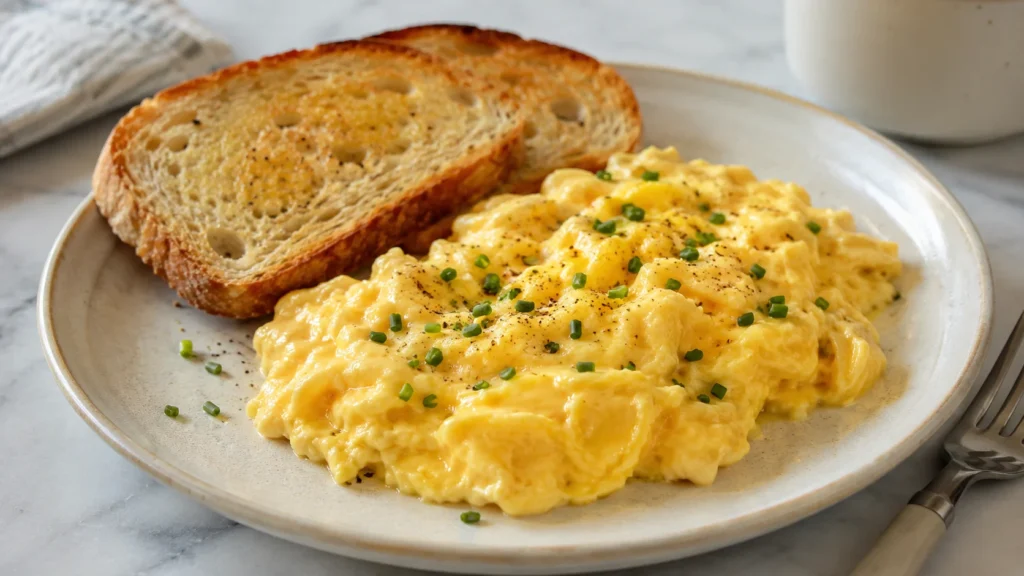
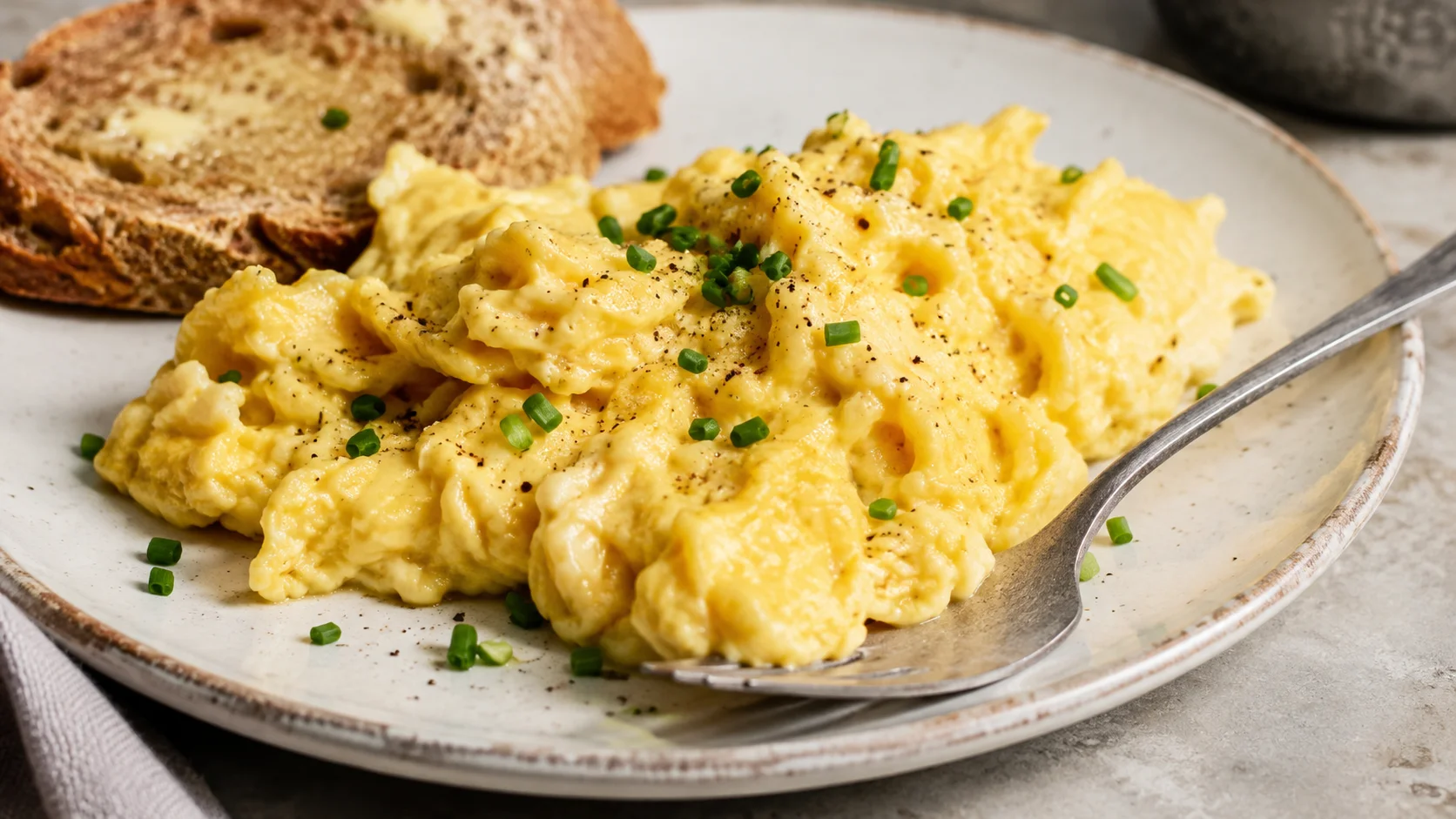
Gordon Ramsay scrambled eggs are soft scrambled eggs made with butter, eggs, and gentle heat control. They are cooked by constantly stirring eggs in a pan while moving it on and off the heat.
This method creates creamy curds instead of dry chunks. The texture stays smooth because the eggs never stay on heat long enough to toughen.
Gordon Ramsay Scrambled Eggs is a French-style egg dish made with eggs, butter, and optional crème fraîche. It is soft, rich, and custardy and takes about 4–6 minutes to make. Most people eat it on toast or English muffins in the morning. It is popular because the texture feels like restaurant-quality eggs at home.
The key idea is simple. Eggs cook fast. So control the heat, don’t rush them, and stop before they look fully done.
Recipe overview: time, cost, and what makes it different
This recipe tastes rich and buttery with a soft, silky finish. It works best for slow mornings or a relaxed breakfast.
The texture is the main highlight. You get soft folds instead of dry scrambled bits.
| Detail | Info |
|---|---|
| Prep Time | 1–2 minutes |
| Cook Time | 4–6 minutes |
| Total Time | 6–8 minutes |
| Servings | 2–3 people |
| Difficulty | Easy |
| Cuisine | British / French style |
| Calories | ~130–160 per serving |
| Cost | ~$1.50–$3.00 per serving |
The cost stays low because eggs are the main ingredient. The only “premium” item is crème fraîche, but you only need a small amount.
Ingredients and what each one does in scrambled eggs
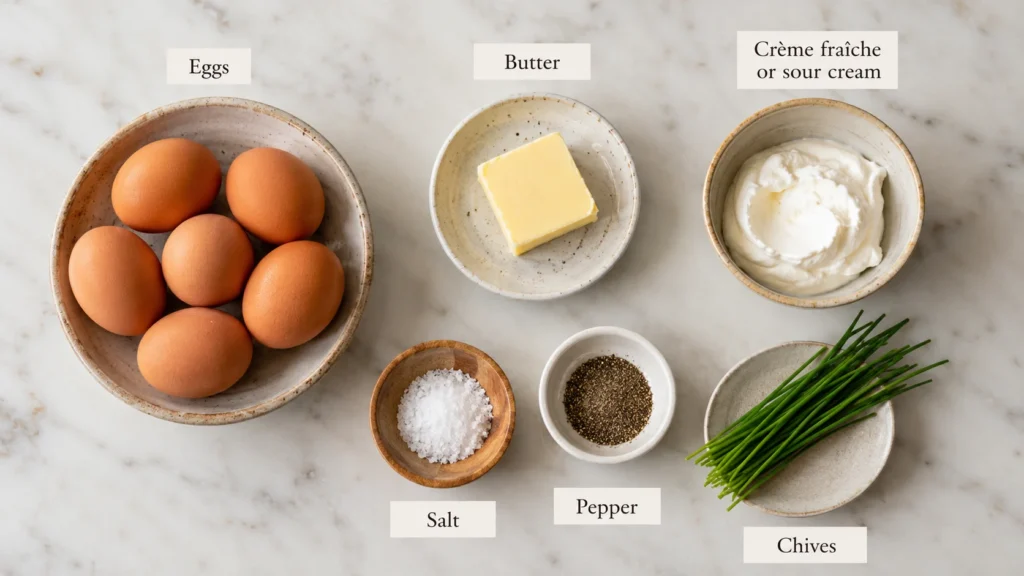
This recipe uses simple ingredients, but each one matters more than you think.
- Eggs: The base. Fresher eggs give better color and creaminess.
- Butter: Adds richness and helps control cooking heat.
- Salt: Enhances flavor but must be added at the right time.
- Pepper: Adds mild heat and balance.
- Crème fraîche or sour cream: Stops cooking and adds creaminess.
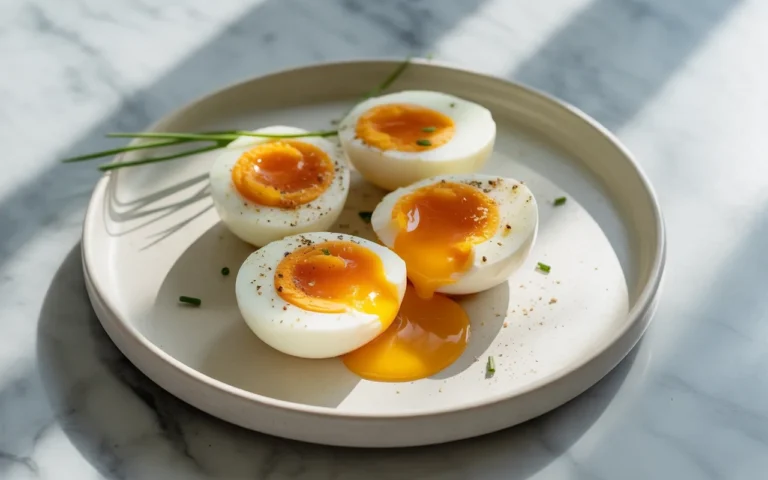
- Chives: Add freshness and a light onion flavor.
Why eggs matter more than anything
Fresh eggs hold tighter protein structure. That means creamier curds when cooked gently. Older eggs spread too fast and can turn watery.
Crème fraîche substitutes that actually work
You can swap crème fraîche with:
- Sour cream (slightly tangy, still creamy)
- Greek yogurt (lighter, less rich)
- Cream cheese (thicker texture)
- Heavy cream (mild and smooth)
Each one changes the final taste slightly, but the method still works.
How to make Gordon Ramsay scrambled eggs step by step
This method is all about heat control. You never let the eggs sit still for long.
Start with a cold pan. Add eggs and butter together. Turn on medium-high heat. Stir right away with a silicone spatula.
Keep stirring until small curds form. Then remove the pan from heat for 10 seconds. Put it back on heat for 20–30 seconds. Repeat this cycle for about 4 minutes.
The eggs slowly thicken into soft folds. You should see glossy, creamy texture. Not dry lumps.
Finish off heat. Add salt, pepper, crème fraîche, and chives.
Step 1: Start cold for better control
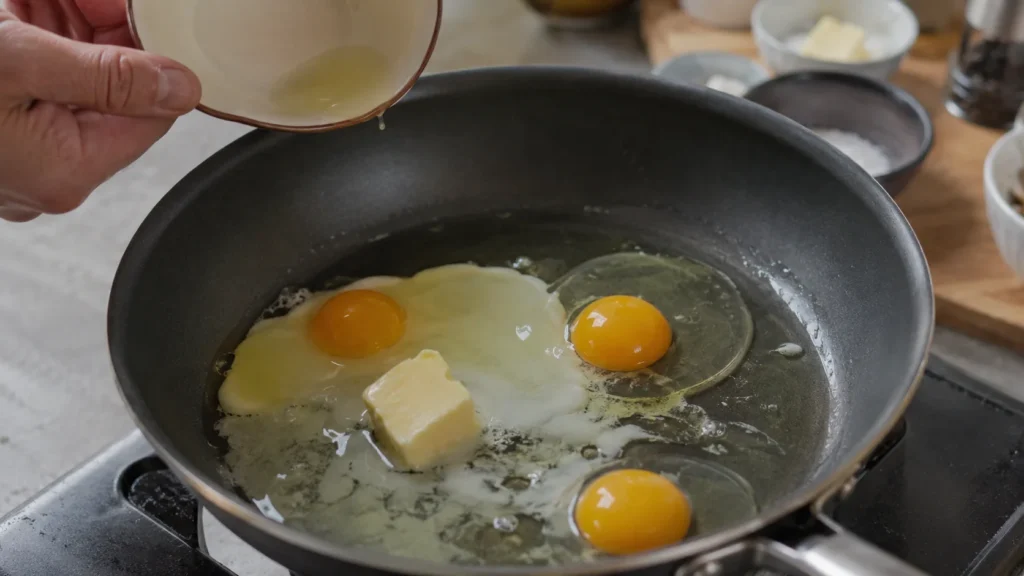
Add eggs and butter into the pan before heating. This helps slow cooking and prevents burning.
Step 2: Stir constantly for soft curds
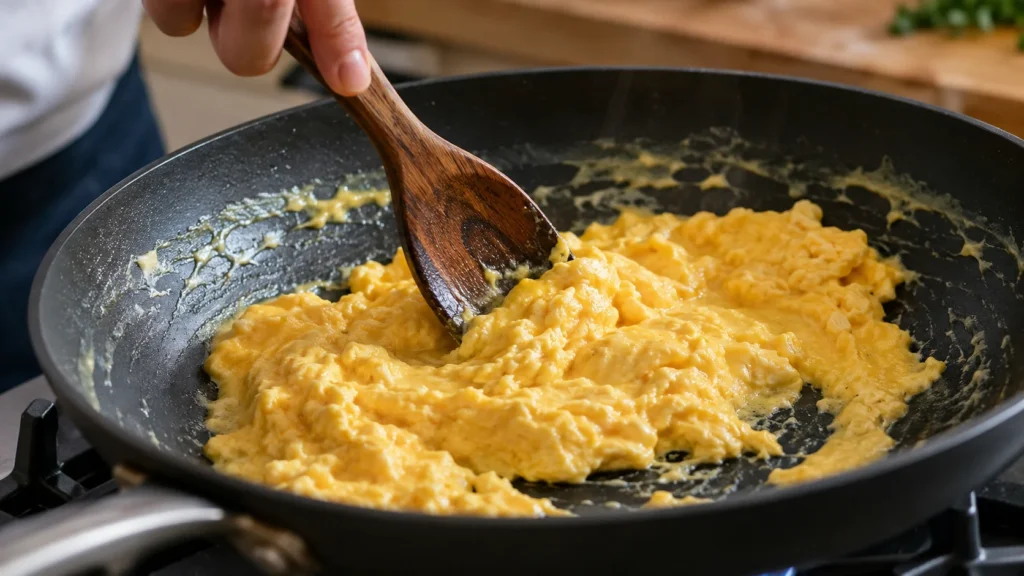
Keep moving the spatula. You want small, soft folds forming.
Step 3: On and off heat timing
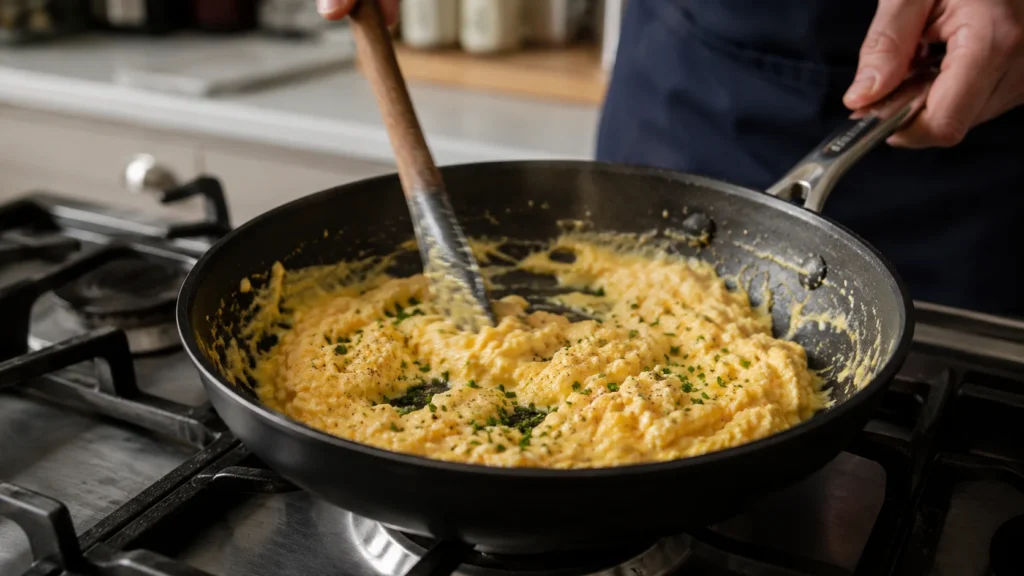
Cook 20–30 seconds on heat, then 10 seconds off. This prevents rubbery texture.
Step 4: Finish off heat
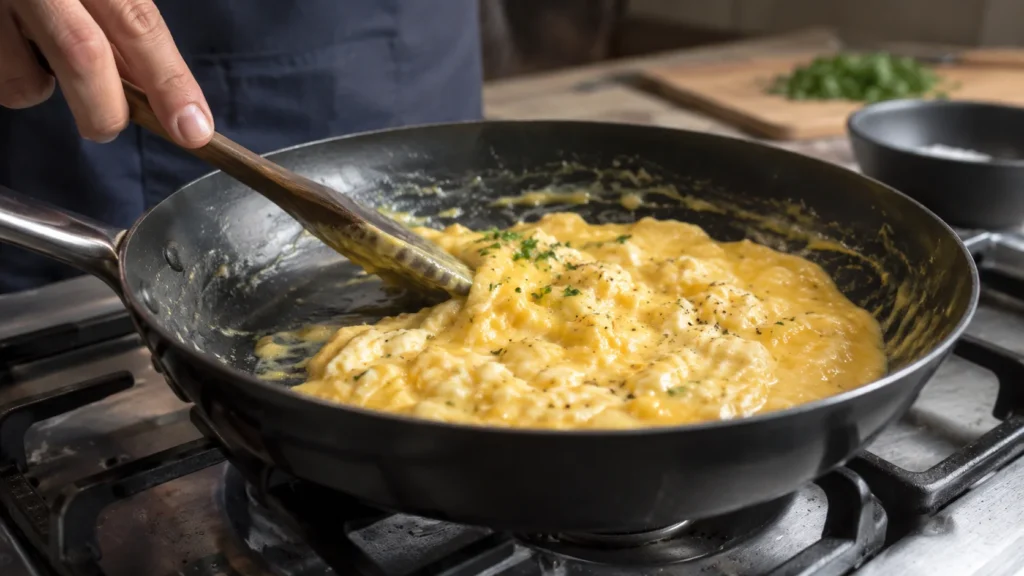
Stop cooking while eggs still look slightly wet. They will set from leftover heat.
The one mistake that ruins Gordon Ramsay scrambled eggs recipe
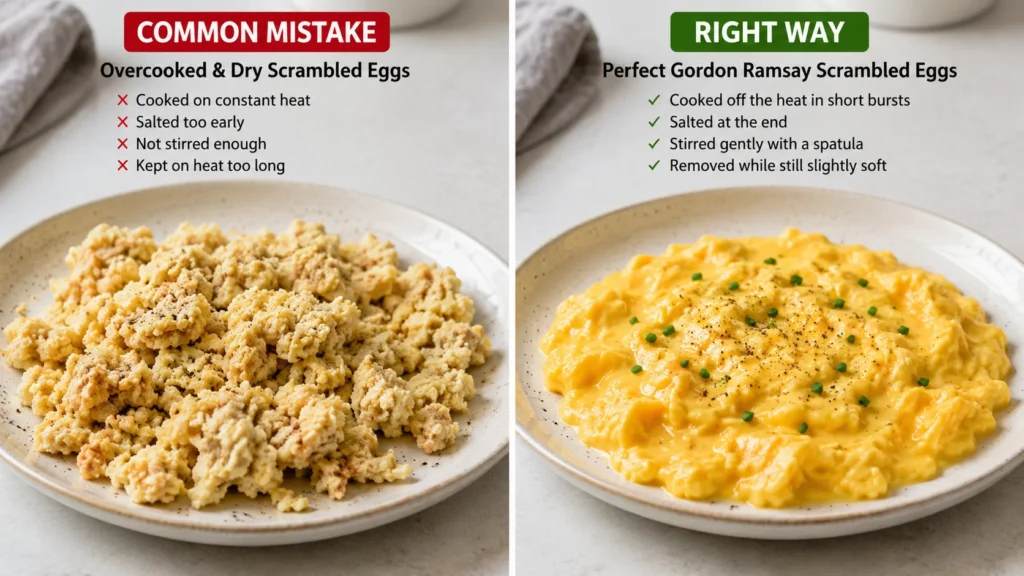
The biggest mistake is keeping the pan on heat too long.
Mistake 1: Cooking on constant heat
This turns eggs dry and grainy. The proteins tighten too fast.
Mistake 2: Salting too early
Salt pulls water out of eggs. This makes them watery and grey.
Mistake 3: Not stirring enough
Eggs stick to the pan and cook unevenly.
Quick fix tips:
- Always remove pan from heat in short bursts
- Salt only at the end
- Use a silicone spatula, not a whisk
- Stop cooking while eggs still look slightly soft
Pro tip: the small change that makes eggs extra creamy
The biggest upgrade is temperature control.
Egg proteins start setting around 60–70°C. If you stay above that too long, moisture gets forced out. That is what makes eggs rubbery.
When you pull the pan off heat, you stop that process instantly. The remaining heat finishes the cooking gently.
This is why Ramsay’s method works so well. It is not about ingredients. It is about stopping heat at the right moment.
Easy variations you can try at home
This recipe is flexible once you understand the base method.
- Add cheese like cheddar or gruyère for a richer taste
- Mix in sautéed mushrooms for an earthy flavor
- Add chili flakes for light heat
- Use Greek yogurt instead of crème fraîche for a lighter version
- Serve on toast with avocado for a full breakfast
- Add smoked salmon for a restaurant-style plate
What to serve with Gordon Ramsay scrambled eggs for a full meal
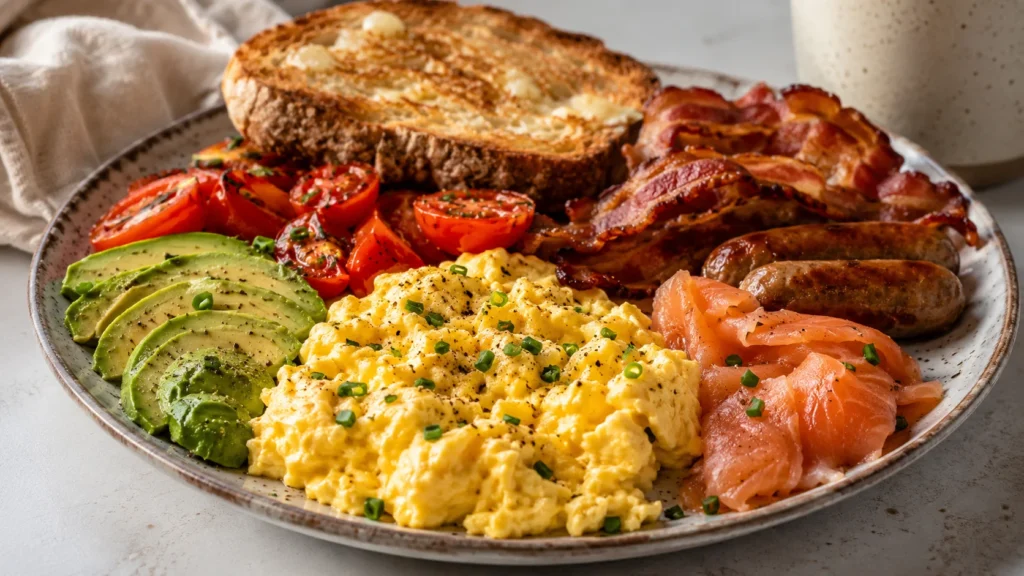
These eggs go with almost anything, but some combinations work better.
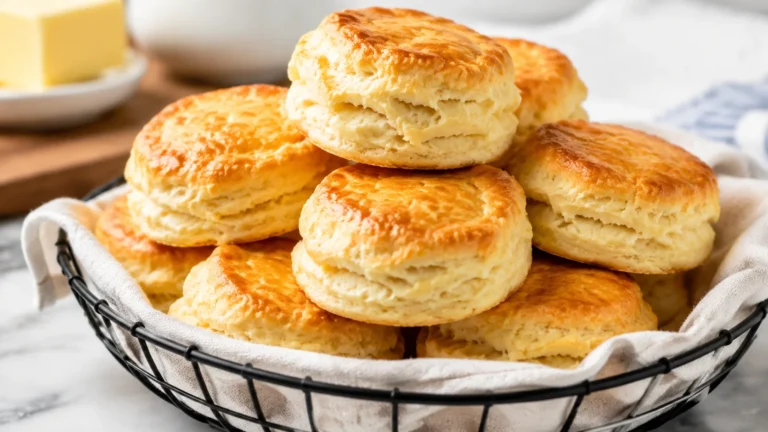
- Toast or English muffins: Classic and simple base
- Crispy bacon or sausage: Adds salt and crunch
- Avocado slices: Creamy texture pairing
- Fresh tomatoes: Light and juicy contrast
- Smoked salmon: Makes it feel like a café breakfast
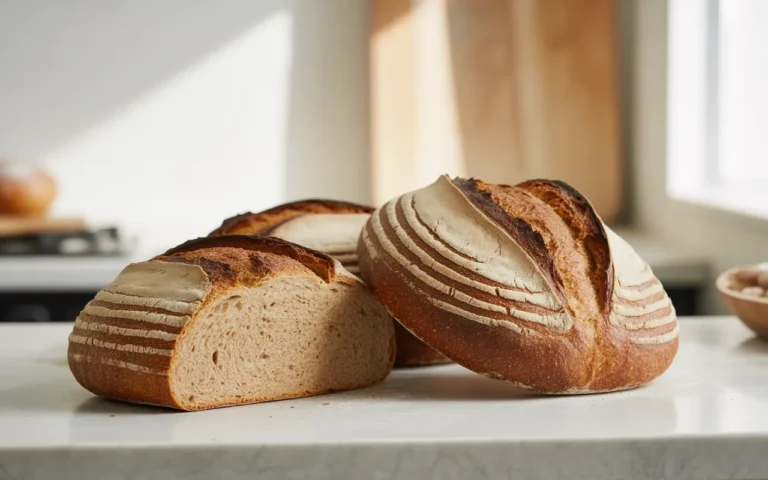
If you like breakfast plates, try pairing this with our homemade sourdough toast recipe or classic hash browns recipe.
My honest experience making Gordon Ramsay scrambled eggs recipe
The first time I made this, I cooked the eggs too long on heat. They turned slightly dry. I realized I wasn’t respecting the off-heat timing.
The second try, I followed the 20–30 second rule properly. The texture changed completely. It became soft and glossy.
What surprised me most was how fast it cooks. Once you get the rhythm, it feels almost effortless.
How to store, freeze, and reheat scrambled eggs safely
These eggs are best eaten fresh. The texture changes quickly after cooling.
- Room temp: 1 hour max
- Fridge: up to 2 days in airtight container
- Freezer: not recommended
To reheat, use low heat or microwave in 20-second bursts. Stir between each round. This helps keep some softness.
Frequently asked questions about Gordon Ramsay scrambled eggs recipe
Gordon Ramsay Scrambled Eggs Recipe
Ingredients
Equipment
Method
- Crack eggs directly into a cold non-stick skillet and add butter. Place on medium heat and start stirring immediately. Eggs should look loose and runny at first.
- Stir constantly with a silicone spatula, scraping the bottom and sides so nothing sticks or burns.
- Once soft curds begin to form, remove pan from heat for 10 seconds. Eggs should look slightly thicker but still glossy.
- Return pan to heat for 20–30 seconds, then remove again. Repeat this on-off heat cycle for about 4–5 minutes.
- Continue stirring until eggs become soft, creamy folds. They should look slightly undercooked but smooth and rich.
- Remove from heat completely and add salt, pepper, and sour cream or crème fraîche. Mix gently to stop cooking.
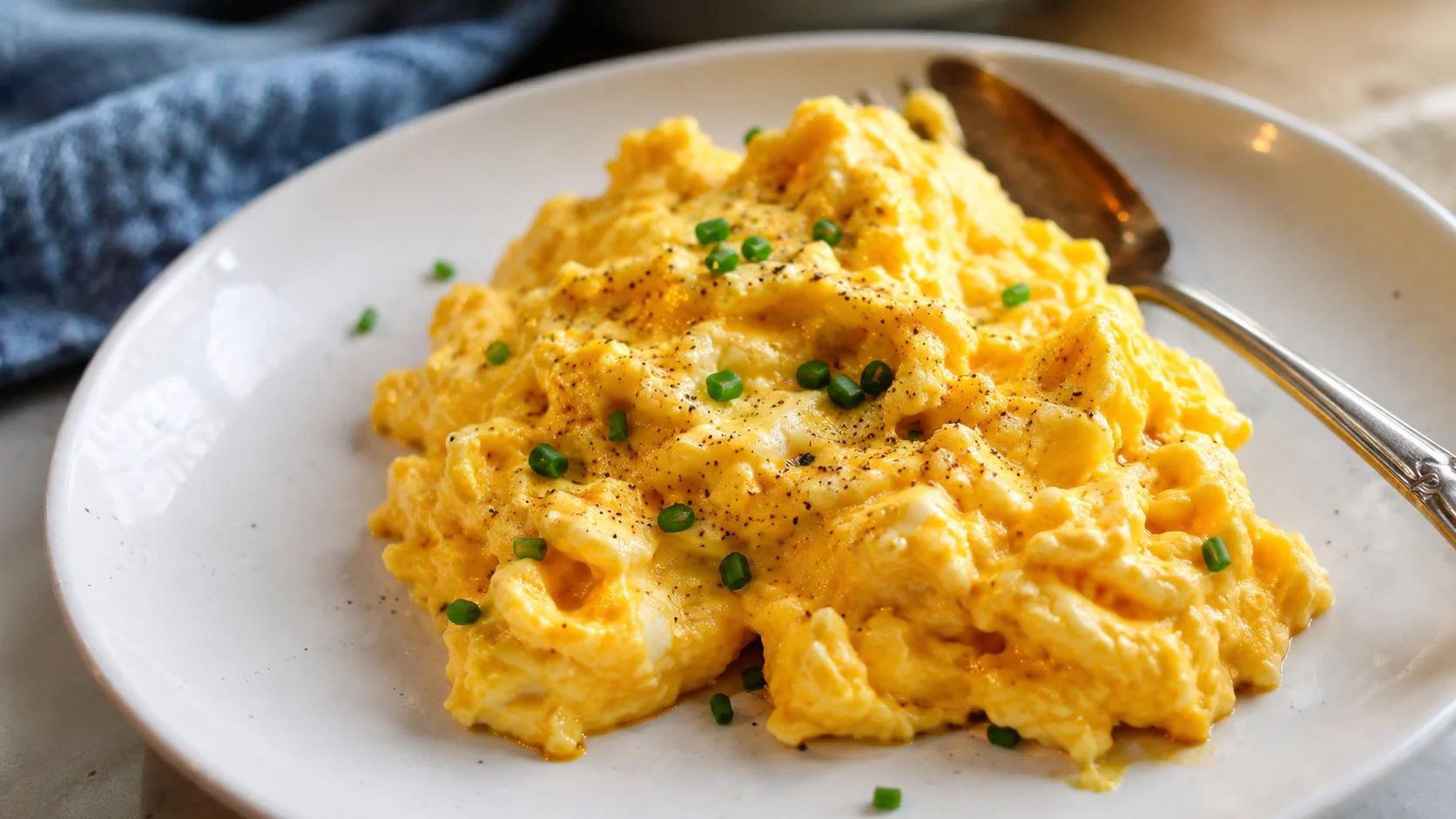
- Fold in fresh chives for flavor and color. Eggs should be soft, shiny, and custard-like.
- Serve immediately on toast or English muffins while warm.
Notes
Always salt at the end to keep texture soft and creamy.
Remove eggs slightly early—they finish cooking off heat.
Final thoughts on Gordon Ramsay scrambled eggs recipe
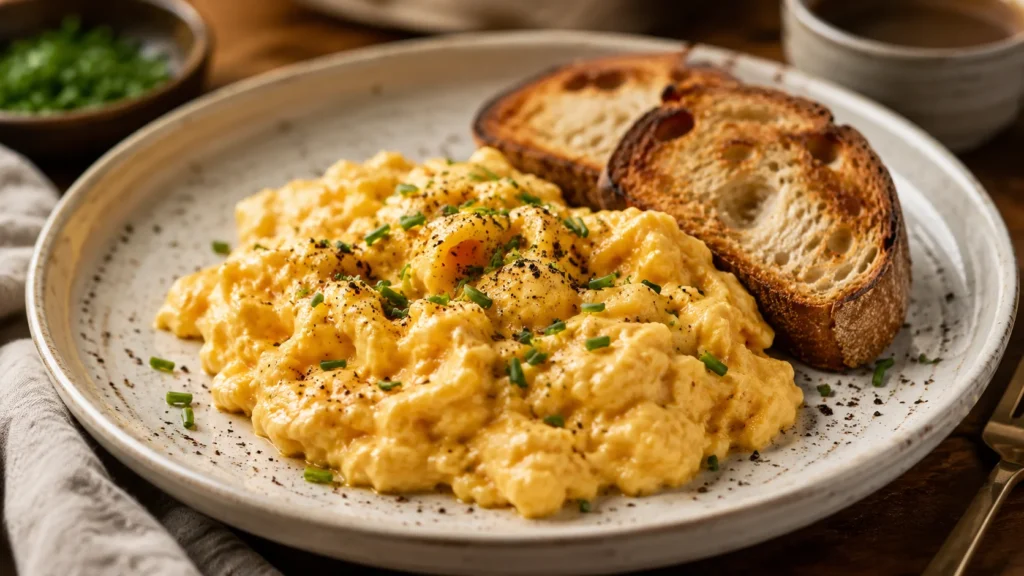
This Gordon Ramsay Scrambled Eggs Recipe works because it respects heat, not just ingredients. That is what creates the soft, creamy texture.
Once you learn the timing, it becomes second nature. You stop guessing and start watching the texture instead.
It is a simple recipe, but it teaches a real cooking skill. Heat control matters in almost every egg dish after this.
If you make this, I would love to know how it turns out. Drop a comment and share your experience.