Sweet Crepe Recipe 7 Easy Secrets for Perfect French Crepes

Most people overcook crepes and never know why. I did it too for the first two years I made them. My crepes turned rubbery, thick, and pale because my pan was either too hot or too cool.
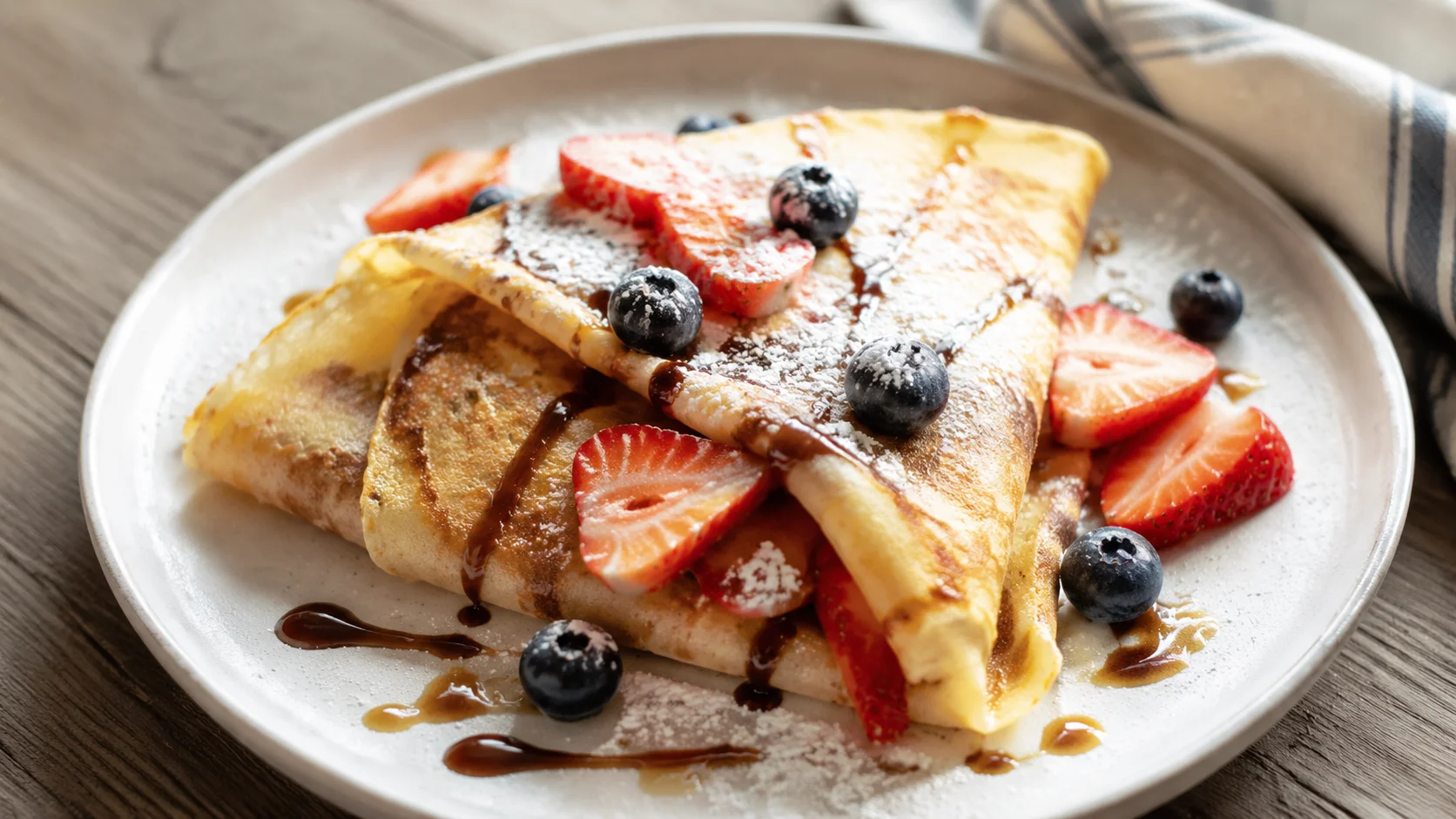
This sweet crepe recipe fixed all of that. The batter is thin, smooth, and lightly sweet. The crepes cook in under two minutes and fold beautifully around fruit, whipped cream, or Nutella. Once you learn the right batter texture and pan temperature, homemade crepes become much easier than they look.
The best part is that these crepes cost less than a coffee shop version and taste fresher, too. Here is exactly how I make them at home.
Table of Contents
- What Is a Sweet Crepe Recipe?
- Recipe Overview: What to Expect
- What You Need Ingredients and Why They Matter
- How to Make Sweet Crepes Step by Step
- The Common Mistakes That Ruin Sweet Crepes
- The One Secret Step That Makes All the Difference
- Easy Variations You Can Try at Home
- What to Serve With Sweet Crepes for a Complete Meal
- My Honest Experience Making This Recipe
- How to Store, Freeze, and Reheat Sweet Crepes
- Frequently Asked Questions About Sweet Crepes
- Final Thoughts on This Sweet Crepe Recipe
What is a Sweet Crepe Recipe?
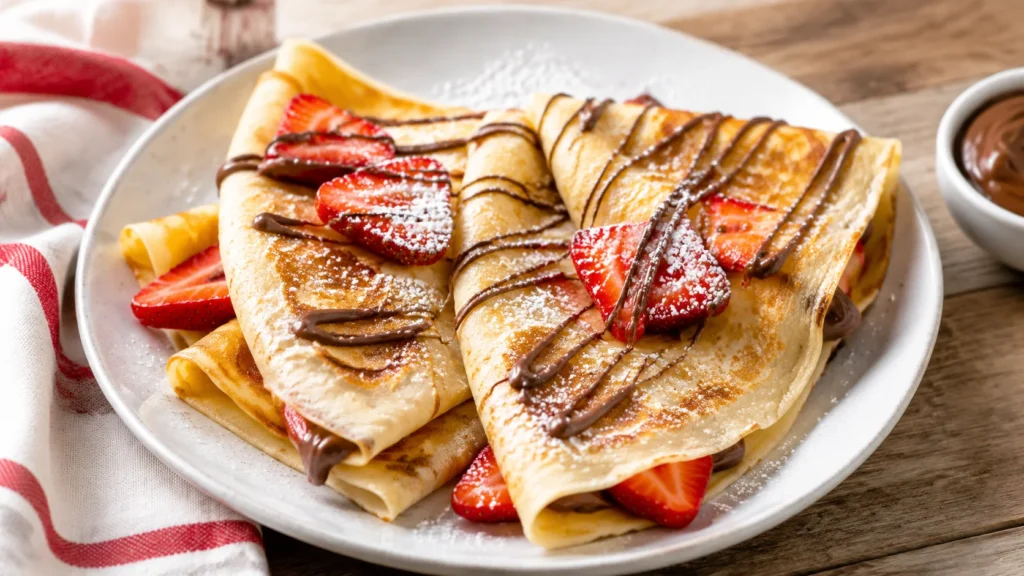
A sweet crepe recipe is a French-style breakfast or dessert made with flour, eggs, milk, butter, and sugar. The crepes are thin, soft, and lightly buttery. Most people serve them with fruit, chocolate spread, or whipped cream. They are popular because they feel fancy but use simple pantry ingredients.
Sweet crepes look delicate, but they are very practical to make at home. The batter is thinner than pancake batter, which helps the crepes spread into a light, almost paper-thin layer.
A good French crepe recipe smells buttery and slightly sweet while cooking. The edges should look golden and a little crisp. The center stays soft and flexible, so you can fold or roll the crepes without tearing them.
Crepes started in France, but now people enjoy them all over the world for breakfast, dessert, lunch, and even dinner with savory fillings.
Recipe Overview: What to Expect
This easy, sweet crepe recipe makes tender crepes with lightly crisp edges. The flavor is buttery with a soft vanilla finish. They feel elegant enough for brunch guests but simple enough for a weekday breakfast.
These crepes cook fast once the batter is ready. The first crepe may look messy, and that is normal. I treat the first one as my “test crepe” to check the heat and batter thickness.
| Detail | Info |
| Prep Time | 15 minutes |
| Rest Time | 30 minutes |
| Cook Time | 20 minutes |
| Total Time | 1 hour 5 minutes |
| Servings | 8 crepes |
| Difficulty | Easy |
| Cuisine | French |
| Calories | ~164 per crepe |
| Cost | About $2–$3 total |
Why this recipe works
The batter rests before cooking. That one step relaxes the gluten and lets the flour fully absorb the liquid. The result is soft crepes instead of chewy ones.
This recipe also uses a measured pan temperature. Most recipes only say “medium heat,” but that changes from stove to stove. Around 375°F gives the best golden color without burning.
What You Need Ingredients and Why They Matter
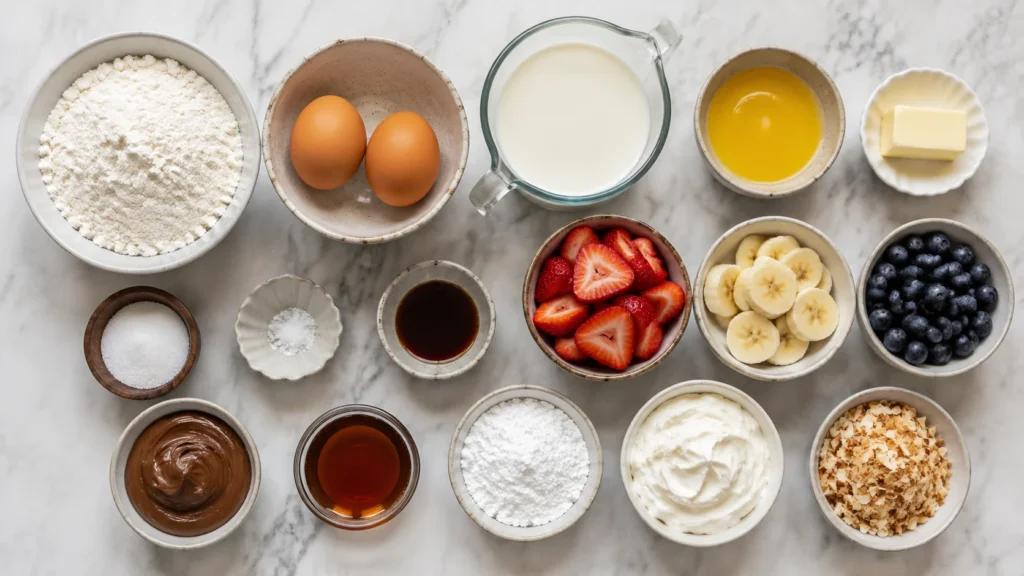
This simple, sweet crepe recipe uses basic baking ingredients you probably already have at home. Each ingredient matters because crepes rely on balance more than heavy flavoring.
Ingredients
- 1 cup all-purpose flour
- 2 large eggs
- 1 1/3 cups whole milk
- 2 tablespoons melted butter
- 1 tablespoon granulated sugar
- 1 teaspoon vanilla extract
- 1 pinch kosher salt
- Extra butter or oil for the pan
Optional toppings:
- Fresh strawberries
- Bananas
- Blueberries
- Nutella
- Maple syrup
- Powdered sugar
- Whipped cream
- Toasted coconut
Why whole milk matters
Whole milk gives the batter enough fat for soft, tender crepes. Lower-fat milk works too, but the texture becomes slightly drier.
Why melted butter matters
Butter adds flavor and helps the edges brown evenly. Without it, the crepes can taste flat and feel rubbery.
Real substitutions that actually work
Oat milk works well in this sweet crepe batter recipe. Add 1 extra tablespoon of water because oat milk makes the batter thicker.
For a nuttier flavor, replace half the flour with buckwheat flour. The batter may need a splash more milk because buckwheat absorbs extra liquid.
Egg-free crepes are harder because eggs hold the crepes together. A flax egg works in a pinch, but the crepes become softer and tear more easily.
How to Make Sweet Crepes Step by Step
Making crepes feels fast once the batter is mixed. The main goal is a smooth, thin batter and steady heat.
1. Mix the batter until smooth
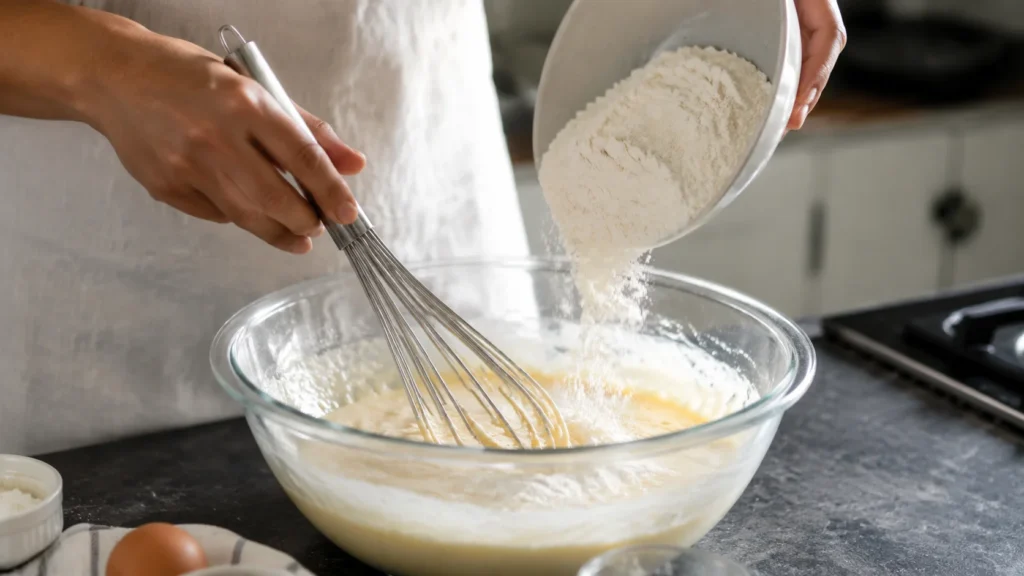
Whisk the eggs, milk, melted butter, vanilla, and sugar in a large bowl. Add the flour and salt slowly while whisking.
The batter should look smooth and runny, almost like heavy cream. Thick batter makes thick crepes.
2. Rest the batter
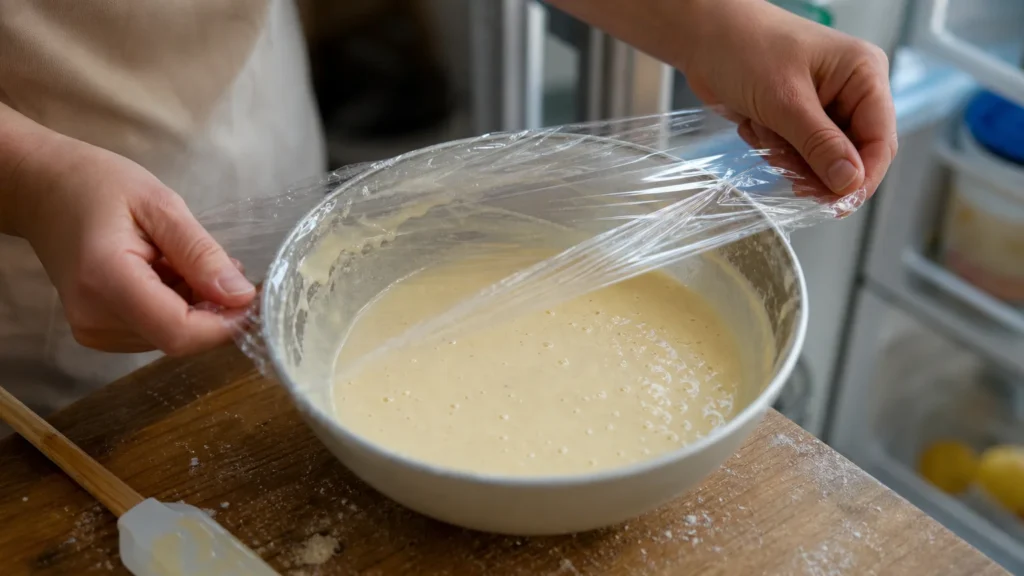
Cover the bowl and let the batter rest for 30 minutes in the fridge.
This step matters because the flour absorbs moisture during resting. Air bubbles also rise out of the batter, which prevents tiny holes in the crepes.
| Rest Time | Result |
| 0 minutes | More bubbles and a chewy texture |
| 30 minutes | Soft and tender crepes |
| Overnight | Best flavor and smoothest texture |
3. Heat the pan correctly
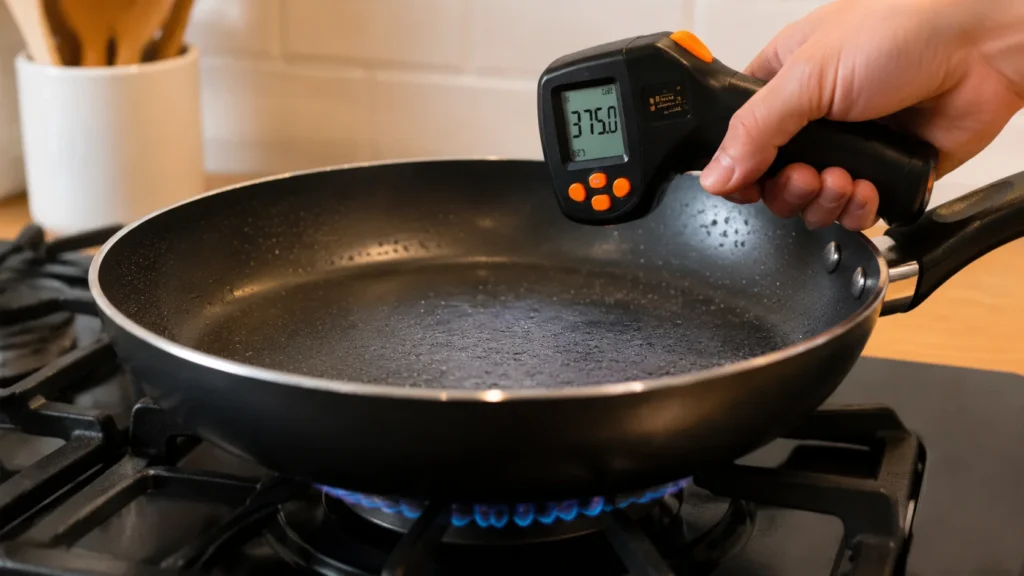
Place a nonstick pan over medium-low heat. Aim for about 375°F if you have an infrared thermometer.
The pan should feel hot enough that a drop of water dances briefly before evaporating.
| Pan Temperature | What Happens | Fix |
| Below 350°F | Pale and rubbery crepes | Increase the heat slightly |
| Around 375°F | Golden, thin crepes | Perfect range |
| Above 400°F | Holes and burnt spots | Lower heat |
[IMAGE NOTE: Hand tilting batter into a pan.
ALT text: “sweet crepe recipe batter spreading in nonstick pan”]
4. Pour and swirl quickly
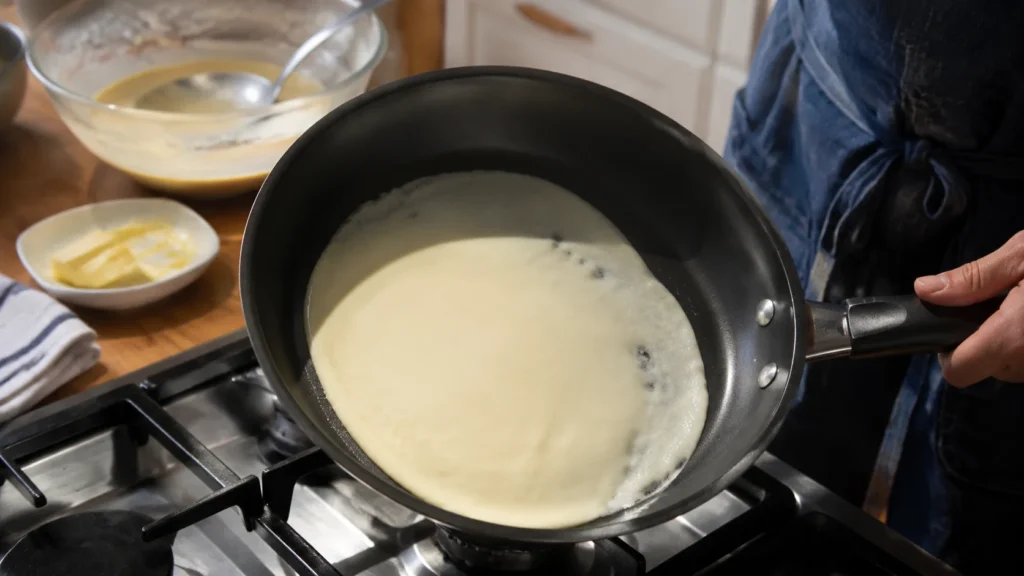
Lightly butter the pan. Pour about 1/4 cup batter into the center.
Immediately swirl the pan so the batter coats the bottom in a thin layer. Work quickly because crepe batter sets fast.
5. Watch for visual cues
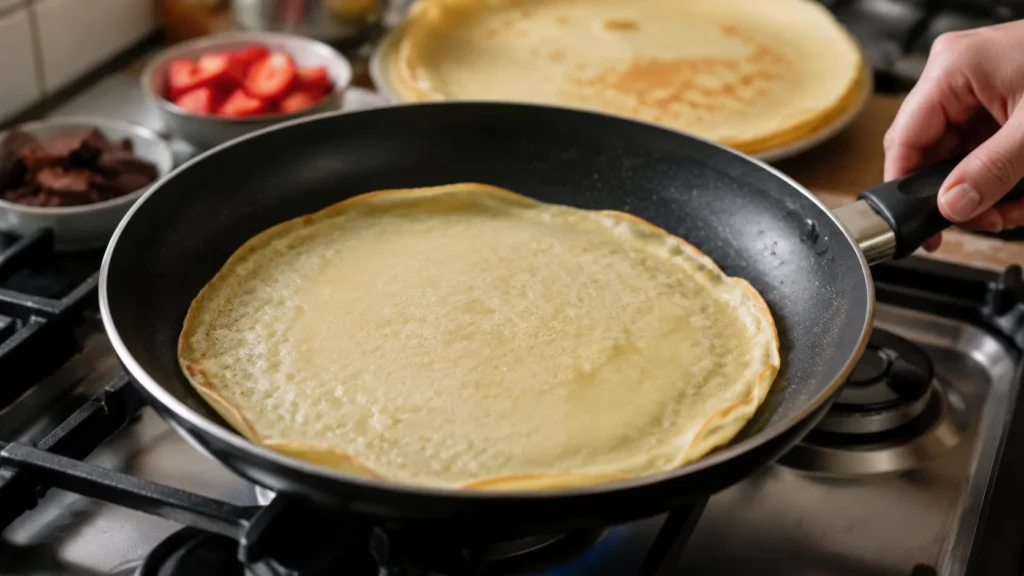
Cook for about 1 minute. The edges will turn lightly golden and lift from the pan.
The center should no longer look shiny. That means the crepe is ready to flip.
6. Flip gently
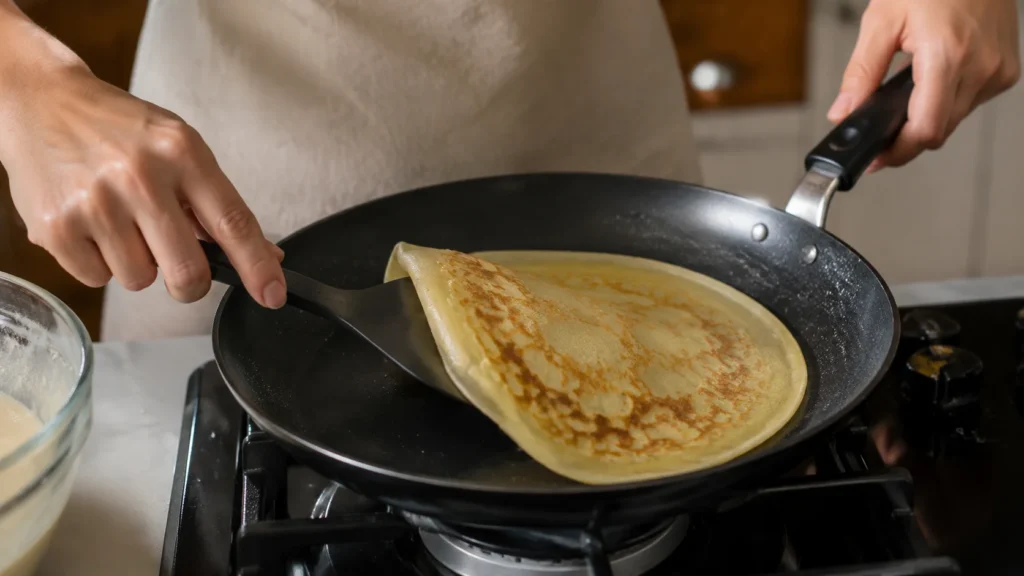
Slide a thin spatula under the edge and flip the crepe carefully.
Cook the second side for another 20–30 seconds. It should smell buttery and slightly sweet.
7. Stack and keep warm
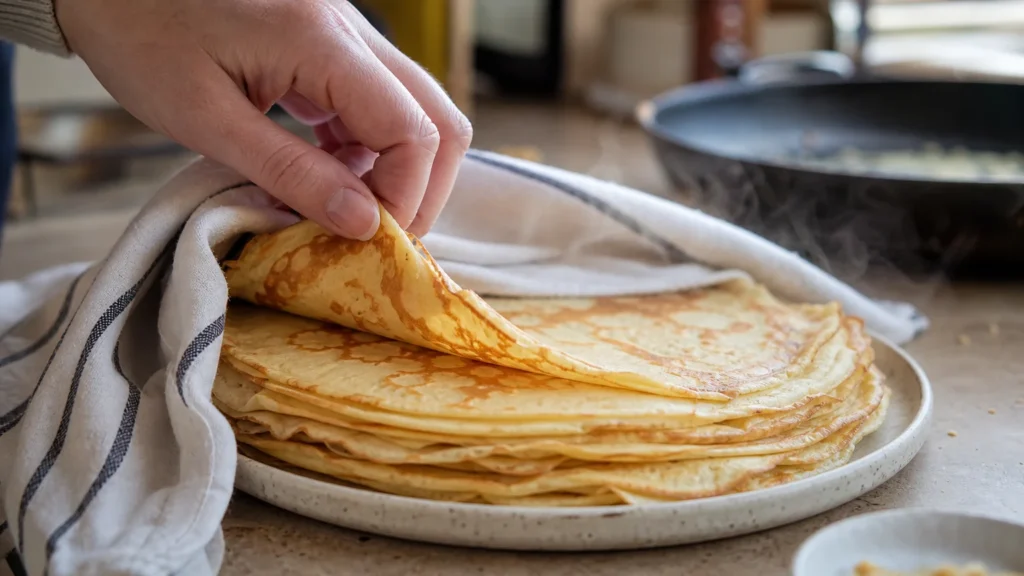
Place finished crepes on a plate and cover loosely with a clean kitchen towel.
This keeps them soft while you cook the rest of the batch.
Blender vs whisk, which is better?
| Method | Best Feature | Downside |
| Blender | Fast and smooth | Adds lots of bubbles |
| Whisk by hand | Better texture control | Takes longer |
| Immersion blender | Smooth with fewer bubbles | Needs a tall container |
I usually whisk by hand because it creates fewer bubbles.
The Common Mistake That Ruins Sweet Crepes
The biggest mistake is using batter that is too thick. Thick batter cannot spread properly, so the crepes become dense instead of thin and light.
Another common problem is overheating the pan. A pan that is too hot cooks the batter before it spreads. That creates holes and uneven circles.
Too much butter in the pan also causes blotchy browning. I learned this the hard way. Now I wipe excess butter with a paper towel before each crepe.
Quick fixes for common crepe problems
| Problem | Cause | Quick Fix |
| Crepes tear | Too little egg or flipped too early | Wait until edges lift |
| The batter will not spread | Batter too thick | Add 1–2 tablespoons of milk |
| Crepes are rubbery | Pan too cool | Raise the heat slightly |
| Crepes stick | Pan not hot enough | Preheat longer |
| Holes everywhere | Pan too hot | Lower heat |
Quick tips summary
- Use thin batter, not thick pancake batter
- Keep the heat steady instead of very high
- Wipe extra butter from the pan
- Expect the first crepe to look imperfect
- Let the batter rest before cooking
The One Secret Step That Makes All the Difference
The secret is resting the batter.
When flour sits in liquid, the starch absorbs moisture, and the gluten relaxes. That makes the crepes soft instead of chewy. Resting also removes extra air bubbles that can leave tiny holes during cooking.
If you skip this step, the crepes still cook, but the texture is never as smooth or tender.
Easy Variations You Can Try at Home
This sweet crepe recipe is flexible, which makes it great for both breakfast and dessert.
- Add cinnamon and orange zest for warm holiday crepes
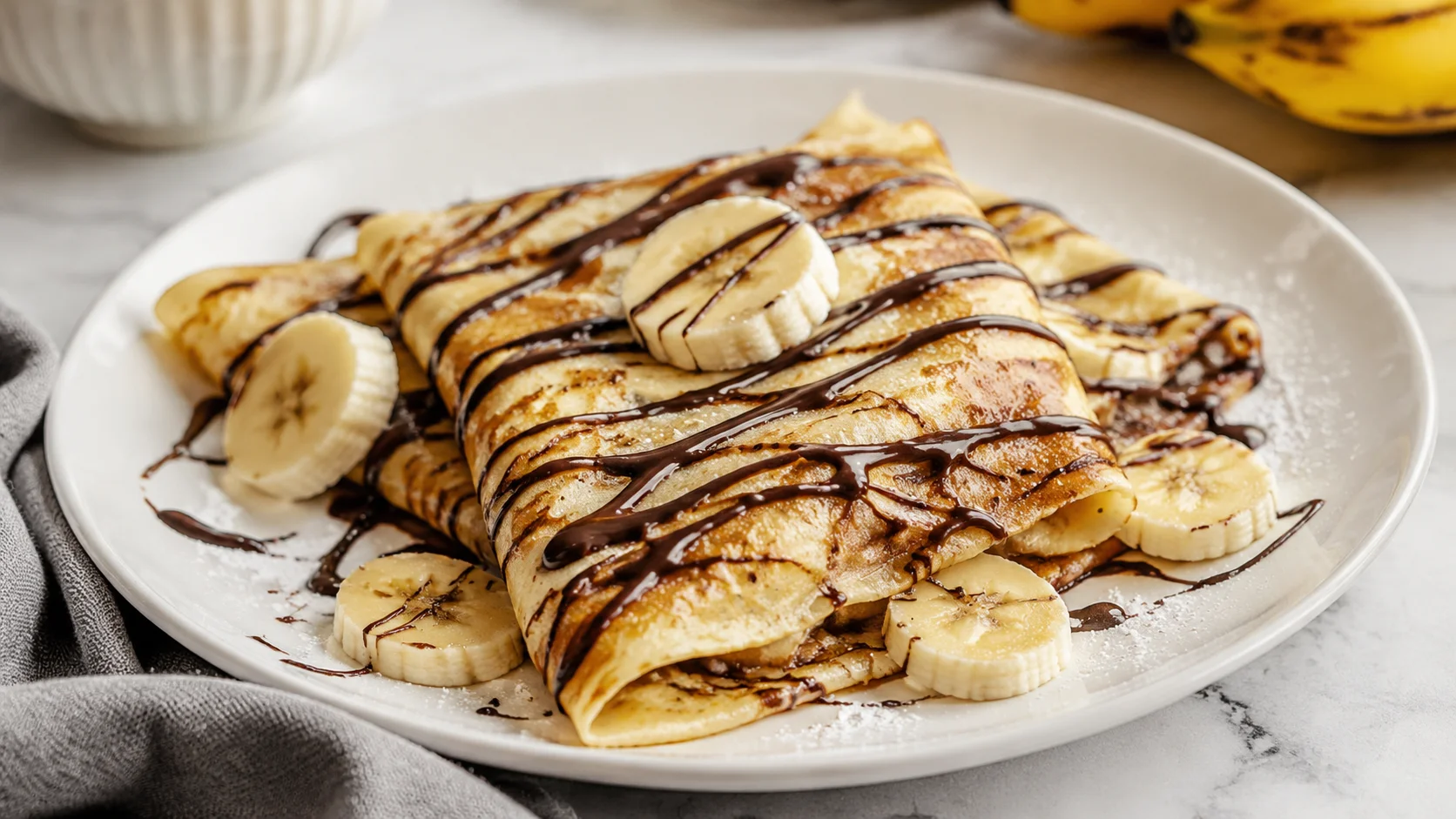
- Spread Nutella and sliced bananas inside for dessert crepes
- Use almond milk for a dairy-free version
- Add lemon juice and powdered sugar for classic French sweet crepes
- Try cream cheese and strawberries for a cheesecake-style filling
- Fill them with scrambled eggs and cheese for a sweet and savory crepe recipe
Sweet vs savory crepes
Sweet crepes usually contain vanilla and sugar. Savory crepes often skip the sugar and use fillings like cheese, mushrooms, or ham.
What to Serve With Sweet Crepes for a Complete Meal
Sweet crepes pair well with both light and rich breakfast foods. I usually keep the sides simple because the crepes already feel special.
Fresh fruit balances the buttery texture nicely. Strawberries, peaches, and raspberries all work well.
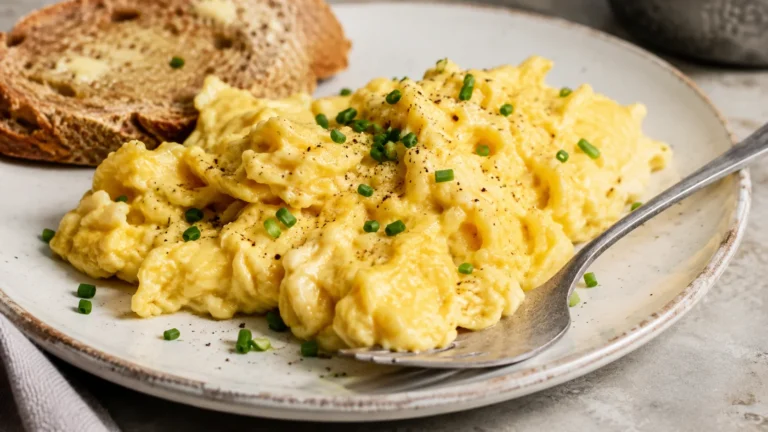
For brunch, I like serving crepes with scrambled eggs and bacon. That mix turns a light breakfast into a complete meal.
If you enjoy homemade breakfast recipes, try our homemade waffle recipe or fluffy blueberry pancakes on CookivaRecipe.com. They pair well with warm coffee and fresh berries.
A small fruit salad also works great because it adds freshness without making the meal heavy.
My Honest Experience Making This Recipe
The first time I made this French crepe recipe, I used a cast-iron pan that was way too hot. The batter cooked before I could swirl it properly, and every crepe looked thick and uneven.
Switching to a lighter nonstick pan helped immediately. I also learned that the first crepe is not a failure. It is basically your practice round.
The biggest surprise was how much resting the batter changed the texture. The crepes became softer, thinner, and easier to flip.
How to Store, Freeze, and Reheat Sweet Crepes
Crepes store surprisingly well if you keep moisture and air away from them. Let them cool fully before storing.
Batter storage
| Storage Method | Time |
| Fridge | 2–4 days |
| Freezer | Not recommended |
Store batter in an airtight container and stir before using again.
Cooked crepe storage
| Storage Method | Time |
| Room temperature | 2 hours |
| Fridge | Up to 5 days |
| Freezer | Up to 2 months |
Place parchment paper between crepes before refrigerating or freezing. This keeps them from sticking together.
Best reheating methods
| Method | Result |
| Skillet | Crisp edges and the best texture |
| Microwave | Soft texture but very fast |
| Oven | Best for reheating a full stack |
Reheat in a skillet for about 30 seconds per side. For quick breakfasts, microwave each crepe for about 10 seconds.
For more storage tips, check our make-ahead breakfast guide on CookivaRecipe.com.
Frequently Asked Questions About Sweet Crepes
Which pan works best for the thin, sweet crepe recipe results?
A nonstick skillet is easiest for beginners. Stainless steel gives better browning, but it needs more practice.
| Pan Type | Best For | Downside |
| Nonstick | Beginners | Less even browning |
| Stainless Steel | Golden color | Needs technique |
| Carbon Steel | Professional results | Requires seasoning |
| Cast Iron | Heat retention | Heavy for swirling |
If you love fruit breakfasts, our julekake recipe is another easy weekend option on CookivaRecipe.com.
Sweet Crepe Recipe
Ingredients
Equipment
Method
- In a large mixing bowl, whisk together the milk, eggs, vanilla extract, and melted butter until smooth and fully combined.
- Add the flour, sugar, and salt to the wet ingredients. Whisk until the batter is thin, silky, and free of lumps.
- Let the batter rest for 10 minutes so the flour fully hydrates and the crepes cook more evenly.
- Heat a nonstick skillet or crepe pan over medium heat and lightly grease it with butter or oil until the surface looks glossy.
- Pour about 1/4 cup of batter into the center of the pan. Immediately swirl the pan so the batter forms a thin, even layer.
- Cook the crepe for 1 to 2 minutes until the edges look lightly golden and begin lifting from the pan.
- Flip the crepe carefully with a spatula and cook the second side for 30 to 60 seconds until lightly golden.
- Transfer the finished crepe to a plate and repeat with the remaining batter, stacking the crepes to keep them soft and warm.
- Serve warm with powdered sugar, whipped cream, fresh berries, Nutella, maple syrup, or your favorite toppings.
Notes
Final Thoughts on This Sweet Crepe Recipe
This sweet crepe recipe works because it focuses on the small details most recipes skip. Thin batter, steady heat, and resting time make a huge difference in the final texture.
Once you make a few crepes, the process feels easy and fast. You do not need special equipment or expensive ingredients to get restaurant-quality crepes at home.
If you make this recipe, I would love to know how it turned out. Try your favorite fillings, save the recipe for brunch, and share your best crepe combinations below.
For more cooking science on batter texture and flour hydration, you can also read resources from King Arthur Baking and USDA Food Safety Guidelines.