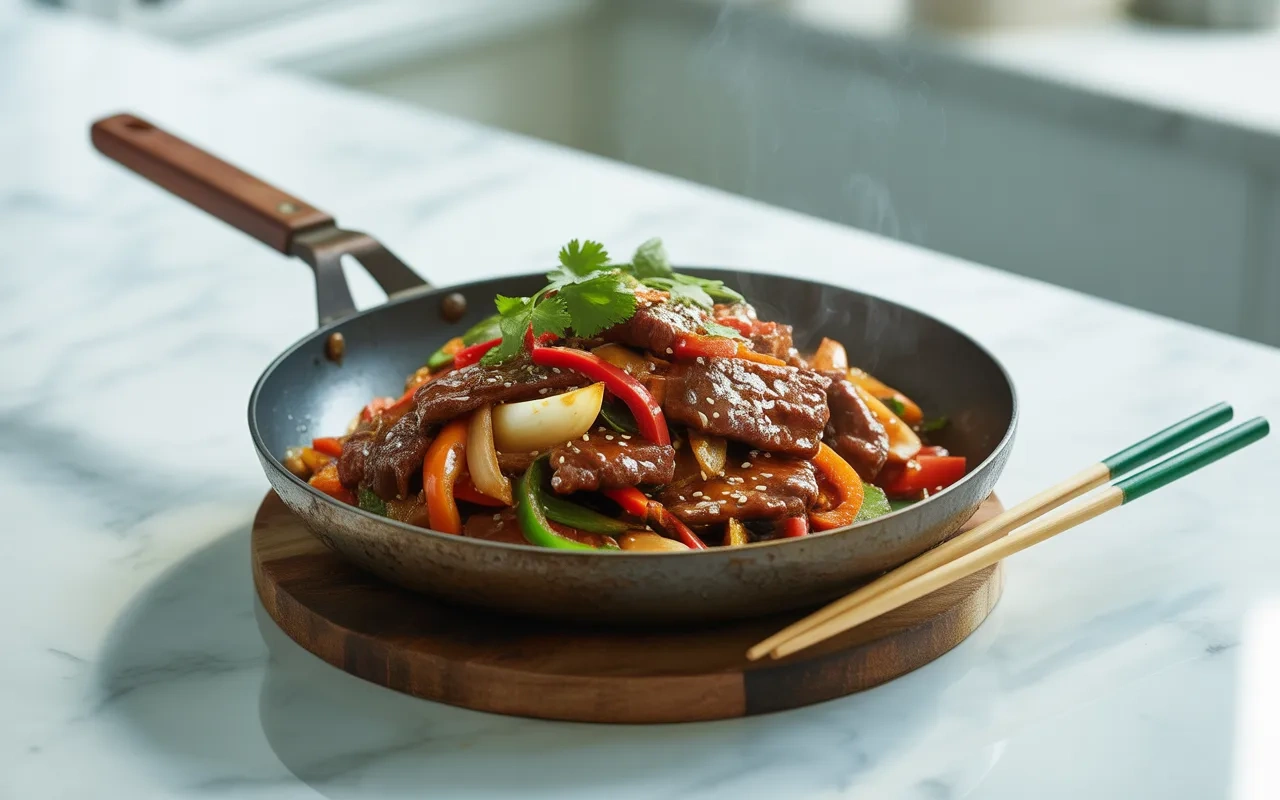
Mongolian BBQ Recipe: 5 secrets for perfect stir-fry

Last weekend I had one of those cravings that refuses to go away—the kind where you can almost smell the smoky grill and hear the sizzle before the pan even heats up. That’s exactly what led me back to this mongolian bbq recipe. There’s something incredibly satisfying about building your own bowl—tender beef, crisp vegetables, and a glossy, savory sauce that clings to every bite.
What makes this dish so addictive isn’t just the flavor—it’s the experience. It’s fast, interactive, and endlessly customizable. Whether you’re cooking for a quick weeknight dinner or setting up a DIY Mongolian BBQ night for friends, this recipe delivers that restaurant-quality stir-fry without leaving your kitchen.
What Is Mongolian BBQ?
Mongolian BBQ is an interactive stir-fry cooking style where you combine raw ingredients like sliced meat, vegetables, noodles, and sauces, then cook everything quickly over very high heat. Despite the name, it actually originated in Taiwan and blends elements of Chinese stir-frying and Japanese teppanyaki.
At its core, it’s all about customization. You choose your protein, vegetables, and sauce, then cook everything together in a hot pan or wok until slightly charred and caramelized. It’s commonly served over rice or noodles and enjoyed as a quick, satisfying meal.
Recipe Overview: What to Expect Before You Start
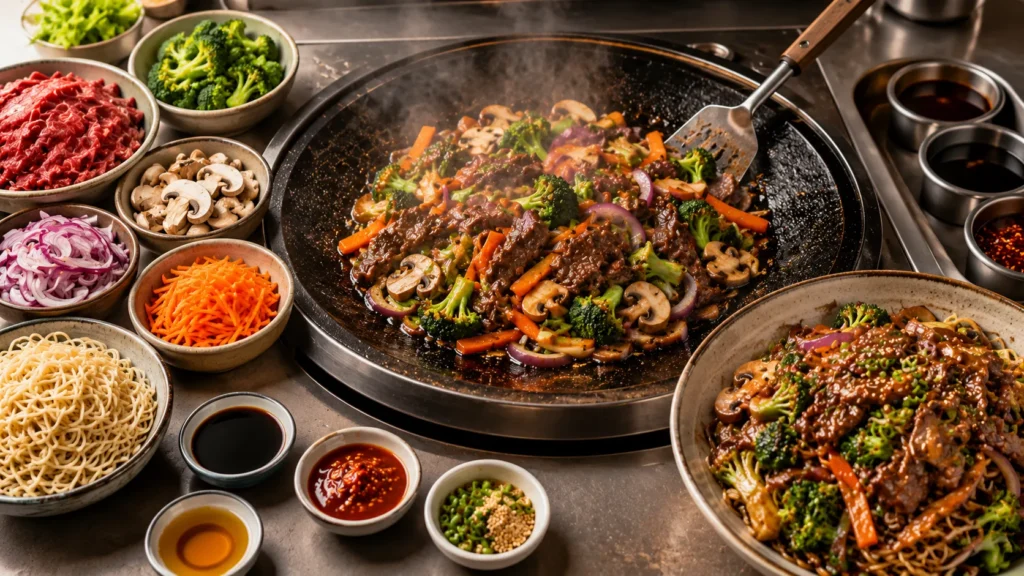
This mongolian bbq recipe delivers bold, savory flavors with a slight sweetness and a hint of heat. The sauce becomes thick and glossy, coating each ingredient while balancing salty, sweet, and umami notes.
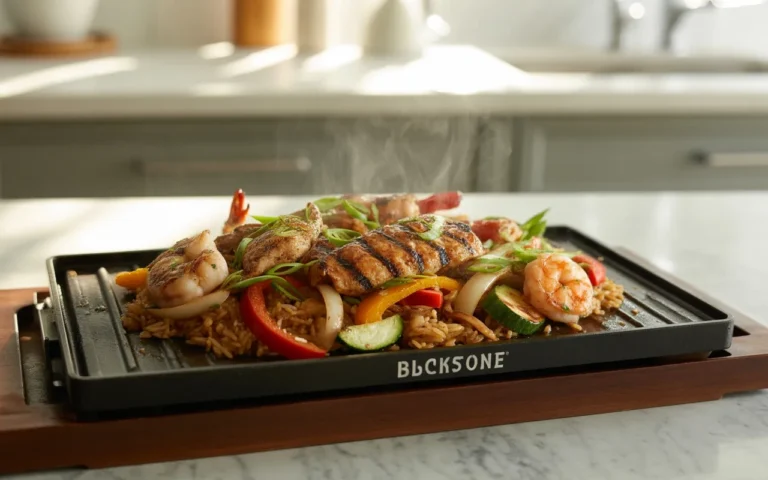
Texture-wise, you get tender slices of beef, crisp-tender vegetables, and noodles that soak up just enough sauce without becoming soggy. That slight smoky char—known as wok hei—is what elevates this dish from good to restaurant-quality.
This recipe works best for:
- Easy weeknight dinners
- Family-style meals
- Interactive cooking nights
- Quick high-protein meals
Ingredients and Why Each One Matters
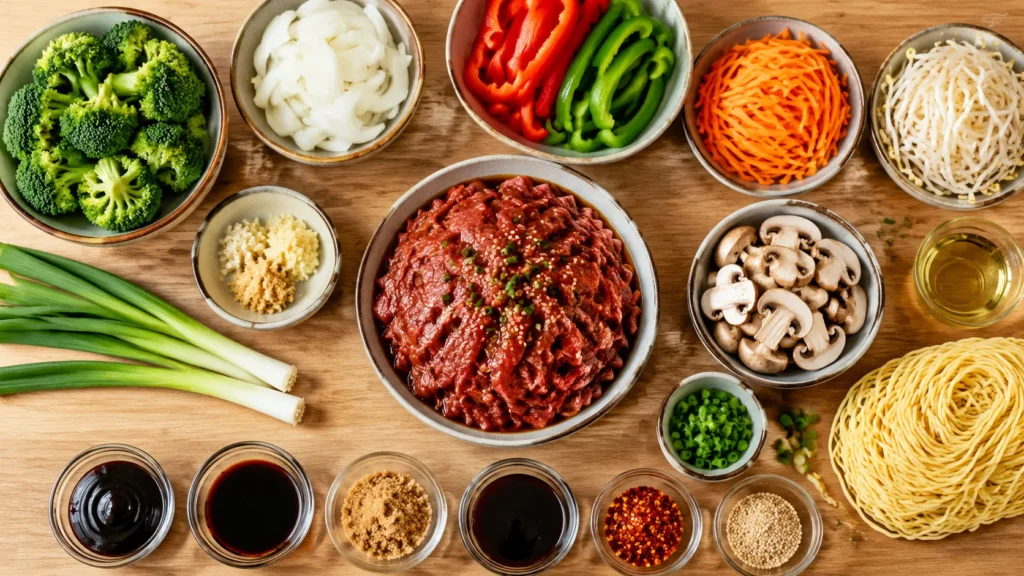
Great Mongolian BBQ is all about balance. Every ingredient plays a role in texture, flavor, or aroma.
- Flank steak or thinly sliced beef – tender and cooks quickly
- Broccoli, carrots, mushrooms, onions – provide crunch and contrast
- Green onions – add freshness at the end
- Noodles (linguine, egg noodles, or stir-fry noodles) – absorb sauce
- Soy sauce – base saltiness and umami
- Sesame oil – nutty depth
- Oyster sauce or hoisin sauce – sweetness and richness
- Garlic and fresh ginger – aromatic foundation
- Cornstarch – thickens the sauce
- Sriracha or chili peppers – heat
- Brown sugar or honey – balances acidity
Where to Find Ingredients (No Guessing Needed)
- Sesame oil → Asian aisle → Online → Substitute: peanut oil
- Oyster sauce → Asian sauces section → Online → Sub: hoisin sauce
- Chinese red peppers → Asian store → Online → Sub: chili flakes
- Stir-fry noodles → Refrigerated section → Online → Sub: spaghetti
Protein Prep Cheat Sheet (This Changes Everything)
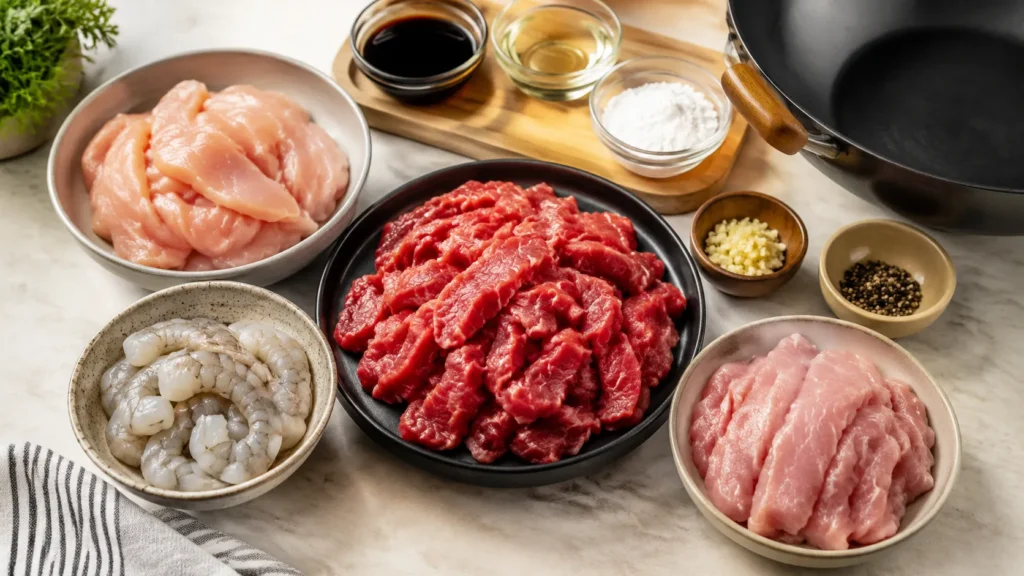
Proper prep is what separates tender meat from chewy disappointment.
Beef (flank steak): Freeze for 20–30 minutes, then slice thin against the grain.
Chicken: Use thighs for juiciness; slice thin and pat dry.
Shrimp: Peel, devein, and pat dry before cooking.
Tofu: Press to remove moisture before slicing.
Pork: Slice thin like beef; slightly fatty cuts work best.
How to Make Mongolian BBQ the Right Way
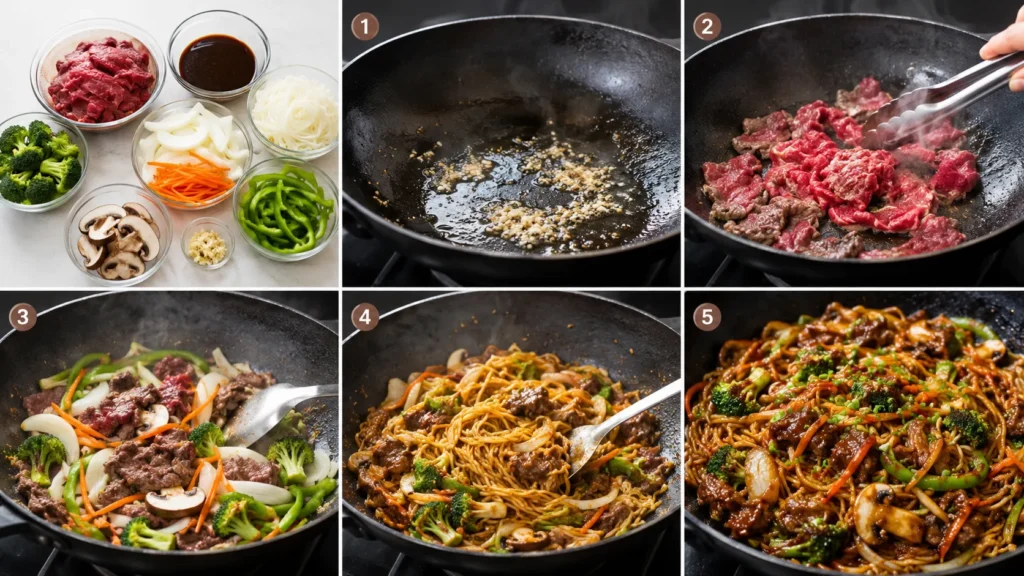
The key is high heat and speed. You’re not simmering—you’re searing.
- Slice beef thinly after freezing briefly
- Prep all vegetables into bite-sized pieces
- Mix your sauce and keep it ready
- Heat a wok or skillet until very hot
- Add oil and cook beef quickly (2–3 minutes)
- Remove beef and cook vegetables in batches
- Add noodles and return beef to the pan
- Pour sauce and toss quickly
- Cook until glossy and slightly caramelized
- Garnish with green onions and sesame seeds
Why Doesn’t Mine Taste Like the Restaurant? (And Fix It)
- Not hot enough – You need very high heat for that smoky flavor
- Overcrowding the pan – This creates steam instead of sear
- Too much sauce – Home batches concentrate flavors more
Fixing just these three things dramatically improves your results.
Pro Tip for Best Results
Cook everything in small batches. I learned this the hard way—crowding the pan ruins texture and kills the char. When ingredients have space, they sear instead of steam, and that’s where the flavor comes from.
Common Mistakes and Why They Ruin the Recipe
Over time, I’ve seen the same issues come up again and again.
- Over-saucing makes everything salty
- Skipping high heat prevents caramelization
- Cutting meat too thick leads to chewy bites
- Not prepping ingredients first slows cooking
Always preheat your pan properly and cook in batches.
Variations, Substitutions, and When to Use Them
This dish is incredibly flexible.
- Swap beef for chicken, shrimp, or tofu
- Use brown rice instead of noodles
- Add pineapple for sweetness
- Try spicy Mongolian sauce for heat
- Use coconut aminos for low sodium
My Experience Making This Recipe at Home
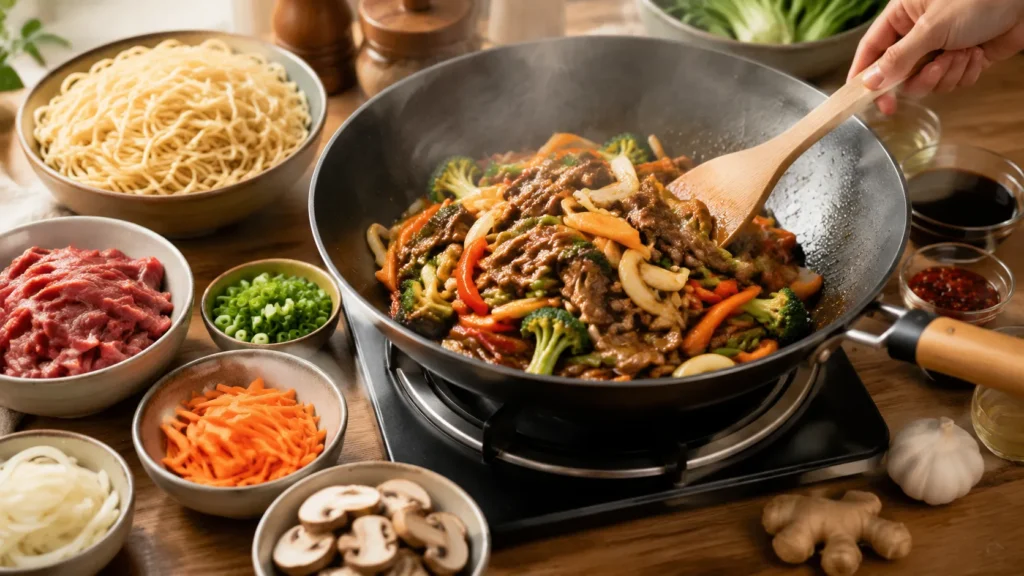
The first time I made this, I completely drowned it in sauce. It tasted overpowering and nothing like the restaurant version. Once I learned the sauce ratio and started cooking in smaller batches, everything changed.
The biggest improvement came from slicing the beef properly. That one small step made the texture dramatically better.
Benefits of Mongolian BBQ
This dish is popular for good reason—it’s flexible, fast, and satisfying.
- Customizable for different diets
- Quick cooking time
- High protein content
- Great for family meals
- Uses simple ingredients
Supporting Background: Why This Dish Became So Popular
Mongolian BBQ became popular because it combines speed, customization, and bold flavors. Unlike traditional recipes, it allows you to build your own meal, which makes it perfect for modern home cooking.
Nutrition Facts and How to Make It Lighter
Approximate per serving:
- Calories: 385
- Protein: 40–45g
- Fat: Moderate (depends on oil)
To make it lighter:
- Use less oil
- Choose lean protein
- Reduce sauce quantity
Storage, Freezing, and Reheating Best Practices
Mongolian BBQ doesn’t always store perfectly, especially noodles.
- Cooked dish: 3 days (fridge)
- Sauce: up to 2 weeks
- Raw sliced beef: 2 days fridge, 2 months frozen
Reheat in a skillet with a splash of water to restore texture.
FAQ – Real Questions People Ask
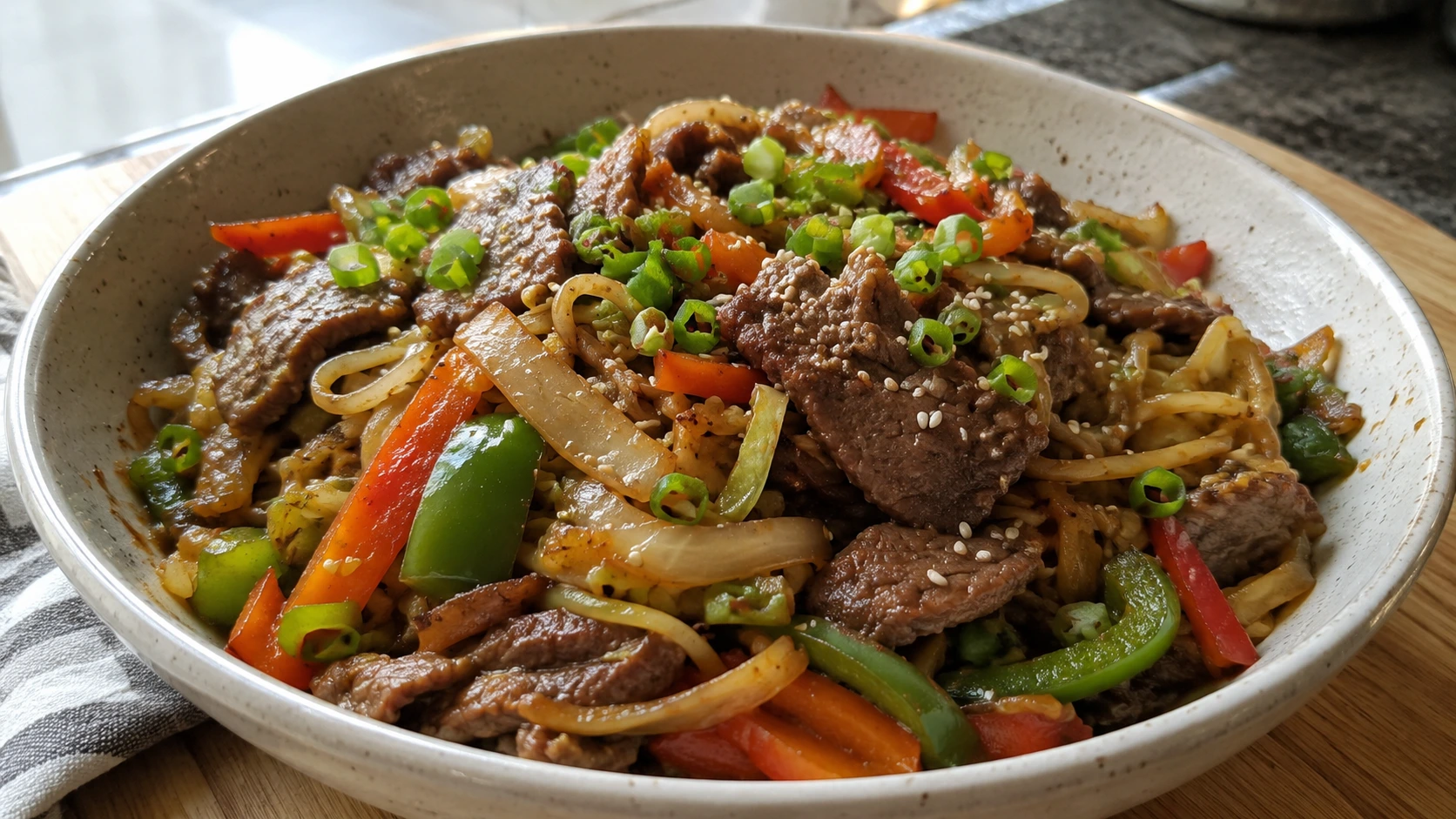

Mongolian BBQ Recipe (Home-Style Stir Fry Bowl)
Ingredients
Equipment
Method
- Slice all meats and vegetables into thin, even strips so they cook quickly and evenly.
- In a bowl, mix beef and chicken with soy sauce, cornstarch, and half the garlic for 10 minutes.
- Heat a wok or large skillet on high heat and add vegetable oil until shimmering.
- Stir-fry the marinated meat in batches until browned and just cooked, then remove and set aside.
- Add onions, carrots, and bell peppers to the hot pan and cook until slightly softened but still crisp.
- Toss in cabbage, remaining garlic, and ginger, stirring quickly to release aroma and maintain crunch.
- Return cooked meat to the pan and pour in soy sauce, hoisin sauce, and oyster sauce.
- Stir everything together for 2–3 minutes until well coated and glossy, then finish with sesame oil and black pepper.
Notes
You can swap proteins with lamb or tofu for variation.
Do not overcook vegetables—keep them slightly crisp for best texture contrast.
Conclusion
This mongolian bbq recipe is one of those dishes that feels impressive but is surprisingly simple once you understand the basics. The combination of high heat, balanced sauce, and proper prep creates a meal that rivals restaurant versions. If you’ve ever been disappointed trying to recreate that smoky, savory flavor at home, this method will change that. Save this recipe, experiment with your own combinations, and explore more stir-fry variations right here on Cookiva Recipe.
Try more hearty Main Dishes like this Butter Beef Recipe for satisfying, flavor-packed family meals any night of the week.