Muscadine Jelly Recipe: Easy Homemade Jam in 30 Minutes

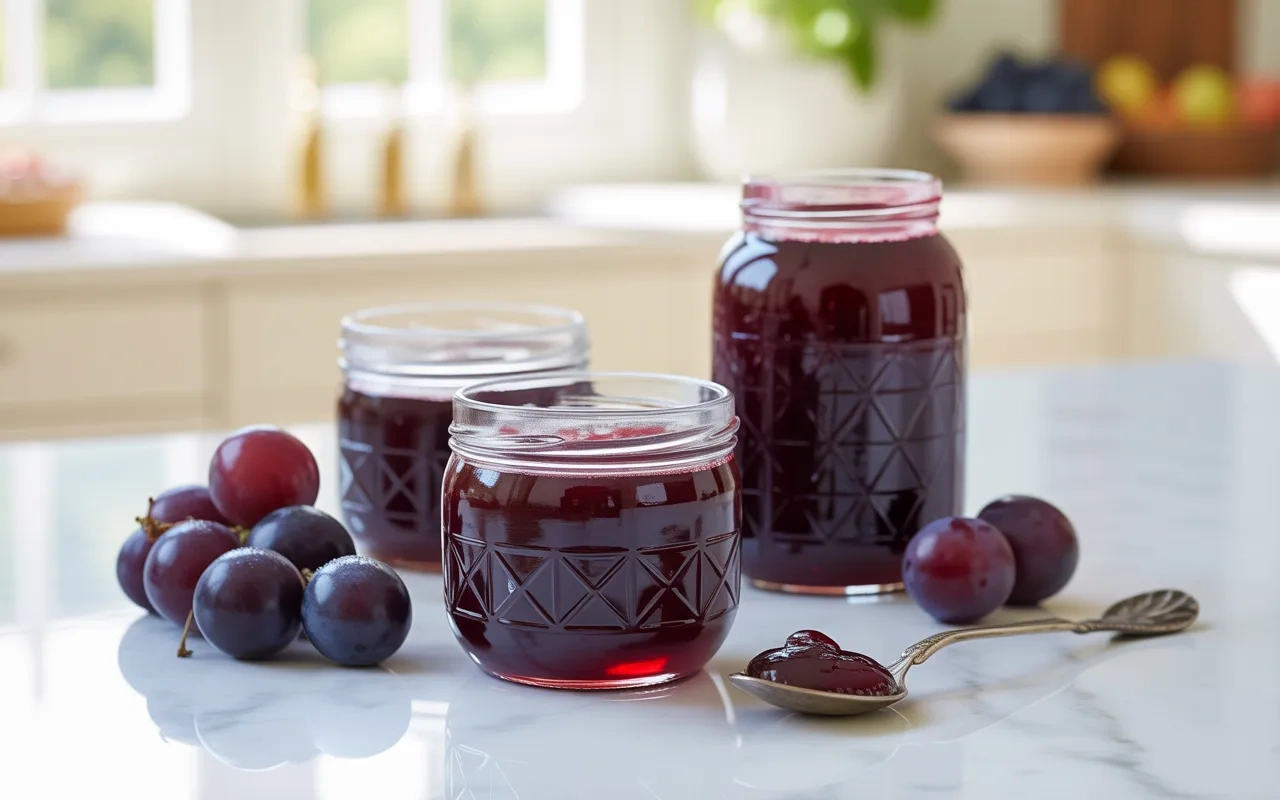
There’s something truly magical about the first time you pop open a jar of homemade muscadine jelly recipe. The aroma hits you first sweet, earthy, and slightly wild, a scent that instantly transports you to a late summer Southern kitchen. I remember picking my first batch of muscadines on a hot August morning, the sun warming the vines and the rich purple fruit bursting under my fingers. By the time the jelly was simmering on the stove, the entire house smelled like a mix of fresh grapes and sugar, promising sticky, glossy goodness.
Muscadine jelly recipe is a Southern classic that’s more than just a spread. Its complex flavor, a mix of sweetness, mild tartness, and that unmistakable musky undertone makes it perfect for everything from a simple peanut butter and jelly sandwich to glazing roasted pork. People continue to make it today not just for nostalgia, but because the flavor is unmatched by store bought grape jellies. Whether you’re serving it at a Sunday breakfast, gifting it for the holidays, or simply enjoying a quiet moment with toast, muscadine jelly offers a rich taste of Southern tradition.
Beyond flavor, the texture is silky yet firm, the color ranging from deep rose red in purple varieties to a honey gold in bronze scuppernongs. This versatility makes it a cherished ingredient in desserts, vinaigrettes, or even cocktail mixers. Making your own might seem intimidating, but with a little patience and attention to detail, you can craft a batch that rivals anything on a specialty store shelf.
Love this muscadine jelly recipe? Visit Cookiva Recipe to explore more delicious recipes and easy homemade ideas.
What Is Muscadine Jelly recipe and Why It’s Loved in the South
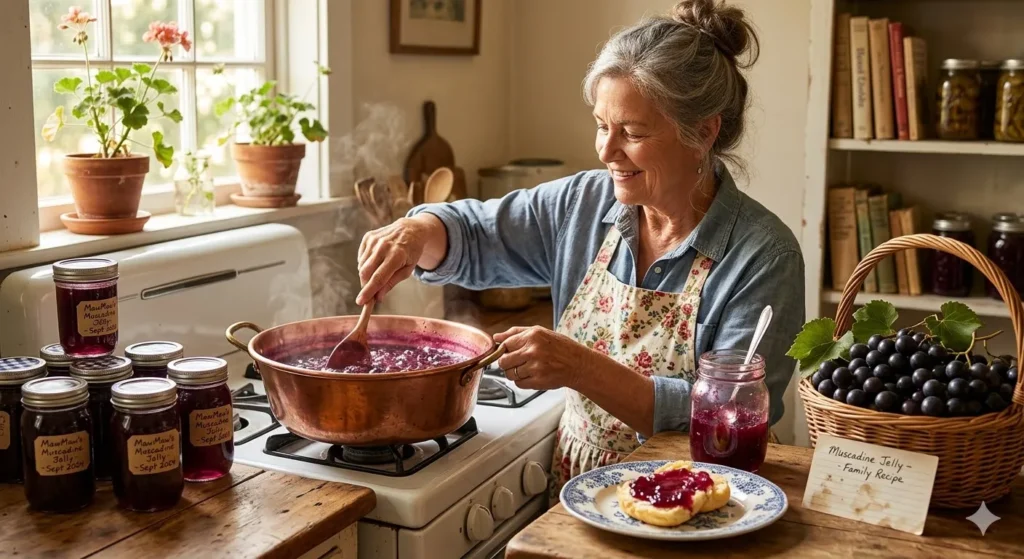
Muscadine jelly recipe is a fruit preserve made from muscadine grapes, a grape variety native to the Southern United States. Unlike standard table grapes, muscadines have thick skins and a slightly musky flavor, which gives the jelly its unique aroma and taste. Traditionally, it’s made by cooking the juice with sugar and pectin until it reaches a gel like consistency, resulting in a glossy, firm spread.
People in the Deep South have been making muscadine jelly for generations. It’s celebrated not only for its flavor but also for its connection to Southern heritage. While Concord grape jelly might be more widely recognized, muscadine jelly offers a flavor profile that’s more complex, with earthy undertones and a hint of tartness that surprises newcomers. Its uses are versatile: spread on bread, swirled into yogurt, drizzled over desserts, or even added to sauces for meats. The tradition of making muscadine jelly continues in kitchens from Georgia to North Carolina, keeping the season’s sweetness alive long after harvest.
This maple syrup recipe shows how to create a smooth, rich syrup at home that tastes perfect over pancakes, waffles, and even morning oatmeal.
What Are Muscadines and How They Influence Your Jelly
Muscadines are thick skinned grapes native to the southeastern U.S., ranging from Delaware to Florida, with most commercial growth in Georgia, North Carolina, and South Carolina. They come in bronze and purple varieties, with subtle differences in flavor. Bronze or scuppernong grapes produce a milder, honey gold jelly, while purple muscadines yield a bold, deep rose red jelly with more pronounced musky notes.
These grapes aren’t just flavorful, they’re also dense with nutrients. While much of the antioxidant rich skins and seeds are removed during juice extraction, muscadines still contribute minerals, anthocyanins, and potassium to your jelly. They’re ideal for making preserves because their natural pectin levels, while moderate, allow a consistent set when paired with commercial pectin.
Why Make Your Own Muscadine Jelly Recipe Instead of Buying It
A quick glance at specialty stores shows artisan muscadine jelly selling for $12–$15 per 18 ounce jar. Making your own at home is not only rewarding but also incredibly cost effective. Here’s a simple cost comparison for a standard batch using 5 pounds of muscadines:
| Jar Type | Cost per Jar | Yield | Time Investment | Gift Value |
| Artisan/Specialty Store | $15 | 1 jar | N/A | $15 |
| Homemade (purchased fruit $1/lb) | $1.25 | 10 jars | 1 day | $12–$14 |
| Homemade (U pick $0.50/lb) | $0.80 | 10 jars | 1 day | $14 |
Seeing it broken down like this makes it clear why so many Southern families insist on homemade batches: they’re affordable, customizable, and make thoughtful gifts.
Muscadine Jelly Recipe Overview
This muscadine jelly recipe balances sweetness and the signature musky flavor, producing a smooth, glossy preserve that’s perfect for breakfast spreads, desserts, and even savory applications. The jelly sets firm yet soft, carrying the complexity of the grapes without being overly sweet.
Prep Time: 10 minutes
Cook Time: 30–40 minutes
Total Time: 40–50 minutes
Servings: 8–12 jars
Difficulty: Intermediate
Cuisine: Southern, American
Calories: ~37 kcal per tablespoon
Ingredients Muscadine Jelly Recipe and Why Each One Matters
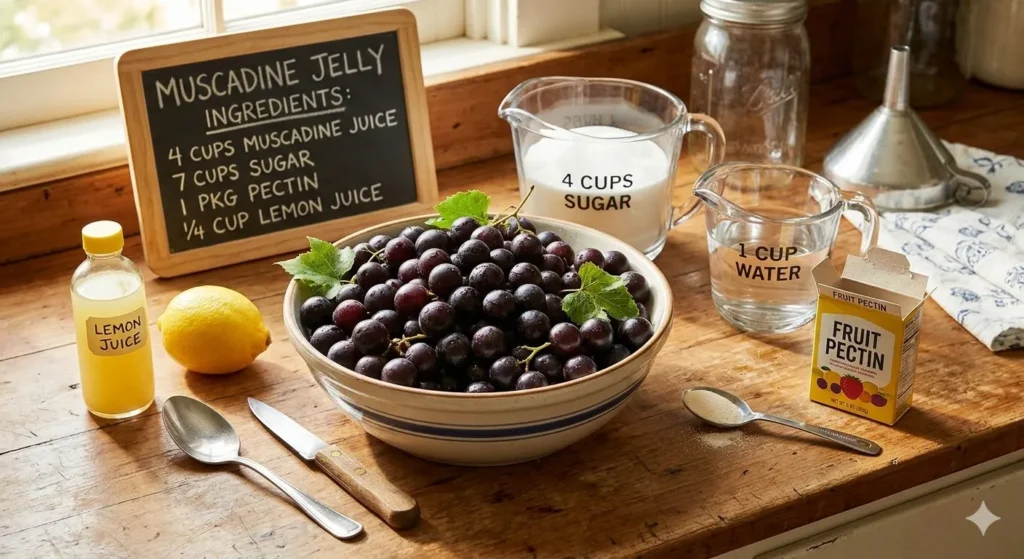
The magic of muscadine jelly lies in the simplicity and balance of its ingredients. Each component plays a key role:
- Muscadines (5 pounds): The star of the recipe, providing juice, natural flavor, and color. Fresh, frozen, or U pick varieties all work.
- Sugar (6–7 cups): Ensures sweetness, aids in preservation, and interacts with pectin to achieve the proper set.
- Pectin (1.75 oz powdered or liquid equivalent): Essential for a firm jelly; muscadines alone don’t always have enough natural pectin.
- Lemon juice (1 tablespoon): Balances sweetness and provides acidity to help the gel set.
- Water (8 cups for juice extraction): Facilitates cooking and juice release.
Optional equipment like a potato masher, fine mesh sieve, cheesecloth, candy thermometer, and sterilized jars will ensure the best results.
How to Make Muscadine Jelly Recipe the Right Way
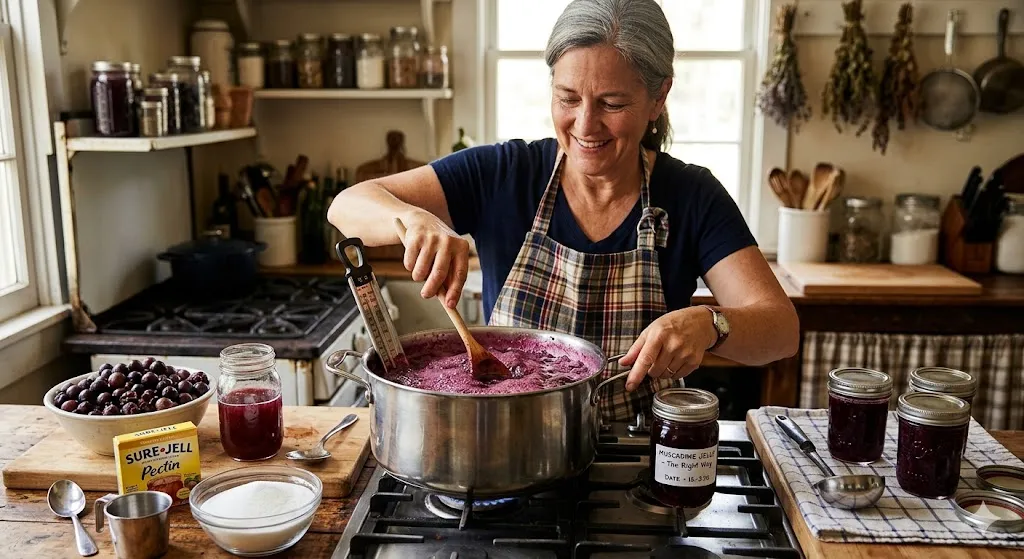
Making muscadine jelly is a two step process: extracting the juice and cooking it into jelly.
- Extract the muscadine juice: Wash grapes thoroughly, remove stems, and place in a large stockpot with water. Simmer until skins soften, then mash gently with a potato masher. Strain through cheesecloth or a fine mesh sieve to collect the juice.
- Make the muscadine jelly: Measure juice and pour into a large saucepan. Add pectin and bring to a rolling boil over medium high heat. Stir in sugar all at once, return to a full boil for 1–2 minutes, and remove foam if desired.
- Test for set: Use the cold spoon method drip a small amount onto a chilled plate. It should gel within a minute. Adjust cooking time slightly if necessary.
- Jar and process: Pour hot jelly into sterilized jars, leaving ¼ inch headspace. Wipe rims, apply lids, and process in a boiling water bath for 10 minutes (adjust for altitude as needed).
Pro Tip for the Smoothest, Glossiest Muscadine Jelly
For a perfectly clear jelly, skim foam diligently during cooking and avoid over stirring once sugar is added. Excess stirring can trap air, creating bubbles and affecting texture. The result is a silky, vibrant jelly that shines in the jar.
Common Mistakes That Ruin Muscadine Jelly Recipe
Beginners often run into the same pitfalls: undercooking the juice, skipping pectin, or improper jar sterilization. Each mistake can lead to runny jelly, fermentation, or spoilage.
Key tips:
- Always measure pectin accurately. Muscadines need a reliable pectin boost.
- Boil for the full rolling time to ensure gel formation.
- Sterilize jars and lids to prevent contamination.
- Don’t discard juice if jelly fails reboil with additional pectin and sugar.
Variations and Substitutions That Actually Work
You can tailor this recipe based on grape variety, sugar preference, and dietary needs:
- Bronze muscadines for a lighter, honey gold jelly.
- Purple muscadines for bold, tarter flavor.
- Low sugar pectin for diabetic friendly jelly with reduced sugar.
- Honey or Splenda can replace sugar in limited amounts; adjust pectin accordingly.
My Experience Making Muscadine Jelly Recipe at Home
I’ll admit, my first batch was a bit runny with too little pectin and impatient stirring. After consulting the instructions, I re boiled with additional powdered pectin, and it set beautifully. I also learned that leaving foam on top makes the jelly appear cloudy, so careful skimming is worth the extra minutes.
This water glassing eggs recipe shows how to preserve fresh eggs for months using a simple traditional method that keeps them ready for baking and everyday cooking.
How to Use Muscadine Jelly Beyond Toast
Muscadine jelly is far from a one trick spread. Use it in:
- Glazing roasted chicken or pork
- Sweetening vinaigrettes or marinades
- Swirled into Greek yogurt or rice pudding
- Drizzled over pancakes, waffles, or ice cream
- Mixed into barbecue sauce for a tangy twist
What to Do With Leftover Pulp, Seeds, and Skins
Don’t toss your grape remnants! They’re packed with antioxidants:
- Hull pie or cobbler: Cook pulp with sugar and butter.
- Seed powder: Dry and grind for smoothies.
- BBQ sauce base: Add strained pulp for depth of flavor.
- Hull jam: Slow cook skins with brown sugar for a unique spread.
Try more sweet and fruity dessert recipes like this muscadine jelly recipe for easy homemade treats.
Choosing Your Pectin: Powder vs. Liquid vs. No Pectin
| Pectin Type | Timing | Flavor Impact | Reliability | Conversion Notes |
| Powdered | Add before boiling sugar | Minimal | High | 1 tbsp liquid = 2 tsp powdered |
| Liquid | Stir in at end of boil | Slightly softer set | Medium | Adjust timing carefully |
| None | Long boil only | Can darken color | Low | Often fails, not recommended |
Muscadines vary in natural pectin; use commercial pectin for consistent results.
Nutrition: The Honest Picture
Even after cooking, muscadine jelly retains some nutrients:
| Nutrient | Homemade Muscadine Jelly (per tbsp) | Commercial Grape Jelly |
| Calories | 37 kcal | 40 kcal |
| Sugar | 7g | 10g |
| Protein | 0.1g | 0g |
| Potassium | 29mg | 15mg |
| Calcium | 5mg | 2mg |
Most antioxidants remain in skins and seeds, so the clear jelly has fewer polyphenols than whole fruit spreads.
Storage, Freezing, and Shelf Life
Proper storage ensures safety and quality:
- Refrigerator uncanned jelly: up to 3 months
- Pantry water bath processed: 12–18 months
- Freezer finished jelly: up to 1 year
- Frozen juice up to 1 year for later jelly making
Check for mold, fermentation bubbles, or off smells before consuming.
Frequently Asked Questions

Muscadine Jelly Recipe
Ingredients
Equipment
Method
- Rinse muscadine grapes and remove stems, then place in a large saucepan with water.
- Bring grapes to a gentle boil over medium heat, stirring occasionally, until skins split and fruit softens (about 10 minutes).
- Mash grapes slightly with a wooden spoon to release juice and flavor.
- Strain the mixture through a jelly bag or fine mesh strainer to separate juice from pulp.
- Return grape juice to the saucepan and stir in lemon juice and pectin until fully dissolved.
- Bring to a rolling boil over medium-high heat, then add sugar gradually while stirring constantly.
- Continue boiling hard for 1–2 minutes, ensuring sugar is fully dissolved and mixture thickens slightly.
- Remove from heat and skim any foam from the surface.
- Pour hot jelly into sterilized jars, leaving 1/4 inch headspace, and seal with lids.
- Let jars cool at room temperature until set and fully chilled (about 6–8 hours) before storing.
Notes
- Use fully ripe muscadine grapes for the best natural sweetness and vibrant color.
- Sterilize jars before filling to ensure safe storage and longer shelf life.
- For a smoother jelly, avoid pressing too hard on the pulp during straining.
Conclusion Muscadine Jelly Recipe
Muscadine jelly recipe is a labor of love, but the rewards are endless. Its rich flavor, versatility, and connection to Southern tradition make it a recipe worth mastering. Try it on breakfast toast, in desserts, or as a thoughtful homemade gift. Bookmark this recipe, experiment with grape varieties, and savor the taste of late summer muscadines at home. Your jars of homemade muscadine jelly will not only impress friends and family, they’ll carry a bit of Southern heritage straight into your kitchen.
This maple butter recipe transforms pure maple syrup into a creamy, spreadable treat that’s perfect for toast, pancakes, and warm homemade biscuits.