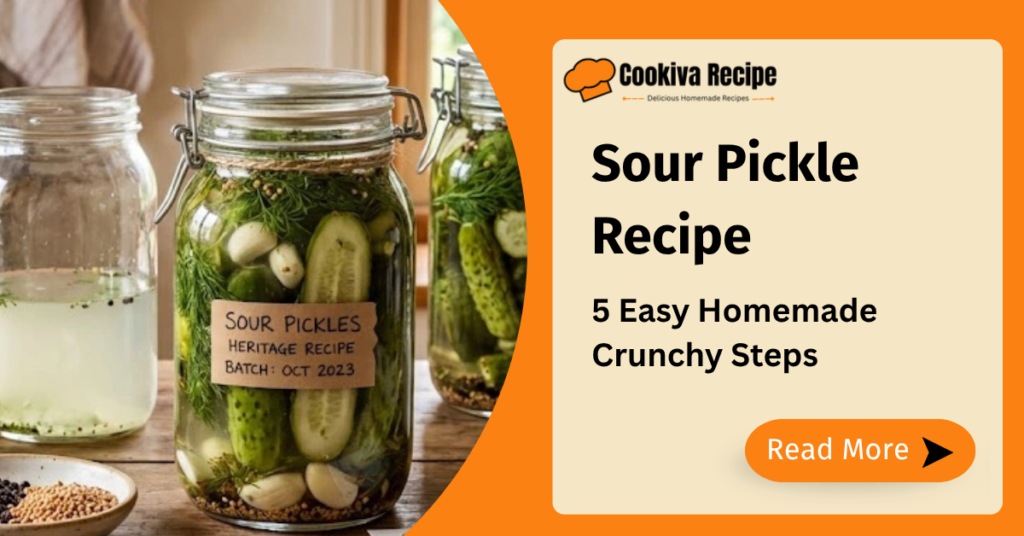
There’s something oddly satisfying about pulling a jar of sour pickles out of your own kitchen and hearing that soft pop when you open it. The aroma alone of garlic, dill, salt, and fermentation feels like stepping into a deli somewhere in New York City, maybe even near Katz’s Delicatessen NYC, where pastrami sandwiches and crunchy pickles always arrive together.
This sour pickle recipe is all about that classic deli style bite: tangy, salty, crisp, and deeply flavorful. Whether you’ve tasted them at a Jewish Russian family table, at a picnic, or through modern fermentation communities like Pickle Mob or educators like Sandor Katz, the goal is the same real sour pickles made with time, salt, and patience.
People love making these at home because it turns simple cucumbers into something alive. The brine fizzes, the flavors deepen, and suddenly your fridge is full of probiotic rich fermented foods that go with everything from salads to grilled meats.
But here’s the truth most recipes don’t tell you: success depends on precision with salt, temperature, and technique, not just throwing cucumbers in a jar and hoping for the best.
What Is a Sour Pickle Recipe and Why It’s Popular
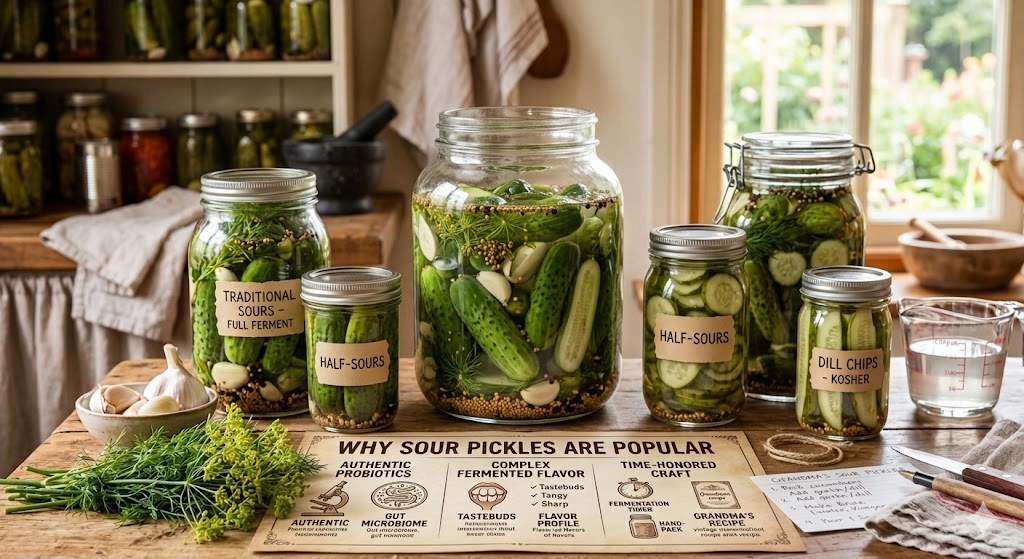
A sour pickle recipe refers to cucumbers preserved through natural fermentation or vinegar brining until they develop a distinctly tangy, acidic flavor. The traditional version is lacto fermented, meaning naturally occurring probiotic bacteria convert sugars into lactic acid over time.
This method has deep roots in Eastern European and Jewish culinary traditions, where fermented vegetables were essential for survival through cold seasons. Families in places like Kishinev and later immigrant communities in New York City brought these techniques with them, eventually shaping the deli style pickles many people know today.
Unlike quick vinegar pickles, fermented sour pickles are alive. They continue evolving in flavor during fermentation and even in cold storage. That’s why modern food movements from Ferment Yourself Wild in Sydney and Melbourne to fermentation educators like Emma Jimson and Gabby Campbell have revived interest in crock style fermentation and fermentation jars at home.
Looking for more homemade ideas like this? Explore more delicious recipes on Cookiva Recipe and find your next kitchen favorite.
Fermented vs Vinegar Sour Pickles recipe: Which One Should You Make?
Before diving into the method, it’s important to understand what you’re actually choosing. Fermented sour pickles rely on salt, water, and time. They develop probiotic bacteria, a deeper flavor, and a naturally effervescent brine. They take days or weeks but reward you with complexity.
Vinegar sour pickles are quick, shelf stable, and reliable. They deliver a clean tangy flavor in a day or two but do not contain live cultures.
If you want gut health benefits, fermentation experience, and traditional flavor, choose lacto fermentation. If you want fast pantry pickles, go vinegar based.
If you love savory baking, this cabbage bread recipe delivers a soft, flavorful loaf packed with comforting, homemade goodness
Recipe Overview: What to Expect from These Sour Pickle Recipe
These pickles are bold, garlicky, and intensely tangy with a satisfying crunch when done right. The texture should snap, not bend, and the brine should taste salty, slightly sour, and aromatic with dill and garlic.
They work beautifully as a side dish for sandwiches, grilled meats, or even chopped into potato salad. Think deli style crunch that cuts through rich foods like pastrami sandwiches or smoky barbecue.
Recipe Summary
| Detail | Info |
| Prep Time | 20 minutes |
| Fermentation Time | 3 days – 4 weeks |
| Total Time | Up to 4 weeks |
| Yield | 4 servings per quart jar |
| Difficulty | Beginner–Intermediate |
| Cuisine | Eastern European / Jewish deli inspired |
| Calories | ~39 kcal per serving |
Why Your Last Batch Failed (The Salt Truth Most Recipes Ignore)
Salt is not just seasoning here it is the controlling factor of fermentation safety and texture. The problem is that most recipes say “2 tablespoons per quart,” but tablespoons are unreliable.
Different salts weigh differently:
| Salt Type | Grams per Tbsp | Brine Impact |
| Table Salt | ~18g | Very salty, fast fermentation |
| Morton Kosher | ~15g | Medium high salinity |
| Diamond Crystal Kosher | ~10g | Mild salinity |
For a safe 3.5% brine (ideal for sour pickles):
- Formula: water weight (g) × 0.035 = salt (g)
So for 1 liter of water (1000g):
- 1000 × 0.035 = 35g salt
This is the consistency professional fermenters use in ceramic crocks and 5L crock setups. Without this precision, batches often fail either too soft or too salty.
Ingredients and Why Each One Matters
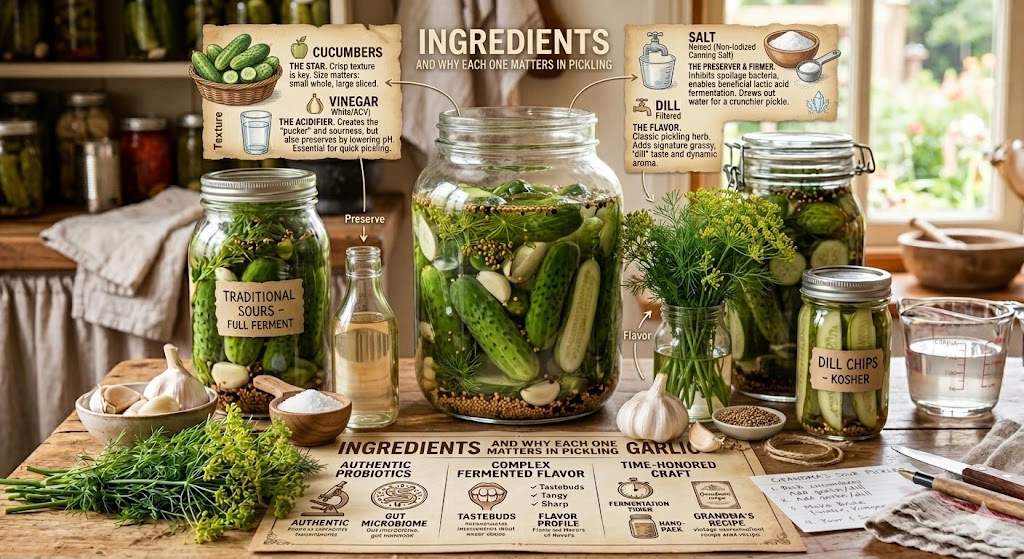
The beauty of sour pickles is simplicity, but each ingredient plays a role.
You’ll need:
- Unwaxed cucumbers (Kirby or Persian work best)
- Water (filtered or chlorine free)
- Celtic sea salt or pickling salt
- Fresh dill sprigs
- Garlic cloves
- Mustard seeds
- Optional fresh chillies
- Vine leaves or grape leaves (for crunch protection)
Cucumbers provide structure, while salt controls fermentation speed. Garlic and dill build aroma, mustard seeds add depth, and vine leaves contribute tannins that protect crunch.
If you only have supermarket cucumbers, especially English cucumbers, cut them into chunks and soak them in ice water first to reduce softness risk.
How to Make Sour Pickle Recipe the Right Way (Fermentation Method)
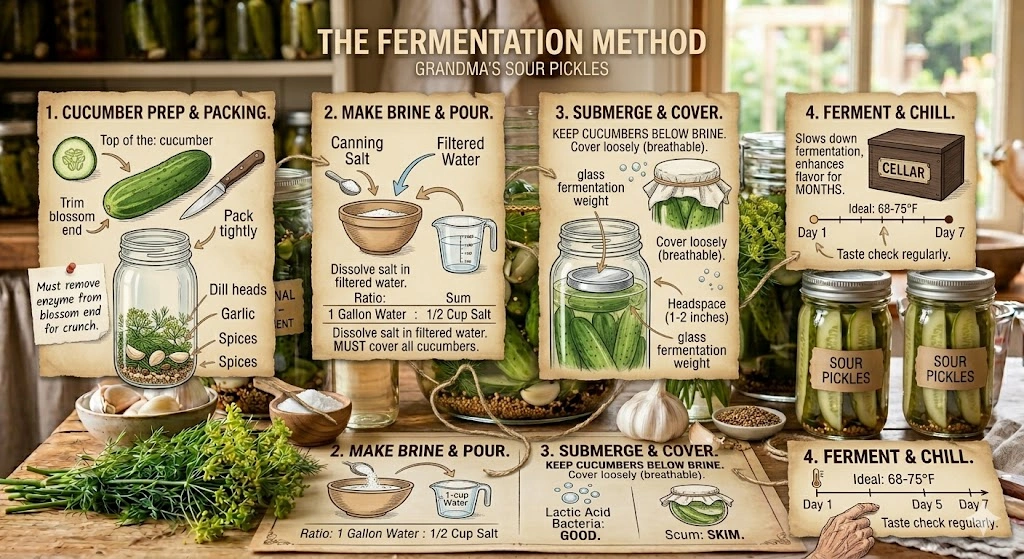
The process is simple but sensitive to detail. First, wash cucumbers thoroughly and trim the blossom end about 1/16 inch this reduces enzymes that cause mushiness. Place them in a clean jar or crock with garlic, dill, and spices.
Mix your brine using the salt formula above and pour it over until everything is fully submerged. Use a weight to keep cucumbers under liquid never exposed to air. Cover with an airlock lid or cloth and rubber band, then place in a cool area.
Fermentation Timeline by Temperature (Critical Step)
| Temperature | Half Sour | Full Sour |
| 60–65°F | 5–7 days | 3–4 weeks |
| 65–75°F (ideal) | 3–5 days | 1–2 weeks |
| 75–80°F | 2–3 days | 7–10 days |
| 80°F+ | Risk of mush | Monitor daily |
This is why a sour pickle recipe fails in summer kitchens but succeeds in cool basements or winter counters.
Crunch Science: Why Some Pickles Stay Crisp and Others Don’t
Crunch is not luck, it’s chemistry. Blossom end trimming stops enzymes that break down pectin. Vine leaves and grape leaves add tannins that stabilize texture. Salt strengthens cell walls through osmotic pressure. And an ice bath before fermenting helps firm cucumbers before they ever hit the brine. If you skip these steps, you risk mushy, hollow pickles even if the flavor is perfect.
Pro Tip for Best Results: The “Cold Shock” Method
One trick I learned after several failed batches is soaking cucumbers in ice cold water for 2–3 hours before fermenting. It tightens the structure and slows enzyme activity. It’s a small step, but it dramatically improves crunch retention, especially for grocery store cucumbers.
Common Mistakes and Why They Ruin Sour Pickle Recipe
Soft pickles, cloudy brine, or strange colors usually come from predictable issues.
- Too little salt → allows bad bacteria and mushy texture
- Too warm fermentation → speeds breakdown and hollow centers
- Cucumbers not submerged → mold growth
- Iodized salt → bitter, cloudy brine
- Skipping blossom end trim → enzymatic softening
The key rule: fermentation is controlled spoilage. Control the environment, and you control the outcome.
This pomme puree recipe creates an ultra-smooth, buttery mashed potato with a rich, restaurant-quality texture that melts in every bite
Troubleshooting Sour Pickles (Fixes for the 7 Biggest Problems)
Why are my pickles mushy?
Usually caused by low salt or warm temperatures. Increase brine strength and ferment in a cooler space.
Why is my brine cloudy?
This is often normal and caused by active fermentation. Only discard if foul smell or slimy texture appears.
What is white film on top?
That’s usually harmless but should be skimmed off.
Why did garlic turn blue?
This is a natural reaction between acids and sulfur compounds. It’s safe to eat.
Why are they too salty?
Brine was too concentrated or fermented for too long. Reduce salt in the next batch.
Why aren’t they sour yet?
Temperature is too low, fermentation slows significantly below 65°F.
Why are they hollow inside?
Over fermentation or uneven salt penetration.
Cucumber Selection Guide: What Works Best at Home
| Type | Crunch Level | Notes |
| Kirby cucumbers | ⭐⭐⭐⭐⭐ | Best overall |
| Persian cucumbers | ⭐⭐⭐⭐ | Great substitute |
| English cucumbers | ⭐⭐⭐ | Slice into chunks |
| Regular slicing cucumbers | ⭐⭐ | Risk of soft texture |
If you only have grocery cucumbers, don’t quit just adjust technique.
Cost Breakdown: Why Homemade Beats Store Bought
A quart of homemade sour pickles typically costs under $2 in ingredients. Compare that to $5–$8 for branded fermented pickles in stores.
- Cucumbers: $1.20
- Salt & spices: $0.40
- Garlic/dill: $0.50
Total: ~$2.10 per quart
Homemade isn’t just tastier, it’s significantly cheaper.
Variations and Substitutions You Can Actually Use
You can experiment freely once you understand the base formula.
- Add chili flakes for heat
- Use grape leaves for extra crunch
- Add sour cherry leaves for aroma
- Mix cucumbers with green tomatoes
- Try mustard heavy brines for deli style flavor
My Experience Making This Sour Pickle Recipe at Home
My first batch failed because I used vague salt measurements and left the jar too warm on the counter during summer. The cucumbers turned soft within three days.
The second time, I switched to weighed brine and moved the jar to a cooler pantry. That batch turned out crisp, sour, and exactly like something you’d get in a traditional deli.
Benefits of Sour Pickle Recipe (Realistic Perspective)
Sour pickles are often enjoyed as part of fermented foods traditions because they contain naturally occurring probiotics when unpasteurized. They are commonly used as a tangy side dish that supports flavor balance in heavy meals.
They may also contribute to dietary variety and hydration due to electrolyte content in the brine, especially popular among athletes.
Discover more tangy and crunchy side dishes like this sour pickle recipe on Cookiva Recipe for easy homemade flavor.
Storage, Shelf Life, and Brine Reuse Tips
Fermented pickles should always be stored in the refrigerator once sour enough.
- 3.5% brine: 1–2 months optimal quality
- Stronger brine: up to 4–6 months
Cloudy brine is normal, but pink or black mold means discard.
You can reuse brine as a starter culture for your next batch. Just add 2–4 tablespoons to new cucumbers to speed fermentation dramatically.
FAQ: Real Questions People Ask About Sour Pickle Recipe
Are sour pickles healthy?
They are commonly enjoyed as fermented foods that may contain beneficial bacteria when unpasteurized.
Why are my pickles not crunchy?
Usually due to warm fermentation or missing tannin sources like grape leaves.
Can I use vinegar instead of fermentation?
Yes, but it changes the flavor and removes probiotic benefits.
How long do they take to ferment?
Anywhere from 3 days to 4 weeks depending on temperature.
Do I need special equipment?
A jar works, but fermentation crocks or airlock lids improve consistency.
Can I reuse the brine?
Yes, it works as a starter for future batches.
Sour Pickle Recipe
Ingredients
Equipment
Method
- Wash the cucumbers thoroughly and slice into spears or rounds; they should look crisp and bright green.
- In a saucepan, combine water, vinegar, salt, and sugar; heat until the salt fully dissolves and the liquid is clear.
- Place garlic, peppercorns, mustard seeds, and dill into a clean glass jar.
- Pack the cucumber slices tightly into the jar without crushing them.
- Pour the hot brine over the cucumbers until fully submerged; bubbles may rise to the surface.
- Let the jar cool at room temperature until no longer warm to the touch.
- Seal the jar and refrigerate for at least 24 hours; flavors will deepen and become more tangy.
Video
Notes
- Use pickling cucumbers for extra crunch and better texture.
- For stronger sour flavor, reduce sugar or increase vinegar slightly.
- Pickles taste best after 2–3 days of chilling as flavors fully develop.
Conclusion: Why This Sour Pickle Recipe Is Worth Mastering
Once you understand the balance of salt, temperature, and time, sour pickles become one of the most rewarding things you can make at home. The transformation from plain cucumber to tangy, crunchy fermented food never gets old.
Whether you’re inspired by deli culture in New York City, old world fermentation traditions, or modern makers like Sandor Katz, this sour pickle recipe connects all of them in one jar.
This Grandma Browns baked beans recipe brings a rich, slow-cooked flavor with a perfect balance of sweetness and savory depth that tastes like pure comfort