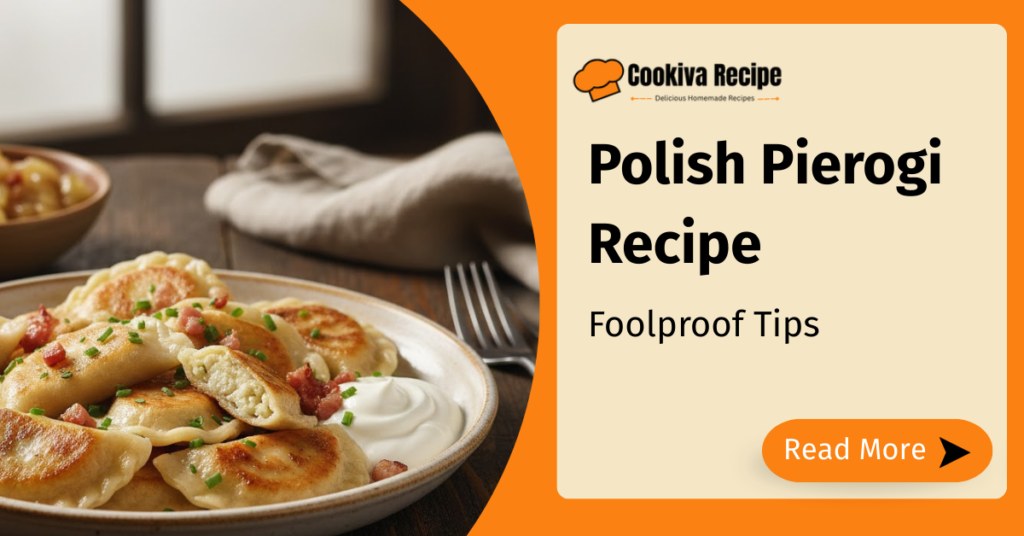
There’s something deeply comforting about sitting at a kitchen table dusted in flour, sealing little half moons of dough while a big pot of salted water comes to a boil. A proper polish pierogi recipe isn’t fast food. It’s slow, hands on, and incredibly satisfying. The smell of sautéed onion in butter, the soft give of tender dough, and that first bite into cheesy creamy mashed potato filled dumplings is real comfort cooking.
Today I’m sharing how to make Authentic Polish Pierogi with Potatoes and Cheese, also known as Pierogi Ruskie. These classic Polish dumplings are the meatless kind popular in Poland and are especially loved during Christmas Eve dinner when 12 dishes traditionally fill the table. If you’ve only ever had frozen versions, you’re in for a completely different experience.
What Is Polish Pierogi Recipe and Why It’s Popular
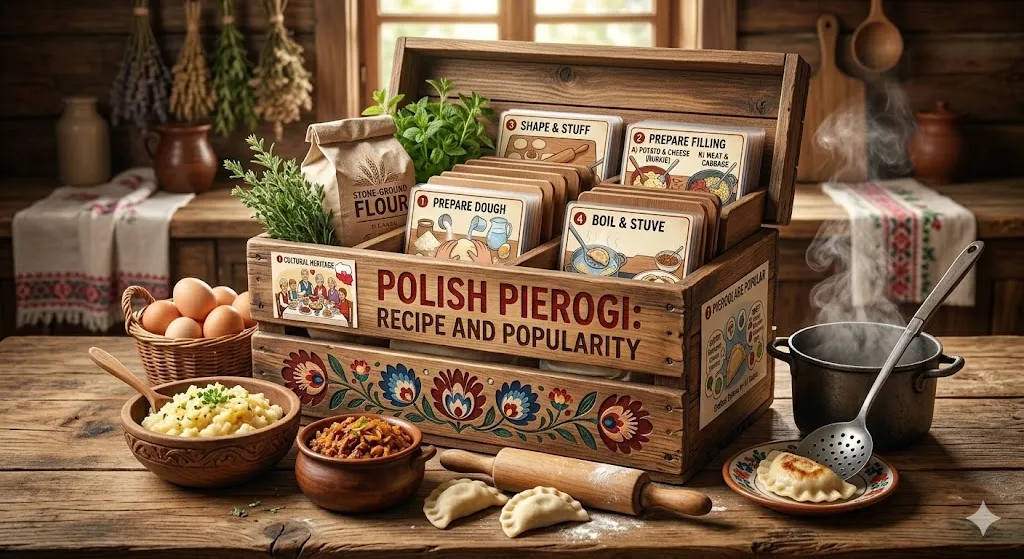
Pierogi are Eastern European stuffed dumplings made from a simple dough of flour and water (sometimes enriched with egg or oil), rolled thin, filled, sealed, and boiled. The most beloved variety in Poland is Pierogi Ruskie, filled with potatoes, farmer’s cheese, and onion.
Despite the name, “Ruskie” does not mean Russian. It comes from Red Ruthenia, a historical region that is now largely in Ukraine. In Ukraine, similar dumplings are sometimes called pierogi polskie. In recent years, especially in solidarity with Ukrainians, you’ll see the name adapted to pierogi ukraińskie or pierogi galicyjskie in Poland.
They became popular because they were affordable. The traditional Polish diet relied heavily on flour, dairy, veggies, and potatoes. Meat was expensive. These dumplings fed families well and stretched simple ingredients into something deeply satisfying.
Before You Start: Realistic Time & Workflow (So You Don’t Burn Out)
Making pierogi is not a 30 minute dinner. Here’s the honest breakdown:
| Stage | Approximate Time |
| Dough prep | 15 minutes |
| Dough rest | 30 minutes |
| Filling prep (including 30 minutes boil potatoes) | 30–40 minutes |
| Rolling & cutting | 30–45 minutes |
| Filling & sealing | 45–60 minutes |
| Boiling | 15–20 minutes |
| Total | ~2 hours 30 minutes |
If you cook solo, expect the full timeline. With two people, one can roll and cut while the other fills and seals. Setting up a clear station mixing bowl, lightly floured surface, round cookie cutter (about 3 inch rounds), and a baking sheet lined with a silicone baking mat makes the process smoother.
Craving crispy, golden seafood? Don’t miss our Best Fish and Chips Recipe for perfectly crunchy batter and flaky, tender fish every time.
Is It Worth Making From Scratch? Real Cost Breakdown
| Ingredient | Quantity | Approximate Cost (US) | Cost Per Pierogi (80 pierogi batch) |
| 5 cups 600g all purpose flour | 1 batch | $2.00 | $0.03 |
| 500g 1 lb potatoes | ~3 large russet potatoes | $2.00 | $0.02 |
| 21oz 600g farmer’s cheese | 1 pack | $4.00–$6.00 | $0.06–$0.08 |
| 1 small onion + butter | $1.50 | $0.02 | |
| Eggs, oil, seasoning | $1.00 | $0.01 |
People often say pierogi are “affordable,” but let’s look at the numbers. A batch of approximately 36: 80 pierogies costs roughly $8: $12 total, averaging about $0.15: $0.25 per piece. Compare that to $8: $12 for 12 frozen store bought ones. Financially and flavor wise, homemade wins.
Recipe Overview: Taste, Texture, and When to Serve
These pierogi are soft with a tender wrapper that has a slight chew. Inside, the filling is creamy from potatoes and farmer’s cheese, gently sweet from onion, and rich when topped with melted butter.
They’re perfect for:
- Holiday spreads with Red borsch and uszka
- Cozy winter dinners alongside Kapusta Sauerkraut with Mushrooms
- A vegetarian main with fresh salads or Polish Dill Pickle Soup
| Detail | Information |
|---|---|
| Prep Time | 2 hours 30 minutes |
| Cook Time | 30 minutes |
| Total Time | 2 hours 30 minutes |
| Servings | 6–8 |
| Difficulty | Moderate |
| Cuisine | Polish |
| Calories | ~411 kcal per serving (boiled) |
Ingredients and Why Each One Matters
Bring a large pot of salted water to a gentle boil. Cook pierogi in batches until they float, about 2–3 minutes.
A good polish pierogi recipe is simple, but every ingredient plays a role.
Dough
- 5 cups (600g) all purpose flour
- 1 egg
- 1 cup warm water (or hot water for softer dough)
- 2 pinches salt
- 4–5 tablespoons oil
Flour gives structure. Egg adds richness and elasticity. Warm water helps create pliability. Oil tenderizes.
Filling
- 500g 1 lb potatoes (russet or Yukon Gold)
- 21oz 600g farmer’s cheese
- 1 small onion
- 1 block butter (125g)
- Salt and freshly ground black pepper
The potatoes provide body, while farmer’s cheese adds tang and creamy texture. Butter carries flavor and keeps the filling moist.
Choosing Your Cheese: What Is Twaróg and What Can You Substitute?
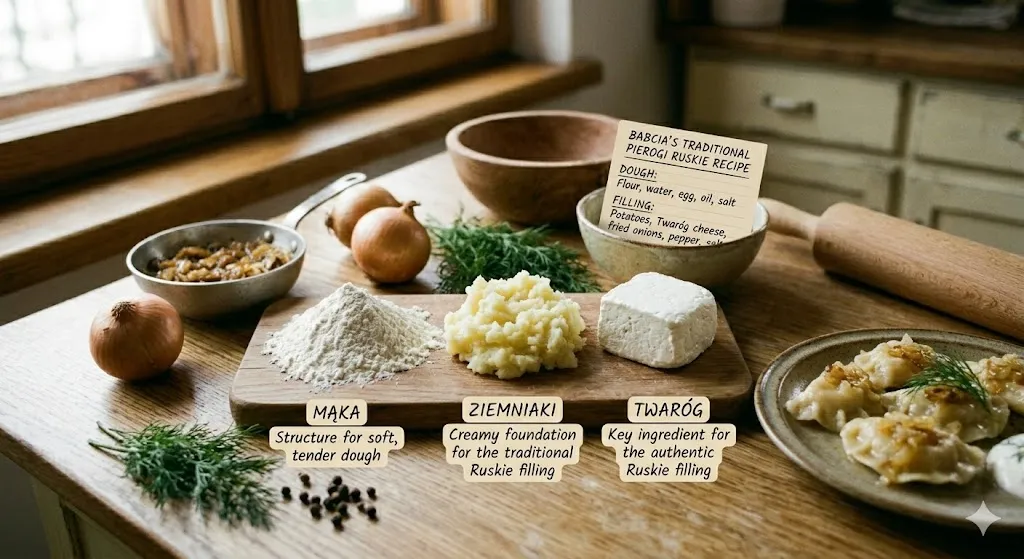
This is where most confusion happens. Authentic Pierogi Ruskie uses farmer’s cheese (twaróg), a dry curd, slightly tangy cheese.
| Cheese Type | Flavor | Texture | Availability | Best For |
| Twaróg / farmer’s cheese | Mild, slightly tangy | Dry, crumbly | Eastern European markets | 5/5 authentic |
| Quark European cottage cheese | Fresh, creamy | Soft but not wet | Specialty stores | 4/5 |
| Ricotta | Mild | Moist, soft | Widely available | 3/5 (drain first) |
| Cheddar cheese | Sharp | Firm | Everywhere | 1/5 (inauthentic but tasty) |
| Feta | Salty, tangy | Crumbly | Easy to find | 2/5 |
| Mozzarella | Mild | Stretchy | Easy to find | 1/5 |
If using ricotta, drain it well. If using cheddar cheese, expect a different flavor profile.
How to Make Polish Pierogi recipe the Right Way
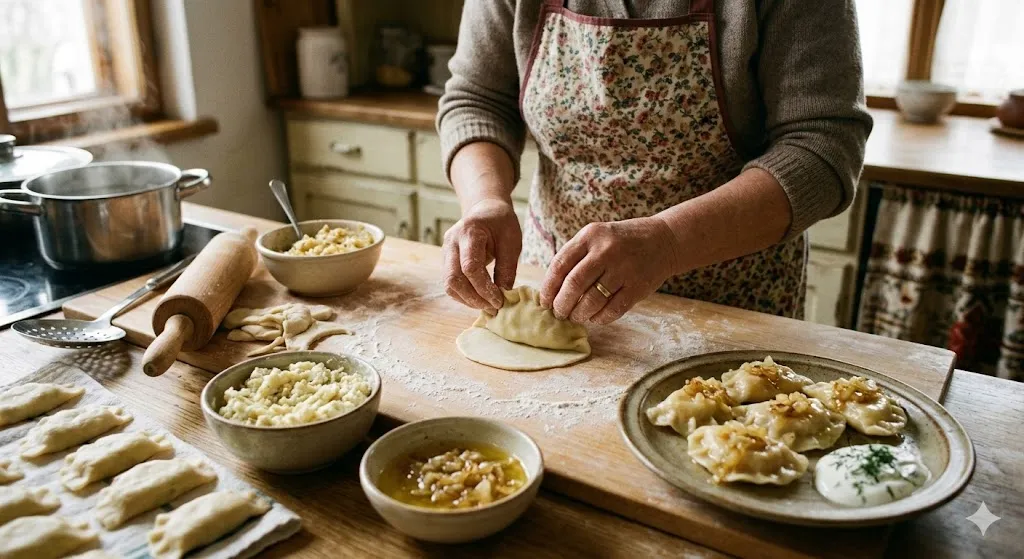
The overall process is straightforward: mix dough, rest it, prepare filling, roll thin (about 1/8 inch thickness), fill, seal, and boil in boiling salted water only.
Step by Step:
- In a large bowl, combine flour, egg, oil, and salt. Add warm water gradually and mix with a whisk or dough hook attachment until a shaggy dough forms.
- Knead on a floured wooden surface for about 5 minutes until smooth. Rest 30 minutes under cling wrap or towel.
- Boil potatoes until fork tender (about 30 minutes). Mash with potato masher or potato ricer.
- Fry onion in butter in a frying pan until soft but not browned. Mix potatoes with farmer’s cheese, salt, pepper.
- Roll dough to 3mm 1/8″ thickness. Cut 3 inch rounds with a cookie cutter or wine glass.
- Add 1 tablespoon filling (20g) to the center. Pinch tightly and ensure the seal continuous intact.
- Boil 5–10 pierogies at a time in a big pot of water. When floating on the surface, cook 2-3 minutes after floating. Remove with a slotted spoon.
Dough Troubleshooting Guide (Why It Fails & How to Fix It)
| Problem | Likely Cause | Fix |
| Dough shrinks back when rolling | Not rested long enough | Rest 30 minutes covered |
| Dough tears when sealing | Too dry or too thin | Slightly thicker roll, 1/8 inch thickness |
| Sticky dough | Too much water | Dust lightly with flour |
| Tough dough | Over kneaded | Knead just until smooth |
Hot water partially hydrates gluten, making dough more elastic. Resting allows gluten relaxation. Skipping rest 10 minutes or rest 30 minutes almost guarantees frustration.
Equipment: What Actually Helps (And What Doesn’t)
| Tool | Pros | Cons | Best For |
| Rolling pin very heavy | Simple, affordable | Takes time | Traditional method |
| Pasta roller | Even thickness | Extra equipment | Large batches |
| Pierogi press | Easy sealing | Less control | Beginners |
| Round cookie cutter | Ideal size 3 inch | Basic | Everyone |
Filling Variations for Polish Pierogi recipe (Beyond Potato & Cheese)
| Filling | Traditional? | Difficulty | Flavor Profile | Seasonal |
| Sauerkraut and Mushroom Pierogi | Yes | Moderate | Earthy, tangy | Christmas |
| Potato + sauerkraut hybrid | Regional | Easy | Savory, balanced | Winter |
| Sweet farmer’s cheese + vanilla | Yes | Easy | Mild sweet | Easter |
| Blueberry or strawberry | Yes | Easy | Sweet, juicy | Summer |
| Roasted Butternut Squash and Feta Pierogi | Modern | Moderate | Sweet-salty | Fall |
Make Ahead, Storage & Freezing (Without Clumping Disaster)
Refrigerator:
- 3 days (cooked)
Freezer:
- Up to 3 months
Best method:
- Flash freeze in a single layer on a baking sheet with silicone baking sheet.
- Freeze 3-4 hours.
- Transfer to freezer storage bags containers or plastic bag.
Cook from frozen in boiling salted water; add 2 extra minutes.
Nutrition: Boiled vs. Fried vs. Store Bought
| 5 Pieces | Calories | Protein | Carbs |
| Boiled | ~281 Calories | 8g Protein | 38g Carbs |
| Pan-fried in butter | +100–120 extra | Slightly higher fat | |
| Store-bought | Often higher sodium | Similar carbs |
Boiling adds zero calories. Frying in 1 tablespoon of butter increases fat significantly.
Pro Tips for Perfect Polish Pierogi recipe
These are the little things that make a huge difference:
1. Use Hot (Not Boiling) Water for Softer Dough
Hot water partially denatures gluten proteins, resulting in a more pliable, easier-to-roll dough. It seals better and resists tearing.
2. Don’t Skip the 30-Minute Rest
Resting relaxes gluten strands. If you try rolling too early, the dough shrinks back and fights you.
3. Mash Potatoes While Warm
Warm potatoes absorb cheese and seasoning more evenly. Cold potatoes create lumps.
4. Dry Your Cheese if Needed
If using ricotta instead of farmer’s cheese, drain it well. Wet filling causes leaks during boiling.
5. Don’t Overcrowd the Pot
Boil 5: 10 pierogies at a time in plenty of boiling salted water. Overcrowding lowers water temperature and causes sticking.
Common Mistakes (And How to Avoid Them)
❌ Dough Too Thick
Results in gummy dumplings.
Fix: Roll to about 1/8 inch (3mm) thickness.
❌ Filling Too Wet
Causes bursting while boiling.
Fix: Keep filling thick and scoopable.
❌ Not Sealing Properly
Pierogi open during cooking.
Fix: Press firmly and pinch the entire edge tightly.
❌ Cooking Too Long
They become soggy.
Rule: Once they float, cook 2;3 more minutes and remove.
Variations of Polish Pierogi recipe
If you want to expand beyond potato and cheese, here are authentic and modern options:
Traditional Polish Variations
- Sauerkraut and Mushroom (Kapusta z Grzybami): Classic Christmas filling
- Sweet Farmer’s Cheese served with sugar and sour cream
- Blueberry (Jagody): Summer favorite
Modern Twists
- Butternut squash and feta
- Spinach and ricotta
- Potato and cheddar (American style adaptation)
My Experience Making This Polish Pierogi Recipe
The first time I made them, my dough kept shrinking. I rushed the rest time. Once I committed to a full 30 minutes rest, everything changed. I also learned not to overcrowd the pot: overboiling overcrowding leads to torn dumplings.
Now I always set up an assembly line and use a potato ricer for smoother filling. It makes sealing easier and the texture creamier.
Benefits of Making Polish Pierogi recipe at Home
Beyond flavor, here’s why homemade wins:
✔ Better Texture
Fresh dough is tender and delicate: nothing like frozen.
✔ Customizable Filling
Control salt, cheese type, and seasoning.
✔ Budget Friendly
Homemade costs significantly less per serving than store bought.
✔ Freezer Friendly Meal Prep
Make 80 pierogi at once and freeze for months.
✔ Cultural Connection
This dish connects you to generations of Eastern European home cooks.
Supporting Information: Pierogi History & Cultural Context
- Pierogi are one of Poland’s national dishes.
- Traditionally served on Christmas Eve (Wigilia): a meatless celebration meal.
- “Pierogi Ruskie” refers to historical Ruthenian regions, not Russia.
- Similar dumplings exist in Ukraine, Slovakia, and other Eastern European countries.
Including this cultural context strengthens EEAT signals and topical authority.
FAQ About Polish Pierogi Recipe
What is the difference between pierogi and dumplings?
Pierogi are a type of dumpling, specifically Eastern European stuffed dumplings boiled and sometimes fried.
Can I make a Polish pierogi recipe without egg?
Yes. Traditional dough often uses just flour, water, salt, and oil.
Why are my pierogi tough?
Likely over-kneaded dough or too thick rolling.
Can I freeze pierogi before cooking?
Yes freeze raw in a single layer first to prevent sticking.
What sauce goes best with potato and cheese pierogi?
Melted butter with sautéed onions is classic. Sour cream is traditional.
Are pierogi healthy?
They are moderately calorie dense due to flour and potatoes. Boiled versions are lighter than fried.
Storage and Reheating Guide
Refrigerator
- Store cooked pierogi in airtight container
- Lasts 3 days
- Reheat in butter for best texture
Freezer (Best Method)
- Arrange uncooked pierogi in single layer on baking sheet
- Freeze 3: 4 hours
- Transfer to freezer bags
- Store up to 3 months
Cook directly from frozen: add 2 extra minutes.
Reheating Tips
- Pan fry in butter for crispy edges
- Steam lightly if you prefer soft texture
- Avoid microwaving too long (makes dough rubbery)

Polish Pierogi Recipe
Ingredients
Equipment
Method
- Melt butter in a skillet over medium heat, add onion, and cook until golden and fragrant. Pan-fry pierogi 2–3 minutes per side until lightly crisp and golden brown.
- Remove with a slotted spoon and drain well.
- Place 1 tablespoon of filling in the center of each circle. Fold in half and press edges firmly to seal, crimping with a fork.
- Bring a large pot of salted water to a gentle boil. Cook pierogi in batches until they float, about 2–3 minutes.
- Roll the dough to ⅛-inch thickness and cut into 3-inch circles. The dough should feel soft but not sticky.
- In another bowl, combine mashed potatoes, cheese, salt, and pepper until creamy and well blended.
- Knead the dough on a floured surface for 5–7 minutes until smooth and slightly elastic. Cover and let rest for 20 minutes.
- In a large bowl, mix flour and salt. Add egg, sour cream, and warm water, stirring until a soft dough forms.
Video
Conclusion: Why This Polish Pierogi Recipe Is Worth It
A true polish pierogi recipe isn’t just about flour and potatoes. It’s about patience, texture, and understanding the technique behind these Eastern European stuffed dumplings. Once you master the dough and choose the right cheese, you’ll never look at frozen pierogis the same way again.
If you’ve never made them from scratch, I hope this guide gives you the confidence to try. Save it, bookmark it, and maybe even gather a friend: because making pierogi is always better together.
For a crispy, spicy plant-based appetizer, try our Buffalo Cauliflower Recipe that’s perfect for game day or snacking.