Best Fish and Chips Recipe: Crispy Homemade in 30 Minutes

There’s something deeply comforting about breaking into a piece of perfectly fried fish and hearing that unmistakable crackle before you hit the tender, flaky center. When done right, fish and chips isn’t just fried food it’s an experience. The aroma of hot oil, the golden crisp exterior, the steam rising from thick-cut fries, and that splash of British malt vinegar over everything. It’s pure comfort.
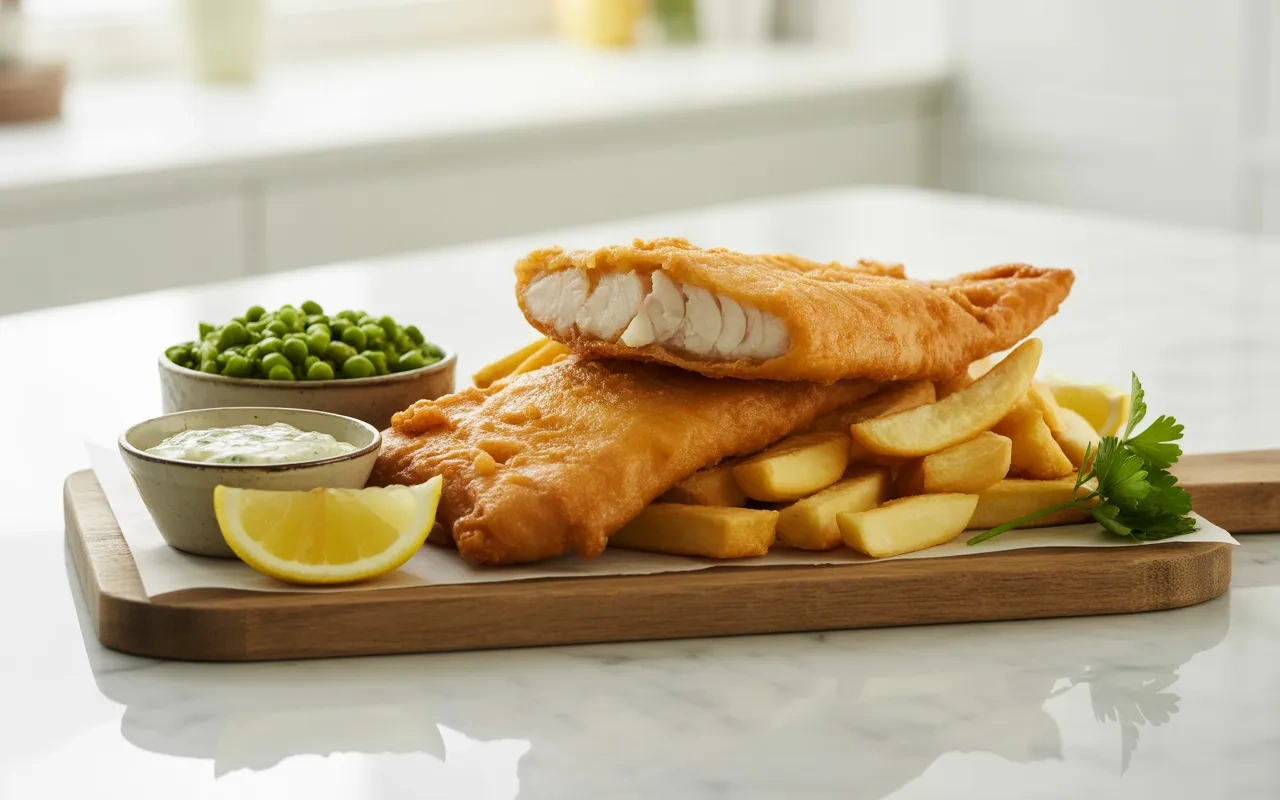
This best fish and chips recipe brings the magic of British pub style beer-battered fish and chips into your own kitchen without the greasy disappointment that so often comes from takeout. The batter is light and airy, the fish stays moist inside, and the chips are crisp outside and fluffy in the center. It’s restaurant quality, but made at home with confidence.
Craving more crispy comfort food like this? Head over to Cookiva Recipe and discover delicious recipes for every taste.
What Is the Best Fish and Chips Recipe and Why It’s Still So Popular
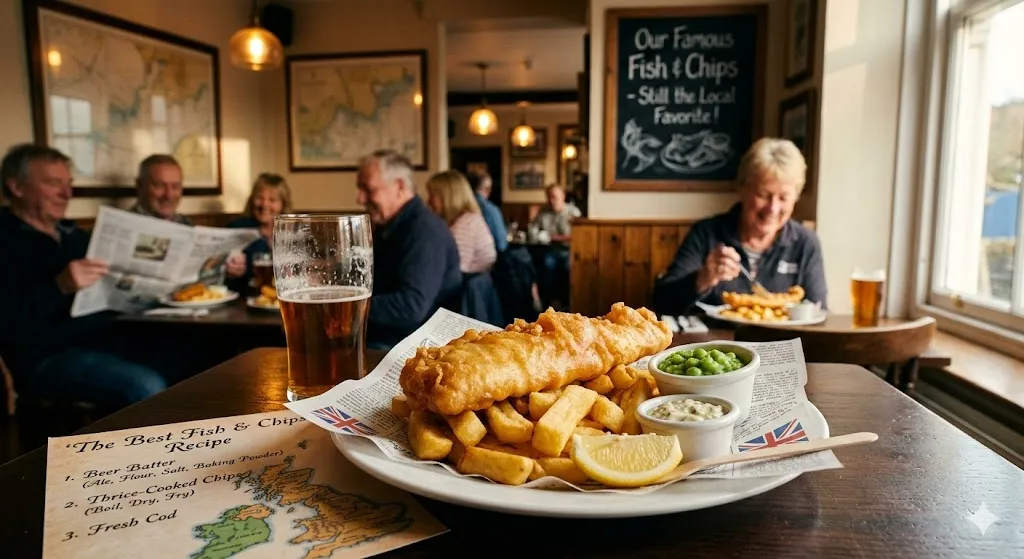
Fish and Chips is considered an iconic dish of the UK and a true cultural symbol of England and Great Britain. Traditionally made with white fish fillets like cod or haddock dipped in a light airy batter and deep-fried, it’s served alongside thick-cut chips (what Americans call French fries), often with mushy peas and tartar sauce.
Its roots trace back to 19th-century England. Fried fish was introduced by Jewish immigrants referred to as “Fried Fish Jewish Fashion” and combined with chipped potatoes. Mentions appear in 1838 in Oliver Twist by Charles Dickens, highlighting how deeply rooted fried fish was in British food culture. By the mid 1800s, vendors like Joseph Malin were selling it in London.
During WWII, even Winston Churchill ensured fish and chips remained available during rationing. That’s how important it was. Today, whether you’re in Whitby, Yorkshire, Liverpool near the Albert Docks, Hastings England, or a modern seafood bar like Dame NYC in the West Village, this dish remains pub-worthy comfort food.
Real Cost Breakdown: Homemade vs. Takeaway vs. Pub
Let’s talk real numbers because this is where cooking at home wins. A 4-serving batch costs roughly $14: 18 total.
| Item | Homemade (4 servings) | Cost |
| 1½ lbs cod | $10–12 | |
| Potatoes | $2 | |
| Flour + cornstarch | $1 | |
| Beer | $1–2 | |
| Oil (portion used) | $2 | |
| Total | $14–18 | |
| Per Serving | $3.50–$4.50 |
Now compare:
| Option | Cost Per Serving |
| Homemade | $3–5 |
| Chip shop | $10–14 |
| Pub | $15–22 |
You’re saving roughly 60–75% and the quality is often better.
Recipe Overview: Texture, Flavor & When It’s Perfect
This version creates a crunchy exterior with a moist fish interior. The batter is golden and airy closer to a tempura-style batter Japanese in texture than a heavy coating. There’s subtle seasoning from paprika and black pepper, and a delicate malt-beer flavor that feels authentically British.
It’s perfect for:
- Friday night dinners
- Casual entertaining
- Game day spreads
- Comfort food cravings
| Detail | Information |
|---|---|
| Prep Time | 10 minutes |
| Cook Time | 30 minutes |
| Total Time | 40 minutes |
| Servings | 6 |
| Difficulty | Moderate |
| Cuisine | British |
| Calories | ~550–650 per serving |
best Fish and Chips recipe Ingredients and Why Each One Matters
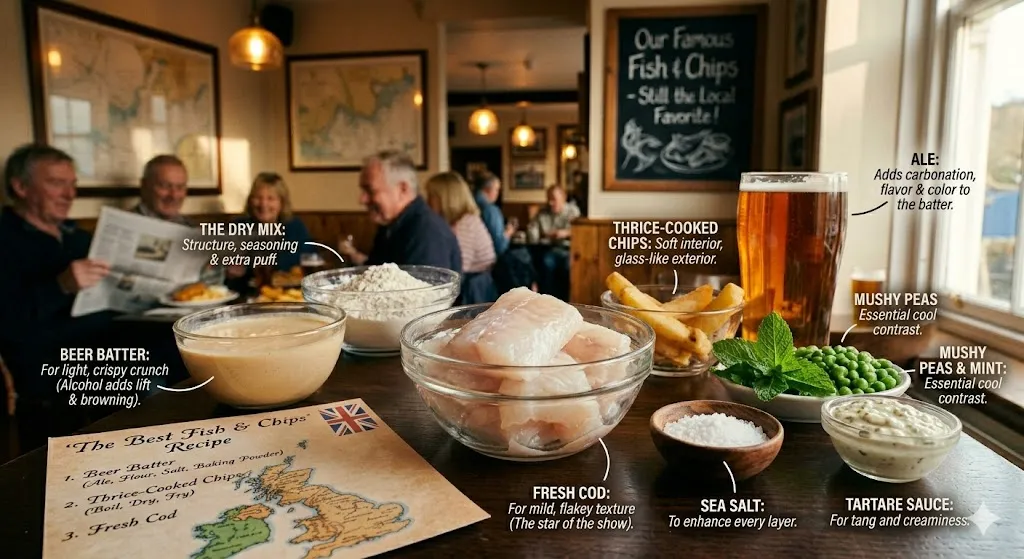
The secret to crispy battered best fish and chips recipe success is balanced starch for structure, carbonation for lift, and cold liquid to prevent gluten overdevelopment.
Fish
- 1½ lbs white fish fillets (cod, haddock, pollock, hake)
- Kosher salt
- Freshly ground black pepper
Batter
- 1 cup all-purpose flour
- ½ cup cornstarch
- 1½ teaspoons baking powder
- ¼ teaspoon paprika
- ½ teaspoon salt
- ¼ teaspoon black pepper
- 1 cup cold light lager beer
Chips
- Russet potatoes (Idaho potatoes work beautifully)
- High smoke-point oil (1–2 inches depth)
Choosing the Best Fish and chips recipe: Quality, Sustainability & Budget Options
Fish is your biggest expense and the biggest stressor.
Tiered Guide
| Tier | Best Options | Texture | Notes |
| Premium | Fresh cod, haddock | Large flakes, sweet | Classic British flavor |
| Mid-Range | Frozen pollock, frozen haddock | Mild, reliable | Thaw completely |
| Budget | Tilapia, catfish | Softer texture | Less traditional |
Look for MSC-certified fish if possible. Frozen is absolutely fine, just thaw completely and pat dry thoroughly.
Oil Selection Matters More Than You Think
Not all oils behave the same.
| Oil | Smoke Point | Flavor | Cost | Best For |
| Canola (rapeseed) | ~400°F | Neutral | Low | Everyday frying |
| Vegetable oil | ~400°F | Neutral | Low | Reliable |
| Peanut oil | ~450°F | Slight nutty | Medium | Extra crisp |
| Beef tallow | ~400°F | Rich, traditional | Medium | BEST tasting |
| Coconut oil | ~350°F | Sweet | High | Not recommended |
Fry between 350–375°F. Oil temperature key: too cold = greasy; too hot = burnt batter.
The Science Behind the Crunch
Cold liquid slows gluten formation, which keeps the batter tender rather than chewy. The CO₂ in cold beer creates tiny bubbles that rapidly expand in hot oil, forming that frothy bubbly batter texture. Alcohol evaporates at a lower temperature than water. That means beer (or vodka) leaves less residual moisture in the crust, producing a golden crisp exterior instead of a soggy one. Cornstarch and rice flour also reduce gluten structure, keeping the coating light and shatteringly crisp.
Equipment Reality Check: What You Actually Need
Bare Minimum Kit
- Heavy-bottomed pot or Dutch oven
- Candy thermometer (non-negotiable)
- Slotted spoon
- Wire rack + baking sheet
Upgrade Kit
- Deep fryer
- Infrared thermometer
- Spider strainer
A $25 thermometer is more important than a $200 fryer.
How to Make the Best Fish and Chips recipe the Right Way
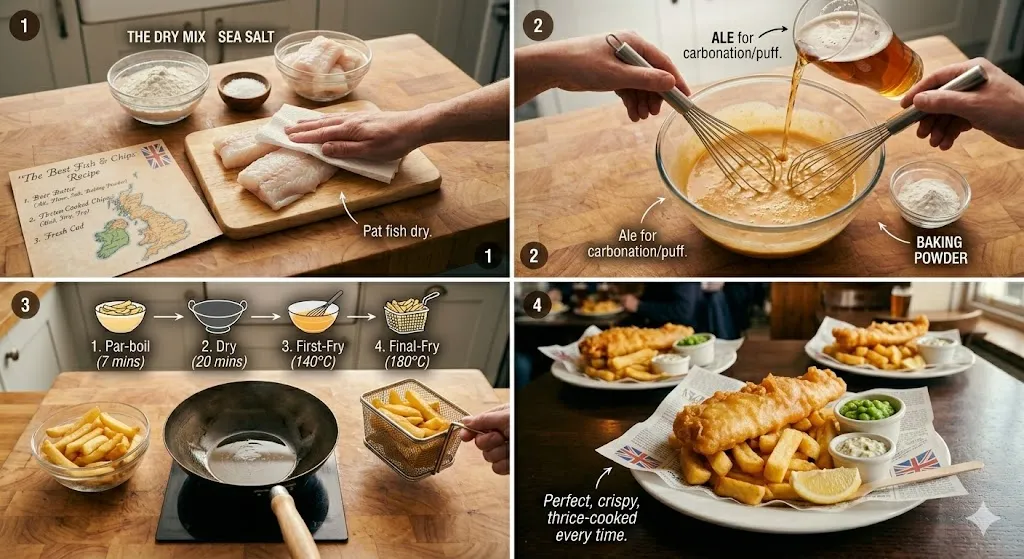
The key is small batches and temperature control.
Step by Step:
- Cut potatoes into thick-cut French fries. Soak for 30 minutes.
- Fry at 325°F for 5–7 minutes. Remove.
- Increase oil to 375°F.
- Mix dry batter ingredients. Add cold beer just before frying.
- Pat fish dry. Season generously.
- Dip fish into batter; let excess drip off.
- Fry 2–3 minutes per side until golden brown.
- Drain on a wire rack (not paper towels).
- Fry chips again at 375°F until golden crisp.
Keep fish warm in a 200 degree oven.
Pro Tip for the Absolute Best Texture
Let the battered fish sit for 30–60 seconds before placing it into the oil. That slight hydration allows the flour to cling better, reducing blowouts and sliding batter. It makes a noticeable difference in crust integrity.
Common Mistakes That Ruin best Fish and Chips recipe (and Why They Happen)
Even a great recipe can fall apart if a few key details are overlooked. best Fish and chips recipe is simple in theory, but it’s extremely technique-sensitive. Most failures come down to moisture control and oil temperature. One of the most common mistakes is adding batter to wet fish. If the surface moisture isn’t removed, the batter won’t adhere properly and can slide off in the oil.
Another frequent issue is overcrowding the pot. When too many pieces go in at once, oil temperature drops dramatically, leading to greasy, soggy coating. Overmixing the batter is another quiet culprit. When flour is overworked, gluten develops and the coating turns dense instead of light and airy.
Key reminders:
- Always pat fish completely dry before dipping.
- Fry in small batches to maintain oil temperature.
- Using a thermometer guessing leads to greasy results.
- Drain on a wire rack, not paper towels.
- Mix batter just until combined lumps are fine.
If your batter burns before the fish cooks through, your oil is too hot. If it’s pale and greasy, it’s too cold. That thermometer is your best friend here.
Variations and When to Use Them
The beauty of fish and chips is that the base technique stays consistent, but you can adjust it depending on dietary needs, flavor preferences, or what’s in your kitchen. If you want a lighter texture, substitute part of the flour with rice flour. It creates an even more delicate, tempura-style crispness. For a richer, old-school flavor, frying in beef tallow produces a deeper savory finish reminiscent of classic British seaside chippies.
For gluten-free fish and chips, a blend of rice flour and cornstarch works better than most 1:1 gluten-free flour blends, which can become gummy. Pair it with gluten-free beer or sparkling water. If you prefer a lower-fat option, baked fish and chips or air fryer fish and chips are practical alternatives. The texture won’t be identical to deep-fried, but they’re weeknight-friendly and still satisfying.
Other practical swaps:
- Pollock instead of cod for budget-friendly results
- Sweet potatoes instead of russets for a slightly sweeter chip
- Add turmeric for deeper golden color
- Use vodka in part of the liquid for extra crispiness
Each variation changes texture slightly, but the method stays consistent.
My Experience Making This best fish and chips Recipe at Home
The first time I made fish and chips at home, I was impatient. I skipped drying the fish properly and didn’t monitor oil temperature closely. The batter slid in patches and the coating absorbed oil. It tasted fine but it wasn’t crisp. What changed everything was two small adjustments: using a thermometer consistently and switching from paper towels to a wire rack for draining. That one switch alone kept the crust audibly crisp for much longer.
I also learned not to fear slightly lumpy batter. When I stopped trying to make it perfectly smooth, the texture improved dramatically. That light, irregular structure is exactly what creates those little craggy, crunchy edges. Now when I fry in small batches and keep oil steady at 365-375°F, the results are consistently restaurant quality.
Explore more comforting main dishes like this best fish and chips recipe for easy and satisfying family meals.
Benefits of Making the Best Fish and Chips recipe at Home
There’s something deeply satisfying about mastering a dish that people usually assume must come from a pub or takeaway shop. Making it yourself gives you control over every element: the fish quality, the oil, the salt level, and the freshness. Homemade fish and chips may also feel
lighter than restaurant versions because you control oil temperature and portion size. You’re not dealing with oil that’s been reused all day. Beyond nutrition, it’s also about experience. Freshly fried fish eaten immediately has a crispness that simply can’t be replicated once it’s boxed for transport.
Why people keep coming back to this best fish and chips recipe:
- Crispier than takeaway when eaten fresh
- Significantly more affordable
- Customizable for dietary needs
- Impressive but surprisingly manageable
- Comfort food that feels special
It’s one of those meals that turns a regular evening into something memorable.
Supporting Background: Why best Fish and Chips recipe Became a UK Icon
Fish and chips became popular in England during the Industrial Revolution because it was affordable, filling, and easy to serve quickly. It was often sold wrapped in newspaper and eaten by hand. By the late 19th century, there were thousands of fish & chips shops across Great Britain. Places like Whitby in Yorkshire became famous for seaside servings, and establishments such as Harry Ramsden restaurant even earned mention in the Guinness Book of Records for size
and popularity. During wartime Britain, fish and chips was one of the few foods not rationed, reinforcing its role as a national comfort dish. It became more than a meal, it became part of British identity. Understanding that history makes cooking it at home feel even more meaningful. You’re not just frying fish; you’re recreating a dish that has fed generations.
Why Did My Fish and Chips Go Wrong?
| Problem | Cause | Fix |
| Batter slid off | Fish too wet | Pat completely dry |
| Greasy result | Oil below 350°F | Use thermometer |
| Soggy after 5 minutes | Drained on paper towels | Use wire rack |
| Batter falling off | Overmixed batter | Mix minimally |
| Raw inside | Too thick fillet | Fry slightly longer at 350°F |
| Burned batter | Oil above 380°F | Lower heat immediately |
Make Ahead Strategy for Easier Cooking
Night Before:
Cut and soak potatoes. Mix dry batter ingredients.
1 Hour Before:
Thaw fish, pat dry, refrigerate uncovered.
30 Minutes Before:
Heat oil.
At Serving Time:
Mix wet batter and fry.
Storage, Freezing & Reheating Honest Expectations
Fish and chips are best fresh. But here’s reality:
- Refrigerator: 2 days
- Freezer: 1 month
Reheating Comparison
| Method | Time | Crispiness | Best For |
| Oven 400°F | 10–12 min | Good | Multiple pieces |
| Air fryer 380°F | 6–8 min | Very good | Small batches |
| Skillet | 5–6 min | Moderate | Fish only |
| Microwave | 1–2 min | Soggy | Avoid |
Nutrition Context: Hemade vs Restaurant
| Version | Calories | Fat | Protein |
| Homemade Fried | 550–650 | 28g | 32g |
| Pub Version | 1200–1800 | 70g+ | 40g |
| Baked Version | 400–500 | 12g | 30g |
Homemade lets you control oil absorption and portion size.
best fish and chips recipe Frequently Asked Questions
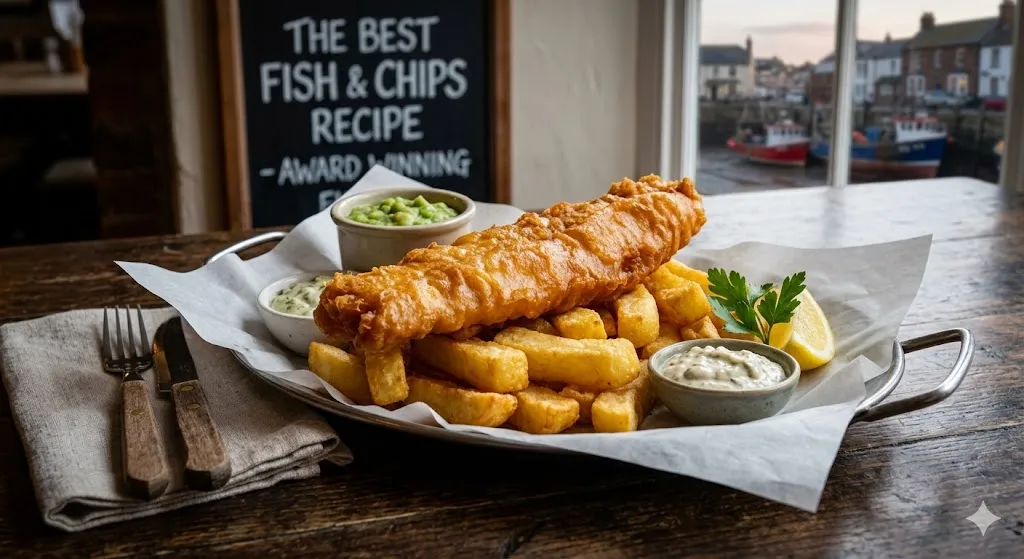

Best Fish and Chips Recipe
Ingredients
Equipment
Method
- Serve hot with lemon wedges and tartar sauce.
- Remove fish when the coating is crisp and the fish flakes easily with a fork. Drain on a rack to keep it crunchy.
- Fry the potatoes again at 375°F for 2–3 minutes until golden brown and crispy. Drain and immediately sprinkle with salt.
- Dip each piece of fish into the batter, letting excess drip off. Carefully lower into hot oil and fry 5–6 minutes until deep golden and crisp.
- In a bowl, whisk flour, cornstarch, baking powder, salt, and pepper. Stir in egg and cold sparkling water until the batter is smooth and slightly thick.
- In a bowl, whisk flour, cornstarch, baking powder, salt, and pepper. Stir in egg and cold sparkling water until the batter is smooth and slightly thick.
- Heat oil in a heavy pot to 325°F. Fry the potatoes in batches for 4–5 minutes until pale and tender but not browned, then drain on a wire rack.
- Peel and cut the potatoes into thick fries. Rinse under cold water until clear, then pat completely dry with a towel.
Conclusion
When you understand the science, control the oil temperature, and choose the right fish, homemade fish and chips isn’t intimidating, it’s empowering. It’s crispy, golden, pub worthy, and dramatically cheaper than takeout. Once you make it this way, you’ll realize: the best fish and chips recipe was always meant to be made at home.
For a crispy, spicy plant-based appetizer, try our Buffalo Cauliflower Recipe that’s perfect for game day or snacking.