
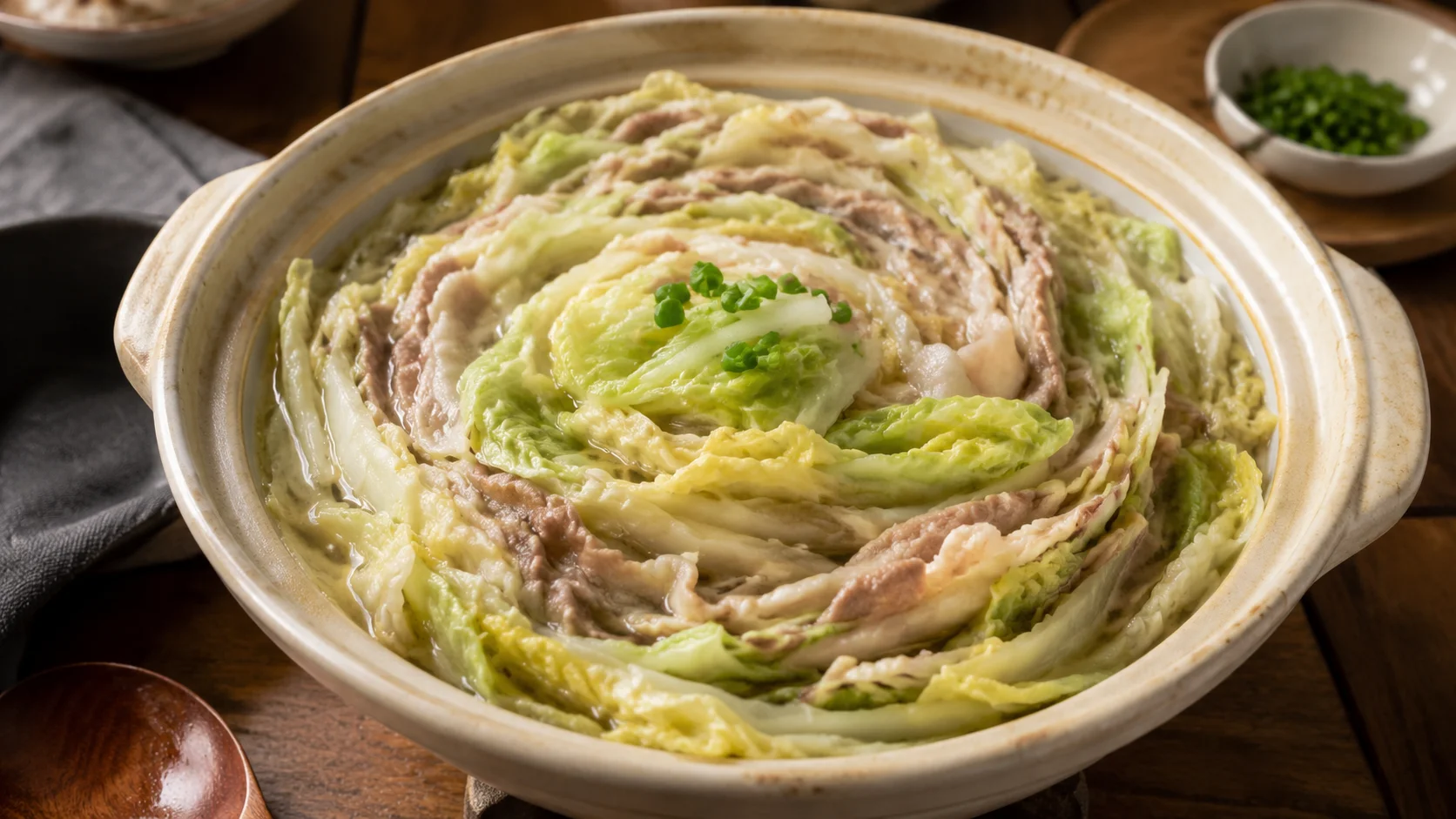
Mille Feuille Nabe Recipe: 5 Easy Secrets for Perfect Layers Every Time

The first time I made Mille Feuille Nabe, I used a pot that was way too big. Everything looked beautiful at first, then slowly collapsed into a soft pile. It still tasted amazing, but I learned something important that day.
This dish is simple, but the details matter. You layer napa cabbage and pork belly, then simmer everything in dashi broth until it turns tender and rich. It feels light, but the flavor is deep and comforting. It’s one of those meals that looks fancy but is actually very easy to make at home.
What I like most is how fast it comes together. You can prep everything in about 20 minutes, then just let the pot do the work. It’s perfect for chilly nights when you want something warm without spending hours cooking.
What is Mille Feuille Nabe Recipe and Why Do People Love It?
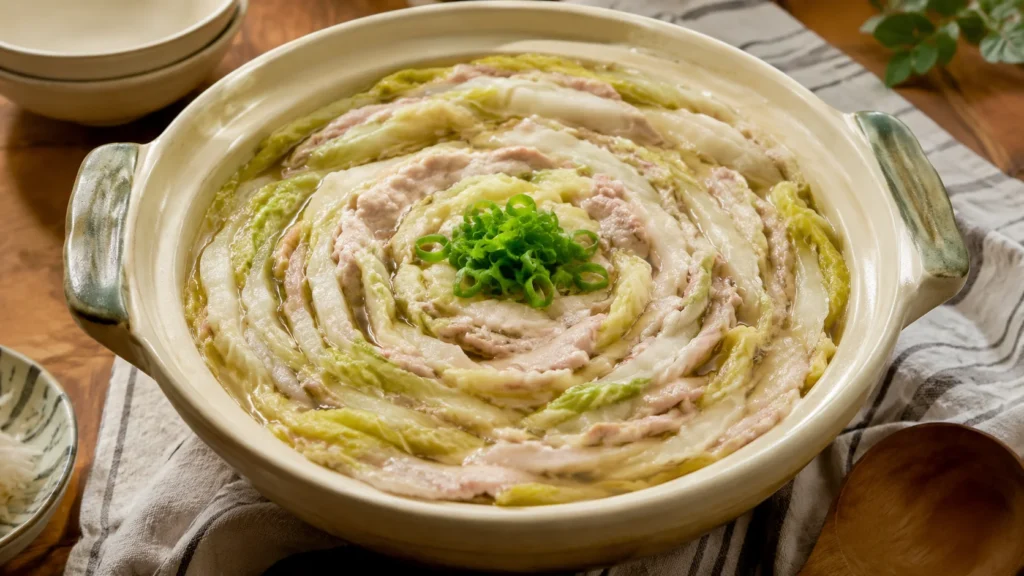
Mille Feuille Nabe is a Japanese hot pot made with layers of napa cabbage and sliced pork belly simmered in dashi broth. It is soft, juicy, and full of umami flavor. It usually takes about 20–30 minutes to cook and is served hot at the table. People love it because it looks beautiful and tastes even better than it looks.
The name comes from French and Japanese food culture. “Mille-feuille” means thousand layers, and “nabe” means hot pot. Once cooked, the layers soften and create a floral pattern inside the pot. It is often served during cold weather as a shared meal.
The taste is mild but rich. The cabbage becomes sweet, and the pork adds deep savory flavor to the broth.
Recipe Overview: What You Need to Know Before You Start
Mille Feuille Nabe is cozy, light, and perfect for sharing. It works best for dinner parties or family meals where everyone eats from the same pot. The texture is soft, and the broth becomes richer as it cooks.
| Detail | Info |
|---|---|
| Prep Time | 20 minutes |
| Cook Time | 20–25 minutes |
| Total Time | 40–45 minutes |
| Servings | 2–4 people |
| Difficulty | Easy |
| Cuisine | Japanese |
| Calories | ~600–900 per serving |
| Cost | ~$10–$18 total |
Cost breakdown matters here. At Asian markets, napa cabbage and pork belly are cheaper. At regular stores, pork belly is the biggest cost. Dashi packets are low-cost but important for flavor.
Ingredients and What Each One Does in Mille Feuille Nabe Recipe
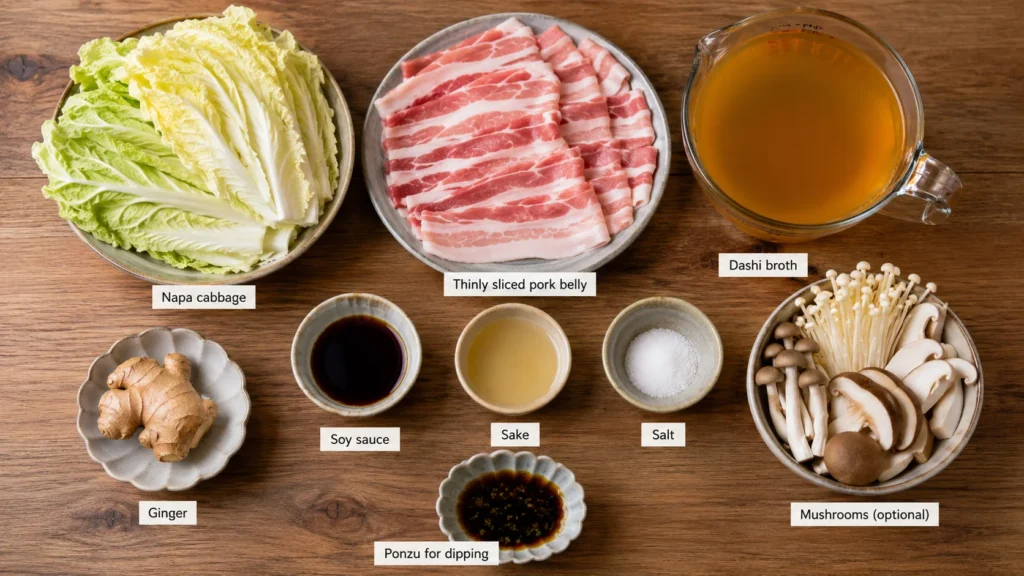
This recipe uses simple ingredients, but each one has a job. The magic comes from how they work together.
You will need:
- Napa cabbage
- Thinly sliced pork belly
- Dashi broth
- Ginger
- Soy sauce, sake, salt
- Mushrooms (optional)
- Ponzu for dipping
Napa cabbage gives sweetness and structure. It softens as it cooks and releases water into the broth. If you swap it with regular cabbage, the flavor becomes stronger and less delicate.
Pork belly adds fat and depth. As it cooks, the fat melts into the broth and makes everything richer. If you use beef or chicken, the broth becomes lighter and less creamy.
Dashi broth is the base. It brings umami and ties everything together. Without it, the dish tastes flat, so even a simple instant dashi works well.
Slicing Tip (Most People Get This Wrong)
If you slice pork belly too thick, it won’t cook evenly. If it’s too thin, it tears during layering.
- Best thickness: about 2–3 mm
- Too thick: chewy and uneven cooking
- Too thin: falls apart in the cabbage
If you don’t have pre-sliced pork, freeze a pork belly block for 30 minutes first. This makes slicing much easier.
How to Make Mille Feuille Nabe Recipe Step by Step
The process is simple. You just layer, pack, and simmer.
Step 1: Build the layers
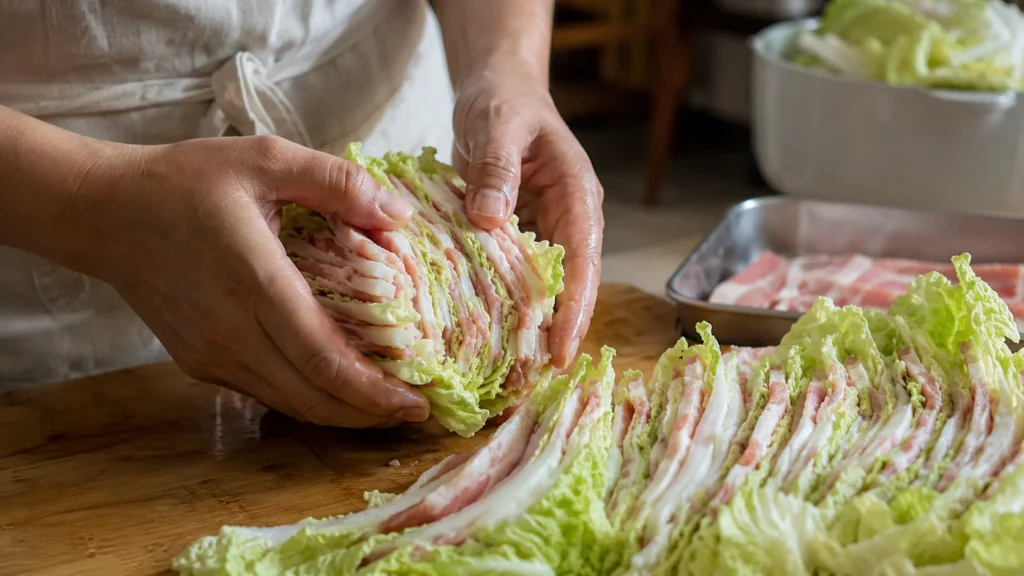
Take napa cabbage leaves and place pork belly between each leaf. Press gently so the layers stick together. You will see a striped pattern of green and pink. This step builds the structure and flavor.
Step 2: Cut into sections
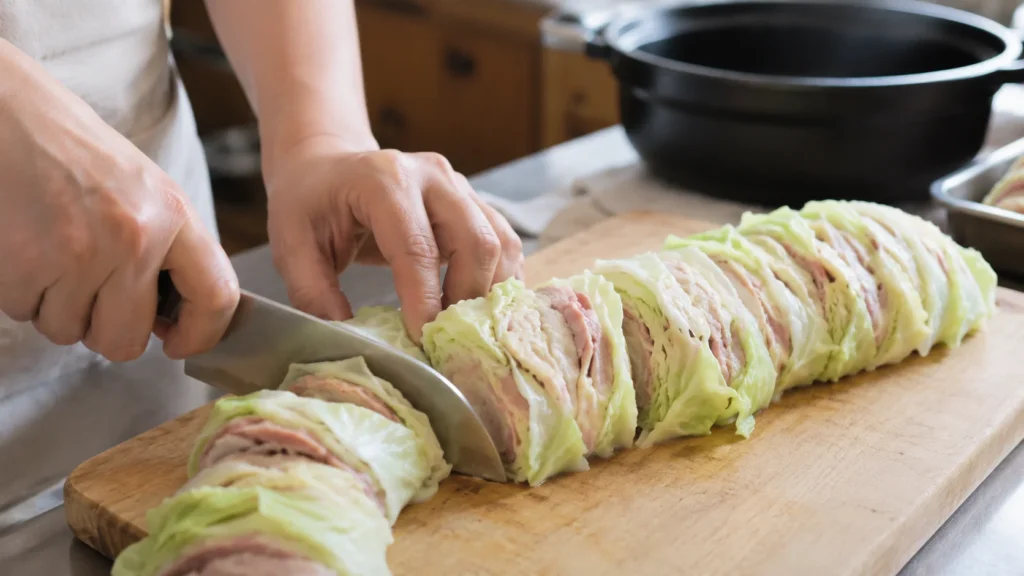
Cut each stacked cabbage bundle into 2–3 inch sections. Do not make them too small or they will fall apart while cooking. You want neat pieces that stand upright.
Step 3: Pack the pot tightly
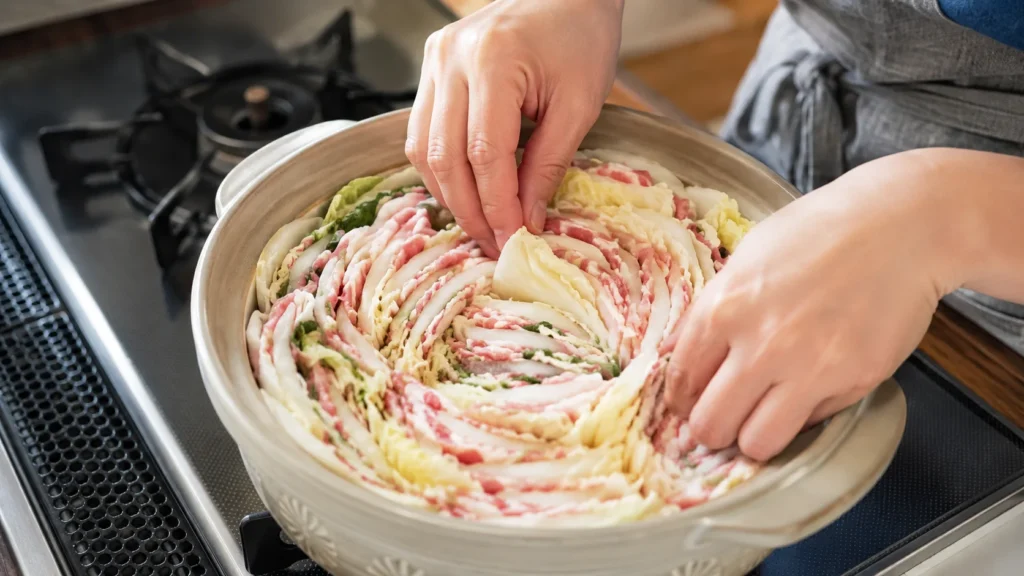
Place the sections upright in a circle inside your pot. Start from the outside and move inward. Pack them tightly so they don’t collapse while simmering. This is where the shape is formed.
Step 4: Add mushrooms and broth
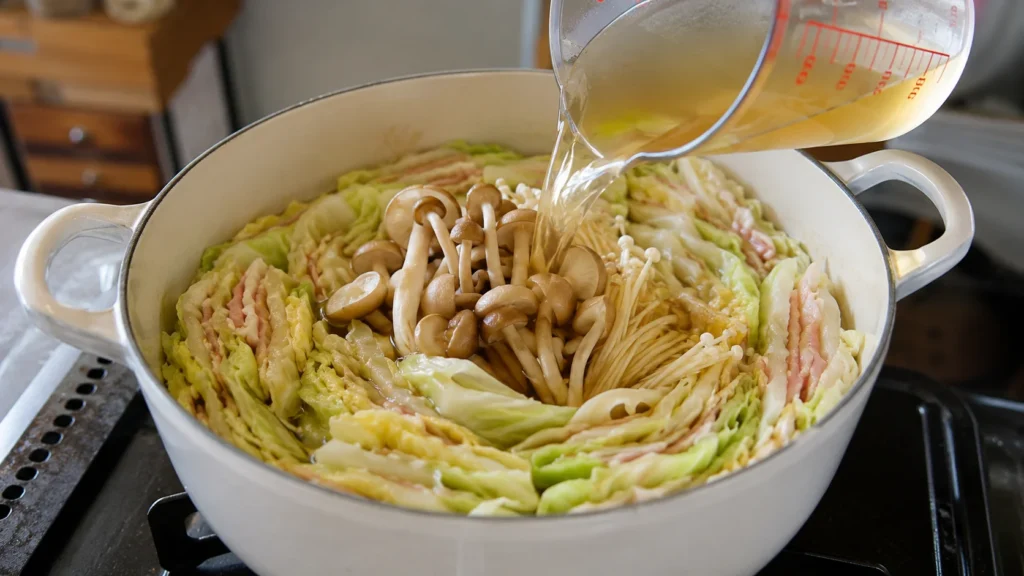
Fill the center with mushrooms like shimeji or enoki. Pour in dashi broth until it almost covers the layers. Add soy sauce, sake, ginger, and salt.
Step 5: Simmer gently
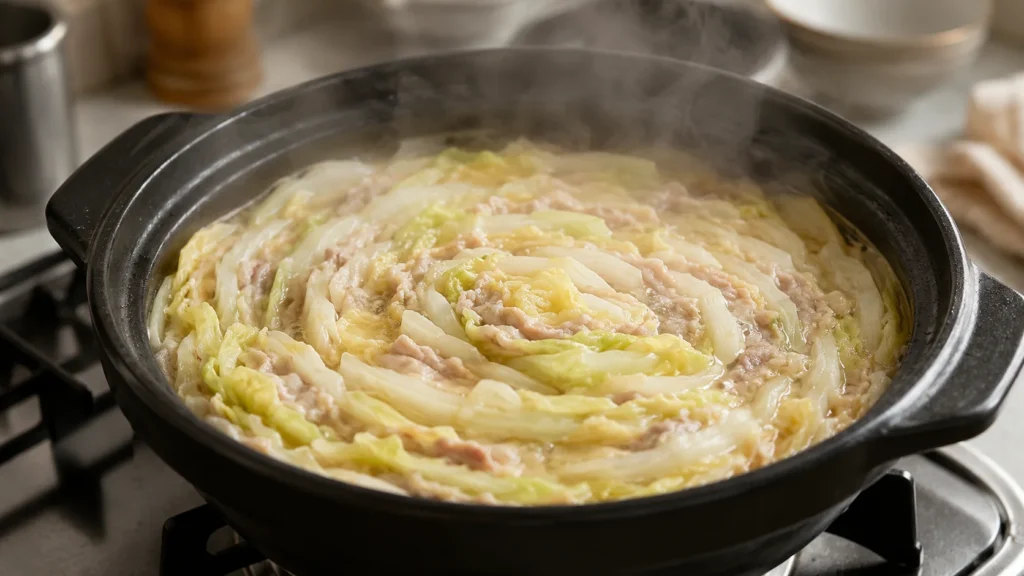
Bring to a boil, then lower the heat. Simmer for 15–20 minutes until cabbage is soft and pork is fully cooked. The smell becomes rich and slightly sweet.
The One Mistake That Ruins Mille Feuille Nabe Recipe
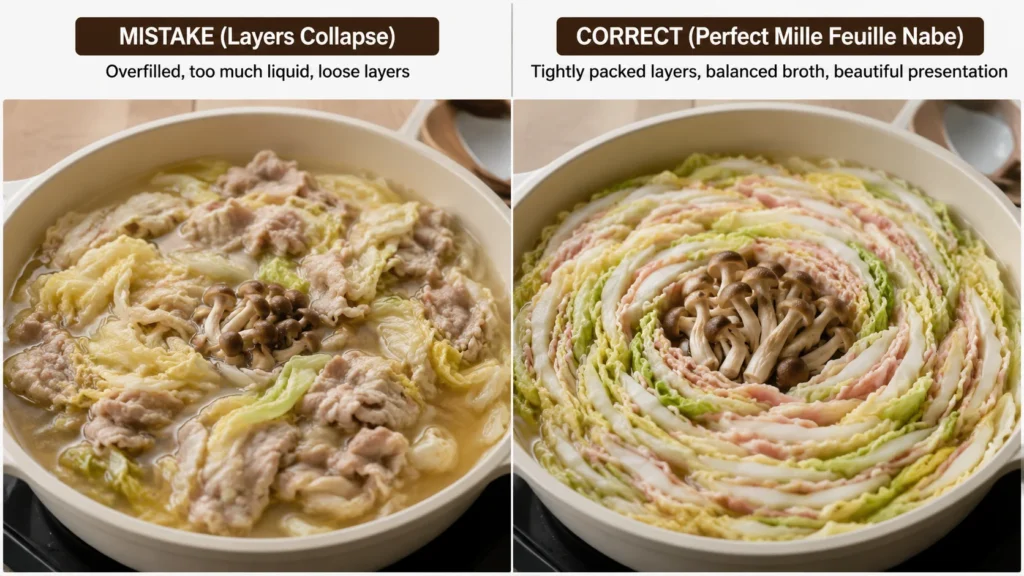
The biggest mistake is overfilling or under-packing the pot. When the layers are loose, they collapse and float apart during cooking. This changes the texture and makes the dish look messy.
Another common issue is adding too much liquid too early. Napa cabbage releases water as it cooks. If your broth starts tasting weak, don’t panic.
How to fix common problems:
- Broth tastes watery → add a small pinch of dashi + soy sauce
- Layers collapse → pack mushrooms tightly in the center
- Pork uneven → slice meat thinner next time
Quick tips:
- Pack tightly from the start
- Keep heat at a gentle simmer
- Use a pot that matches your cabbage size
- Don’t overfill with broth
Pro Tip for Better Flavor in This Mille Feuille Nabe Recipe
Let the pork and cabbage sit in the broth for 5 minutes after cooking before serving. This short rest time helps the flavors settle.
It works because the fat from the pork fully blends into the broth during resting. The cabbage also absorbs more umami. This small pause makes the soup taste deeper without adding extra ingredients.
Easy Variations You Can Try at Home
This recipe is flexible. You can change it based on what you have.
- Beef version: Use thinly sliced beef for a lighter taste
- Chicken version: Works well but makes a clearer broth
- Vegetarian version: Replace meat with tofu and mushrooms
- Spicy version: Add chili oil or kimchi for heat
- Vegan version: Use kombu dashi and skip animal products
- Noodle version: Add udon at the end for a full meal
What to Serve With Mille Feuille Nabe Recipe
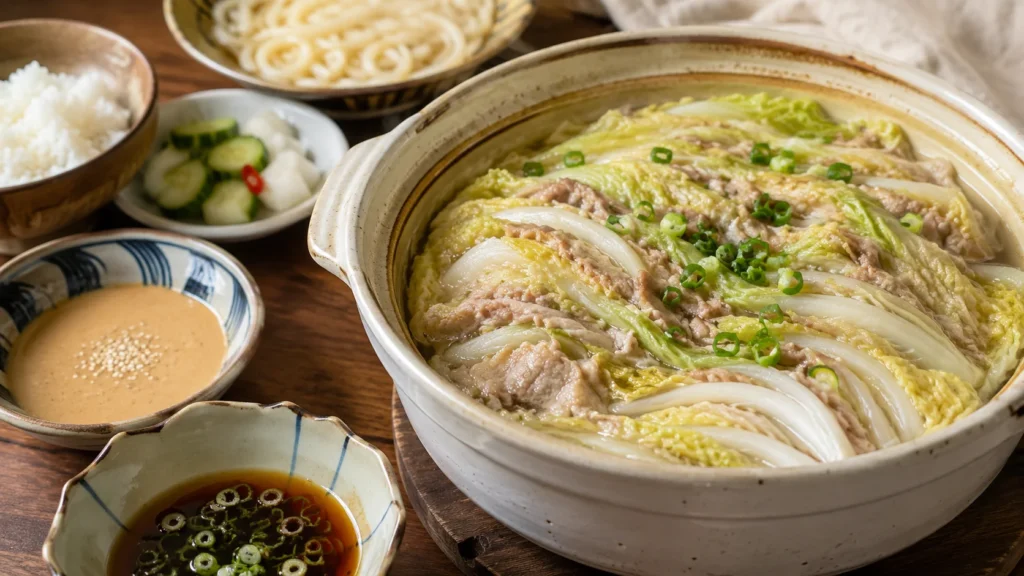
This dish is usually served as a shared hot pot meal. It already feels complete, but side dishes make it even better.
- Steamed rice: Soaks up the rich broth
- Ponzu dipping sauce: Adds bright citrus flavor
- Pickled vegetables: Cuts through the richness
- Garlic sesame sauce: Creamy and bold dip
- Udon noodles: Perfect for finishing the broth
If you enjoy Japanese comfort food, this pairs well with our homemade chicken broth recipe for other soup ideas.
My Honest Experience Making This Recipe
The first time I made this, I didn’t pack the pot tightly enough. The layers shifted and looked messy. I also added too much broth, which made it weaker than expected.
The next time, I fixed those two things and everything changed. The pot held its shape, and the flavor became much deeper. I was surprised how much difference simple packing makes in this dish.
How to Store, Freeze, and Reheat Mille Feuille Nabe Recipe
This dish stores well, but texture changes slightly after cooling.
- Room temp: 2 hours max
- Fridge: 3 days in airtight container
- Freezer: up to 2 months (broth separate is best)
To reheat, warm it slowly on the stove. Avoid boiling too hard or the cabbage becomes too soft. Add a splash of water or dashi if needed.
Frequently Asked Questions About Mille Feuille Nabe Recipe
Mille Feuille Nabe Recipe
Ingredients
Equipment
Method
- Wash the napa cabbage and separate the leaves carefully, keeping them whole and firm. This helps create clean layers for stacking.
- Place one slice of pork belly between each cabbage leaf, building neat layered stacks. The contrast of green and pink should be visible.
- Cut each stack into 2–3 inch sections so they fit upright in your pot. Keep pieces even so they cook at the same speed.
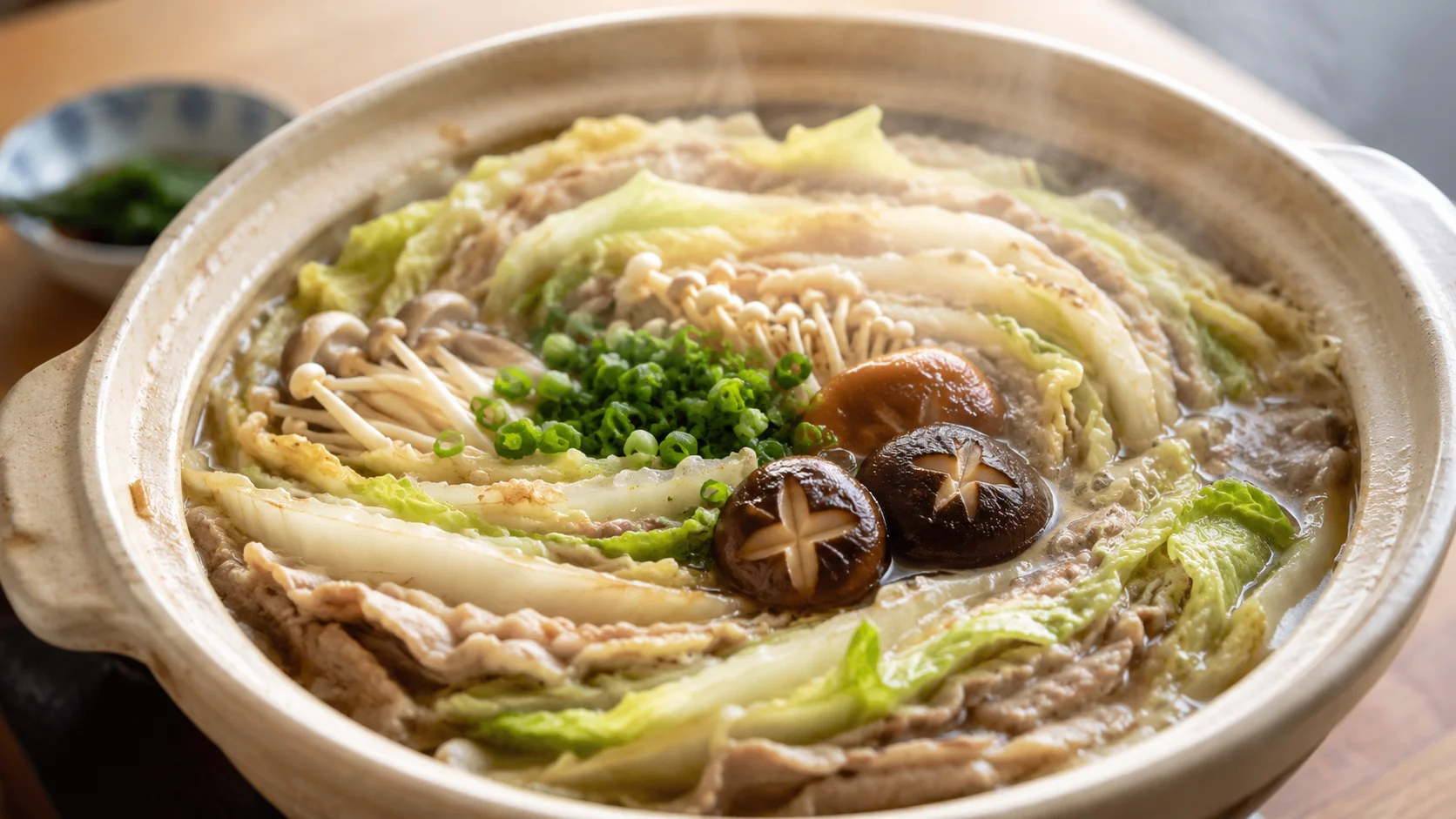
- Arrange the stacked sections tightly in a circle inside the pot. The tight packing helps them hold shape while simmering.
- Fill the center with mushrooms and pour in dashi broth mixed with soy sauce, sake, and ginger. The liquid should almost reach the top of the layers.
- Bring the pot to a gentle boil over medium heat, then reduce to a simmer. You should see light bubbling, not a heavy boil.
- Cook for 15–20 minutes until cabbage turns soft and pork is fully cooked. The broth will become slightly richer and aromatic.
- Taste the broth and adjust with a little salt or soy sauce if needed. The flavor should be light but deeply savory.
- Serve hot with ponzu sauce on the side for dipping. The layers should stay soft but structured when lifted.
Notes
• Pack the pot tightly to prevent layers from collapsing during cooking.
• Add more dashi at the end if the broth becomes too light from cabbage water.
Final Thoughts on Mille Feuille Nabe Recipe
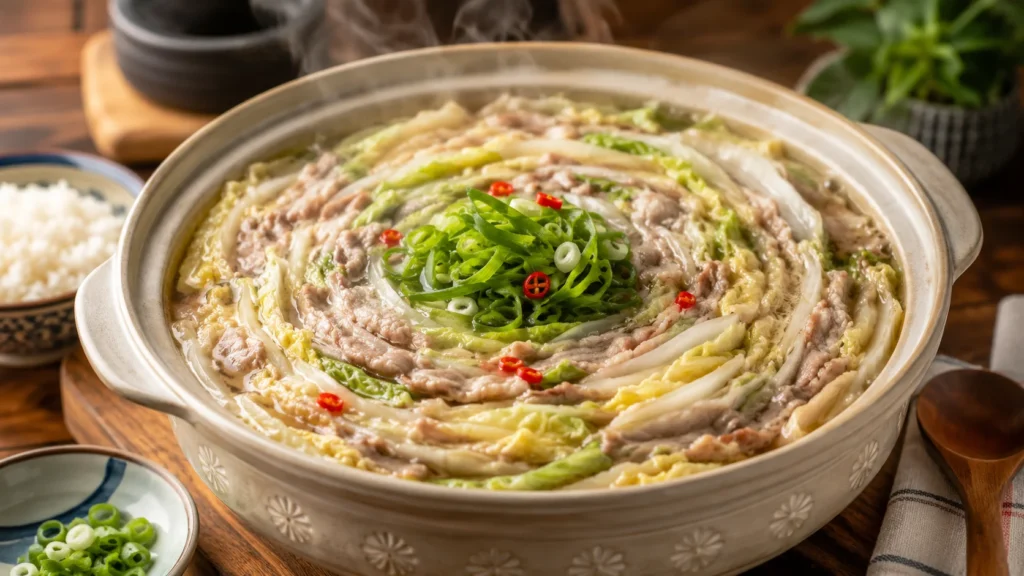
This is one of those meals that feels simple but teaches you a lot about cooking. Small details like slicing, packing, and simmering all change the final result.
Once you make it right, it becomes an easy go-to dinner for cold nights. It’s warm, comforting, and perfect for sharing at the table.
If you make this Mille Feuille Nabe Recipe, I would love to know how it turned out. Drop a comment below and share your version.